
One of my core beliefs is that we all have the potential to be creative. I believe not only this because of my own experience in learning the art and craft of creative photography, but also through my experience teaching others through my photography workshops and my apprenticeship program. Also, many of the top photographers who I admire the most have confided in me that they were not originally creative and that creativity came to them slowly over the course of many years..

By the Light of the Setting Sun and Rising Moon
I have no formal education in photography and the arts, and I am largely self-taught. For most of my career I worked at Boeing as a Cost Analyst. My forays into nature served as a necessary counterbalance to my role in the corporate world. I have learned the art and craft of photography from many sources not the least of which is direct experience of nature. Other indispensable sources include reading books, YouTube videos, tutorials, participation in photography club outings, hanging out with photography friends, photography workshops, studying the images of others, and willingness to experiment and make mistakes. I think, however, my biggest hurdle that I needed to get over in developing a creative approach to photography is getting beyond my belief “that I am not creative’. My experience has taught me that we all have the capacity to be creative. In my case Nature itself was my best ally in breaking through thought patterns, usually learned, that tell us we are not creative. I will get into more about this later. Channeling creativity into an image of course also requires skills that must be learned. Creativity and skill are not an either-or proposition, the two are inseparable. But it is my belief the capacity to be creative is something we are all born with, but for most of us somewhere along the way this capacity becomes blocked, ironically due to learning. It is the ultimate irony of the creative process that we must learn to unlearn much of what we have been taught!
My apprenticeship program, where I work with a budding photographer over a period of one year, has also convinced me that everyone has the capacity to be creative and learn the art and craft of photography. Everyone learns in different ways and one of the benefits of a one-on-one apprenticeship program is the ability to tailor instruction to support the way a specific individual best acquires knowledge and learns. With all of my students this has meant putting them in the driver seat. They use their own camera and their own computer while I help guide them through their options, rather than just watching how I go about taking and processing images. I teach them the skills they need and help them see their creative options but leave actual creative choices up to them. With the student in the driver seat, this helps develop confidence, that they can do it. This confidence in turn helps unlock the creative potential, that in many ways was always there. I feel successful once the student does not need me anymore and develops their own ability to grow creatively.

Forest Moss Icicles
For as long as I can remember there has been an ongoing debate about the origins of creativity. Some think only certain people are born to be creative, and others think that creativity solely a function of one’s environment and how it supports the learning process. It turns out that science supports both nature and nurture playing a role in the creative process, but not in the way that many would expect. Let us take a look at study that is particularly important in this regard.
In a landmark study, NASA hired Dr. George Land and Dr. Beth Jarman to develop a test to measure creative potential for NASA’s scientists and engineers. The test measured divergent thinking, the ability to come up with lots of ideas to solve a particular problem. After using the test within NASA, Land and Jarman, decided to use the same test to address the age-old question “where does creativity come from”. The test was administered to 1600 children who were then retested at different points in their life span.

As you can see from the above chart test performance declines precipitously with age. “What we have concluded,” wrote Land, “is that non-creative behavior is learned”. What we can therefore also conclude is the creativity is not so much learned as unlearned or put another way we must learn to unlearn much of what we have been taught, especially any negative and often habitual thoughts that we are not creative.
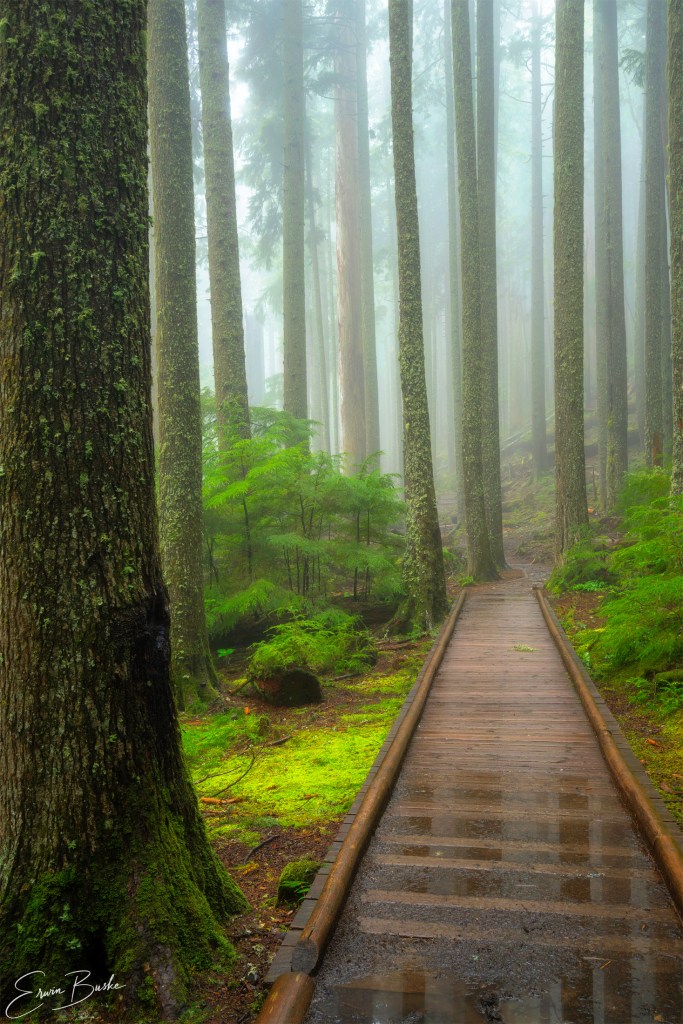
Mt. Si Boardwalk into the Fog and Mist
This notion that our natural capacity for creativity declines with age, can be found in the wisdom and spiritual traditions of the Tao, Zen and also American Transcendentalism. Consider this passage from chapter 56 of the Tao De Ching as translated by Sam Torode.
The Tao
As creatures grow and mature,
they begin to decay.
This is the opposite of the Tao—-
the Tao remains ever young.
Lao Tsu
A central theme in the Taoist perspective is a return to nature. At a more personal level this also means a recovery of our own nature. I say recovery, because our own original nature, a sort of childlike primordial state, was always there but its voice has become faint as we grow and mature in a society that pulls us away from the expression of our natural self that was born to be creative. For more on the Tao see my blog post The Tao of Nature Photography.

My daughter Caroline, running through the tulip fields and naturally expressing herself, long ago.
Zen
The way of Zen is for us to awaken to our true nature. When we wake up, we are also more creative because we loosen the hold of mental filters that not only falsely define who we are but also limit creative possibilities. The renowned Twentieth Century Psychoanalyst Erich Fromm expressed it more bluntly this way at a conference with D.T. Suzuki on Zen Buddhism and Psychoanalysis. “The average person’s consciousness is mainly false consciousness consisting of fictions and illusion, while precisely what he is not aware of is reality.” Zen practices such as meditation and mindfulness help us to slow down and gradually weaken the fictions and illusions surrounding our false identities. In the process of this happening our expanded awareness brings us into contact with new sources of creativity. For more on Zen see my blog post The Way of Zen, Love of Nature and Photography.
American Transcendentalism
The sun illuminates only the eye of the man, but shines into the heart of the child.
From Nature by Ralph Waldo Emerson
What did Emerson mean by these words? Many people only see nature as an object, but the child has a deep spiritual connection to nature. For Emerson, we are all an integral part of nature, with no separation between ourselves and the natural world. But most often we no longer feel this way. We separate ourselves from nature in the sense we no longer feel deeply connected to it. And yet the child is different; she feels nature deep inside her heart and in her soul. She doesn’t just see the sun, she sees—and feels—what it illuminates. Children are naturally curious about the world around them, and this curiosity spawns creative exploration. But as children mature into adults this curiosity gradually becomes less and less until at last one surrenders to the force of habit losing our natural inclination to be creatively curious. The primary reason for Emerson writing Nature was to issue a call to adults to bring back their childlike sense of wonder in exploring the possibilities of Nature. For more on American Transcendentalism see my blog post Journey to Your Own Walden Pond: Thoreau’s Legacy and his Message to a Modern World.
“Truly I tell you, unless you change and become like children, you will never enter the kingdom of heaven.”
Jesus Mathew 18:3
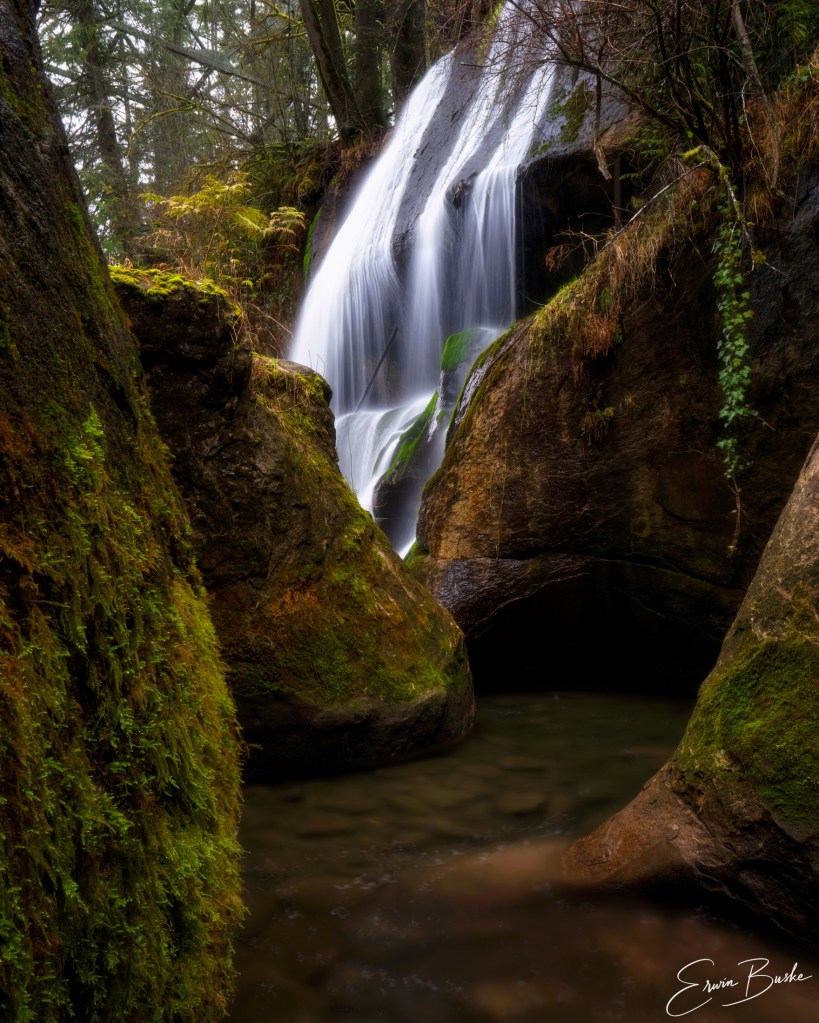
You are the River: Green River Gorge
“Good artists borrow, great artists steal” Picaso
If both learning and unlearning are required for expressing oneself creatively in a photograph, which comes first? My answer is the two are inextricably intertwined. Although it has become popular in recent times to play down the role of technique and skill in the creation of photographic art, I know from my personal experience that the more that I develop my skill level, the better I am able to achieve my creative vision. But technique and skill alone will not result in a creative and artistic image.
A commonly accepted definition of creativity is “The process that leads to a novel and useful outcome”. I am not, however, going to get into this academic definition here of creativity because I think it does more to distract us than help up. I am going to voice my strong opinion, however, because I think that is what people who follow my work want to know. Photographic images that are creative and artistic need to have emotional impact. If well-crafted and composed images using good photographic technique do not result in emotional reaction in the viewer, they can never rise to the level of being creative and artistic, let alone great. Too often definitions of creativity have focused on the presence of novelty (something new or different) in the photograph and downplaying emotions. Personally, I think novelty has little to do with artistic creativity in photography, music, or any other field. We have all heard the expression “steal like an artist”. This is fact what creatives do, whether they be photographers, painters. musicians or writers. They borrow from many influences, standing on the shoulders of those who came before them. It is in their unique and authentic integration of various influences into their own personal style that results in an artistically creative image with emotional impact. My definition of creativity as it pertains to photography for those who insist upon a definition would go more like this: “The ability to experience and express artistically original, appropriate, and authentic combinations of emotions-adapted from Averill and Thomas-Knowles, 1991.”

You Keep Me Hanging On: Kendal Lakes Snowshoe Trail
Learn it to forget it
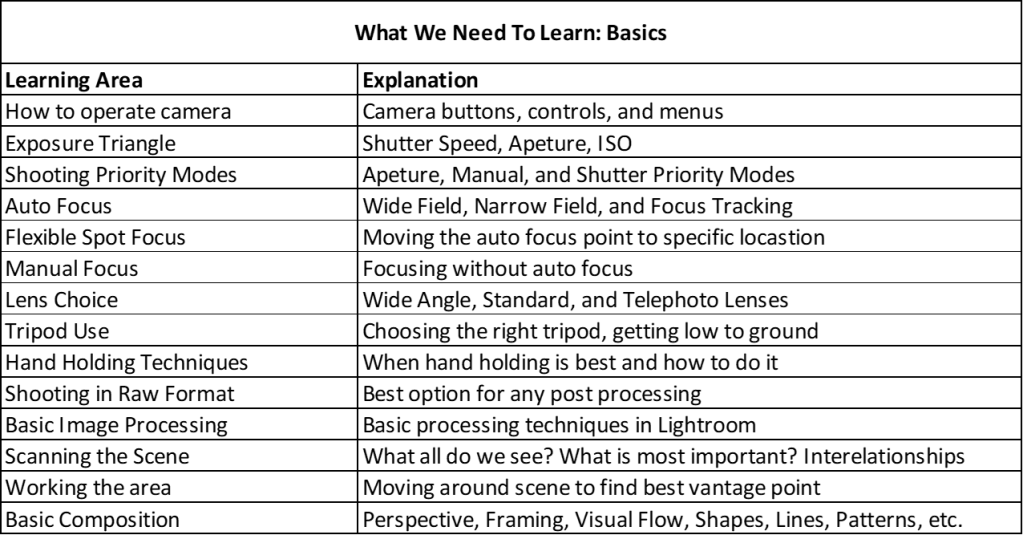
What I tell all of my students in my apprenticeship program is that we must “learn it to forget it.” In other words, we must learn so thoroughly how to operate our cameras, take pictures, and process images that we do not need to think all that much about the technical side of things. A good analogy would be driving a car. Sure, we are aware at all times that we are driving, but our focus is more upon where we are going because safe driving techniques have become almost automatic. So, it is with creative photography. Once photographic technique is thoroughly mastered, we do not need to think about technique all that much anymore, then we can focus instead upon what is our photographic vision and the realization of that vision. Here are some basic areas of learning that we must learn so thoroughly that they become almost second nature freeing us up to live and breathe our creative vision.
Discipline is a way of expression. Say, you want to to express your feelings in stone. Now, stone doesn’t give way very easily; it’s tough stuff. And so you have to learn the skill–or the discipline–of the sculptor in order to express yourself in stone. So in every other way, whatever you do, you require a skill.
Alan Watts
Once the basics are learned, then one should also master as well these more advanced areas of expertise to further support movement into ones creative zone.
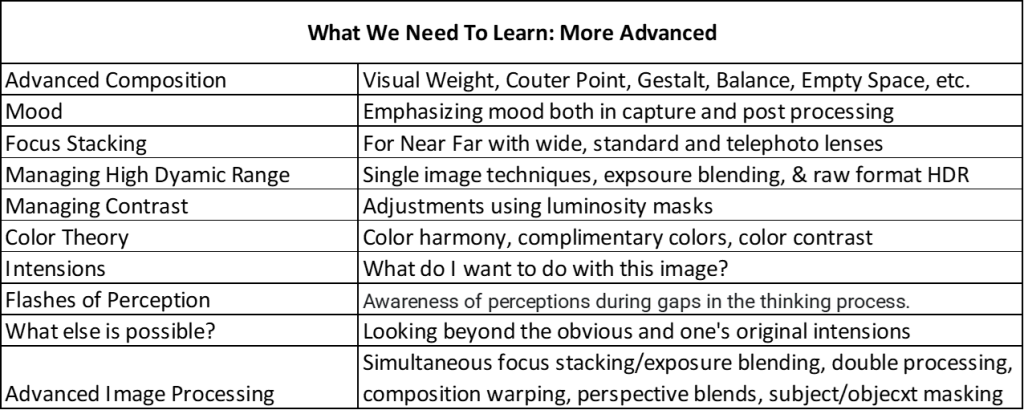
I am not going to get into the specifics of these learning areas too much here, as I am bringing this up to make a point that embarking upon a creative journey does involve learning skills. Although these skills will not necessarily result in a creative and artistic image, they are part of our tool box that makes creative photography possible, especially the basic skills. That is why in my apprenticeship program I teach all of these skills. Ideally my students learn these skills to forget about them!
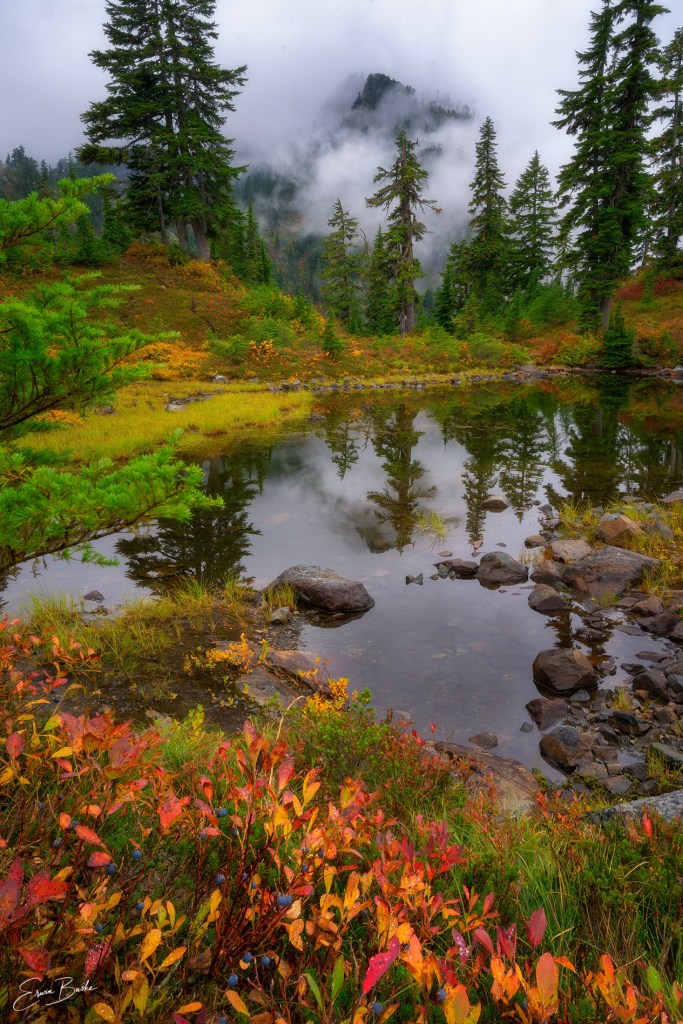
Alpine Pond Autumn Moods
In the Zone
Once we have learned the basic skills and made good progress with the more advanced skills, it will be much easier for us to get “In the Zone” of artistic creativity. Why might you ask? We step out into nature fully confident that we have the requisite skills in our toolbox necessary to do the job. This helps liberate us from being too involved in a thinking process that can actually get in the way of getting us back to that more childlike state of natural wonder that is the wellspring of creativity.
What do we mean by “In the Zone”? Let’s look at a few definitions. Cambridge Dictionary says, “If you are in the zone, you are happy or excited because you are doing something very skillfully and easily.” In the Zone is an idiomatic phrase and not a word so it makes sense to also share the Online Slang Dictionary definition. To be in the zone is “to have one’s thoughts flow easily and creatively with regards to art, music design, or invention” (and I might add the creative photography). Being “In the Zone” is very much like being “In a Flow State.” Although the term Flow State was popularized by positive psychologist Mihaly Csikszentmihalyi the concept has actually been around for centuries. In the flow state there is a sense of fluidity between body and mind, where you are so totally absorbed and deeply focuses on something that distractions disappear and time seems to slow way down. Your senses are heightened, and you feel one with the task at hand and your environment. Action and awareness coalesce in an effortless momentum as you carry out the task at hand, in our case creating a photograph.
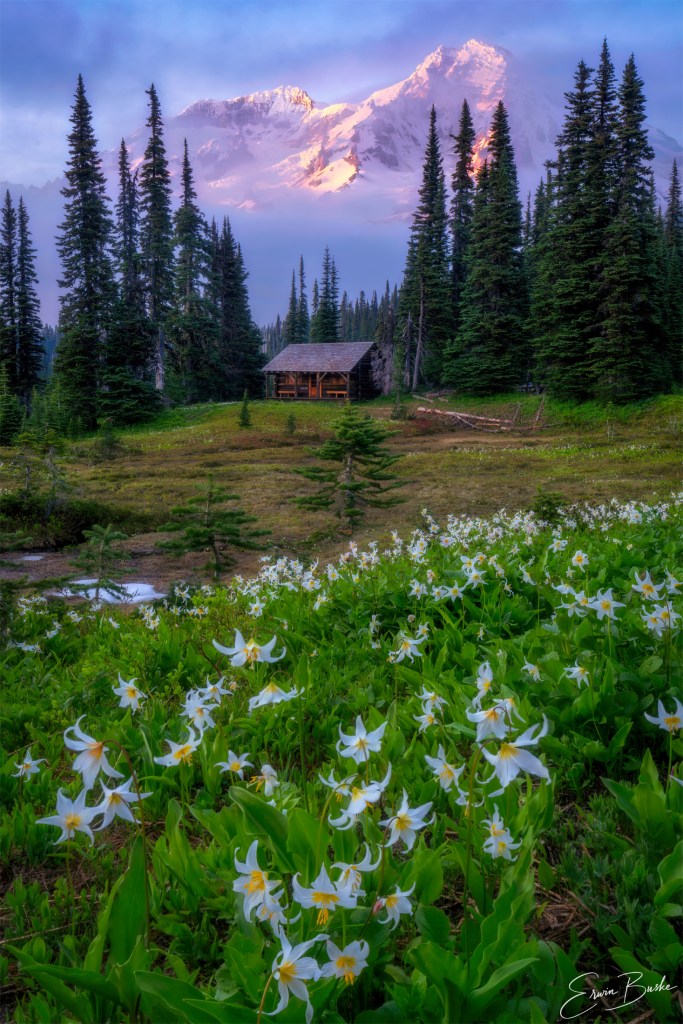
Coming Home: Avalanche Lilies and Ranger Patrol Carbon at Indian Henry’s Hunting Ground
Coming Home
All children are artists. The problem is how to remain an artist once we grow up.
Pablo Picasso
Skills enable us to be creative, but how do we get back to a home where we once again see the world more with the eyes of a child? Although there are no series of steps, we can take that will bring this perspective back, there are practices that can help us feel more present. These practices include daily walks in nature, meditation and mindfulness. These practices will help loosen the grip of some of the barriers that keep us from experiencing the world of nature in a more intuitive, playful and spontaneous way. These barriers have to do with our habitual way of thinking about and experiencing the natural world. Daily walks in nature, meditation and mindfulness help weaken our habitual thoughts through making us more present and aware of our surroundings opening up the door to see the world with fresh creative eyes. You will find a more complete discussion of the practices of daily walks in nature, meditation and mindfulness in my blog post The Way of Zen, Love of Nature, and Photography.
Photography Practices
There are also photography practices that will help us see the natural world with fresh eyes. These will differ for each individual depending upon where you are at in your photography journey. But the basic idea here is to take up a photography practice that is different from what you normally do. For example, if you normally shoot primarily macro or small intimate scenes you may try near far perspectives of the Grand Landscape. Or if you shoot primarily birds, you may try instead shooting images of people in the landscape. This works for some of the same reasons that walking, meditation and mindfulness work. It takes us away from our habitual way of thinking about and experiencing the natural world, bringing us back home, to more of a beginner’s mind, one that is better able to see nature in fresh ways as if one had once again the eyes of a child. Sure, there will be new skills to learn, but my experience is that if you are already evolved in a least one genera of photography, these skills will be learned quickly and easily because you are already starting from a point of significant knowledge.
If your mind is empty, it is always ready for anything, it is open to everything. In the beginner’s mind there are many possibilities, but in the expert’s mind there are few
Shunryu Suzuki (Zen Monk and Teacher)
In the remainder of this blog post, I am going to explore multiple photography practices/genera that may help you get out of your creative slump. Again, they will help, not because there is anything inherently creative about these practices, but rather they may help breakthrough your habitual way of thinking about and experiencing the natural world. With this breakthrough you may once again see the world through the eyes of a child. Regardless of which practice or genera you choose, what is important is that you feel the spark of passion for this new approach. Going back to what I mentioned earlier, it is my belief unless you feel the spark of emotion in taking images and also covey this in your images in a way that also resonates with others, the photography will never rise to the level of being great and creative, let alone rise to level of being art.
Near Far

Light of the Angels North Cascades. 31mm, F14, 1/15s, ISO 100
Near far compositions, especially with the use of a wide-angle lens, have received a bad rap lately. Many perceive that the use of the wide-angle lens to capture grand scenes, especially icons, results in too many quickly captured images that are visually similar and lack creativity. This may be true for the initial spotting of the scene and taking a quick picture, but zeroing in and fine tuning the composition is another matter entirely. Used properly this lens is one of the most difficult but also one of the most rewarding lenses to use. A wide angle zoom, skillfully used, can also highlight your unique vision for the scene even if it is a often photographed location. Another criticism I frequently hear is that with a wide angle zoom one can only pick out one or maybe two compositions for a scene. This criticism reveals more of a user’s lack of knowledge or experience in the creative use of the wide angle zoom, than it is an accurate assessment of the lens’s potential. When one gets low and as close as possible to the foreground, even micro movements can and will result in substantially different compositions. The possibilities are virtually limitless. With a wide angle zoom, I can pick out in most situations as many as ten different compositions which is likely a point at which few would even want to venture beyond! A final misconception about the use of wide-angle lenses for near far is that one always goes to the most extreme wide angle. For me a least, nothing could be further from the truth. I am shooting the above image at 31MM which is almost near a normal perspective. This is a deliberate choice to better balance near, mid and backgrounds parts of the scene. As we will soon see, near far can also be creatively done with a telephoto lens.
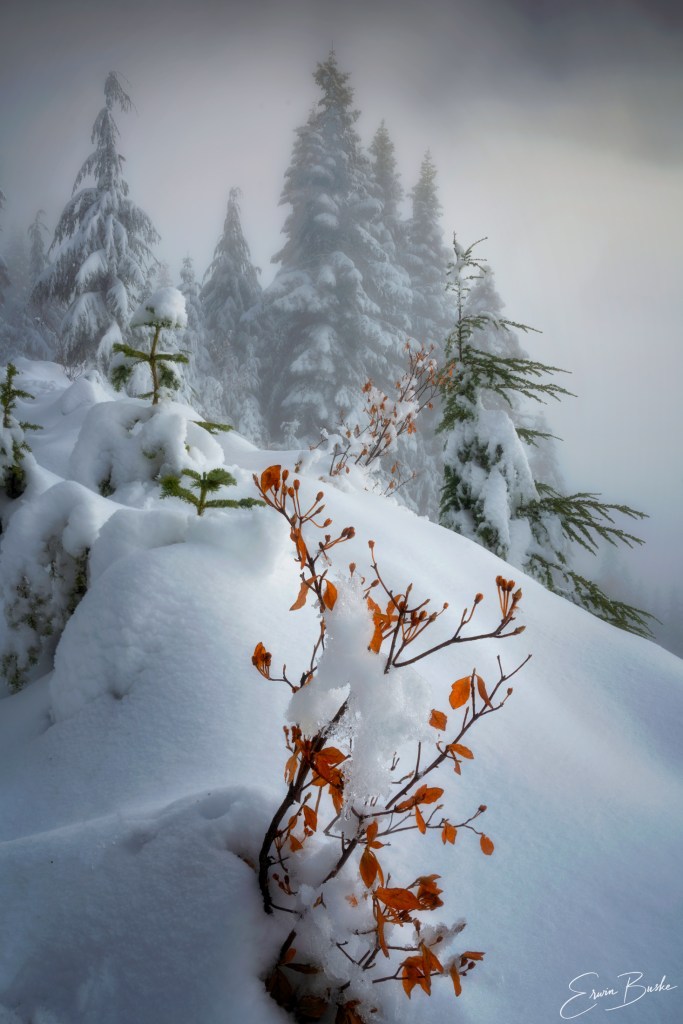
Touch of Autumn in Winter: 30mm, F14, 1/100S, ISO 100 Focus Stacked
A wide angle zoom definitely requires slowing down as one gets very close, often within inches from the foreground and finds a visual flow from the foreground to the mid-ground and background. I have been known to spend up to a couple hours in the field fine tuning my wide-angle compositions. When the camera is this close to the foreground, a couple of inches this way or that can dramatically alter the composition. One needs to study thoroughly the scene, especially the visually predominant foreground, to eliminate or reduce visual distractions. It is almost as if one has in the foreground an intimate or macro scene within the larger scene. The larger scene provides context to the image, but it is the foreground that will make or break the image. Getting this close, usually will also require focus stacking. If one focuses on a very close foreground the rest of the scene will not be in focus even at F-16. If one focuses one third into the scene, which is usually the mid-ground, then the foreground will not be in focus.
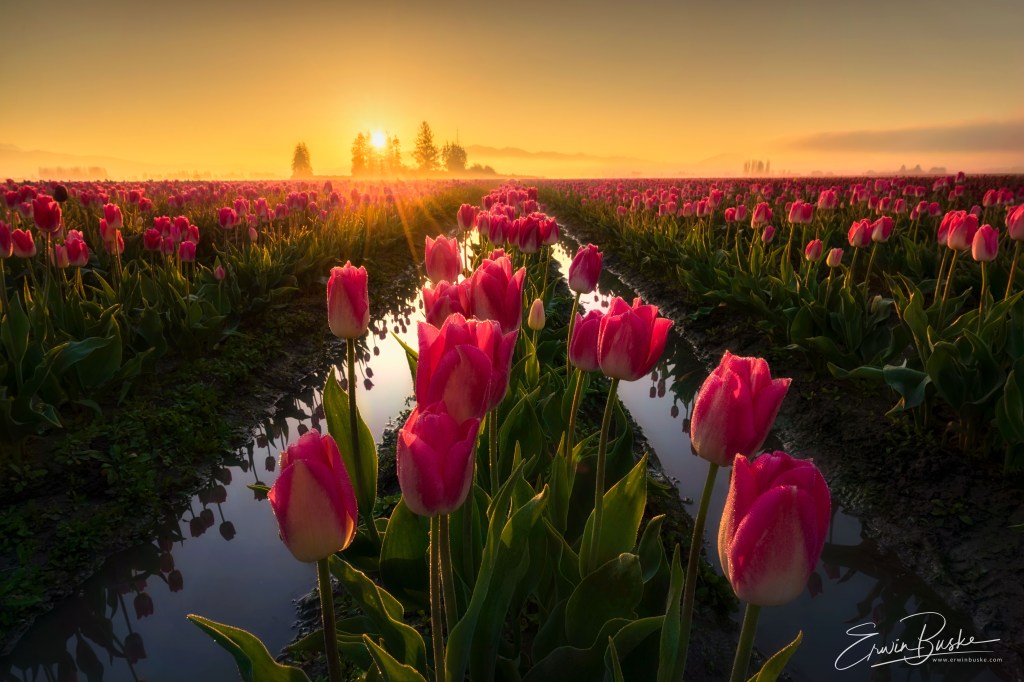
Morning Dew: 19mm, F16, 1/160, ISO 100-a focus stack and exposure blend
The near far approach can also be used very creatively using the telephoto perspective. Just as in wide angle compositions, the key is to find a natural and believable blend of the near, mid, and backgrounds. I have found that these compositions are the most challenging and from a technical perspective also the most difficult. But the rewards are immense opening the possibility to create something truly unique. I have found myself more and more creating near far compositions with both standard and telephoto lenses. This gets me out of my habitual way of viewing the world, which for me tends to be wide angle, opening up new avenues for my creative expression.
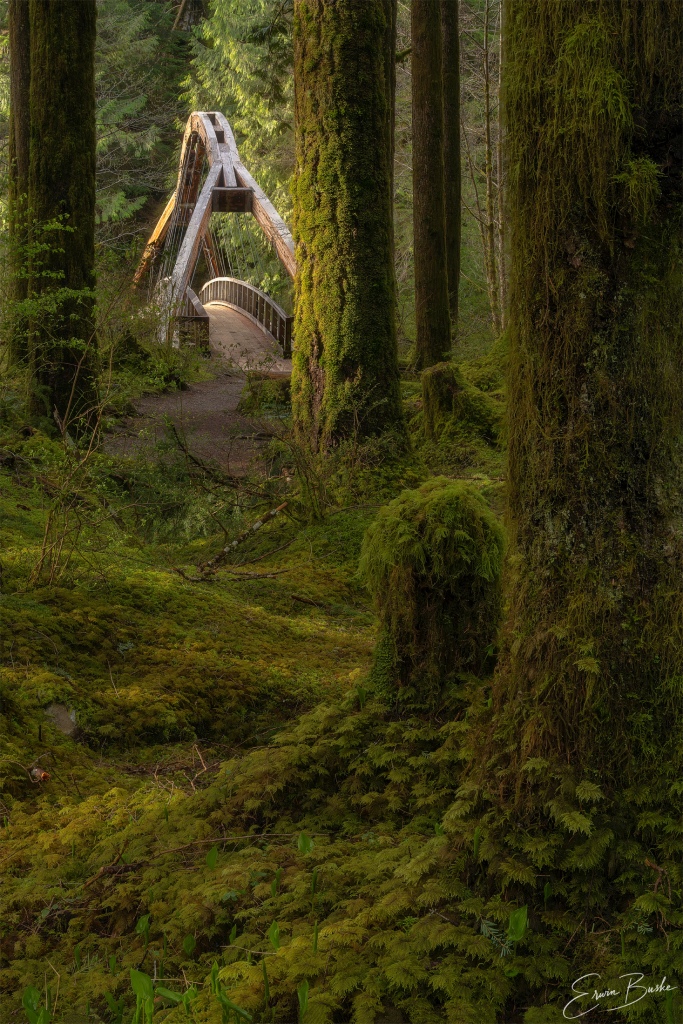
Middle Fork Bridge to the Spirit of the Shire: 70MM, F14, 1/2S, ISO 100, Focus Stack
Criticisms by many in the professional photography community of near far compositions in my opinion has done more to tarnish the reputation of landscape photography as a creative and artistic medium than it has served as a constructive criticism. If there is anything that has served to help put landscape photography on the creative map alongside the painting arts, it is the near far composition. That is because photography can uniquely create near-far compositions in a way that is difficult for painting artists. I have several painting artist friends who have confirmed that this is the case and also indicated to me that near far is what caused them to recognize and accept my work as art. We also see this in the history of landscape photographer with key figures such as Ansel Adams, David Muench, Marc Adamus, Erin Babnik and others using near far techniques to bring the unique possibilities of landscape photography to an audience who appreciates art. Let’s be more mindful about our criticisms of near-far, and also celebrate and give appropriate and well-deserved credit to this unique practice of photographic expression!
Feathered Friends

Day of the Eagle
Although I consider myself primarily a Landscape Photographer, recently I have also gone to the birds! I decided to give birding a try inspired by the images of a friend of mine Shaping. Leveraging off of my experience as a Landscape Photographer I usually place equal importance to the bird and the bird’s environment blending the two together in a compositionally pleasing way. I also pay close attention to light to focus attention on the bird and what the bird is doing in its environment. I am excited about this new direction in my photography and will be releasing more bird images in the days to come! Bird photography can serve as a good counter point to landscape photography. For bird photography one must be nimble and quick, hand holding most images. There is no time to think about camera settings so things like combinations of shutter speed, aperture and ISO must be mastered along with focus tracking to the point where they are natural and intuitive. All the focus needs to be on the bird which in most cases will flying be flying around or not staying still for very long. Contrast this to landscape photography where often it seems one has all the time in the world! Going to the birds has helped unlock some more of my creative potential for working with and paying attention to the precise moment and working quickly that has also yielded benefits for my landscape photography in highly fluid situations such as weather. To see my complete portfolio click here Feathered Friends.

Blue Heron and Turtle on the Log

Flock of Birds
People in the Landscape
Including people in the landscape is an excellent way of breaking through the landscape photographer’s habitual way of viewing the natural world. Afterall we humans are also part and partial of nature, and including a person or persons in the landscape is an excellent way of expressing the fluidity of this connection-I and we are in nature and nature is in I and we.

The Sun Goddess
In August, my friend Shaping joined me for a sunset hike to Mt Fremont. Although when we started hiking it was a bluebird kind of a day and also very hot, as we approached the top a breeze moving down from the glaciers of Mt. Rainier helped keep us cool and comfortable. Wispy clouds slowly filled the sky. The wildflowers were still in peak form and Shaping in her beautiful dress reminded me of a Sun Goddess as the sun slowly dipped below the horizon.
Although I called this image the Sun Goddess, Shaping also represents to me the spirit of a “Nature Goddess”. When she wears this flowing dress and reaches out from Fremont Mountain to the sun she is celebrating and honoring mother nature. Shaping feels the same way. A few people confronted me when I originally displayed the series of images that this image is a part of and accused me of chasing Instagram popularity. I can assure you that that was the last thing on my mind. For me the event was completely unplanned and just arose spontaneously out of the happenings on this wonderful day. Sometimes I think some are too quick to jump to conclusions about other photographer’s intentions. Their accusations may be more of a reflection of their own inner state of mind than anything else. To see my complete portfolio click her Honoring Nature: Women in the Landscape.
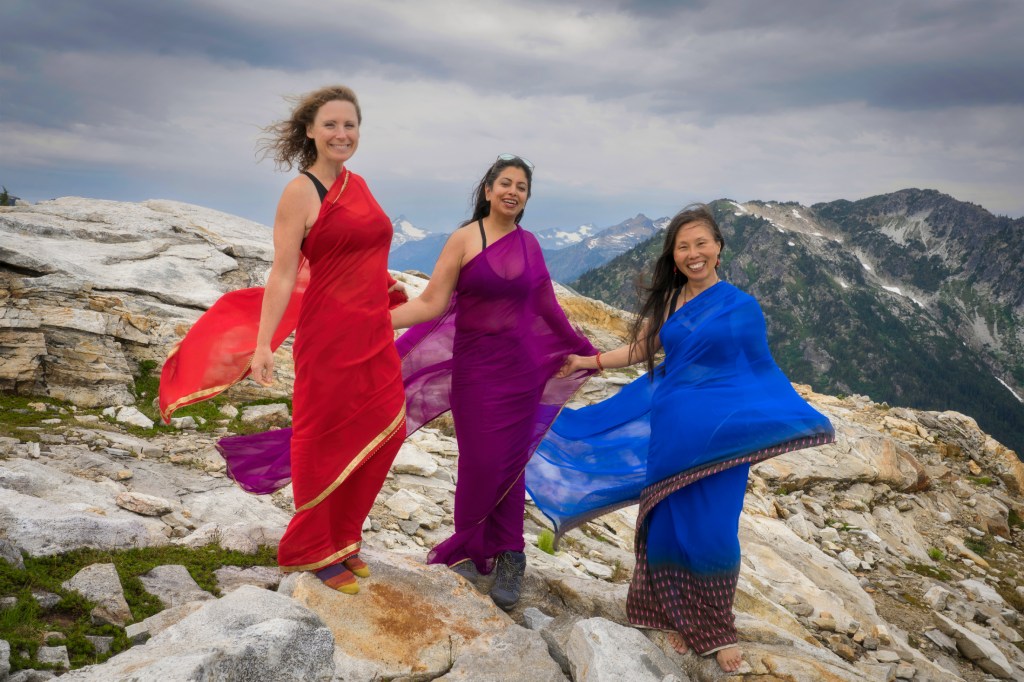
Women in Saris
From left to right, the women are Cindy, Chetna and Shaping posing so beautifully and elegantly even after a 5,000 foot elevation gain hike up Sourdough Mountain in the North Cascades!
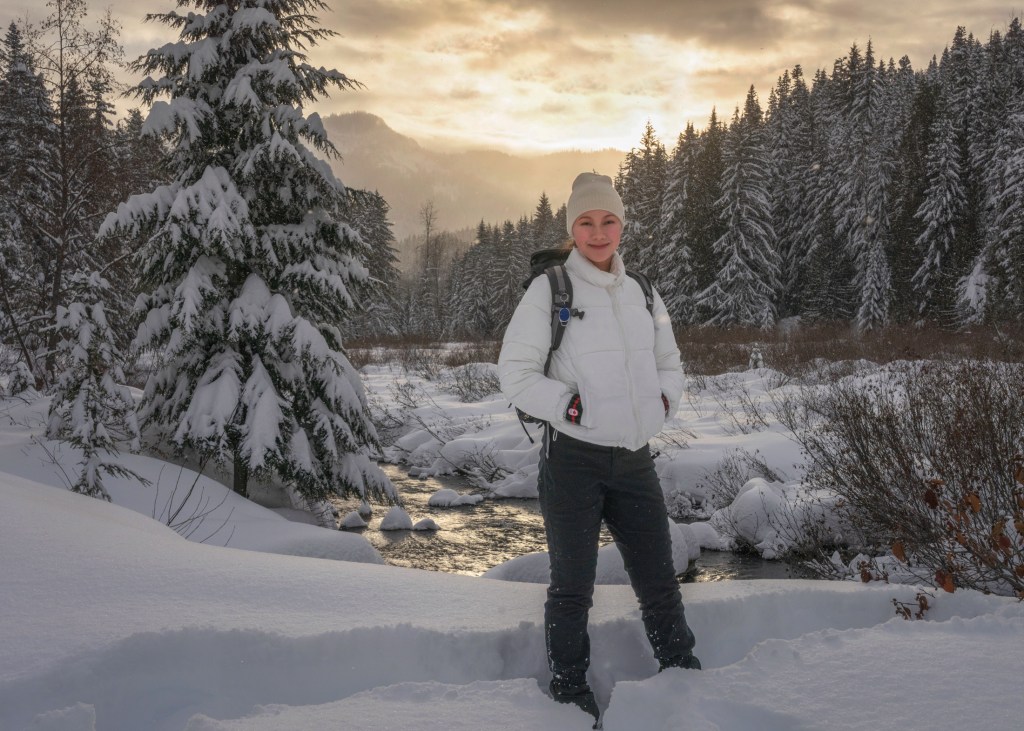
Daughter Caroline
When my daughter returned home from UCSD for the Holidays one of the first things she asked to do was to go have some fun in the snow at Gold Creek Pond. We have had many Father Daughter snowshoe hikes here over the years, and the beauty of this Winter Wonderland is like a thread weaving together our two lives even as both of our worlds go through changes that are inevitable in life.
Into the Forest
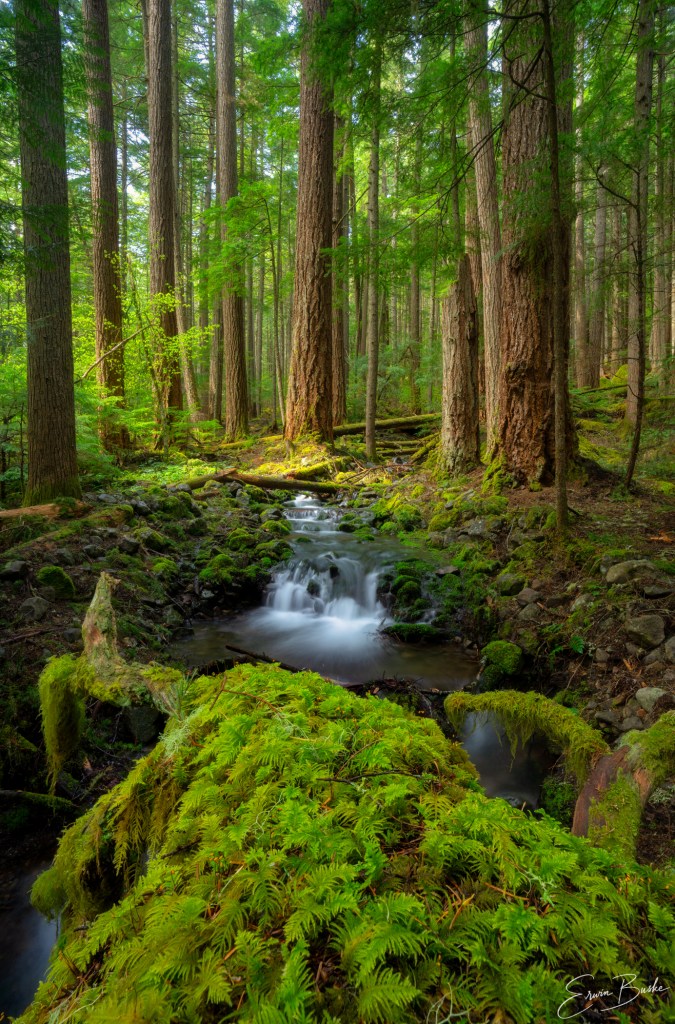
Small Stream in a Hemlock Forest
When we walk through a forest, oftentimes we feel a sense of peace and calm with our close connection to the wonders and beauty of nature that surrounds us. We have difficulty, however, transferring to our images what we experienced in our minds eye through our flashes of perception. This difficulty, however, is precisely why photographing the forest can yield creative breakthroughs. There is no iconic scene or scarcely even somewhat obvious compositions to latch onto. We must let go of all preconceptions, take a journey within, to a world prior to any thoughts, to the hidden forest. This process has been described by many as creating order out of chaos, and this analogy does have some validity. But to capture the spirit of the forest we need to go deeper than this, beyond projecting our own conceptions of order onto the forest, to developing a more organic awareness and skill set to capture the very essence and heart of the forest. This process results in more impactful images that more closely match what we experienced in our flashes of perception and in our mind’s eye. Photographing the forest teaches us to be more aware of subtle changes in light and recognize compositions that will at first look very faint and more like clues to a mystery than anything obvious. These skills, once learned, will then travel with us we return to photograph the Grand Landscape which we will then do with much more sensitivity and awareness. To see my complete portfolio click here Deep Woods Enchanted Forest.
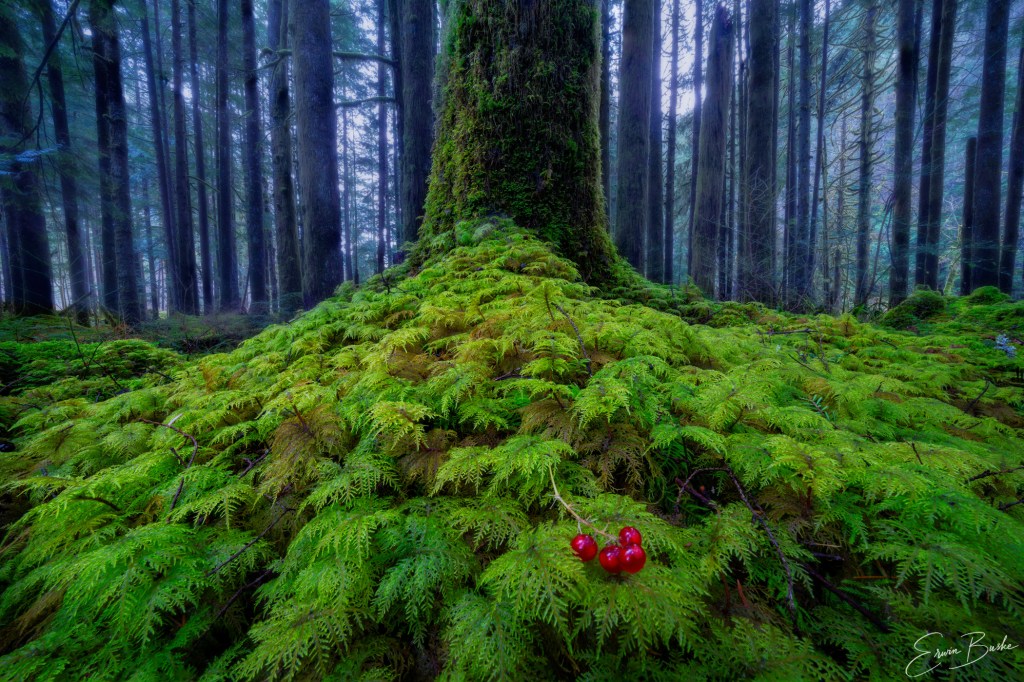
Red Berries in the Forest Moss

Young Tree in the Forest of Elders
Abstract Discoveries
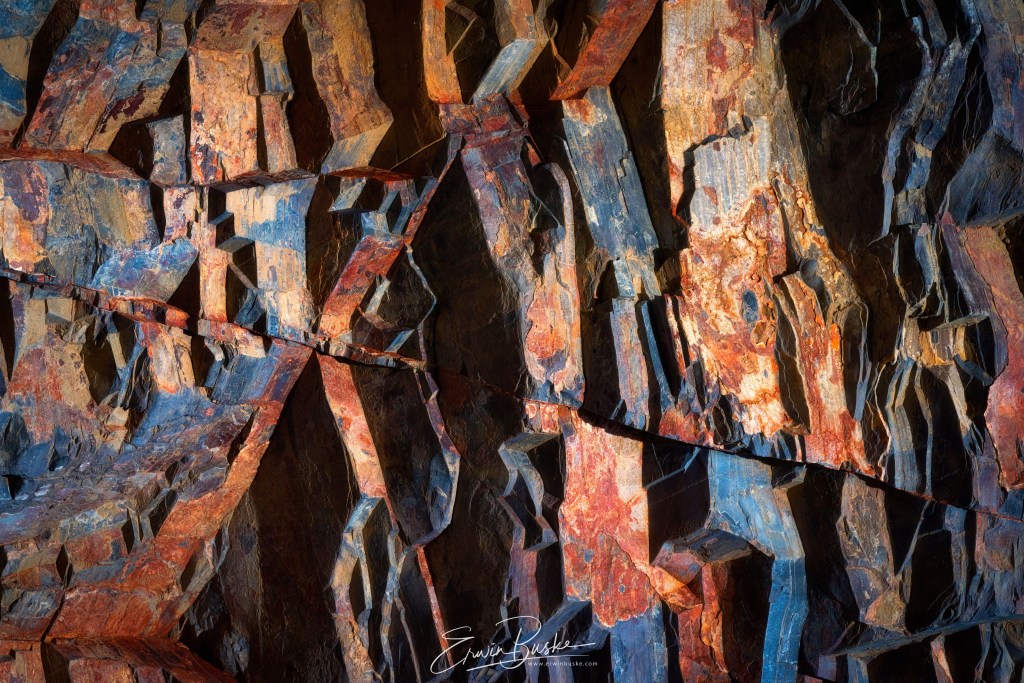
Rock Tapestry
Shooting abstracts has become a very popular if not trendy in recent year. In posting abstracts, some hope to show to others that they can move beyond the Grand Landscape and explore basic forms, shapes, patterns and textures devoid of any larger environmental context. Sometimes I think it is done too mechanically as more of a mental exercise. Abstracts are no different than other genera, for them to rise to a level that one identifies as creative and artistic they will need to have personal emotional impact both to the creator of the image and to viewers. That is why it is so important that if one does choose abstracts as a way to distinguish oneself and open up new avenues of creative expression, that one also feels the passion and is shooting from the heart; not just to say, “hey look at me I can shoot abstracts”. Back in the day we used to call such images devoid of emotional content, ” Artsy Fartsy-LOL-images that pretend to be art through emulation but that are seldom accepted as the real thing. That being said, abstracts can give us the necessary spark to grow creatively. By eliminating the larger context of the image this reduces if not stops our habitual way of experiencing and interpreting the natural world. This can open up our hearts to see the world with fresh eyes, the eyes of the child.
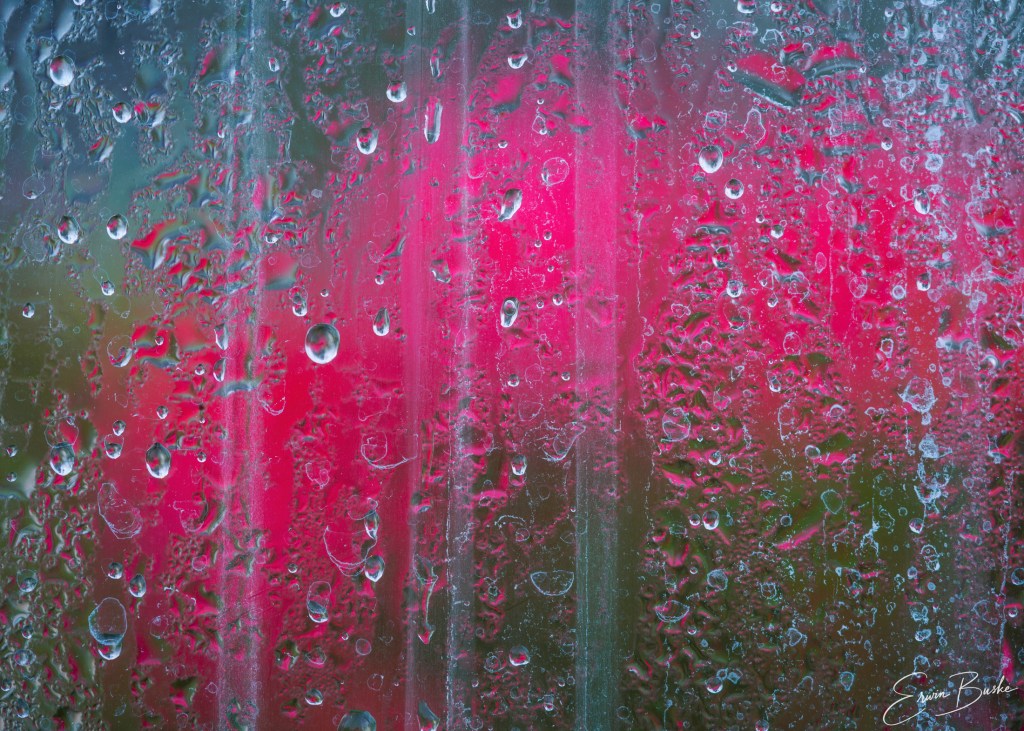
Valentines Day
Intentional Camera Movement
Intentional Camera Movement is a technique that involves moving the camera either vertically, horizontally or in a swirling motion during a long exposure usually about a half of a second or more in order to create an effect. Intentional Camera Movement can work great in the forest where a somewhat chaotic scene can be reduced down to the essence of lines, shapes, blotches of merged colors and tones, yielding an effect the many have told me is like an impressionistic watercolor. Although this technique involves a lot of trial and error, successful ICM still requires careful selection of a suitable scene, previsualization, and good composition skills. When done in this way, it is a great way to get some new inspiration for creative growth. It encourages us to see more deeply, the scene behind the scene, the bare essentials, and the visual essence.
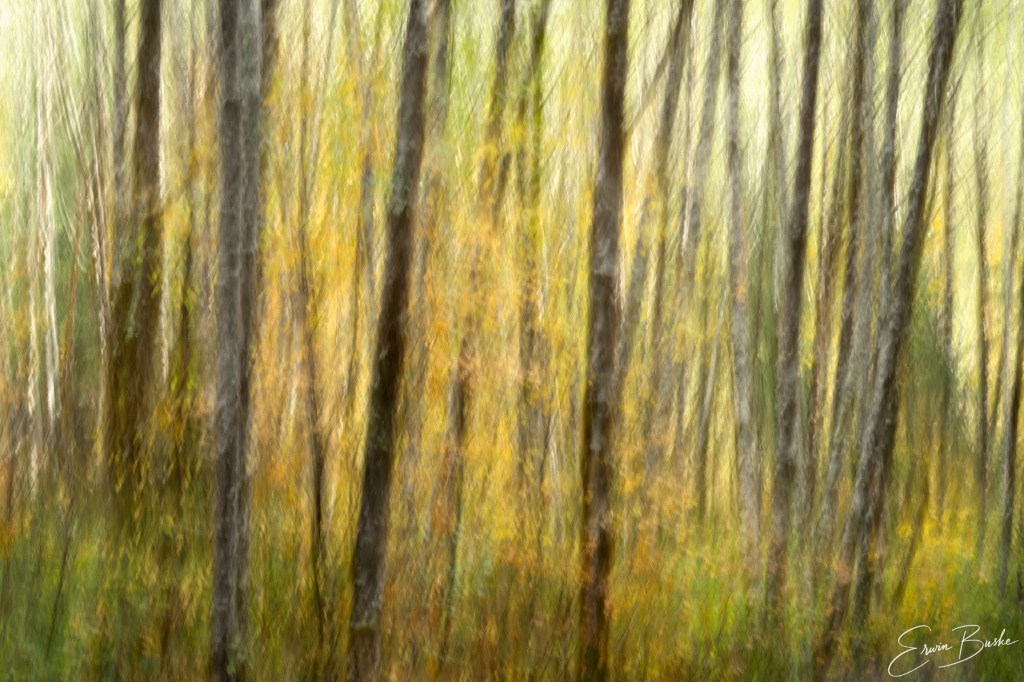
A Walk in the Forest
These white bark alders were lit by the diffused light reflecting off the walls of the Middle Fork valley on a beautiful Autumn Day, perfect for a walk in the forest. For this image I handheld the camera and gently panned up and then back down during .6 second time period.

Variegated Yarn Water Threads (Horizontal)
While at Rosario Beach, I noticed some beautiful water highlights of gold, aqua, and green. While waiting for the seals to return from underwater, I started to play around with some intentional camera movement to feature and blend together the streaks of light and color in the moving water creating this image. This image works either horizontal or a vertical but with somewhat different effects. Next is the vertical image which has more of an abstract look but also with seemingly more defined yard threads even though the two images are actually identical except for orientation.

Variegated Yarn Water Threads (Vertical)
Black and White Visions

Dance with Fog and Light
Black and White photography can spur creativity precisely because it does not rely upon reality, our accustomed way of viewing the world. Color which binds us to reality can also serve as a distraction to seeing the creative possibilities of a scene. I see this all the time in sunset scenes where the photographer is so excited about capturing the magnificent color of the moment that he/she forgets to carefully compose the scene. Sure, such images will get immediate social media attention, but they seldom if ever have lasting impact soon to be overran by another photographer who captures the next sunset a day or two later. Black and White Photography removes what can be the distraction of color and helps the photographer to pay better attention to other aspects of the image such as the subject/s, visual flow, textures, shapes and patterns, and composition.
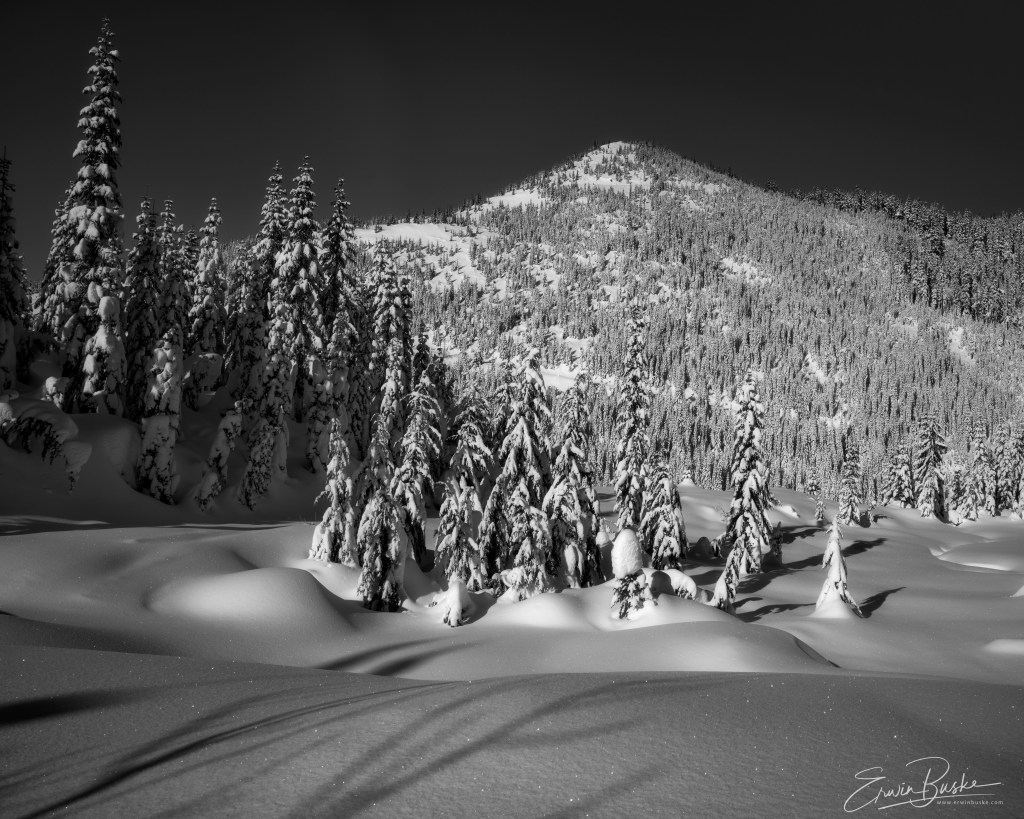
Tree Shadows on the Snow
Color is the real world we live in, but Black and White can transport us to a completely different often surreal world. Because of this we feel we have more license to be creative, not so worried that we are passing the threshold where the image is no longer rooted in reality. This allows us to consider our subject in new and exciting ways. For some, including myself, in certain situations the Black and White image may actually be far more emotive than the color image. Back to one of the central themes of this blog post, if an image is to rise to the level of greatness and art it needs to tap into the viewers emotions.
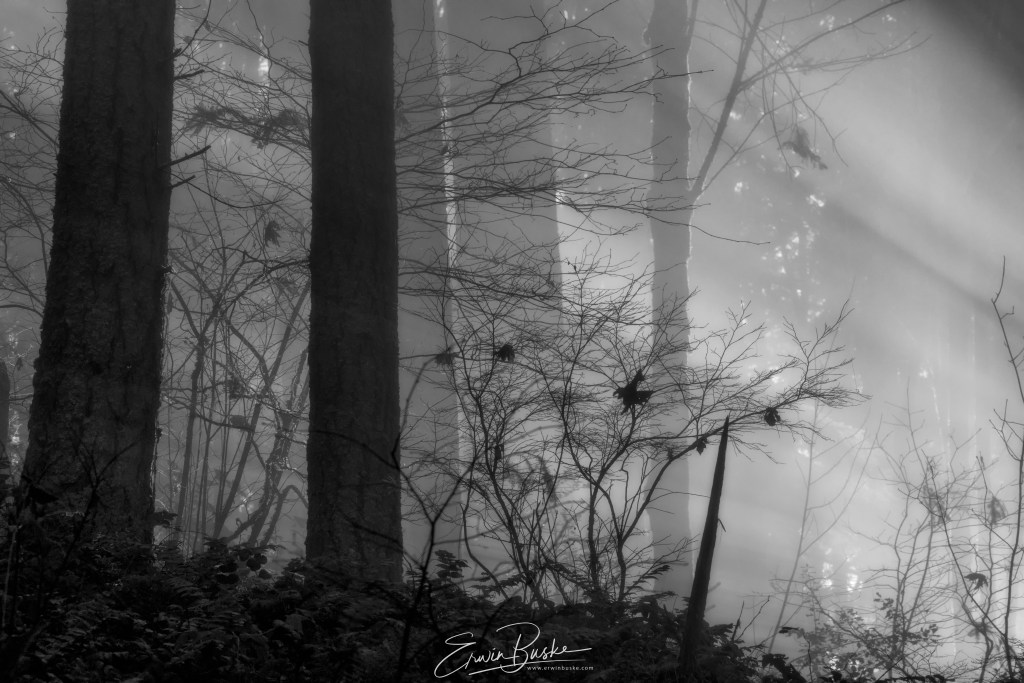
Light in the Forest

Snoqualmie River Foggy Morning
Lens Baby Unplugged-Soft Focus Images
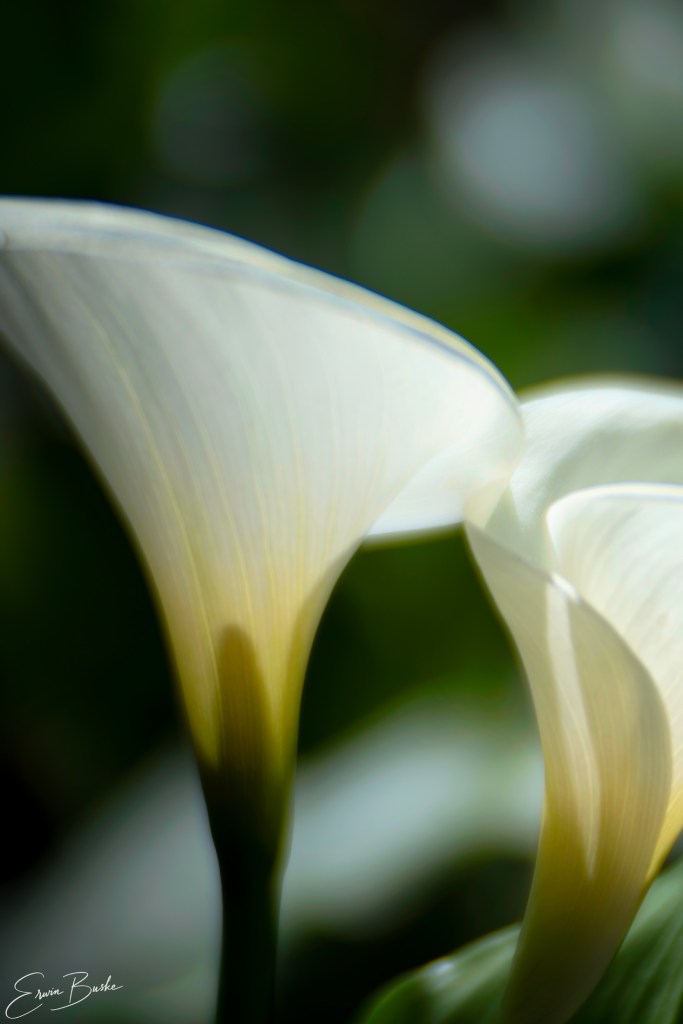
Inner Glow
Lensbaby lenses create optically beautiful soft focus and glowing painterly effects with minimal processing. This encourages a more spontaneous and immediate approach to photography where the in-camera image is already in synch with my vision in the present moment. This is very welcome in this day and age where many images are the function of much technical planning and pre-visualization of post processing requirements. This latter approach is so far removed from one’s flashes of perception and immediate experience of the scene that often all spontaneity is lost. With a Lensbaby, I can approach nature and the landscape more with a beginner’s mind, in other words with the eyes of a child which I find very refreshing.
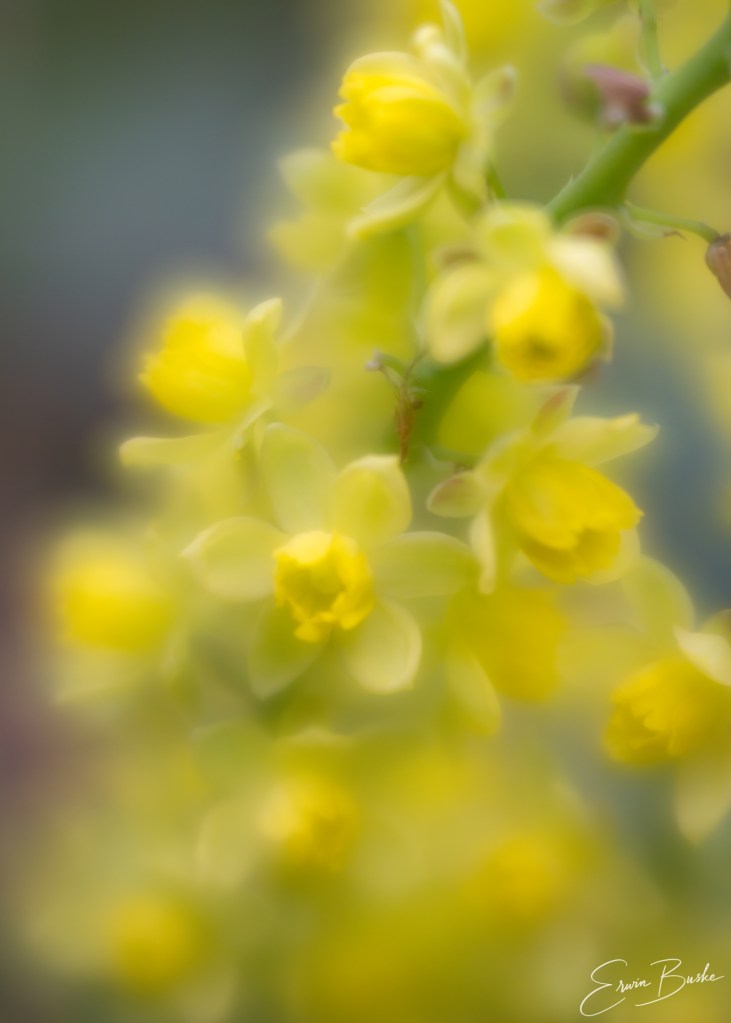
Oregon Grape Blossoms
Portfolio-Twin Peaks

On a Blue Winter Evening
A pond in the Snoqualmie Valley makes the gradual transition from evening to night as a snowplow working overtime turns on its lights hoping to complete the clearing of a nearby farm road. This is one of the images I recently brought together into a portfolio that together convey some of the mood of the Lynch/Frost show Twin Peaks that was filmed in this area-perhaps agent Cooper is hiding out somewhere around this pond! You can find the entire portfolio at this link Twin Peaks.
One of the best ways to tap into and also channel sources of creativity is to build a new portfolio around a theme. A portfolio will often be stronger than the sum of its parts. Many of us will also feel more emboldened to put images into the portfolio that we would feel reluctant to post as a standalone image because of fear it may not be well received. In a portfolio, however, other images will help lift it up and give the perhaps more creative image the attention it deserves, which is beyond the two second attention interval that one typically is given when viewers rapidly scroll through their social media feed. To be creative, one must more beyond fear of rejection, be willing to experiment, and put our best foot forward regardless how we feel the image may be received. Oftentimes I will do this and will be pleasantly surprised that the image that does the best in a portfolio is actually the one I thought would not get much notice. These are also the images with more lasting impact and that will also help establish you as a creative artist with his/her own identity, not just some formulaic image that one knows will appeal to your social media audience. In the long run it is only the truly creative images that will separate you from the crowd and allow you to rise to a level of artistry.
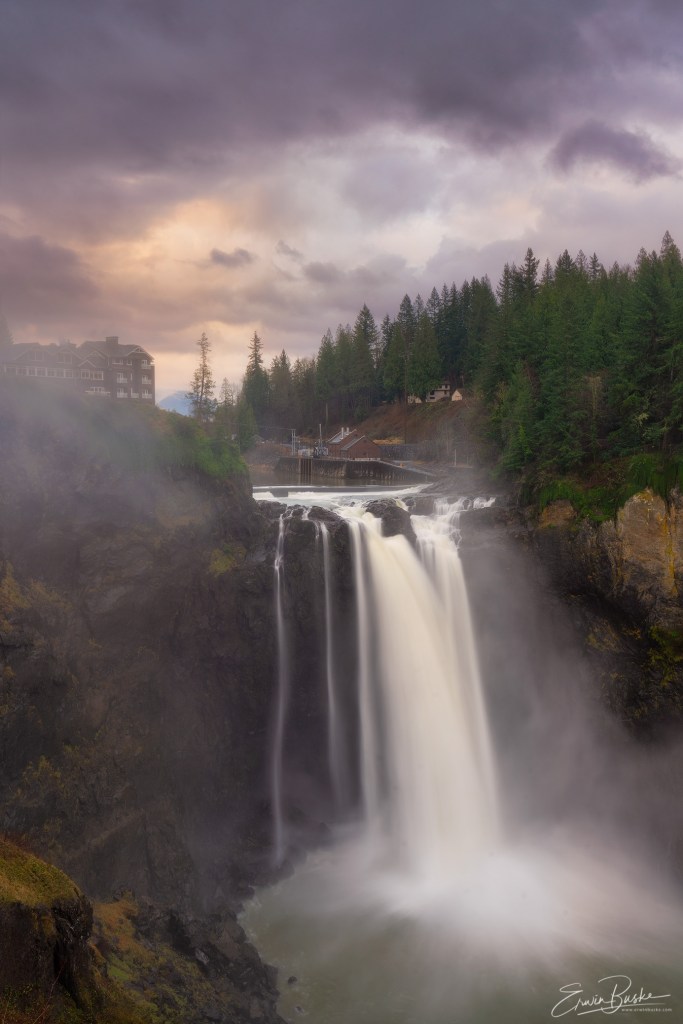
Snoqualmie Falls December Moods
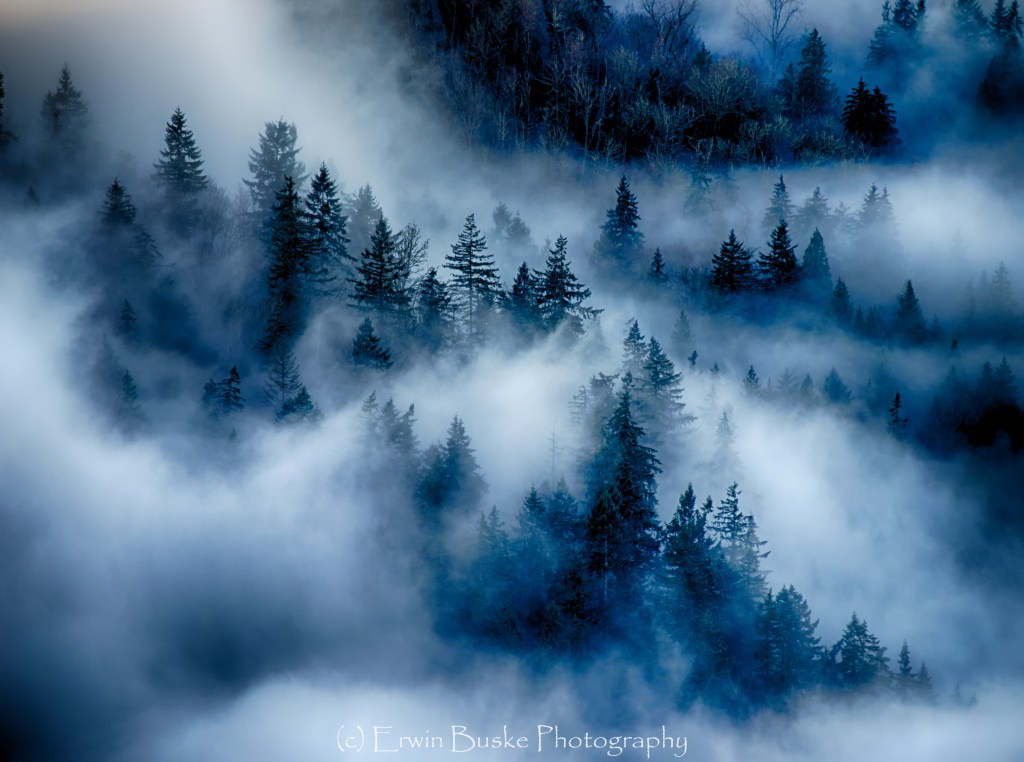
Secrets of the Forest
Its a Small World Afterall: Macro and Small Area Images
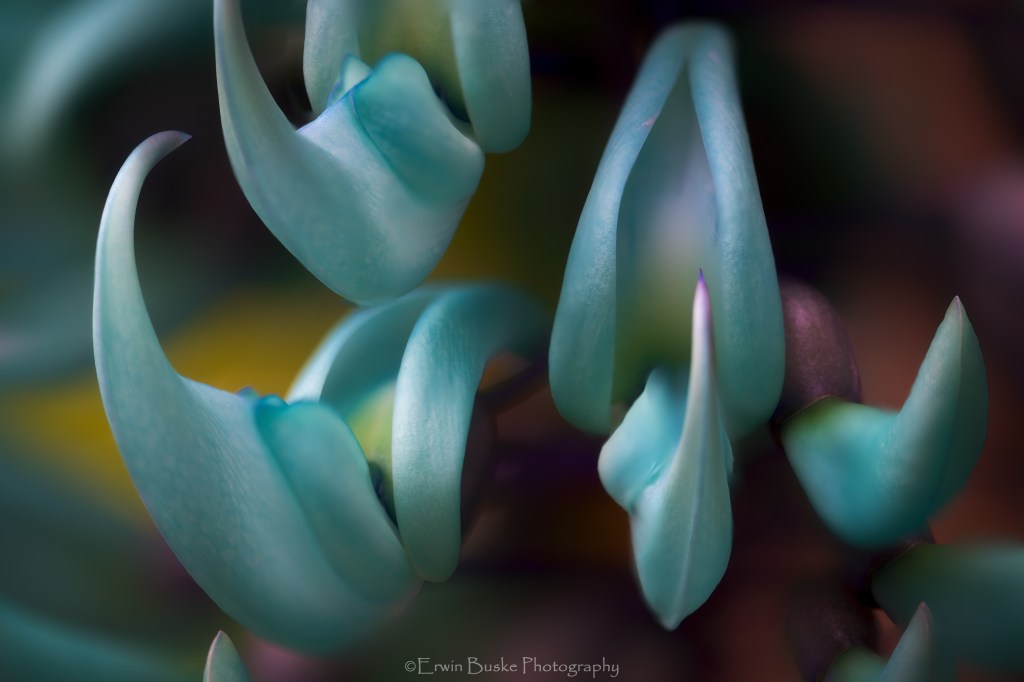
Dangling Conversation
Do you ever get the feeling plants are talking to you, or perhaps even poking a little fun? These Jade Vines might also be channeling a bit of their inner Mick Jagger only with Jade colored lips!
I have always included macro images in my portfolios ever since I started shooting with film decades ago. In fact, it was the beauty of macro photography that helped motivate me to pursue photography as more of an art and craft decades ago. I am surprised; however, about how many landscape photographers do not want to venture into this arena. I know they love these kinds of images based on how they react to my own macros and those of others. This is a case of some well-known photographers allowing social media perceptions to get too much in the way of guiding what they shoot and what they do not shoot. That is because macro images do not usually garner the same level of popularity as the grand landscapes. But there are exceptions. The key is to have images that stir the emotions and evoke a mood. Including a few macros in a larger portfolio of primarily grand landscape images will almost always do nothing but to strengthen the portfolio as a whole. And delving into the world of smaller things will definitely open up worlds withing worlds igniting new sources of creativity!
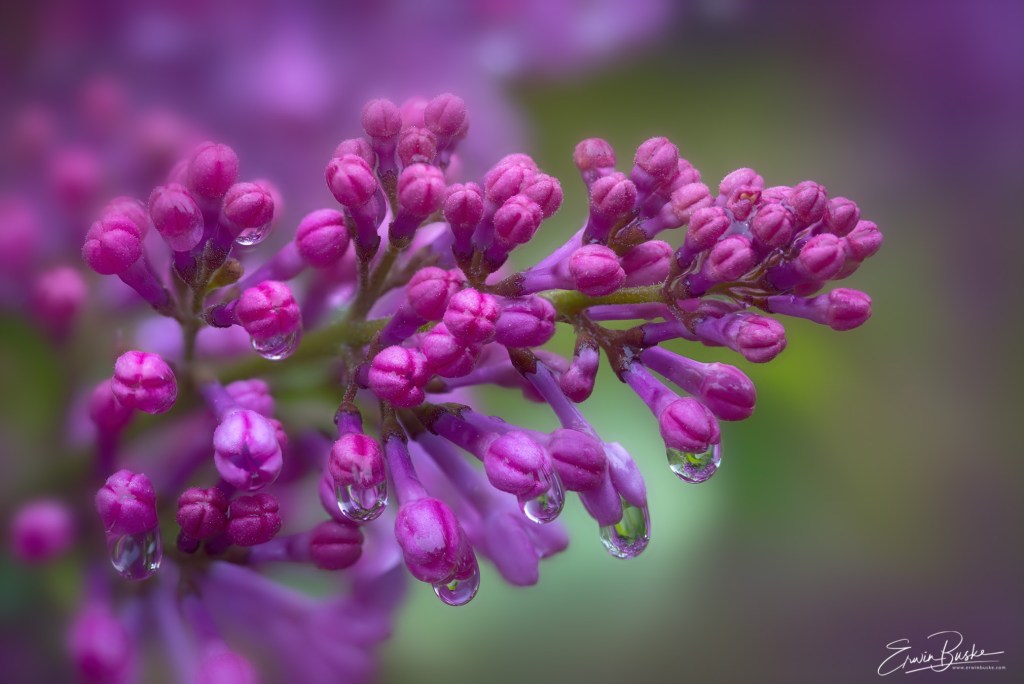
Lilac Tears of Joy
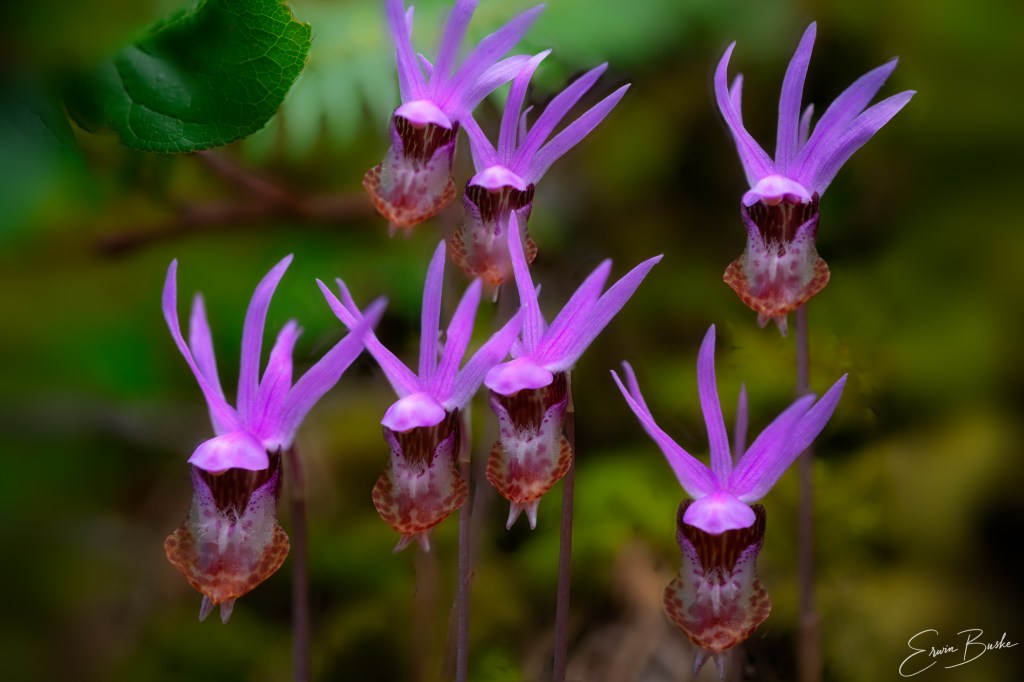
Dance of the Calypso Orchids
Conclusion
We are all born with the capacity to be creative. Creativity, however, declines with age. Recultivating creativity, which is our birthright, involves unlearning reasons why we think we are not creative and getting back to more of a beginner’s mind, seeing the natural world once again through the curious eyes of the child. Although creativity is natural, it cannot be expressed without skill. In Photography as in any art form we must learn the skills needed to express our creativity. We must learn these skills so thoroughly that we do not need to think about them very much anymore, and instead focus on getting in our creative zone and moving toward our creative vision. Walks in nature, mindfulness, and meditation can help cultivate the beginner’s mind, as can also experimentation with other genera of photography. It is important, however, that we feel some passion while engaging in this experimentation. For photography to rise to the level where it is personally creative and artistic it needs to convey the photographer’s emotions and also instill an emotional response in others.
________________________________________________________________________________________________________
Thanks so much for reading and viewing the images of this blog post. I encourage you to share your reactions, thoughts, comments, impressions on this post here. If you think others would enjoy reading this post, please also share it with your friends and communities. If you would like to see more content like this subscribe to the blog so you automatically receive future blog posts. To find out more about my workshops, apprenticeship, and coaching programs click here. To learn more upon my perspectives on nature be sure to check out my Ebook, the Hidden Landscape: The Inside Passage. This image rich book is 248 pages and provides insight how nature, mystery, the Tao, Zen, and the American Transcendentalism of Thoreau inform my photography and can provide sources for you own inspiration. Here is the link to the EBOOK along with a preview. https://payhip.com/b/FCI4z. Thanks again and happy trails!


Thanks Erwin for another very inspiring & detailed blog & photos. You have offered much wisdom , helpful information & tips in this writing.
LikeLiked by 1 person
Thanks so much Kirsten! I am glad you enjoyed this blog post which is also useful for reference during your apprenticeship!
LikeLike
Yes, for sure this and your other writings ( especially The Hidden Landscape) are great complementary aspects to the apprenticip program.
LikeLiked by 1 person