
I have always viewed my photography as a spiritual practice. A spiritual practice is any repeated activity that helps bring us a sense of inner peace as we face the mysteries of life and nature. They are undertaken to cultivate self awareness. Spiritual practices help us recognize the illusion of a separate self. They deepen our connection with other people and nature. This in turn helps us tap into powers greater than our individual self. Spiritual practices ultimately cultivate a sense of purpose and meaning in life. These practices can be diverse, ranging from prayer, music, singing, writing, dancing, meditation, and yes photography. Photography is an individual expression of my spirituality. It has always been linked to my love for nature. Nature comes first.
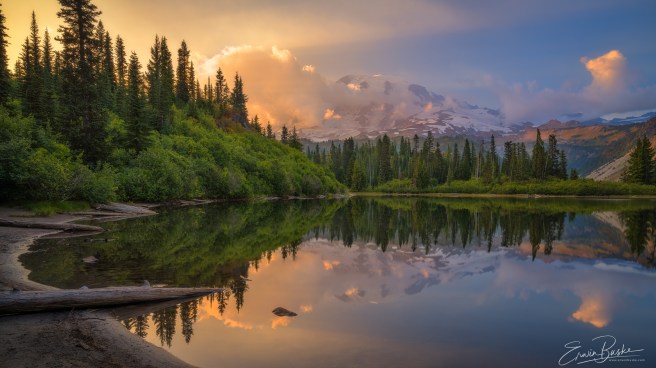

Where the Angels Roam
Mt Rainier
Photography over the years has increased my awareness of nature and respect for the mysteries of life. Photography has also brought me purpose and meaning as I share images with others. The images and stories associated with images instill an emotional reaction in others. They participate in my experience. They are also inspired to progress on their own personal spiritual and transformational journeys.
Spirituality is not the easiest concept to define. For some, it’s primarily about a belief in God and active participation in organized religion. But for me the definition goes far beyond this. Spirituality often refers to the search for meaning, purpose, and connection beyond the purely material world. It encompasses one’s deepest values and beliefs. It’s a personal journey of self-discovery. This journey can involve various practices and perspectives. These include religious beliefs, meditation, mindfulness, or a sense of inner peace. Spirituality is not necessarily tied to organized religion, and many individuals recognize themselves as spiritual but not religious including myself.
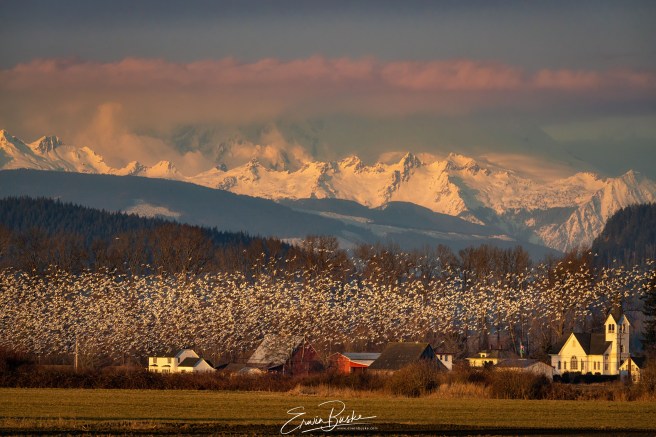
Flock of Birds
Skagit Valley
Spirituality resists precise definition for a reason. Both traditionally and in the modern world, it is closely associated with things unseen. It is linked to the mystery of nature and life, and also human emotions—all of which resist precise rational explanation. Ultimately spirituality is about transcendence of the material world. Transcendence is a state of mind and feeling that can never be defined. It is well described in the Zen poem by Ryokan, “Like a finger pointing at the moon”. It is not the moon itself, it is just the finger pointing at the moon. The best we can do is use our creative skills in such activities as writing, poetry, music, painting etc. and yes also photography to develop artworks that represent the finger pointing at the moon. In other words we can create something grounded in this material world that is also evocative, pointing to a spiritual transcendence of the material world.
The following activities or concepts are associated with my practice of spiritual photography.
- Connection
- Stillness
- Beginners Mind
- Awareness
- Mystery
- Awakening
- Light
- Flow
- Cycles
- Transitions
- Emotions
- Soul
- Serenity
- Evocation
- Shared Experience
- Transcendence
1. Connection
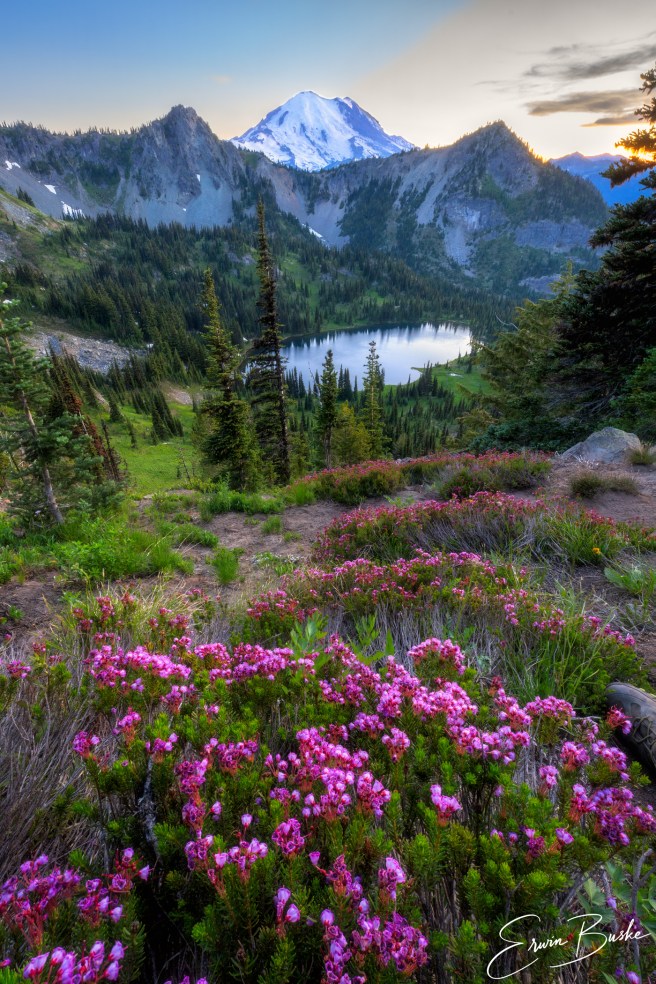
On Our Way Home
Mt. Rainier
My spiritual path in photography started out with recognizing my strong connection to the natural world. In my case, this connection was not developed over time. I recognized this connection immediately during my childhood while in nature, especially in the mountains of the Pacific Northwest. Once I realized this connection, I felt inspired. This inspiration also felt very spiritual to me, opening my heart and mind to something much larger than myself. I spent more and more time in the natural world. Living close to nature is an essential part of who I am as a person.
2. Stillness
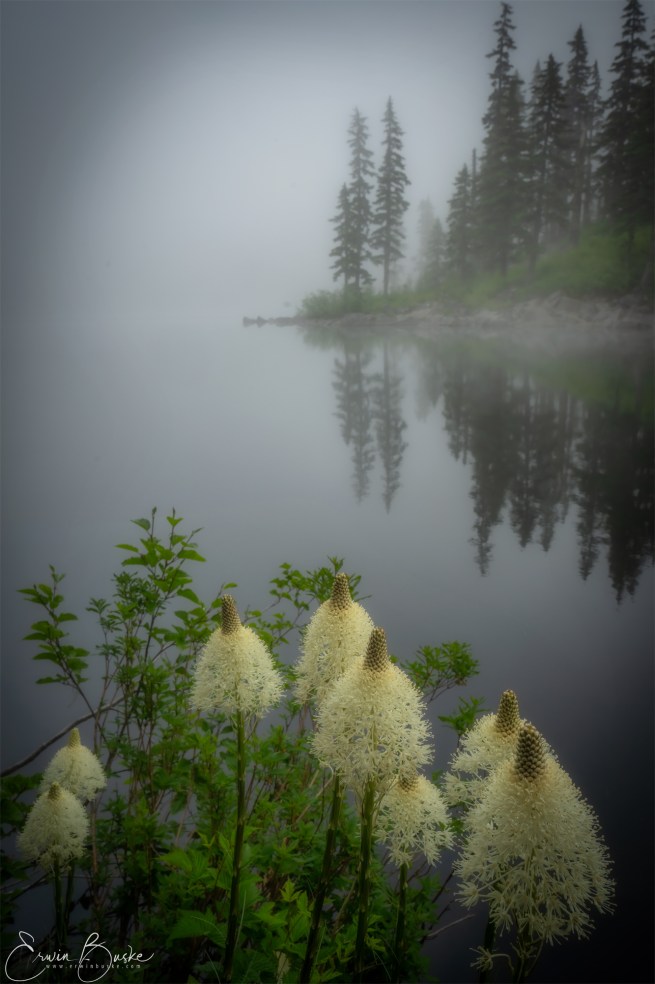
Mason Lake Foggy Morning
Finding stillness in nature has always been the way I open the door to spirituality. There is no door to actually open, but the imaginative door will only open once the sill point is reached. Stillness will often flow from observation of nature. Yet, it is not readily apparent without first getting into the proper frame of mind. For me this means slowing down and observing nature in a more meditative way. Before even taking the camera out, I will sit down and be present with nature for some time. It could be 5 minutes, 10 minutes, or even thirty minutes or more. This is the way I enter the church of Mother Nature.
3. Beginners Mind
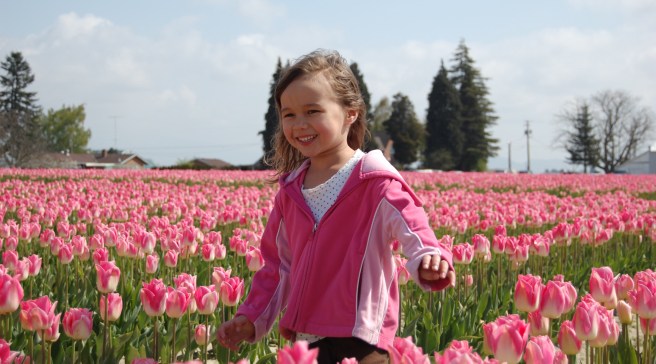

My daughter running through the tulip fields as a young child.
To grasp the concept of a beginner’s mind, we should think back to when we were very young children. This mindset is also known as Shoshin in Zen Buddhism. We had a playful nature open and eager to explore. We were ready to learn from the world that surrounded us. We had no preconceived notions or knowledge of our experience because we were experiencing things for the first time. Creativity has a lot to do with getting back to this beginners mind set. With a beginners mind set, we are freed from filters and preconceived notions that frame our experience like wanting to capture an image we have seen before. Instead, we are open to whatever beauty we ourselves encounter on our daily journeys. This allows us to see beauty that others may not notice. For more on Zen see my blog post The Way of Zen, Love of Nature, and Photography
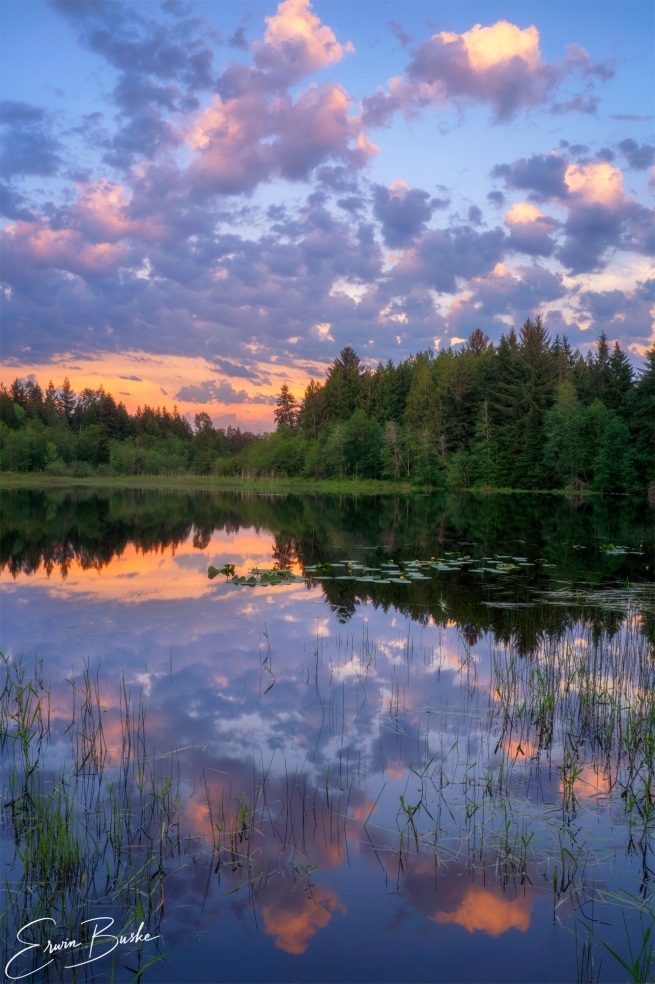
Erwin’s Pond
The image above is of a pond close to my home called wetland #`4, not a very descriptive name. I have never seen images of this pond posted on social media. Most people think of it as just an ordinary pond, nothing special. On this evening, though, I instantly recognized the beauty of this pond. It has waterlilies and an ability to collect light and reflect clouds. I allowed myself to slow down and waited for sunset bringing this ordinary pond into some extraordinary sunset lighting. . Tapping into to my beginners mind helped me to do this. By the way, I now refer to this pond as Erwin’s Pond and photograph it often.
4. Awareness
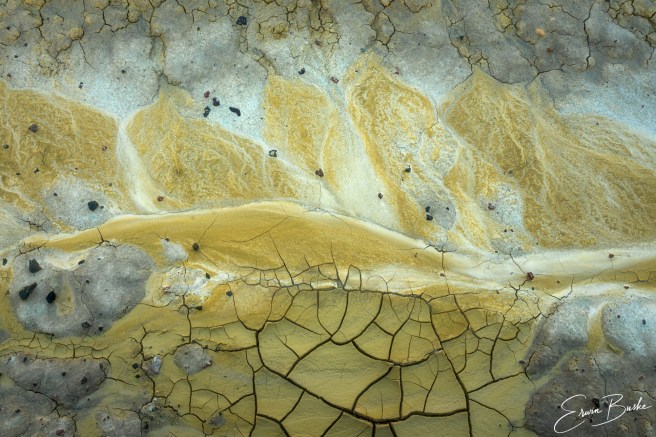
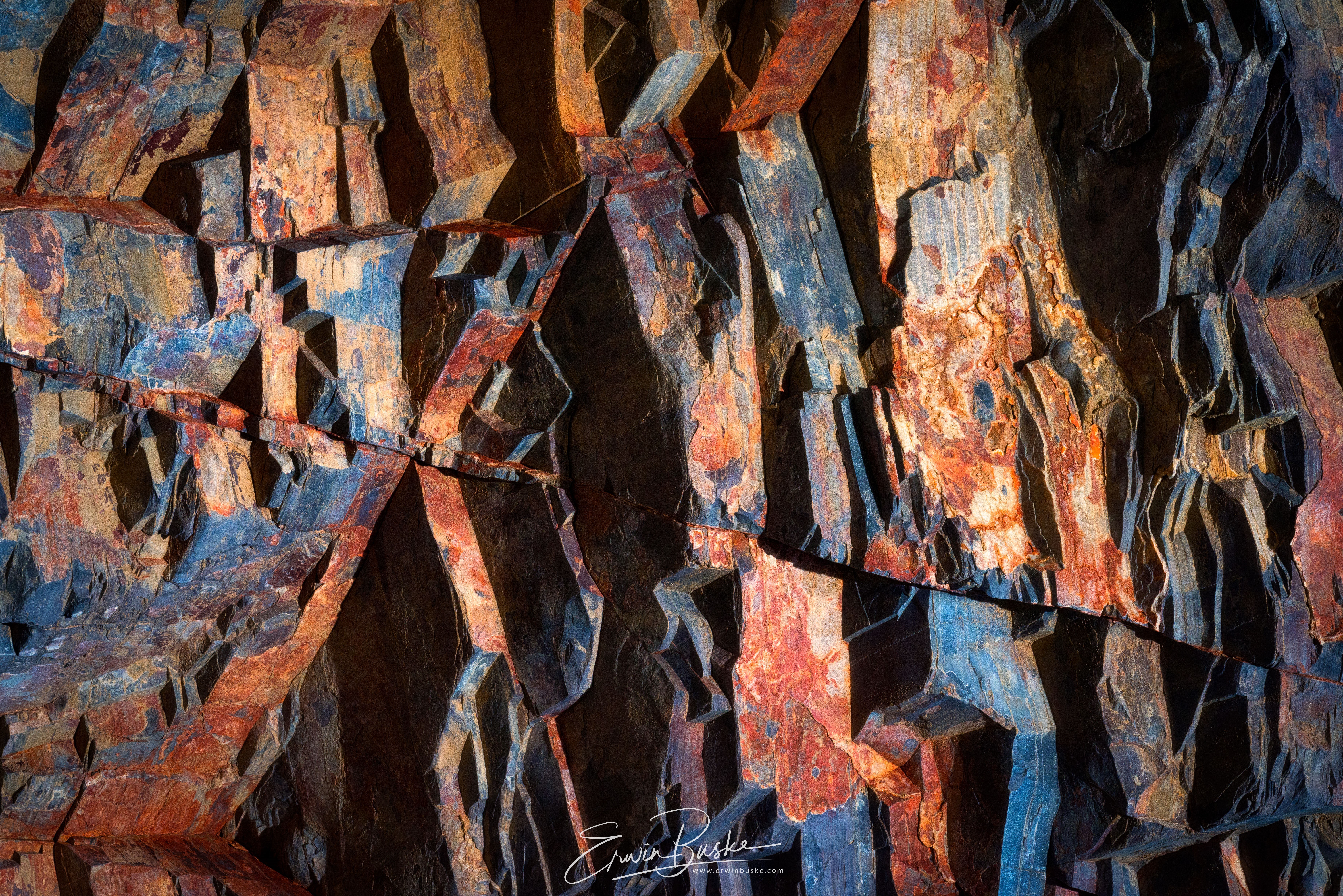
Painted Hills Claystone Silt Abstract
Awareness is related to the “Beginners Mind” but is also different. Both open our eyes to scenes both large and small. These are scenes we might have otherwise missed if we just relied upon our habitual way of viewing the world. But awareness is more of a learned skill that gets better and better with practice. We improve at recognizing light, lines, shapes, textures, colors, and tones as we practice framing compositions and processing images. These elements make up an effective composition. We build awareness by learning to quiet our mind. We move into a more meditative state of consciousness. This state considers all elements of the scene, both large and small. Finally, we focus on a particular composition. For some, practicing formal meditation in a seated position will help here. For others it will be more of cultivating a meditative state of mind while walking around.
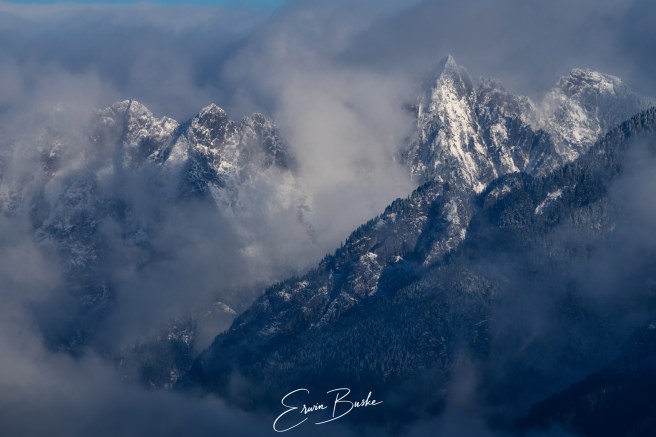
Mountains, Clouds and Mist
I have learned something valuable over the years. Pay very close attention to things you see out of the corner of your eye. This is especially true if they seem pleasing to you. If you see something out of the corner of your eyes that attracts you, it is almost always worth exploring. This holds true even if others would generally not consider it worthy of a photograph. Trust your instincts and see if you can make an image out of what attracts you.
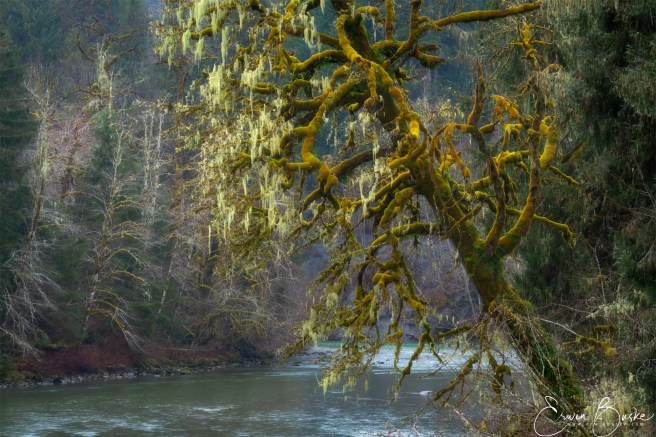
Tree Beards and Mossy Arms
Middle Fork
5. Mystery
Historically spirituality has always been linked to the mysteries of nature and life. People look to spirituality to comfort them when dealing with things that are difficult for them to comprehend. Examples include facing up to their own mortality and the loss of loved ones. Spirituality, nonetheless, is also connected to the mysteries of nature. Although much of nature can be explained scientifically, science does not help us much with explaining “The force that thru a green fuse drives a flower”. These are the poet Dylan Thomas’s words that evoke the spirit of some of the wonders and mysteries of nature. Photography too, can evoke the feeling of the wonders and mystery of nature. One effective way it achieves this is by using atmospheric light. This includes clouds, fog, and mist in photographic compositions. For more on mystery see my blog post Mystery: The Holy Grail of Nature Photography
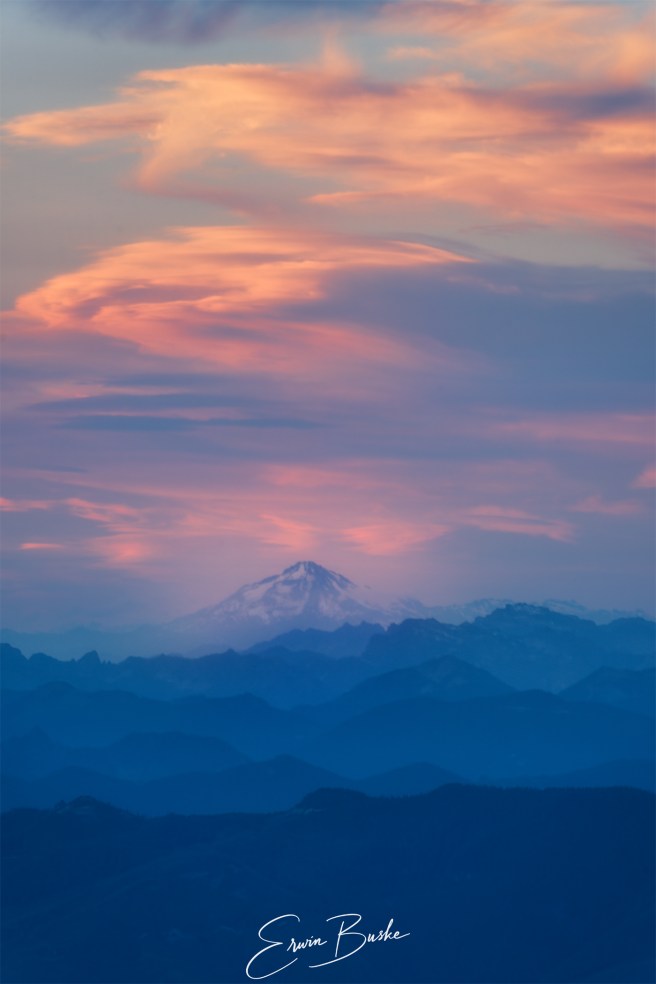
Oh Beautiful for Spacious Skies
From Fremont Lookout Mt. Rainier
Fog, clouds, and mist serve to keep hidden, soften, or obscure parts of the landscape. They darken the landscape and build a more mysterious mood. Mystery is not so much about giving us fine pixelated details and all of the answers. We do not solve the mystery of nature. Mystery in art and photography is more about moving us closer to recognizing, appreciating and ultimately accepting what can never be fully known.
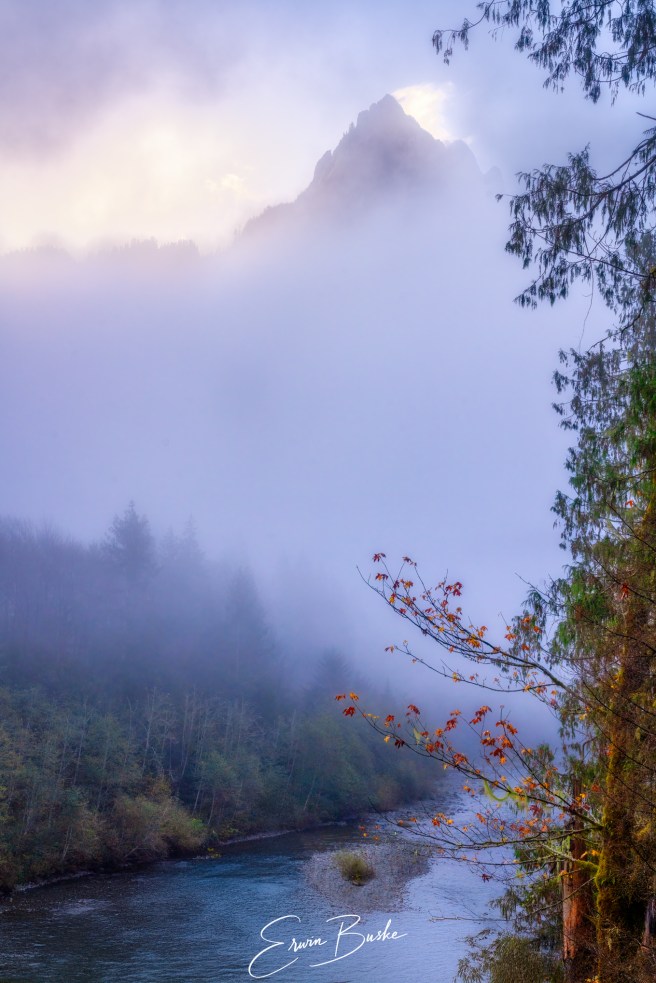
Middle Fork Mystical Morning
Since many including myself are attracted to foggy and misty scenes, our attraction naturally moves us closer to mystery and its close connection to spirituality. We feel more and more spiritual as we become comfortable living without all of the answers. We let go and accept the rhythm and flow of the wonders and mysteries of life and nature.
6. Awakening
While mystery often leads us into a darker world, awakening is more about experiencing the presence of light. As the sun rises, light shines on previously dark areas of the landscape. We too feel ourselves awakening to the bright promise of a new day. This transition from darkness to twilight and daylight is symbolic of a spiritual awakening. It signifies waking up to our authentic selves, grounded in nature.
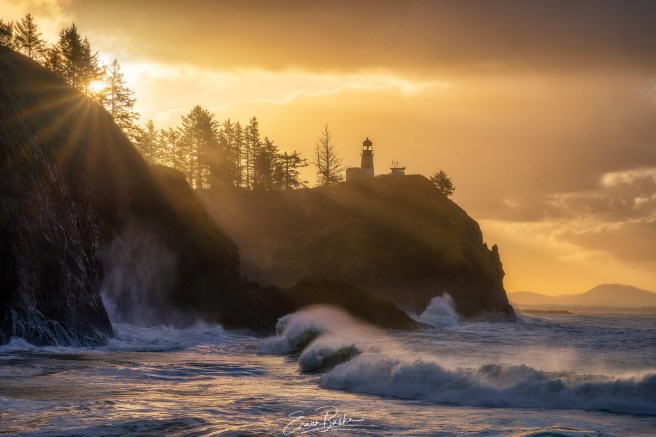
Let the Light Always be with You
Cape Disappointment
The idea of awakening to our true spiritual nature can be found in several of the world’s wisdom traditions. These include Taoism, Buddhism, and related Zen. In Taoism, it is often expressed as a primordial awakening to our true nature. This nature existed all along. Yet, it became lost as we made various compromises to get along in society. Reclaiming our true nature is redemption. In Buddhism we have the image of the Buddha awakening under the Bodhi Tree. Many people also find a spiritual awakening with their journeys into the natural world. I have seen it countless time as friends and others who I know spend more and more time in wilderness settings. At some point, there is a shift. Priorities change. In other words, there is a kind of a primordial spiritual awakening. People discover that they too are connected to nature.
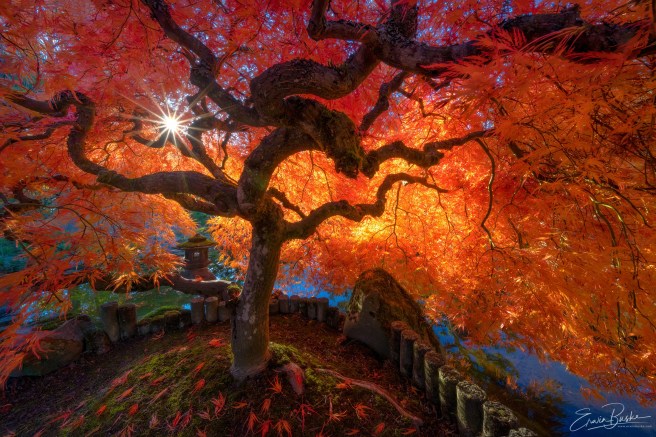
The Lantern
Every time I photograph a sunrise, I feel I am tapping into this energy of a spiritual awakening. The very act of photographing the sunrise is a spiritual practice. I wake up before dawn and set out into nature. I can’t help but feel a reverence for nature. This feeling arises amidst the beauty of the landscape with gradual changes in the quality of light as the sun rises. It is as though there is a correlation between the external landscape and my own internal landscape. I am in nature and nature is in me, no separation. The resulting photographs of sunrise become symbols and reminders. They show how nature can awaken us to our true nature. We are individuals interconnected to nature and the world around us.
7. Light
Closely related to Awakening is Light. This Summer, I took an evening hike around the Paradise area of Mt. Rainier. The blue asters were now out, an August-blooming flower. The clouds thickened as the evening progressed, and it was also windy. The mountain was not visible. In conditions like this, my inclination is to follow the light. On this evening, it was over Pinnacle Peak in the Tatoosh Range. I suppose this is somewhat of a metaphor for life. We should embrace the light. Follow it wherever it may lead us. Sometimes it’s hard to find, but it is always there. We find light in nature, in other people, and each of us has our own inner light. For myself and many others, following the light is a very spiritual act. With the close connection of light and spirituality it should not surprise us that following the light in photography leads us to spirituality.
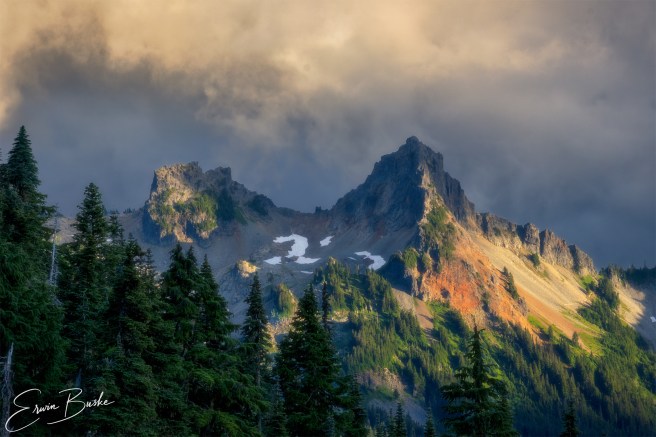
Pinnacle Peak
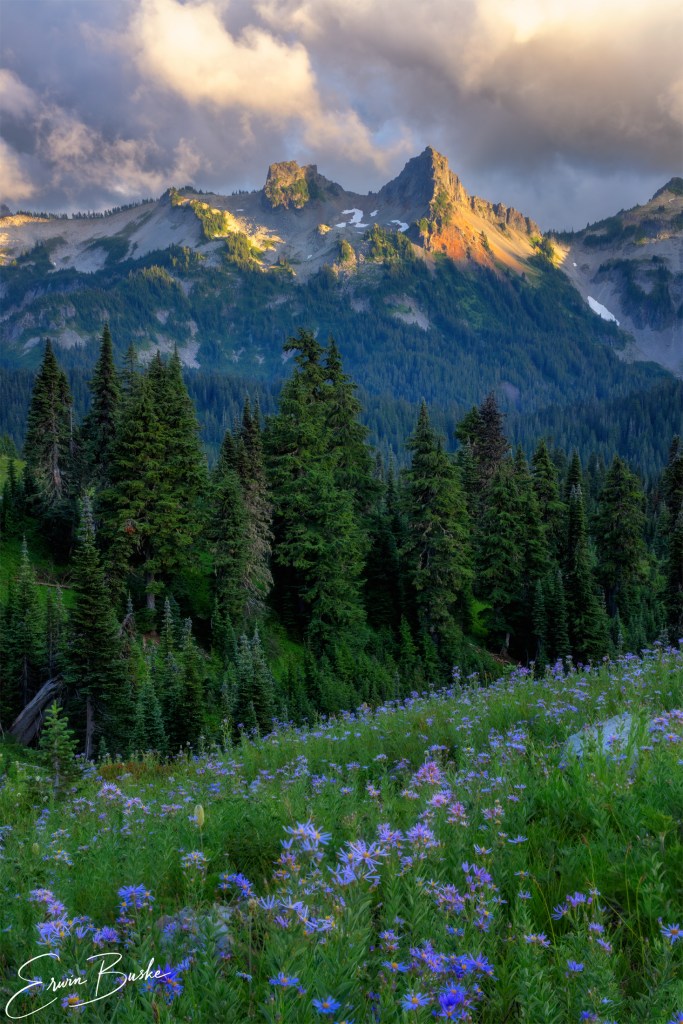
Blue Asters
8. Flow
One of the enduring symbols of the Tao Te Ching and Taoist literature is flowing water. Water flows naturally like the Tao. It easily moves around, under, over, or through obstacles without resistance. It transitions smoothly from stream, to river, to sea. This Taoist notion of flow is also known as “Wu Wei” or effortless action. It is not the same as inaction or passivity. Instead, it means going about life in a simple and flowing manner. One should not try to force things but live in tune with the rhythms of nature. In his landmark book, Tao-The Watercourse Way, Alan Watts said this about Wu Wei: “The art of life is more like navigation than warfare, for what is important is to understand the winds, the tides, the currents, the seasons, and the principles of growth and decay, so that one’s actions may use them and not fight them.”
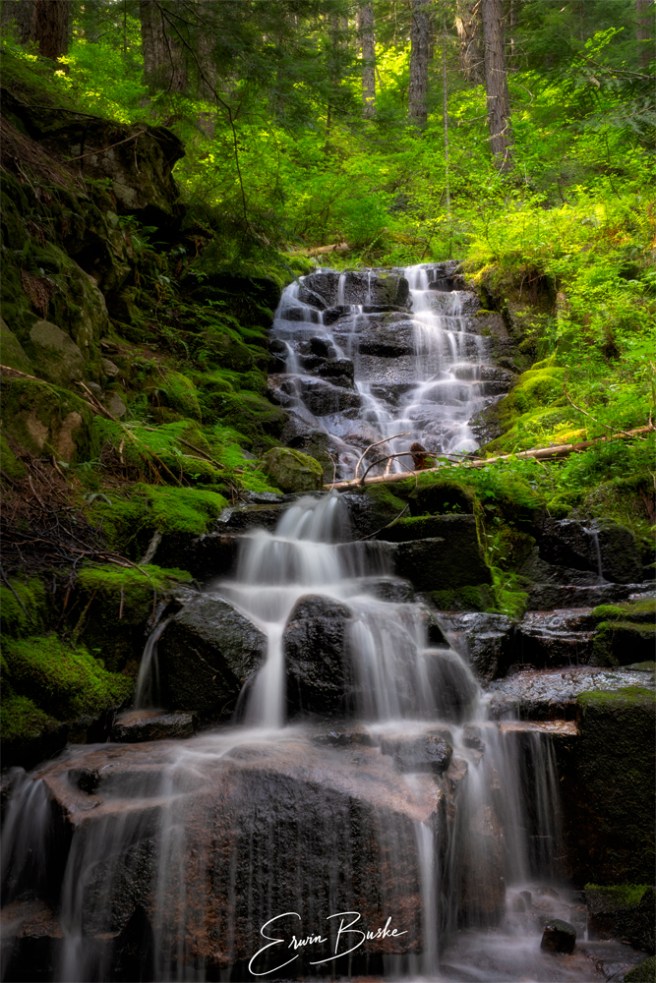
Falling into Tiers in the Forest
Alpine Lakes Wilderness
Tapping into the spirit of Wu Wei, going with rather than against the flow, is a point of view that is present for most of my best work in photography. This is not to say I go out into the field without any intentions or expectations. At a minimum I have chosen a place and a time to visit. What is important is that once I am at my chosen location, I navigate freely. I move with the vicissitudes of nature. I do not try to fight it when nature does not cooperate with my expectations. I move more freely with acceptance and a minimum effort cooperating with the ebb and flow of nature. Not uncommonly, moving with the flow I will move to alternative locations and compositions substantially different than any of my previous intentions. It is at these alternative locations where I create most of my best images.
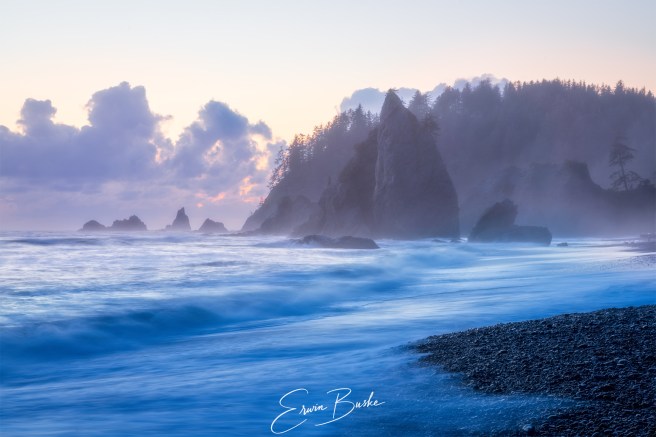
Ocean Lullaby
Olympic National Park
For me, being in a flow state is very much a spiritual experience. In the flow state, there is a sense of fluidity between my body and mind. I am totally absorbed and deeply focused. Distractions disappear, and time seems to slow way down. My senses are heightened, and I feel one with the task at hand, nature and the landscape. Action and awareness coalesce in an effortless momentum as I carry out the task at hand, creating an image. For more on Tao and flow see my blog post The Tao of Landscape Photography
9. Cycles
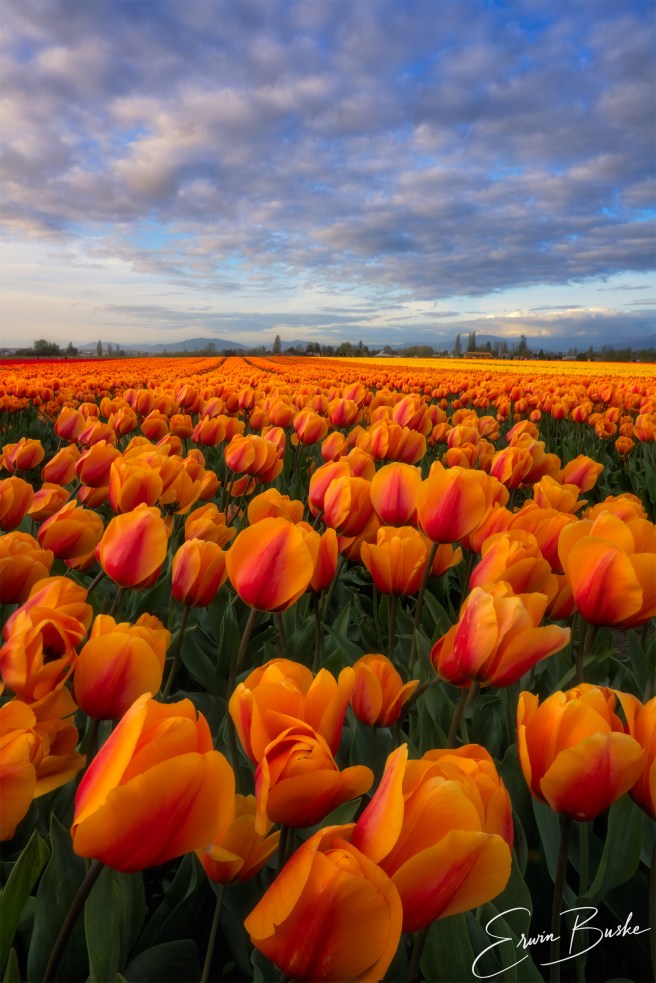
The Gathering
Skagit Valley
In spirituality, cycles and seasons represent the cyclical nature of life, growth, and transformation, mirroring the natural world’s rhythms. The seasons are filled with mystery and symbolic meaning and often the natural world mirrors our own emotional states. With Spring there is rebirth and the sense of excitement of having one more life to live. This is a time for hope, growth and renewal. With Summer there is a sense of comfort, mellowness, and maturity in having arrived to a time where the end seems far far away, i.e., “the endless summer” . With Autumn there is a sense of warmth, change and letting go as the season gradually comes closer to what feels like will be an end but is still a ways away. Winter is a time of reflection and detachment with the realization things have come to an end. But there is also a beauty in the silence and quiet of Winter, knowing that the seasonal cycle will repeat itself as long as the world turns.
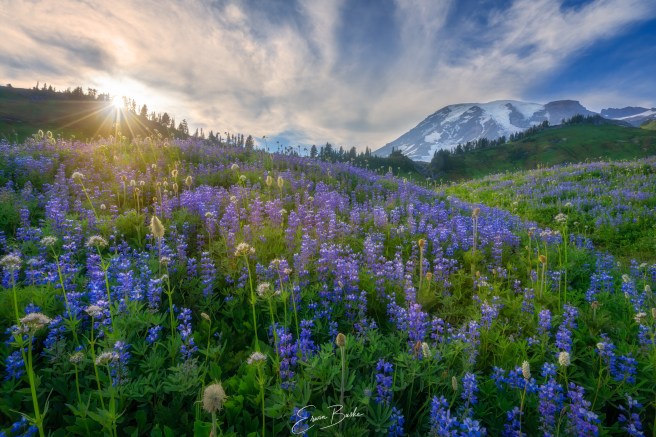

Fields of Lupine and Golden Light
Mt Rainier
As a photographer I feel I am connecting with the spiritual energy of the cycles of nature during my adventures into nature, There is a kind of rhythm that repeats itself year after year starting with Spring, then Summer, Fall, and Winter. On each adventure, I start with at least some expectation surrounding the current season, but surprises always lie on the horizon, and each year I experience the four seasons differently. After all, I am not the same person as the year and years before. So I will perceive nature differently even if I return to some of the same places. To me nature always appears new and fresh. In the four seasons, stability and change coexist side by side.
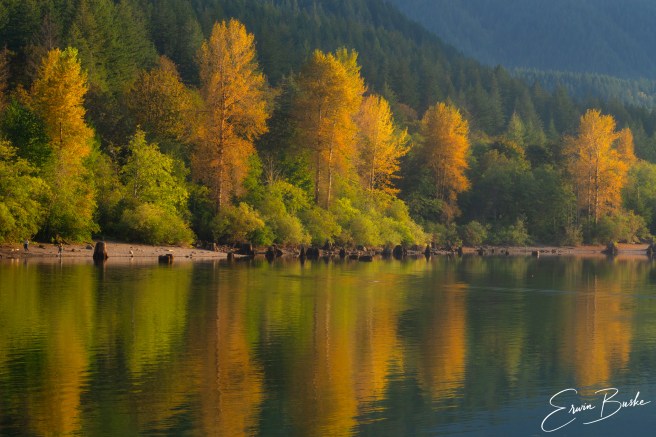

Autumn Cotton Wood Reflections
Rattlesnake Lake
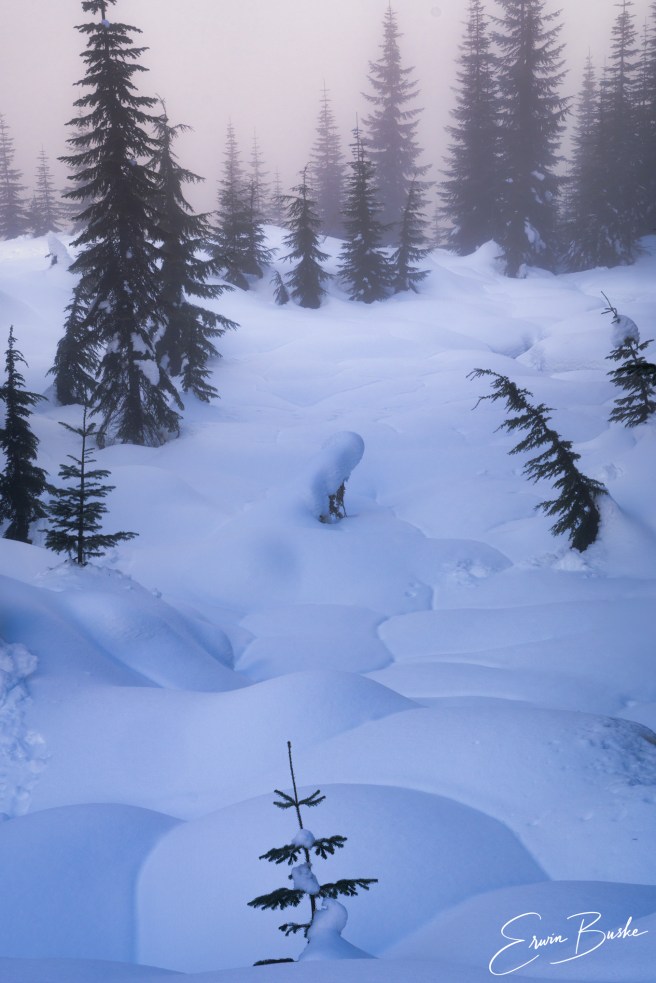
Snow Mounds
Kendall Lakes Snow Shoe Trail
10. Transitions
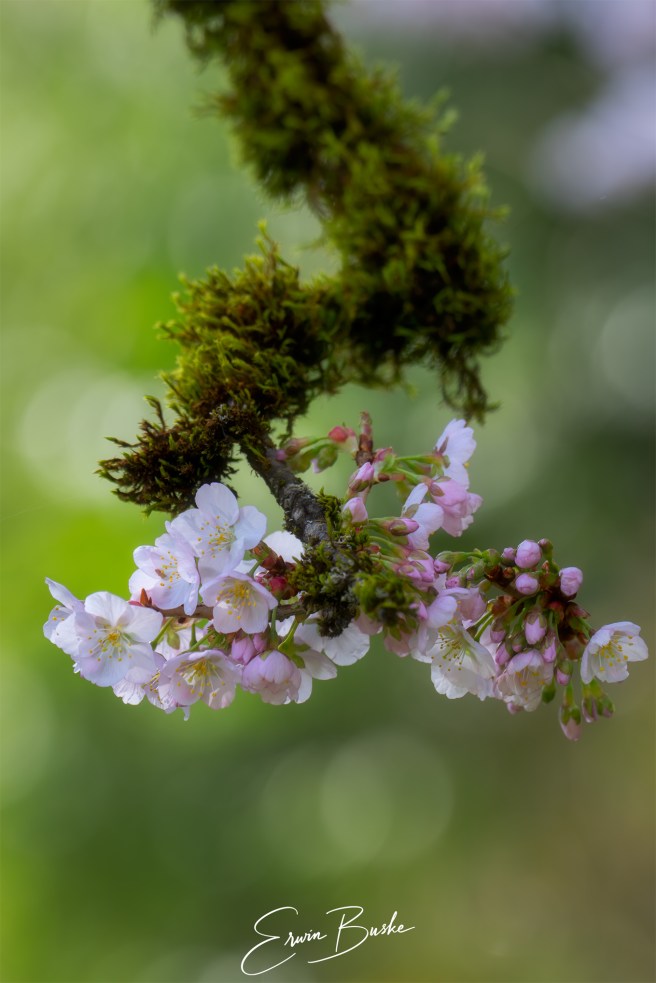
Ever Returning Spring
Cherry Blossoms, a traditional symbol of Wabi-Sabi
Each season has its own sense of wonder. It fills us with mystery. We stand in awe of how nature can change the colors, mood, and feel of the landscape. This mystery, though, is even more deepened during the time of seasonal transitions. With seasonal changes, life moves from one state to another. Part of what was will now be hidden. Part of what will be has not yet come into view. When something remains hidden and unknown, the mystery deepens. But the mystery not only comes from what is in view. It also emerges as we stand in awe and wonder of the new season beginning to unfold. It is the interplay between what we see and do not see that creates the ultimate mystery of seasonal transitions.
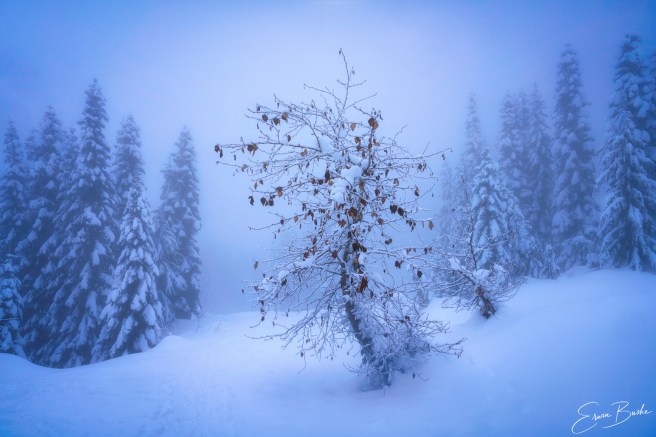
You Keep Me Hanging On
Autumn Leaves in Winter
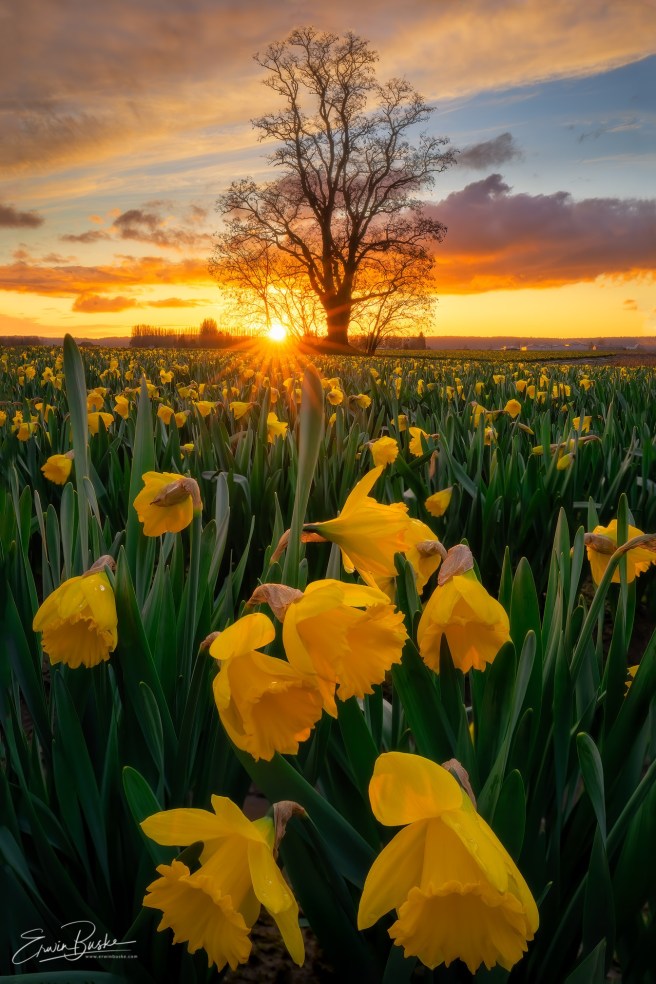
Spring Daffodil Flowers Under a Bare Tree Holding on to Winter
Seasonal transitions always lead me to a more spiritual perspective. Part of this is the correlation to changes in the seasons to changes in myself especially at a more emotional level. When I set out to photograph seasons in flux, I am tapping into this spiritual energy. I find that it helps in my creative journey. In the Japanese tradition of Zen there is a name for spiritual perspective and aesthetic. It is Wabi-Sabbi. In Wabi-Sab nothing is perfect, nothing lasts, nothing is finished. Wabi-Sabi is about the world always being in flux. There is no better representation for Wabi-Sabi than seasons in transition. For more on Wabi-Sabi see my blog post My Encounters with Wabi-Sabi and the Quest for Perfection in Nature Photography
11. Emotions
I have found over the years of spending time in nature that emotions and spirituality are deeply intertwined. Photography for me has fostered a sense of connection to nature and a feeling of belonging to something larger than myself. In the field when I am photographing nature I often have feelings of awe, wonder, joy, peace, contentment, and tranquility. These emotions lead me to a feeling of alignment with nature, and powerful forces greater than myself. Often, the emotions I am experiencing in the field are also visible to viewers of my images. This extends the sense of connection to other people as well. It further validates the spiritual experience.
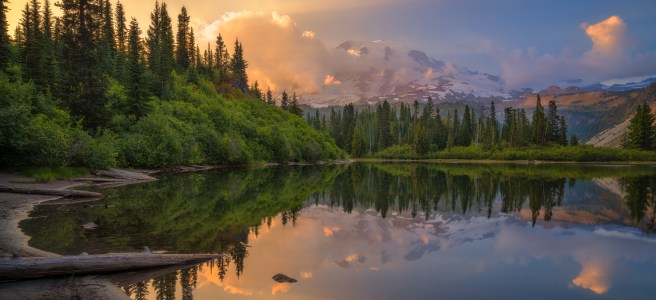
Awe and Wonder. Majestic and grand landscapes like mountains, lakes, and vast skies, as in the image below, can inspire feelings of awe. They evoke wonder and remind us of the power and scale of nature.
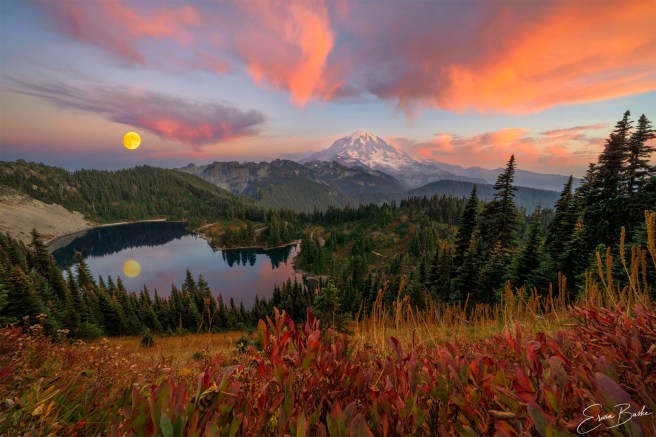
By the Light of the Rising Moon and Setting Sun
Mt Rainier
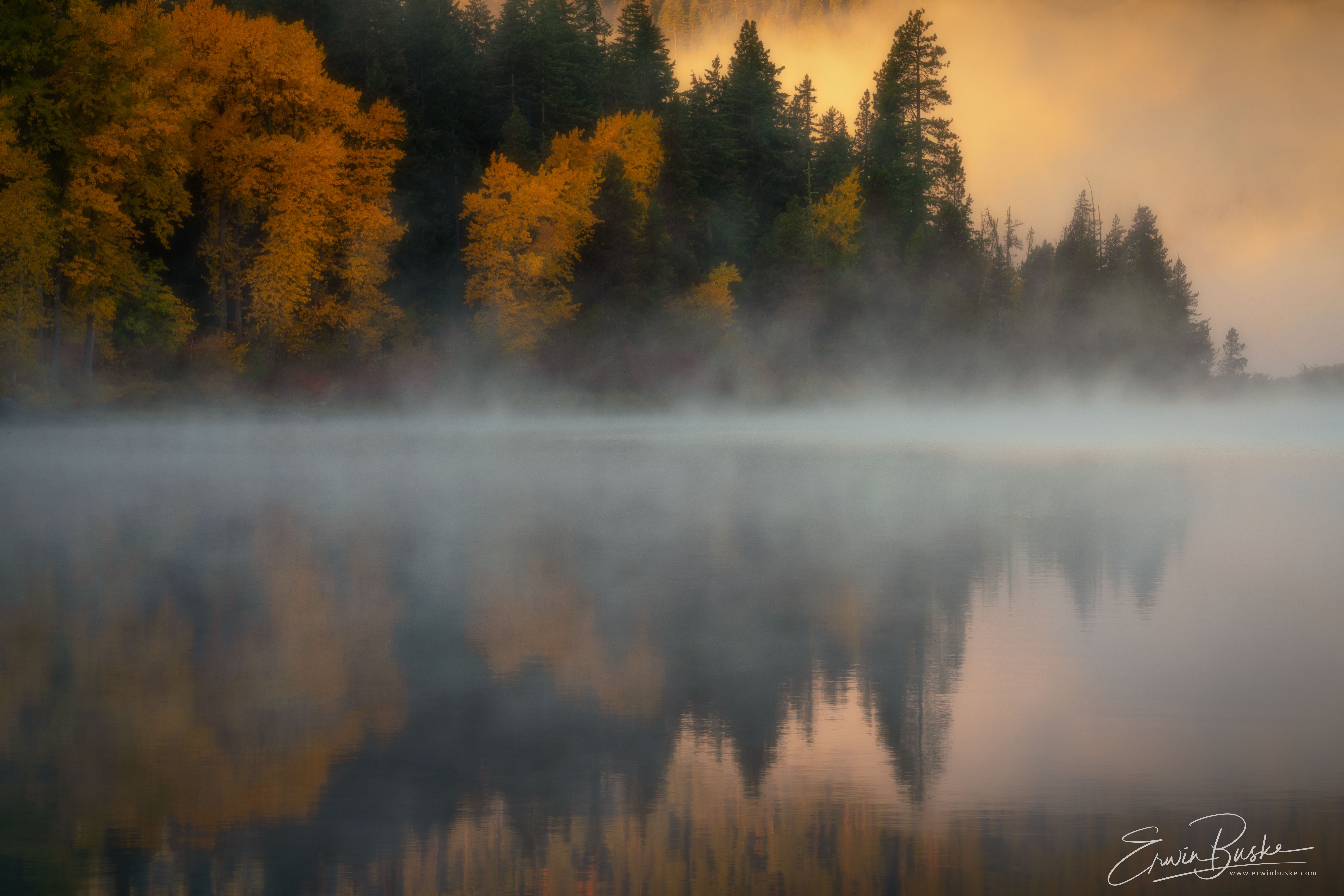
Peace and Tranquility. Serene scenes like a calm lake with reflections can evoke feelings of peace. Mist and clouds rise from the lake into the mountains and forest, as in the next image. These elements bring relaxation and tranquility.
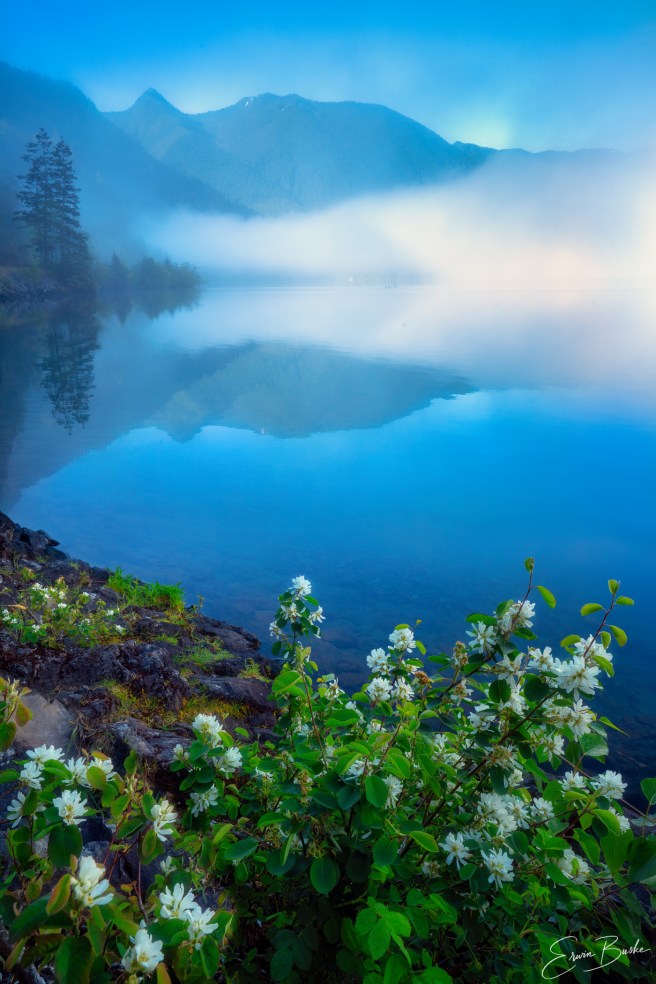
Lake Crescent Misty Morning
Olympic National Park
Joy and Happiness. Bright and vibrant landscapes that include wildflowers and the rising or setting sun can give us a feeling of joy and happiness.
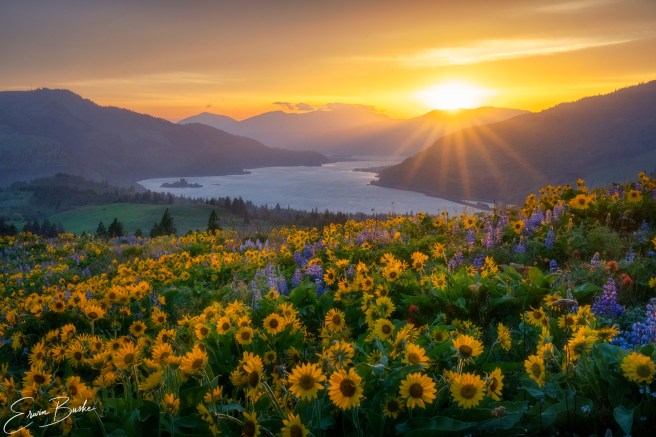
Falling into a Beautiful Dream
Columbia Gorge
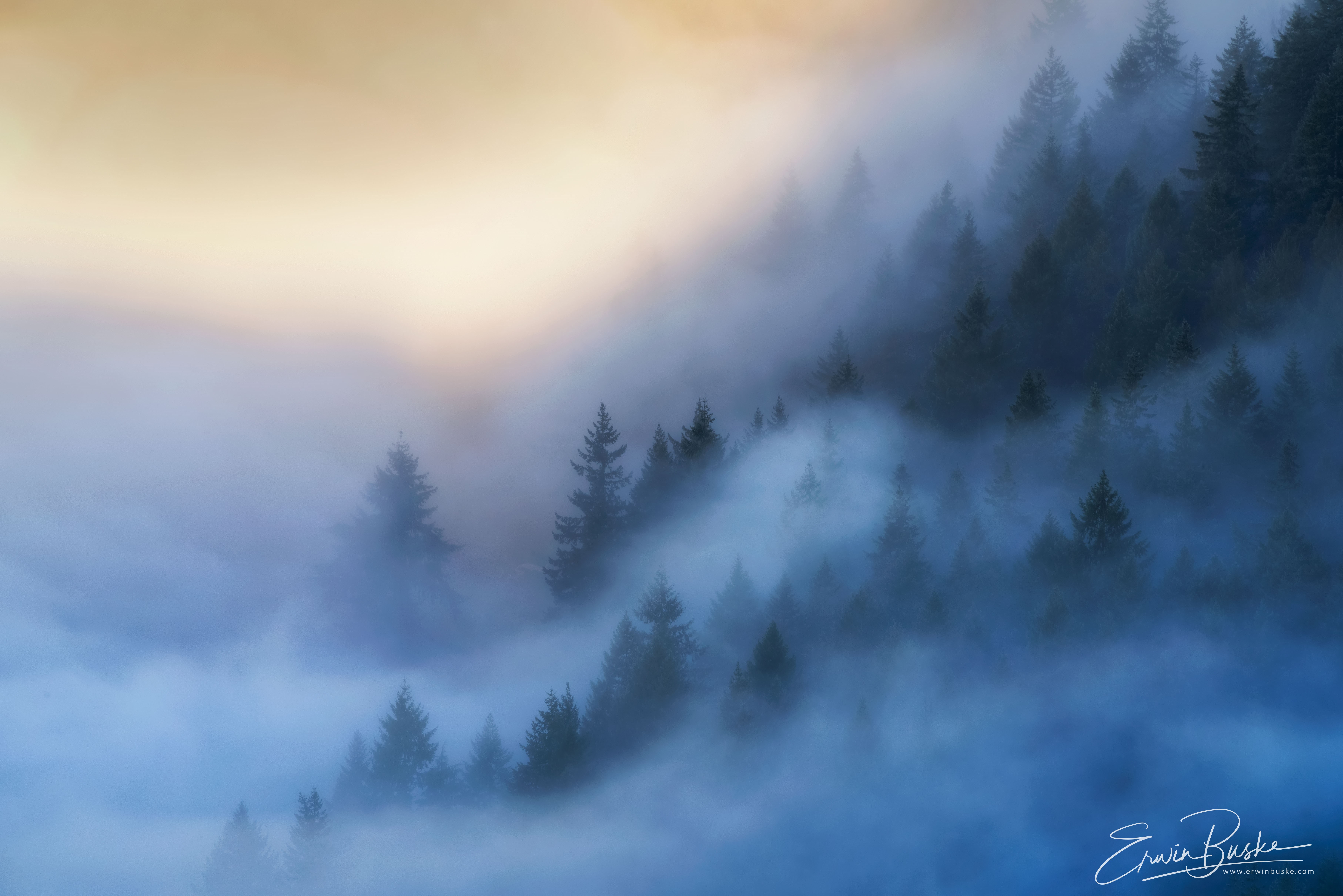
Mystery and Intrigue. Foggy and often dark landscapes can alter our sense of time and space. They create a sense of mystery and intrigue. These landscapes prompt curiosity and imagination.
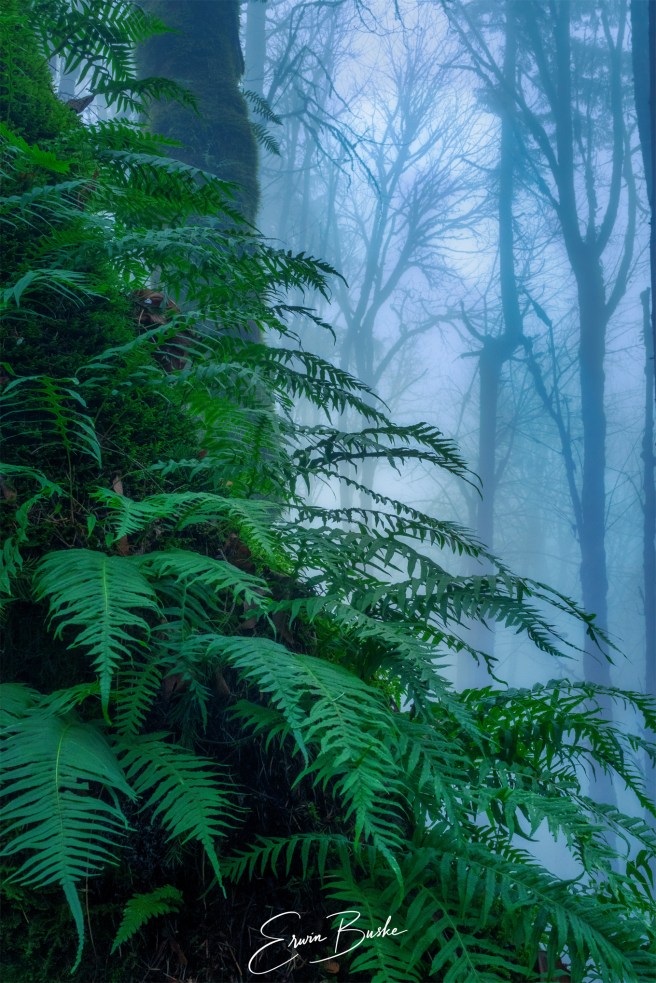
Licorice Ferns in a Foggy Forest
Cougar Mountain
Introspection and Reflections. More intimate images draw us deeply into the scene. For instance, these submerged leaves underwater encourage introspection. They prompt deeper contemplation.
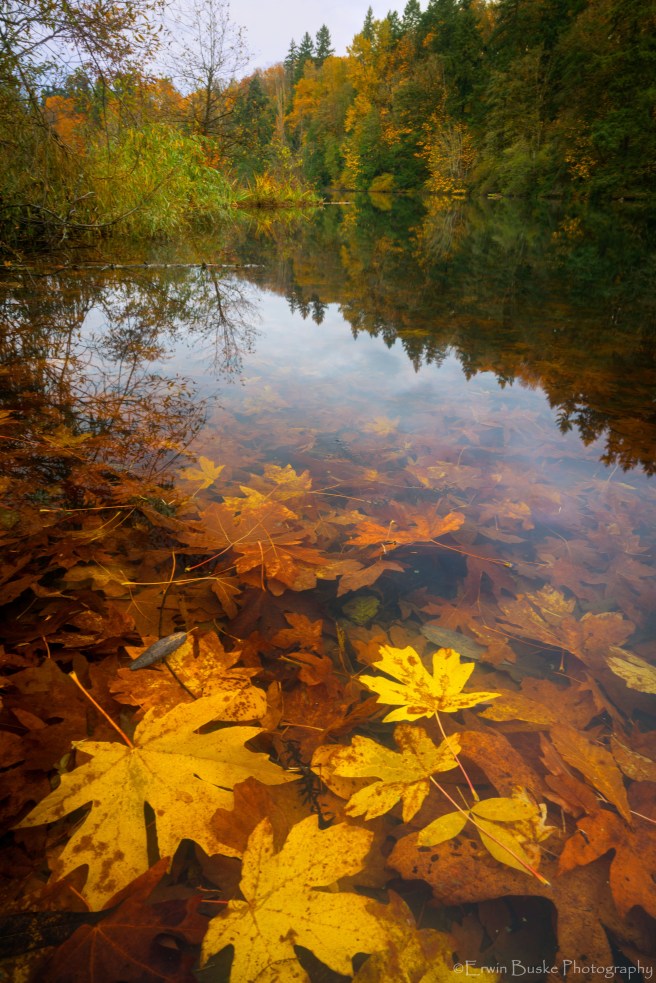
Submerged Leaves Under Water
Lake Fenwick
All of these emotions have been traditionally linked with spirituality. Photographing scenes like this lead us directly to a more spiritual orientation, especially when these images are shared with others.
12. Soul
The soul is often described as the inner self, the essence of an individual. The spirit, on the other hand, is often seen as the animating force of life, connecting us to a higher power or realm of existence, and enabling spiritual growth and connection. Although these definitions are different, in the consciousness of most people today and in my own mind, soul and spirit are related. That is why I include soul in the discussion of spirituality. Thomas Moore, in his work on “Care of the Soul,” defines the soul not as something separate from ourselves as in some lofty spiritual place. Instead, he describes it as something at the core of who we are as individuals. It is the home of our emotions and the source of our unique identity as individuals. According to Moore, the soul is also deeply connected to our unconscious self. A soulful individual is one who maintains a healthy connection to his/her unconscious self.
In nature and landscape photography, photographing from the heart and soul means we are not just photographing what is out there. It is also about expressing who we are as individuals. When a photographer puts his/her heart and soul into a photograph, even common or mundane scenes come to life. When we view the soulful photographer’s work, we are not just looking at the scene. We are looking into the heart and soul of the photographer. Soulful subjects often take us deeper into a scene. They bring us down into the earth rather than up into the stratosphere. Here are a few of my images I and others have characterized as soulful.
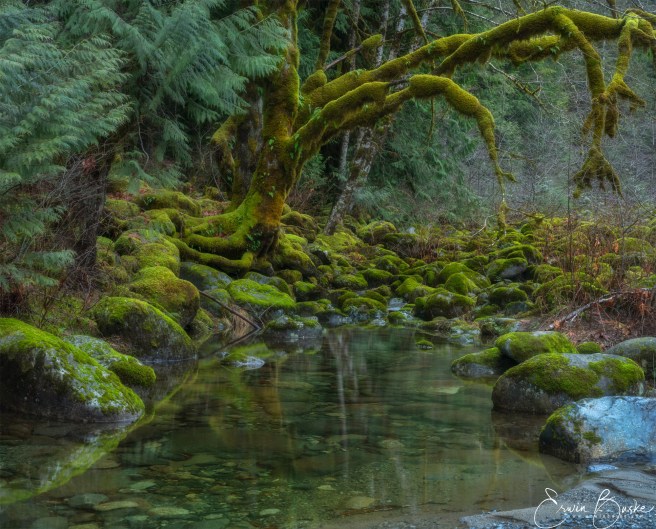
Forest Pond Mossy Stones
Middle Fork
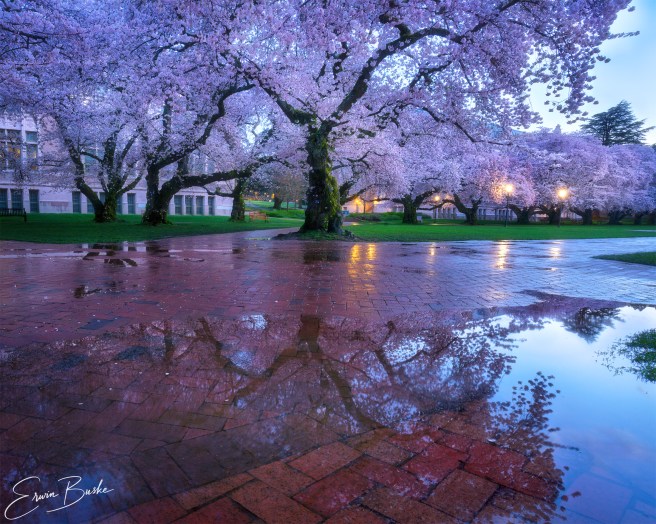
Yoshino Cherry Blossom Reflections
UW Quad
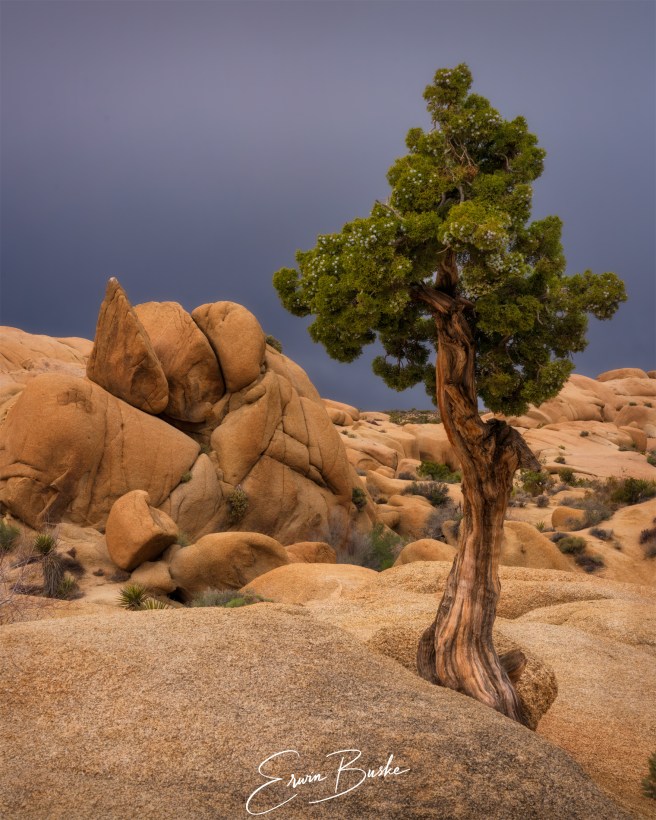
Lone Juniper and Owl Rock
Joshua Tree National Park
13. Serenity
I found early on in my hiking adventures a sense of serenity and inner peace. I felt calmness in nature, especially at locations with sublime beauty. These included alpine lakes and ridges. I was also captivated by landscapes illuminated by the rising or setting sun, ocean beaches, and meandering rivers. Later this feeling evolved to include all aspects of nature. It now encompasses long walks through quite ordinary forests or sparse desert landscapes. Now, I even feel a sense of inner calm and serenity hiking in the rain and snow, and during storms.
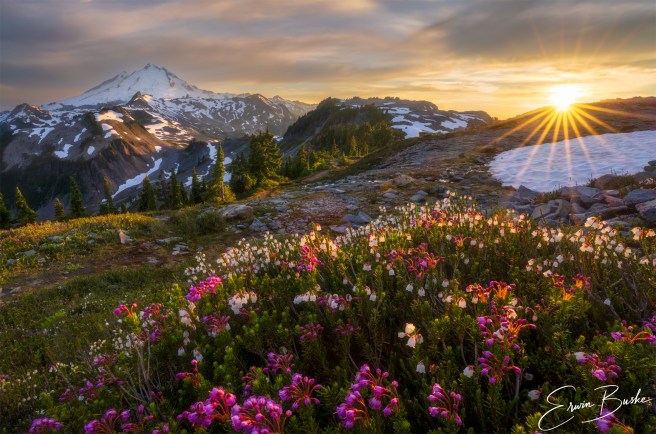
Magic Meadows
Mt Baker
Most of the people I know who have followed my work over time have let me know that they also find a sense of serenity, peace and calm in most of my images. This is important to me. Not because I need some form of external validation of my images, but rather I am helping others also recognize nature as a source of serenity. This in turn helps inspire my viewers to set out on their own journeys into the wild.
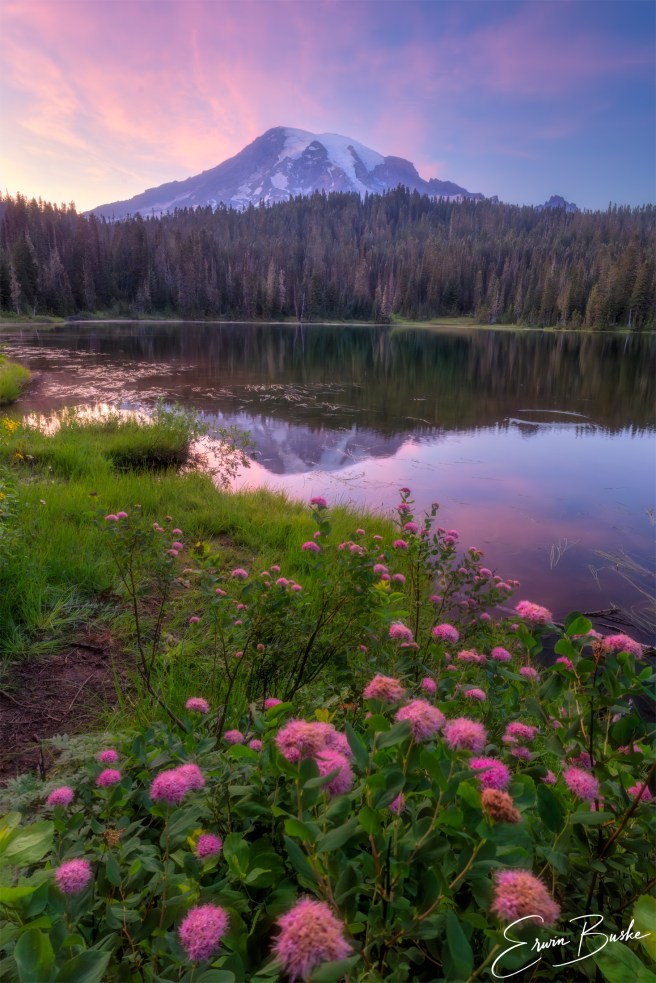
Reflecting In Nature
Mt Rainier
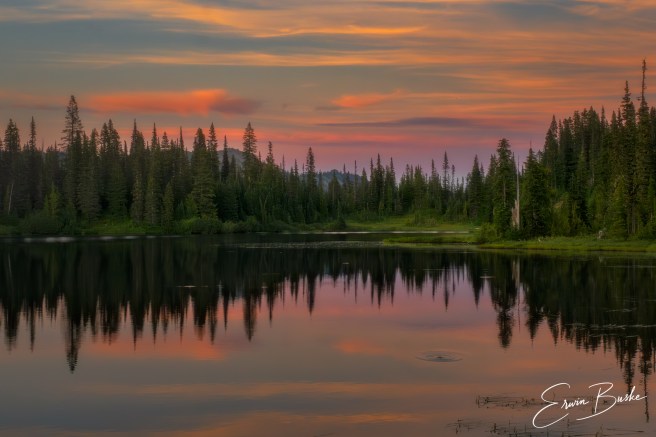
Reflections, Layers, Light
Mt Rainier
Serenity and spirituality are deeply intertwined concepts, with serenity often viewed as a key attribute of the spiritual journey. Serenity in nature, is a state of inner peace and calmness, a freedom from worry or agitation. Serenity flows directly from our external surroundings but also becomes internalized in us. Us in nature, nature in us-connection. Nature and landscape photography as a spiritual practice directly helps cultivate feelings of inner serenity. This practice leads to a more balanced and fulfilling life. Serenity in landscape photography is achieved by capturing scenes that evoke feelings of peace, tranquility, and calmness. This often involves using techniques like soft light, muted colors, negative space, and shallow depth of field to create a sense of solitude and quiet beauty.
14. Evocation
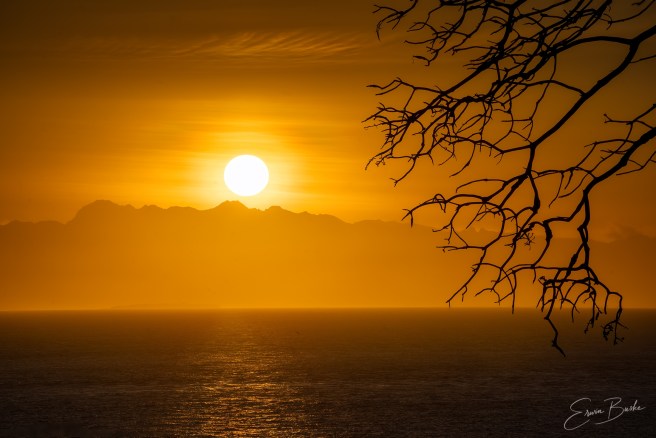
There are moments when my soul is a mirror to everything around me. Forms, shapes and patterns bathed in light rise out of the dark void and return again in an endless cycle. In such moments, I feel I am the mountains and the sea. I am the setting sun and the tree spread out over the bay. There is no me, mountains, sea, setting sun, or tree spread out over the bay–Satori.
My narrative for this image.
The evocation recognizes no words can describe the wonder and beauty of nature. The image itself is actually the best expression of the wonders and beauty of nature. Yet, if we also want to use words to complement the image, we should use evocative rather than literal language. Literal language seeks to fully describe the mystery of nature often in scientific terms but always somehow falls short. Evocative words as described by the Zen poet Ryokan are like a “Finger Pointing at the Moon”. Symbolically the finger represents the words and the moon nature or reality. The finger only points at the moon, it is not the moon itself. Words only give us an expression of the wonders and mystery of nature, and are not to be confused with nature itself.
For an evocation I usually use more poetic language to express to the reader a sense of what I experienced in the process of creating an image. I will choose words for their sound with extensive use of alliteration and consonance (repetition of sounds), rhythm and perhaps even rhyme. My words will often be metaphors in their own right like “Foxglove” and “Avalanche Lilies”. The narrative will include rich imagery, symbols, and descriptions of my feelings. These elements do not just literally describe the photography. Instead, they complement the photography, taking us beyond the literal. Together, they allow us to better appreciate the mystery of nature. For more on Evocation see my blog post The Stories We Tell Through Our Images–With or Without Words
15. Shared Vision
One of the greatest joys for me as a photographer is discovering through comments or conversation that a viewer feels they are right there in my photo. They’re immersed in the scene, experiencing a kind of visual flow. In a sense they are living vicariously through me. Sometimes these feelings are so intense at an emotional level. Some viewers describe feelings of love, joy, and happiness. These emotions can bring them to tears. Can images instill this kind of emotional reaction? In my experience the answer is a resounding yes. This feeling of joy in sharing my vision is very spiritual to me. My connection with nature is also shared with others. This sharing extends the connection to a community.
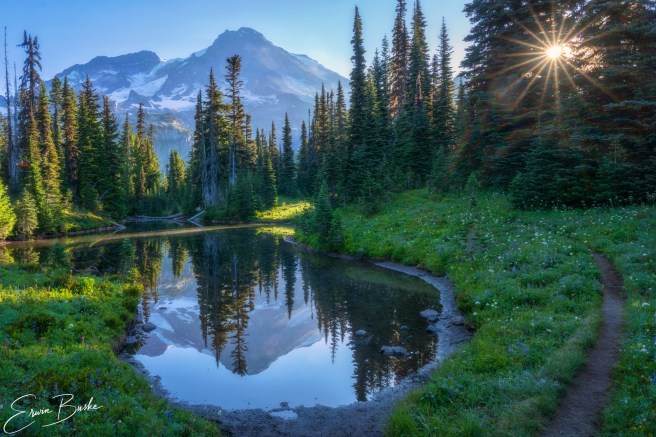
Mirror Lake Sunburst
Mt Rainier
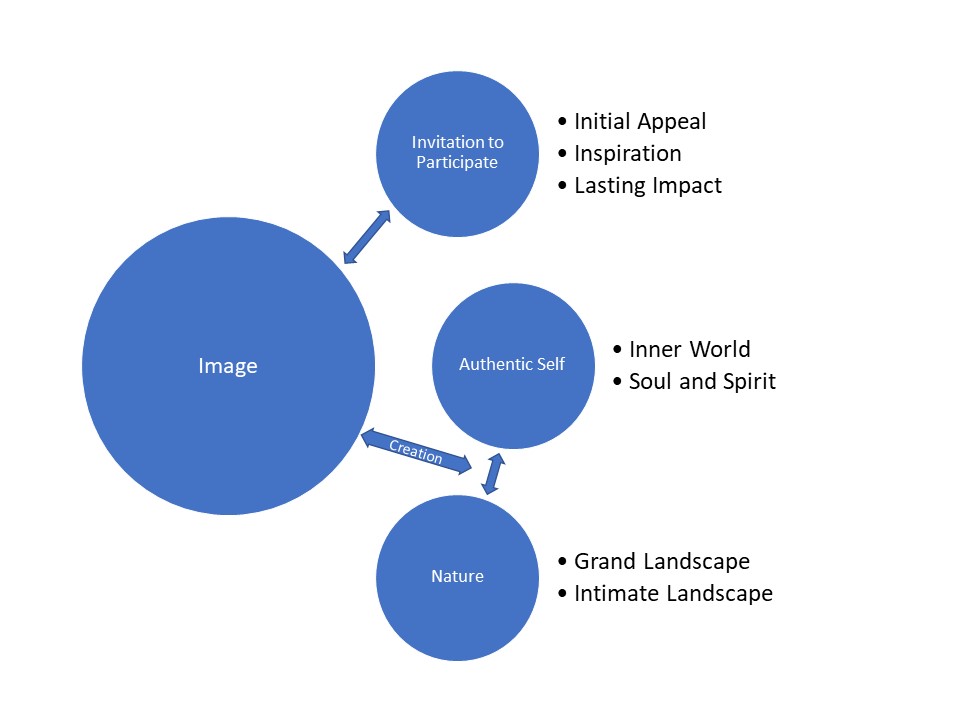
At this point it will be beneficial to explain my concept of a shared vision. Nature images that have staying power put forward a vision that is shared by both the originator of the image, the Photographer, and the viewer. The attributes of the image invite the viewer to participate in the photographer’s vision. American philosopher and writer Ralph Waldo Emerson provides us with some insight into how this is possible. The process starts by finding who we are as a person, our authentic self. Emerson and two noteworthy legends he influenced, Henry David Thoreau and John Muir pointed out the way. We must recover our authentic self through separating ourselves from societal influences and immersing ourselves in nature. Emerson thought nature always points to soul and spirit, the invisible world, that is the source of all creation. This may seem far-fetched to some. Still, in my experience working with skilled nature and landscape photographers, most have revealed to me that there is more to the world than what is seen. It’s this additional, often idealized or romanticized vision of nature they aim to include in their photographic creations. Because photography, which is anchored in the moment and physical world also points to the universal world of spirit, others can join in and share in the photographer’s vision. Emerson saw a circular and fluid path between Nature, the Self, and Spirit. The conventions and distractions of society can keep us from noticing this flow, but experiencing this continuum is available to all who approach nature on her own terms. For more on Emerson and Thoreau see my blog post Journey to Your Own Walden Pond: Thoreau’s Legacy and Message to a Modern World
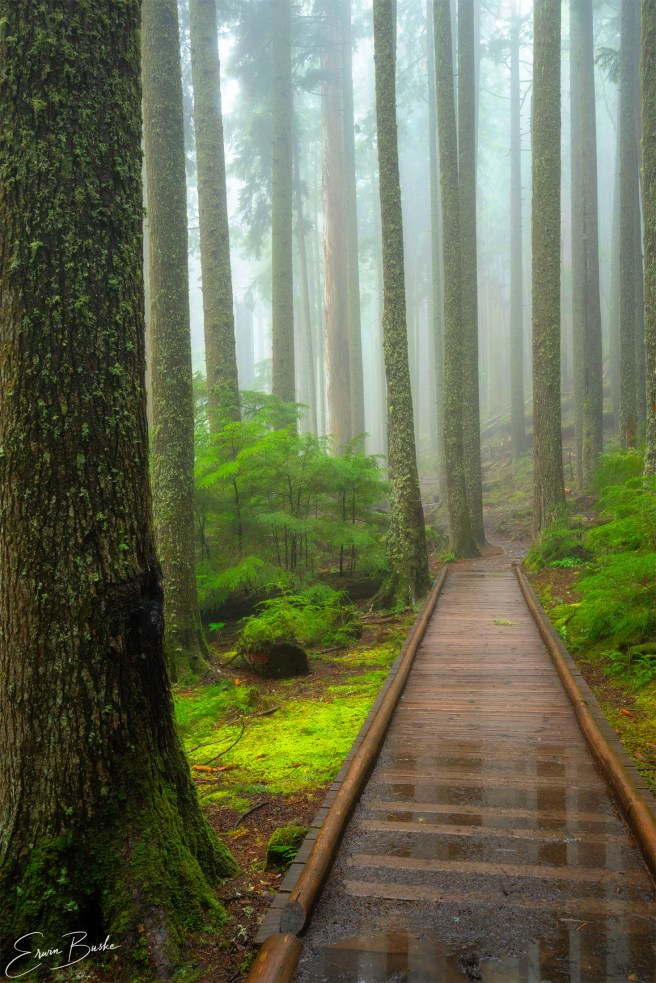
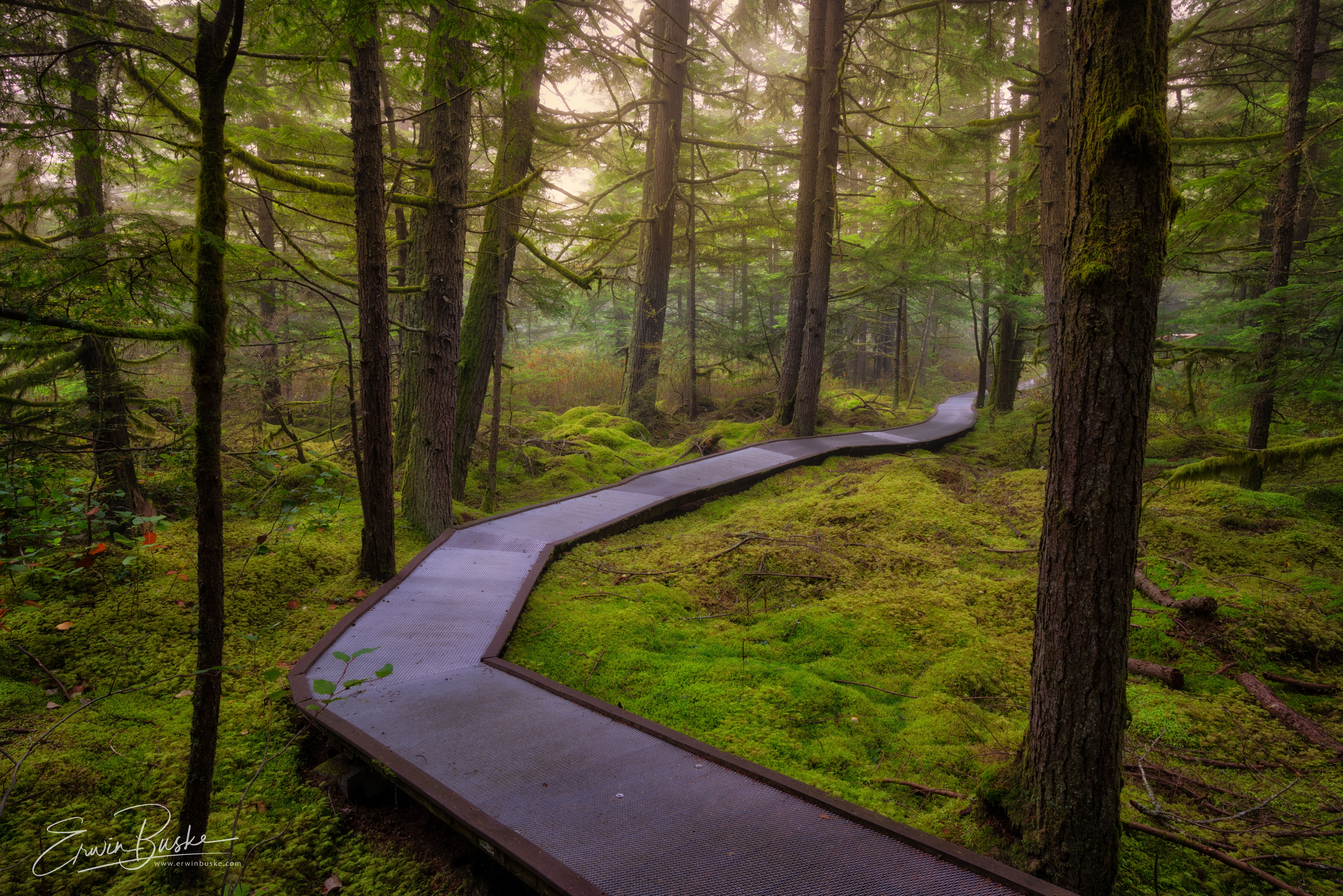
Mt. Si Boardwalk into the Fog and Mist
16. Transcendence
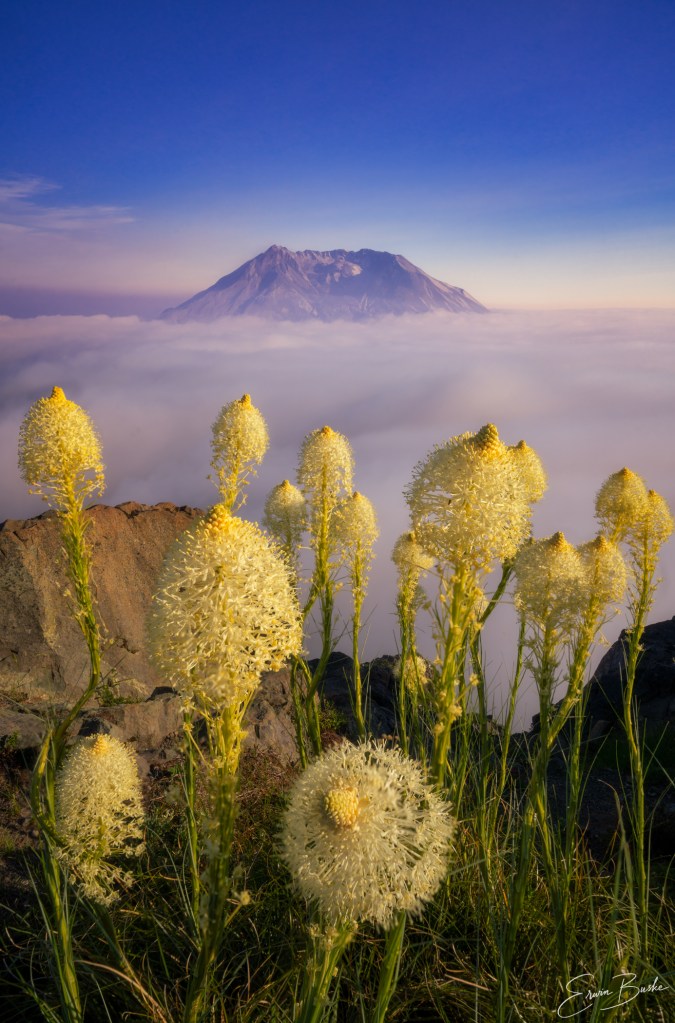
Mt. St. Helens
Bear Grass Rising Above the Clouds
The word transcendence is often used with lofty and abstract meanings that are difficult for most of us to grasp. But transcendence in nature and landscape photography brings the meaning of the term more down to earth. Here, transcendence is always anchored in nature itself. But in our photographic creations we go beyond a literal representation of the scene to create an image with deeper emotional and spiritual meaning. This is done in part through the photographer’s skill set including point of view, angle of view, framing, use of light and shadow, establishing a visual flow and other compositional techniques. It’s about capturing the essence and feeling of a scene, rather than just its visual appearance, connecting the viewer with something larger than themselves. For more on Transcendence see my blog post Transcendental Nature Photography: Creating Inspiring Images with Lasting Impact

Spirit Angels in the Forest
Summary
This post reflects on my journey of viewing photography as a spiritual practice that deepens my connection with nature and fosters self-awareness. Through my lens, I explore various facets of spirituality that manifest in my work.
- Connection: From a young age, I felt a deep bond with nature that continues to inspire me today.
- Stillness: Finding moments of stillness in the natural world opens the door to spirituality for me.
- Beginner’s Mind: Embracing a fresh perspective allows my creativity to flourish and helps me notice beauty in everyday scenes.
- Awareness: Cultivating awareness sharpens my perception and enhances my photographic compositions.
- Mystery: I find that spirituality and nature are intertwined through the mysteries they hold.
- Awakening: The presence of light during sunrise symbolizes spiritual awakening for me.
- Light: Following light in nature serves as a metaphor for my spiritual pursuits.
- Flow: Embracing the natural flow in my photography leads to enriching spiritual experiences.
- Cycles: The changing seasons reflect the cycles of life, growth, and transformation.
- Transitions: Seasonal shifts evoke deeper spiritual reflections and resonate with my own emotional changes.
- Emotions: Through my photography, I aim to capture emotions that foster a sense of connection and belonging.
- Soul: Photography from the heart expresses my individuality and connects with the essence of my being.
- Serenity: Nature evokes feelings of calm and peace, and I strive to convey this serenity in my work.
- Evocation: Literal words and images can never fully encapsulate the wonders of nature. Yet, expressive photography and poetic words can get us a lot closer.
- Shared Vision: Engaging with my viewers allows us to share a spiritual connection through my photography.
- Transcendence: My goal is to create images that go beyond literal representation, revealing deeper emotional and spiritual meanings.
Ultimately, photography serves as a profound avenue for my spiritual exploration and connection to nature, capturing not just moments of beauty, but insights into my own journey. The very process of getting out into nature opened the door to my spiritual awareness. Photographing nature deepened this awareness, and over time became my spiritual practice.
About the Author
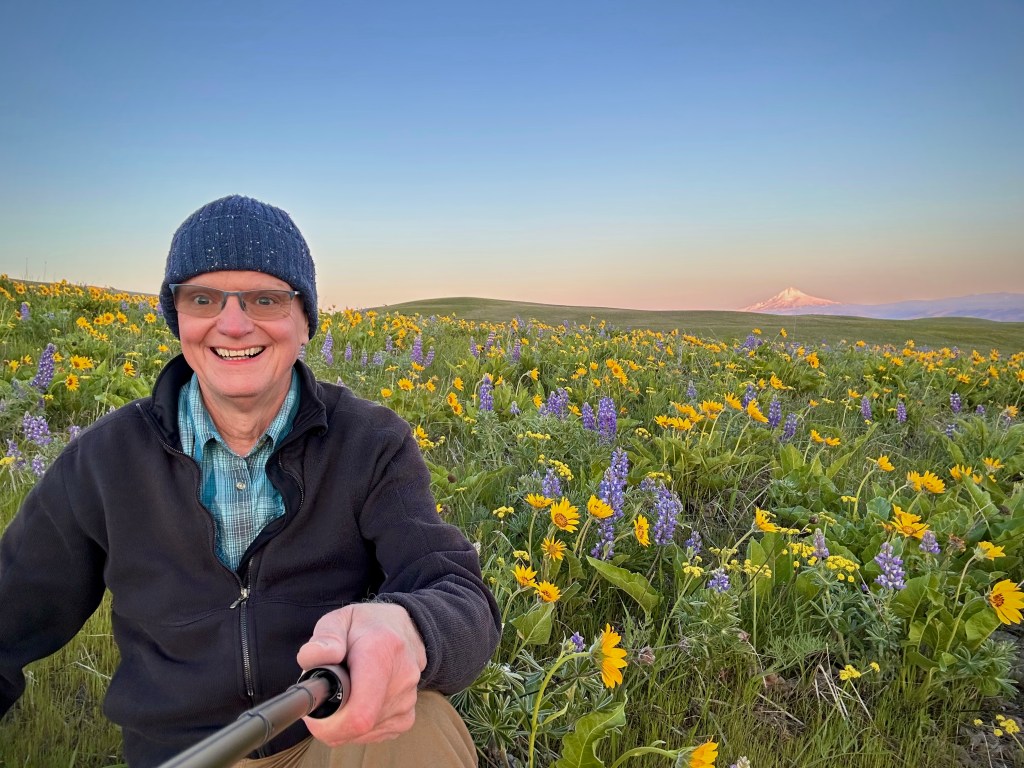
Selfie taken around sunrise at the Columbia Gorge.
I am a nature and landscape photographer based in Fairwood, Washington. My work focuses on capturing the essence and emotion of the Pacific Northwest’s mountains, forests, and coastlines. I witness and interpret nature. I aim to convey my inner vision and personal connection to the landscape through images. I am also a writer. I couple my images with stories. I publish articles covering a wide range of philosophical and spiritual subjects. These subjects also relate to nature and photography.
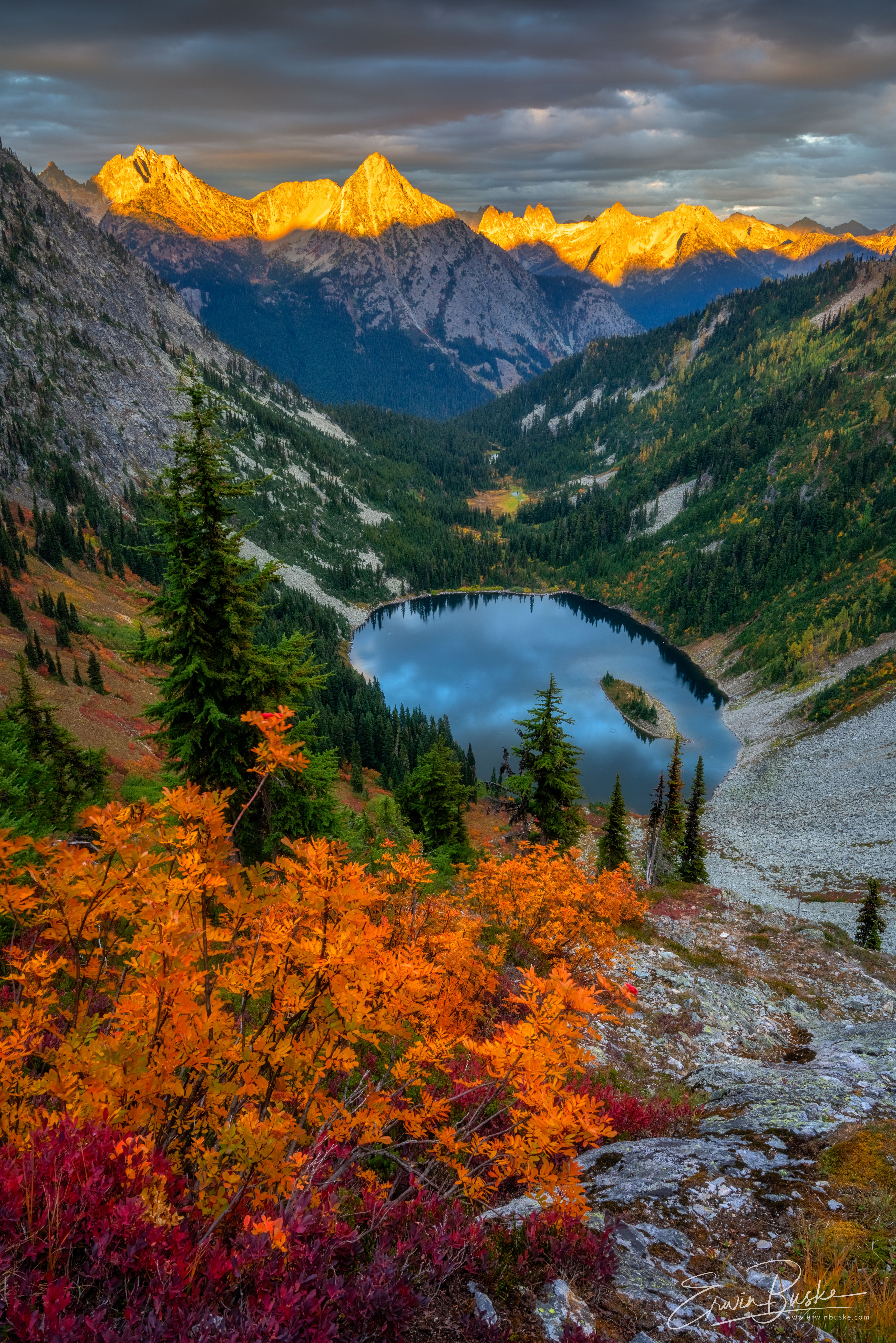
 Liberty Bell Reflecting Pond
 Erwin Buske Photography Blog