There is nothing more fundamental in photography than establishing a point of view. Point of view in photography refers to the position of the camera when taking a picture. If the camera low to the ground this is a “worm’s eye view”. If the camera higher up and pointed straight down this is a “bird’s eye perspective”. Although this concept is simple enough, both beginner and more advanced photographers often fail to establish a point of view for nature that coincides with how they personally view the world. Putting ones heart and soul into a photograph to create a unique image requires a personally expressive point of view.
Magenta Paint Brushes in the Mountain Meadow This image is a good example of a “Worm’s Eye” point of view.
Establishing a personally expressive point of view requires what I call “working the area”. Before even taking out the large interchangeable lens camera, one must explore a wide range of points of view. Go low, go high, get near, move further back, go left, go right-in short dance around to find the best vantage point for your subject. A cell phone camera is also a great tool for establishing a point of view, one which I now almost always use because it is so intuitive and allows me to explore many options quickly. A slow approach to photography does not mean not moving around and even in a go slow approach moving around and working the area should be done fairly quickly in order to explore a wide range of options. The biggest mistake I see photographers, both beginner and advanced, doing is not moving around and exploring options. No matter how good you get, you still need to do this! What I typically see in Landscape Photography even among advanced photographers is getting to a scene and immediately establishing a point of view planting their tripod legs-big mistake. No one is that good! Your legs need to work, you need to dance! I am currently mentoring a beginner Highschool student and point of view is one of the first concepts I taught him. He quickly understood the concept and carried out an assignment to develop multiple points of view. The impact on his growth as a creative photographer was immediate and easy to see in his images.
One should establish a point of view before deciding upon an angle view. The angle of view is determined by the lens focal length. Wide angle lens have a wide angle of view. Telephoto lenses have a narrow angle of view. The temptation is to first start with an angle of view then establish a point of view, but in my experience this approach leads to more formulaic rather than creative images. Once a good point of view is identified, then and only then should one decide which angle of view (lens focal length) works best to best present the point of view. The over reliance on either the wide angle or telephoto perspective usually is a result of jumping immediately to one of these two lens choices without first establishing a personally expressive point of view by working the area. The wide angle or telephoto may indeed be the best choice for some points of view, but for many others it will be something in the standard focal length range, 30mm to 70mm in full frame photography. Once you get in the practice of first establishing a point of view, you might find out that on some trips that a majority of your images will actually fall in the often ignored standard focal length range.
Painted Hills Claystone Silt Abstract: 32mm, F14, 1/60, ISO 400 Handheld This is a good example of a “Bird’s Eye” point of view looking straight down.
Spirits of our Ancestors: Painted Hills 72mm, F14, 1/20, ISO 100, 2 image focus stack Although this image has a near far perspective it was not taken with a wide angle lens but rather with a 70-200 telephoto zoom at 72mm. I first established a point of view by working this area for about an hour before settling on this composition. The layering you see in this image, of not only the grassy foreground but also the turquoise peaks and red painted hill like mounds, could only be achieved using a moderate telephoto focal length. The grassy foreground was the most tricky in this image and it required a low point of view fairly far back from the grass and focus stacking to get the entire image sharp.
Middle Fork Bridge to the Spirit of the Shire: 70MM, F14, 1/2S, ISO 100, Focus Stack I discovered the point of view for this image by getting very low to the ground and making multiple dance moves forward and back, left and right, looking for the vantage point that would provide the best visual flow from the moss to the tree trucks and bridge. Once settling on this point of view, I decided it would work best with a 70mm moderate telephoto perspective to achieve a good balance between a near far perspective and compression of key elements in the scene. A 70mm telephoto would also render the bridge at a size that would draw the eye into the light shining on the bridge through the trees and the middle fork river basin.
Day of the Eagle 347mm, F11, 1/2000, ISO 1250 Handheld The point of view for this image is looking more or less strait up which allowed me to photograph the textures on the underside of the eagle’s spread-out wings. In order to render the bird at a sufficient size in the frame I used my 200-600 zoom lens.
Trilliums Underneath Big Cedar Tree 18mm, F16, 1/5, ISO 400 Focus Stack The point of view for this image is a worms eye view and up close to the trilliums but also looking almost straight up to the big tree in the distance. It might look easy but it took some doing to get this point of view. Although I tried this with a much wider focal length I found 18mm offered a less distorted and more realistic rendering of the scene, much as if one were lying on the forest floor and looking up at the trilliums and big cedar tree.
Two Hearts Beat As One: 16mm, F14, 1/10, ISO 100 Focus Stack Olympic National Park This is Lunch Lake in the Seven Lakes Basin of Olympic National Park. This lake from most points of view does not look like a heart but from this point of view it does. Note there is another lake in the basin called Heart Lake that more obviously looks like a heart from any point of view. Point of view often also involves juxtaposition. Juxtaposition is often not easy to find and involves both a keen eye and much moving around and working the area. The rock in the foreground and surrounding red huckleberries echoes the heart shape of the lake. In nature all hearts beat as one.
Know Thy Self
Although the concept of a Point of View is simple enough, it is where you place your camera, many people find it challenging to create a personally expressive Point of View. To create an image that is personally expressive, a person needs to first be aware of how nature and the landscape makes them feel at a more emotional level. This might seem simple enough also, but I have found through my work with multiple students, few (at least initially) have this ability. It is not quite the same as the thoughts and feelings you bring with you when you visit a landscape. It is the feelings, emotions and moods that flow from your immediate and moment by moment connection to nature and the landscape.
Comfortably Lost in the Middle Fork Forest
I have found that the best way to get in touch with what you are feeling when in nature is to spend at least some time daily walking through nature ironically without a camera in hand. Doing this daily will help you move toward a more meditative state of mind, also known as the “Beginners Mind” in Zen. The “Beginners Mind” is free from preconceived notions about a place and our normal preoccupations with daily concerns. This opens the door to a more immediate connection to the nature and the landscape. Freed from the filters of the mind, one is more open to immediate flashes of perception and seeing things that others likely pass by. This is because you will be connecting directly with nature, nature in you, you in nature, no separation.
Forest Pond Mossy Stones
While hiking through the Middle Fork forest I came upon this small pond surround by lush mossy stones. To me, although not grandiose in its beauty, it was such beautiful sight to behold on a Mid Winter day.Several people reached out to me on Social Media wanting to know exactly where this scene is located. I declined to tell them as I know that scenes like this can only be found through becoming more self aware and in tune with one’s surroundings, not be retracing someone else’s steps.
What About Intentions?
Some of you may be wondering is there a place for intentions when establishing a personal point of view that requires getting back to a more beginners state of mind and letting go of expectations. My answer is that there is still a place for intensions. One should always start out with a set of intensions. To do otherwise is a bit like setting out on a boating trip with no ability to stir the ship. Having intentions is not the problem, the problem is not being open to changing plans once circumstances change. In the movie “Get Back”, during the creative recording sessions where the Beatles were engaged in a very free flowing and iterative process of composing their songs, Paul McCarthy says to his band mates that entering a session with no plan is a recipe for getting absolutely nothing done. This is interesting that he would say this because there was an incredible amount of improvisation and changing of plans in those jam sessions associated with the songs on the Get Back film set. The songs that were eventually recorded bore little resemblance to the original ideas and plans. Creative photography follows a similar trajectory. One is far more likely to be creative if one starts off with a set of intensions, but at the same time feels an immediate connection to nature, and is willing to pivot with what is happing in the field and momentary flashes of new perception. Can you imagine trying to write an essay or a story without a outline? Can you imagine the creators of the movie Avatar attempting to make a movie without a script or a plan? Of course not. Plans are not the problem and are necessary. The problem is not being flexible and willing to pivot and change the plan.
Cherry Blossoms Cobble Stone Roots
This old gnarled Cherry Tree, with its beautiful blossoms, also looked a bit spooky in the light of the early morning, also collecting some warm light from the golden lamps. Standing contorted and strong, as if it was doing a kind of yoga tree pose, its reflection to me looked almost like its own roots anchored deep deep in the ground.When I arrived at the UW Quad on this early morning, this is not the image I had planned. But when I realized that hoards of people were standing in the way of my originally planned compositions, I looked with fresh eyes in areas where few people were present. When I saw this magnificent tree, I knew this was the image and story for this day!
Technique: Learn it to Forget It
In a sense having a plan and the ability to be spontaneous both aim for the same thing. Both help free our mind from an overly deliberate and analytic approach to photography and allow us to shoot more from the heart which is the key to being creative. Because the plan is already there we do not need to think about it all that much in field. And because we are spontaneous we also do not need to think all that much about the need to change direction. Even higher levels of freedom are possible by being so thoroughly knowledgeable about photographic technique that it also becomes second nature. As important as things like aperture, shutter speed, and ISO are, we should not have to think about them all that much in the field. At this point in my photographic journey, I dial them in manually with no thought at all. This frees me to follow my heart mind finding that point of view that supports best my creative vision.
Tree Beards and Mossy Arms I think some trees, just like people, come to life in the offseason or Winter, when we can see better their true form. With this Broad Leaf Maple Tree, we can also see its many lichen beards and moss covered arms cantilevered and spreading out over the Middle Fork of the Snoqualmie River. This scene was not part of the plan for this day and was a spontaneous discovery through a flash of perception out of the corners of my eyes. I have passed this tree countless times on my travels through the Middle Fork, but only on this day did it grab my attention. I instantly knew what to do and did not need to think through the technical details of how to create this shot. The how to was second nature to me, freeing me up to to follow the heart mind, establish a point and angle of view, and record on my camera sensor my creative vision.
Putting it All Together
Establishing a point of view, especially when combined with an angle of view, is the single most important creative decision in photography. A point of view is simply where we place our camera. Establishing the best point of view requires moving around, going this way and that. Get prepared to quickly dance. You will get a Zumba workout! Although the concept of a Point of View seems simple enough, for an image to rise to the level that is recognized as art, the point of view needs to be personally expressive in a way that also instills an emotional reaction in others. Personal expression requires that we are in touch with how nature and a landscape makes us feel. For this we must get back to more of a “Beginners Mind” that is free from preconceived notions about what is our task for the day. This does not mean we go into the field without intentions. Intentions are vital for putting the creative process in motion. The “Beginners Mind”, and the ability to pivot with changing circumstances, however, are what will ultimately lead us to the a personally expressive and unique point of view.
I’m Still Standing Several of the trees in this grove (but not all) stand alone in having survived an ancient fire. Standing underneath this ancient grove and walking along the boardwalk, one feels humbled and what it means to endure in the face of danger. Establishing a point of view for this image involved use of a moderately wide angle view (27mm) and getting above the boardwalk leading to the Lady in Red. She was important in providing a sense of scale to this image juxtaposed with the sunburst at the top of the image to further enhance the sense of scale of the forest. It was important not to go too wide and not to stand too close to the forest in order to preserve the sense of forest compression.
Thanks so much for reading and viewing the images of this blog post. I encourage you to share your reactions, thoughts, comments, impressions on this post here. If you think others would enjoy reading this post, please also share it with your friends and communities. If you would like to see more content like this subscribe to the blog so you automatically receive future blog posts. To find out more about my workshops, apprenticeship, and coaching programs click here. To learn more upon my perspectives on nature be sure to check out my Ebook, the Hidden Landscape: The Inside Passage. This image rich book is 248 pages and provides insight how nature, mystery, the Tao, Zen, and the American Transcendentalism of Thoreau inform my photography and can provide sources for you own inspiration. Here is the link to the EBOOK along with a preview. https://payhip.com/b/FCI4z. Thanks again and happy trails!
Happiness is sitting on a carpet of moss in the Middle Fork valley!
Wabi-Sabi is an aesthetic for beauty that has its roots in historical Japanese culture, buy also reaches way back to the practices of Zen and Taoism in China. Wabi-Sabi honors all that is authentic in nature by acknowledging three simple truths: nothing lasts, nothing is finished, and nothing is perfect. This stands in sharp contrast to classical western and modern concepts of beauty. In the classical western tradition beauty is associated with perfection with the proper relation of all parts to the whole. The modern tradition takes this classical concept a step further emphasizing clean geometric lines, the bold and spectacular. Wabi-Sabi, however, is more organic and connected to the earth with all its imperfections. In Nature, objects that evoke the spirit of Wabi-Sabi are especially ones that show nature in flux, moving out of or returning to nothingness-for example settling claystone silt and mud (shown below), new flower blossoms, or fallen leaves. Wabi-Sabi arrangements and compositions are not perfect–irregularities and asymmetries can almost always be found.
Painted Hills Claystone Silt Abstract With the heavy rains in the Painted Hills, some of the claystone washes away with the silt quickly drying in streambeds often forming beautiful patterns with contrasting colors. These change from one rainstorm to the next and with different directional light for a constantly changing show. Who says mud cannot also be beautiful!This image is only loosely geometric, and it has more of an organic feel, with many irregularities, that brings us closer to the earth. It is here where we can better feel the oftentimes imperfect rhythms of authentic nature rather than our own projections of a geometric order onto the natural world.
A often sited example of Wabi-Sabi are cherry blossoms, especially at the early stage of the bloom cycle when there are still flower buds or when blossoms begin falling down and decorating the ground below. The cherry blossom cycle is short, at most a week or so, perfectly embodying the spirit of Wabi-Sabi: nothing lasts, nothing is finished, and nothing is perfect.
Cherry Blossom Time I know spring has arrived when I see the Cherry Blossoms! I especially like them when there are both flower buds and blossoms living harmoniously together! Cherry blossoms opening and in transition also embody the spirit of Wabi-Sabi.
Humanmade structures in nature that show the impact of weather and associated changes over time also show the spirit of Wabi-Sabi, as is the case with this old abandoned farm house in the image below.
This Old Farm House As I made my way to the Painted Hills on a stormy day, I passed this old, abandoned farmhouse and decided to make a roadside stop. I love the old, weathered look of the wooden house against the dark stormy backdrop along with a few tumbleweeds in the front yard. Even the small amount of graffiti seemed to add a interesting touch. Wabi-Sabi is especially evident in weathered structures on their way out, returning to nature in an endless cycle of change
Encounters with Wabi-Sabi
It is impossible to define precisely what Wabi-Sabi is. The ancient Zen masters of Wabi-Sabi did not want to communicate this knowledge in this way. Wabi-Sabi is more of a mood or a feeling that at best lends itself more to a poetic description, rather than anything that can be analyzed and explained in rational terms. Photographers encounter Wabi-Sabi as they grow in their ability to find beauty in ordinary things and places. The best training ground for appreciating Wabi-Sabi is not a well known iconic landscape where bold and spectacular beauty is staring at us in the face. The best training ground is in places usually overlooked, most of time hidden, but often close by, in our ordinary worlds.
My house in the Woodside Neighborhood is located on the urban growth boundary of the greater Seattle area. Out my front door and a short ways down the street is a large area of open-space made up of several interconnected parks. This area is primarily second growth woodland with a pond and a few small forested lakes. Most would not consider this area very remarkable and mainly of interest to people who happen to live close by. One seldom encounters people visiting from other areas and this is primarily a locals only place where they take a casual hike rambling through a quite ordinary forested area.
Fern Hill Forest Here is some local beauty across the street from my home on a north facing hillside leading down to the Cedar River. Walking to through this ravine I had the feeling of total immersion in this transparent wall of ferns.
These woods right out my front door are a perfect place for me to have encounters with the spirit of Wabi-Sabi. Because Wabi-Sabi is often hidden, it is up to us to give Wabi-Sabi context and perspective. It does not appear on its own accord. Think of Wabi-Sabi, as more of an altered state of consciousness where the light bulb clicks and we see beauty where we saw none before. Here are a few images from these woods that I believe embody the spirit of Wabi-Sabi.
Winter Leaves After autumn most leaves darken and slowly disintegrate into the earth, a few find a place in an otherwise wet Pacific Northwest where they can just dry out and maintain their beautiful veins and some of their color, now with some areas of black and blue, after the snow has melted and well into winter. In retrospect, looking at the back of the leaf, for a moment I thought I saw a few angelfish swimming from right to left!
Wild Current Blossoms in the Forest From my sunrise walk on a April morning in the forest outside of my home, here is a welcome sign of spring in the PNW, the blossoms of a wild current bush bringing some color to the forest.
This next image is more of a synthesis of Wabi-Sabi and a more modern perspective. I would not have encountered this beautiful sunset had I not been willing to venture into the quite ordinary woods close to my home. Encounters with Wabi-Sabi made me more open to encountering this extraordinary beauty at this quite humble forested pond.
Erwin’s Pond The official name of this pond is Wetland 14 Natural Area. That feels a little overly technical and unimaginative to me, a little like second and third beach in Olympic National Park so I gave it my own name, Erwin’s Pond-but I encourage others to name it as they will! I have heard from a passerby on the trail who has walked this area forever (He is in his upper 80’s) that this was a peat mine that filled with spring water after the mine was abandoned. The woman who lived here had the entire pond in her residence. When she passed on, she willed the land to the park system for enjoyment of everyone. I can imagine the sunsets she saw here living at the pond 365 days a year! It is a simple pond surrounded by second growth trees; most of the time not all that remarkable. But this body of water does collect the light in such a beautiful way, and when there are clouds the reflections for me are beyond beautiful. I find the lily pads in bloom also very attractive. But more than all this, for me this is a place for meditation and reflection I can access frequently-maybe not 365 days a year, but at least 60 times a year!
Wasabi and Popular Movements in Nature Photography
In his landmark book: “Wabi-Sabi for Artists, Designers, Poets & Philosophers”, 2008, Leonard Koren points out that Wabi-Sabi has always associated itself with alternative cultural movements especially in aesthetic tastes. In the 16th century it was a reaction slick, perfect and bold Chinese art and treasures emphasizing instead the organic, imperfect, subtle, and earthy artifacts of the Japanese Tea Ceremony. Koren believes that Wabi-Sabi is also present in more recent cultural movements especially among younger people including the Beat Generation, Hippies, Counter Culture, and other Alternative Cultures. In modern times Wabi-Sabi turns away from slick and bold, exactly packaged, Madison Avenue like presentations of beauty to something much more organic, unique, earthy, irregular, and even murky.
Coyote Canyon Garden Wall I am truly amazed at the resiliency of these Desert Parsley flowers growing in the cracks of the Coyote Wall. Not only is it challenging to live in this near desert area due to sparse rain fall, but somehow, they manage to thrive in the cracks of rocks where there is even less moisture. I loved how the surrounding patterns of the Columbia Gorge canyon wall helped to feature the beauty of these rock hardy plants.
In this blog post I am primarily interested in how Wabi-Sabi is associated with popular movements in nature and landscape photography. In this context I think it is fair to say that we find the spirit of Wabi-Sabi in the following movements:
Slow Photography Movement
Contemplative Photography Movement
Zen Photography
Expressive Photography
Zen Wet Rocks
I am not going to get into the philosophies of each of these movements but suffice it to say all four advocate slowing down, paying more attention to details, developing a more meditative, intuitive and mindful approach to photography. All four want us to be internally motivated and not allow the expectations of others to shape our photographic vision. All four also in my opinion struggle to explain in rational terms what their movement involves and there are definitely no exact step by step by the numbers approaches for creating images consistent with the aesthetic of any of these movements.
It is noted that Wabi-Sabi is closely aligned with Zen. In Zen the teachings are not explained in rational terms but rather through the use of koans-a kind of parable that defies logic such as: Two monks are arguing about a flag.One says, “The flag is moving.” The other, “The wind is moving.” A third walks by and says, “Not the wind, not the flag; the mind is moving.” Although our first inclination may be to try to figure the koan out, that is not possible. The purpose of the koan is to move us away from our rational mind to more of an intuitive way of perceiving the world. It is this kind of intuition that shapes our perception of the natural world and opens our senses to the world of Wabi-Sabi.. We begin to notice details we did not see before and interconnections between material things become more apparent. In short our creative minds get in touch with the spirit of Wabi-Sabi.
East Meets West
Touch of Autumn in Winter
Without knowing the name Wabi-Sabi until the last couple of years, I believe I have had encounters with the spirit of Wab-Sabi throughout most of the decades of my life. Prior to social media being a thing, I always had a penchant for the small scene, macro, intimate details, and finding beauty in ordinary places and things. With the rise of social media and my involvement in it through the sharing of images, I like most photographers started posting images that I knew, from examining behavior of others on social media, would be popular. But with me this phase did not last long. Although I would not say I am currently immune from the pull of catering to what I know for sure will be popular, this is definitely not my primary motivation any longer. But I would not go so far as to say that I travel only within the realm of Wabi-Sabi either. There is too much of the western and modern influences in me. I do love the bold, colorful, and often dramatic grand scenes that quickly capture my own attention and the attention of others. But my experiences with Wabi-Sabi have forever changed me, so that even when I am photographing the Grand Scene, Wabi-Sabi is shaping how I compose the scene, what I include and exclude, and my tolerance for and even welcoming of imperfections and sloppy geometry!
Clouds Float in My Eyes At sunrise the sky of Garibaldi Lake was mostly blue, but as morning progressed patchy clouds appeared everywhere and were reflected in the beautiful water of the enormous lake. Early morning light filtered through gaps in the clouds help create this beautiful grand landscape. The clouds in this image if viewed somewhat abstractly form an X like shape, but it is imperfect with broken lines and irregular shapes. But with all of these imperfections and Wabi-Sabi we can still sense a modern and crisp vision of the world. I like to think of this image as embodying a synthesis of Modernity and Wabi-Sabi.
Grand Landscape Revisited
Much of the training and instruction in photography workshops today, especially those that are primarily focused on the iconic grand landscape, are about achieving a sort of perfectionist ideal in images. In workshops people are taken to iconic places and even specific scenes within iconic places where much of the planning and thinking has already been done for us. These places are bold and grandiose with clean geometric lines. These places are shutter ready with compositions that are already proven to be popular. Everything is all teed up with the only variable the weather and there are attempts to even plan for the best possible outcome there. Although getting to some of these places may be challenging, either in transportation or physically challenging, they are not the type of places where instructors are providing encouragement to see the scene with fresh eyes in a more creative way. If truth be known many of these instructors lack the skills even to do this. I know this to be the case because I have participated in several of these workshops myself. Sure I came back with some awesome images, but they were not ones that I am particularly proud of from the standpoint of personally expressive creativity.
Palouse Falls Dream I love this iconic perspective of Palouse Falls. When I was there all around me were over 30 photographers, most part of workshops, all taking more or less the same image. If you have ever gone to this location, you will know that there are only a couple of compositions in this area that work well. Although I am proud of this image, especially with the beautiful not always present sunset clouds and processing, I cannot claim that it is particularly creative. There are literally tens of thousands of others out there like it!
The march to create a common and ubiquitous commonality in beautiful and perfect images does not stop in the field. It moves forward into the digital darkroom where a uniform style and instantly recognizable aesthetic in processing is taught, so that our images have that same kind of wow look that so many of the most popular images on popular social media sites have. Images are warped so as to obtain more perfect geometric shapes, patterns and relationships. Elements that are less than perfect are cropped or cloned out, and the lighting in the scene is heavily altered to place all of the emphasis on the most perfect elements of the scene. Even nature’s colors are changed so as to obtain a kind of perfect color harmony. It is a march toward perfection. But do we ever truly get there? In our attempts to obtain perfection are we fighting nature itself? In creating perfection do we loose our organic connection to nature?
Convergence A photographer friend of mine in Vancouver Canada, Connie Wong, said this about this image upon viewing it when we were also discussing Wabi-Sabi: “It has dimension. It may have imperfections but I think it is a good balance. There is balance of the lines meeting on either sides of the midline. The darker to lighter tones draws the eyes into the photo. The streaks creates movement and flow.” I could not have said it better myself. Thanks Connie. I like to think of this image as a Convergence, not only of lines, but also of the spirit of Modernity and Wabi-Sabi, East and and West.
How might our choice of compositions change if we openly embraced irregularities, asymmetries, incongruities, murkiness, even distractions, and hard to spot details in our images? And if we embraced all of this but at the same time did not abandon our attempts to capture the bold, grand, dramatic, even the geometric–would this result in a creative synthesis between the modern vision of a perfect world and the Wabi-Sabi vision of nature where nothing is perfect and nothing is finished? There is beauty in this tension between the perfect and imperfect, that can provide inspiration to create images that not only capture our immediate attention but also cause us to stay awhile with the image and explore its details and subtleties. This is where I am at today—exploring the beautiful synthesis between Modernity and Wabi-Sabi in both grand landscape and small more intimate scenes.
Elfin Rocks After climbing up over Elfin Lakes close to sunset, I felt drawn to these split, irregular, and somewhat crushed rocks leading out to the beautiful lake basin and distant peaks. These are likely remnants of past actions of glaciers that were once here leaving intriguing lines, textures and shapes.Fallen Blossoms and Umbrellas in the Rain
Thanks so much for reading and viewing the images of this blog post. I encourage you to share your reactions, thoughts, comments, impressions on this post here. If you think others would enjoy reading this post, please also share it with your friends and communities. If you would like to see more content like this subscribe to the blog so you automatically receive future blog posts. To find out more about my workshops, apprenticeship, and coaching programs click here. To learn more upon my perspectives on nature be sure to check out my Ebook, the Hidden Landscape: The Inside Passage. This image rich book is 248 pages and provides insight how nature, mystery, the Tao, Zen, and the American Transcendentalism of Thoreau inform my photography and can provide sources for you own inspiration. Here is the link to the EBOOK along with a preview. https://payhip.com/b/FCI4z. Thanks again and happy trails!
One of my core beliefs is that we all have the potential to be creative. I believe not only this because of my own experience in learning the art and craft of creative photography, but also through my experience teaching others through my photography workshops and my apprenticeship program. Also, many of the top photographers who I admire the most have confided in me that they were not originally creative and that creativity came to them slowly over the course of many years..
By the Light of the Setting Sun and Rising Moon
I have no formal education in photography and the arts, and I am largely self-taught. For most of my career I worked at Boeing as a Cost Analyst. My forays into nature served as a necessary counterbalance to my role in the corporate world. I have learned the art and craft of photography from many sources not the least of which is direct experience of nature. Other indispensable sources include reading books, YouTube videos, tutorials, participation in photography club outings, hanging out with photography friends, photography workshops, studying the images of others, and willingness to experiment and make mistakes. I think, however, my biggest hurdle that I needed to get over in developing a creative approach to photography is getting beyond my belief “that I am not creative’. My experience has taught me that we all have the capacity to be creative. In my case Nature itself was my best ally in breaking through thought patterns, usually learned, that tell us we are not creative. I will get into more about this later. Channeling creativity into an image of course also requires skills that must be learned. Creativity and skill are not an either-or proposition, the two are inseparable. But it is my belief the capacity to be creative is something we are all born with, but for most of us somewhere along the way this capacity becomes blocked, ironically due to learning. It is the ultimate irony of the creative process that we must learn to unlearn much of what we have been taught!
My apprenticeship program, where I work with a budding photographer over a period of one year, has also convinced me that everyone has the capacity to be creative and learn the art and craft of photography. Everyone learns in different ways and one of the benefits of a one-on-one apprenticeship program is the ability to tailor instruction to support the way a specific individual best acquires knowledge and learns. With all of my students this has meant putting them in the driver seat. They use their own camera and their own computer while I help guide them through their options, rather than just watching how I go about taking and processing images. I teach them the skills they need and help them see their creative options but leave actual creative choices up to them. With the student in the driver seat, this helps develop confidence, that they can do it. This confidence in turn helps unlock the creative potential, that in many ways was always there. I feel successful once the student does not need me anymore and develops their own ability to grow creatively.
Forest Moss Icicles
For as long as I can remember there has been an ongoing debate about the origins of creativity. Some think only certain people are born to be creative, and others think that creativity solely a function of one’s environment and how it supports the learning process. It turns out that science supports both nature and nurture playing a role in the creative process, but not in the way that many would expect. Let us take a look at study that is particularly important in this regard.
In a landmark study, NASA hired Dr. George Land and Dr. Beth Jarman to develop a test to measure creative potential for NASA’s scientists and engineers. The test measured divergent thinking, the ability to come up with lots of ideas to solve a particular problem. After using the test within NASA, Land and Jarman, decided to use the same test to address the age-old question “where does creativity come from”. The test was administered to 1600 children who were then retested at different points in their life span.
As you can see from the above chart test performance declines precipitously with age. “What we have concluded,” wrote Land, “is that non-creative behavior is learned”. What we can therefore also conclude is the creativity is not so much learned as unlearned or put another way we must learn to unlearn much of what we have been taught, especially any negative and often habitual thoughts that we are not creative.
Mt. Si Boardwalk into the Fog and Mist
This notion that our natural capacity for creativity declines with age, can be found in the wisdom and spiritual traditions of the Tao, Zen and also American Transcendentalism. Consider this passage from chapter 56 of the Tao De Ching as translated by Sam Torode.
The Tao
As creatures grow and mature,
they begin to decay.
This is the opposite of the Tao—-
the Tao remains ever young.
Lao Tsu
A central theme in the Taoist perspective is a return to nature. At a more personal level this also means a recovery of our own nature. I say recovery, because our own original nature, a sort of childlike primordial state, was always there but its voice has become faint as we grow and mature in a society that pulls us away from the expression of our natural self that was born to be creative. For more on the Tao see my blog post The Tao of Nature Photography.
My daughter Caroline, running through the tulip fields and naturally expressing herself, long ago.
Zen
The way of Zen is for us to awaken to our true nature. When we wake up, we are also more creative because we loosen the hold of mental filters that not only falsely define who we are but also limit creative possibilities. The renowned Twentieth Century Psychoanalyst Erich Fromm expressed it more bluntly this way at a conference with D.T. Suzuki on Zen Buddhism and Psychoanalysis. “The average person’s consciousness is mainly false consciousness consisting of fictions and illusion, while precisely what he is not aware of is reality.” Zen practices such as meditation and mindfulness help us to slow down and gradually weaken the fictions and illusions surrounding our false identities. In the process of this happening our expanded awareness brings us into contact with new sources of creativity. For more on Zen see my blog post The Way of Zen, Love of Nature and Photography.
American Transcendentalism
The sun illuminates only the eye of the man, but shines into the heart of the child.
From Nature by Ralph Waldo Emerson
What did Emerson mean by these words? Many people only see nature as an object, but the child has a deep spiritual connection to nature. For Emerson, we are all an integral part of nature, with no separation between ourselves and the natural world. But most often we no longer feel this way. We separate ourselves from nature in the sense we no longer feel deeply connected to it. And yet the child is different; she feels nature deep inside her heart and in her soul. She doesn’t just see the sun, she sees—and feels—what it illuminates. Children are naturally curious about the world around them, and this curiosity spawns creative exploration. But as children mature into adults this curiosity gradually becomes less and less until at last one surrenders to the force of habit losing our natural inclination to be creatively curious. The primary reason for Emerson writing Nature was to issue a call to adults to bring back their childlike sense of wonder in exploring the possibilities of Nature. For more on American Transcendentalism see my blog post Journey to Your Own Walden Pond: Thoreau’s Legacy and his Message to a Modern World.
“Truly I tell you, unless you change and become like children, you will never enter the kingdom of heaven.”
Jesus Mathew 18:3
You are the River: Green River Gorge
“Good artists borrow, great artists steal” Picaso
If both learning and unlearning are required for expressing oneself creatively in a photograph, which comes first? My answer is the two are inextricably intertwined. Although it has become popular in recent times to play down the role of technique and skill in the creation of photographic art, I know from my personal experience that the more that I develop my skill level, the better I am able to achieve my creative vision. But technique and skill alone will not result in a creative and artistic image.
A commonly accepted definition of creativity is “The process that leads to a novel and useful outcome”. I am not, however, going to get into this academic definition here of creativity because I think it does more to distract us than help up. I am going to voice my strong opinion, however, because I think that is what people who follow my work want to know. Photographic images that are creative and artistic need to have emotional impact. If well-crafted and composed images using good photographic technique do not result in emotional reaction in the viewer, they can never rise to the level of being creative and artistic, let alone great. Too often definitions of creativity have focused on the presence of novelty (something new or different) in the photograph and downplaying emotions. Personally, I think novelty has little to do with artistic creativity in photography, music, or any other field. We have all heard the expression “steal like an artist”. This is fact what creatives do, whether they be photographers, painters. musicians or writers. They borrow from many influences, standing on the shoulders of those who came before them. It is in their unique and authentic integration of various influences into their own personal style that results in an artistically creative image with emotional impact. My definition of creativity as it pertains to photography for those who insist upon a definition would go more like this: “The ability to experience and express artistically original, appropriate, and authentic combinations of emotions-adapted from Averill and Thomas-Knowles, 1991.”
You Keep Me Hanging On: Kendal Lakes Snowshoe Trail
Learn it to forget it
What I tell all of my students in my apprenticeship program is that we must “learn it to forget it.” In other words, we must learn so thoroughly how to operate our cameras, take pictures, and process images that we do not need to think all that much about the technical side of things. A good analogy would be driving a car. Sure, we are aware at all times that we are driving, but our focus is more upon where we are going because safe driving techniques have become almost automatic. So, it is with creative photography. Once photographic technique is thoroughly mastered, we do not need to think about technique all that much anymore, then we can focus instead upon what is our photographic vision and the realization of that vision. Here are some basic areas of learning that we must learn so thoroughly that they become almost second nature freeing us up to live and breathe our creative vision.
Discipline is a way of expression. Say, you want to to express your feelings in stone. Now, stone doesn’t give way very easily; it’s tough stuff. And so you have to learn the skill–or the discipline–of the sculptor in order to express yourself in stone. So in every other way, whatever you do, you require a skill.
Alan Watts
Once the basics are learned, then one should also master as well these more advanced areas of expertise to further support movement into ones creative zone.
I am not going to get into the specifics of these learning areas too much here, as I am bringing this up to make a point that embarking upon a creative journey does involve learning skills. Although these skills will not necessarily result in a creative and artistic image, they are part of our tool box that makes creative photography possible, especially the basic skills. That is why in my apprenticeship program I teach all of these skills. Ideally my students learn these skills to forget about them!
Alpine Pond Autumn Moods
In the Zone
Once we have learned the basic skills and made good progress with the more advanced skills, it will be much easier for us to get “In the Zone” of artistic creativity. Why might you ask? We step out into nature fully confident that we have the requisite skills in our toolbox necessary to do the job. This helps liberate us from being too involved in a thinking process that can actually get in the way of getting us back to that more childlike state of natural wonder that is the wellspring of creativity.
What do we mean by “In the Zone”? Let’s look at a few definitions. Cambridge Dictionary says, “If you are in the zone, you are happy or excited because you are doing something very skillfully and easily.” In the Zone is an idiomatic phrase and not a word so it makes sense to also share the Online Slang Dictionary definition. To be in the zone is “to have one’s thoughts flow easily and creatively with regards to art, music design, or invention” (and I might add the creative photography). Being “In the Zone” is very much like being “In a Flow State.” Although the term Flow State was popularized by positive psychologist Mihaly Csikszentmihalyi the concept has actually been around for centuries. In the flow state there is a sense of fluidity between body and mind, where you are so totally absorbed and deeply focuses on something that distractions disappear and time seems to slow way down. Your senses are heightened, and you feel one with the task at hand and your environment. Action and awareness coalesce in an effortless momentum as you carry out the task at hand, in our case creating a photograph.
Coming Home: Avalanche Lilies and Ranger Patrol Carbon at Indian Henry’s Hunting Ground
Coming Home
All children are artists. The problem is how to remain an artist once we grow up.
Pablo Picasso
Skills enable us to be creative, but how do we get back to a home where we once again see the world more with the eyes of a child? Although there are no series of steps, we can take that will bring this perspective back, there are practices that can help us feel more present. These practices include daily walks in nature, meditation and mindfulness. These practices will help loosen the grip of some of the barriers that keep us from experiencing the world of nature in a more intuitive, playful and spontaneous way. These barriers have to do with our habitual way of thinking about and experiencing the natural world. Daily walks in nature, meditation and mindfulness help weaken our habitual thoughts through making us more present and aware of our surroundings opening up the door to see the world with fresh creative eyes. You will find a more complete discussion of the practices of daily walks in nature, meditation and mindfulness in my blog post The Way of Zen, Love of Nature, and Photography.
Photography Practices
There are also photography practices that will help us see the natural world with fresh eyes. These will differ for each individual depending upon where you are at in your photography journey. But the basic idea here is to take up a photography practice that is different from what you normally do. For example, if you normally shoot primarily macro or small intimate scenes you may try near far perspectives of the Grand Landscape. Or if you shoot primarily birds, you may try instead shooting images of people in the landscape. This works for some of the same reasons that walking, meditation and mindfulness work. It takes us away from our habitual way of thinking about and experiencing the natural world, bringing us back home, to more of a beginner’s mind, one that is better able to see nature in fresh ways as if one had once again the eyes of a child. Sure, there will be new skills to learn, but my experience is that if you are already evolved in a least one genera of photography, these skills will be learned quickly and easily because you are already starting from a point of significant knowledge.
If your mind is empty, it is always ready for anything, it is open to everything. In the beginner’s mind there are many possibilities, but in the expert’s mind there are few
Shunryu Suzuki (Zen Monk and Teacher)
In the remainder of this blog post, I am going to explore multiple photography practices/genera that may help you get out of your creative slump. Again, they will help, not because there is anything inherently creative about these practices, but rather they may help breakthrough your habitual way of thinking about and experiencing the natural world. With this breakthrough you may once again see the world through the eyes of a child. Regardless of which practice or genera you choose, what is important is that you feel the spark of passion for this new approach. Going back to what I mentioned earlier, it is my belief unless you feel the spark of emotion in taking images and also covey this in your images in a way that also resonates with others, the photography will never rise to the level of being great and creative, let alone rise to level of being art.
Near Far
Light of the Angels North Cascades. 31mm, F14, 1/15s, ISO 100
Near far compositions, especially with the use of a wide-angle lens, have received a bad rap lately. Many perceive that the use of the wide-angle lens to capture grand scenes, especially icons, results in too many quickly captured images that are visually similar and lack creativity. This may be true for the initial spotting of the scene and taking a quick picture, but zeroing in and fine tuning the composition is another matter entirely. Used properly this lens is one of the most difficult but also one of the most rewarding lenses to use. A wide angle zoom, skillfully used, can also highlight your unique vision for the scene even if it is a often photographed location. Another criticism I frequently hear is that with a wide angle zoom one can only pick out one or maybe two compositions for a scene. This criticism reveals more of a user’s lack of knowledge or experience in the creative use of the wide angle zoom, than it is an accurate assessment of the lens’s potential. When one gets low and as close as possible to the foreground, even micro movements can and will result in substantially different compositions. The possibilities are virtually limitless. With a wide angle zoom, I can pick out in most situations as many as ten different compositions which is likely a point at which few would even want to venture beyond! A final misconception about the use of wide-angle lenses for near far is that one always goes to the most extreme wide angle. For me a least, nothing could be further from the truth. I am shooting the above image at 31MM which is almost near a normal perspective. This is a deliberate choice to better balance near, mid and backgrounds parts of the scene. As we will soon see, near far can also be creatively done with a telephoto lens.
Touch of Autumn in Winter: 30mm, F14, 1/100S, ISO 100 Focus Stacked
A wide angle zoom definitely requires slowing down as one gets very close, often within inches from the foreground and finds a visual flow from the foreground to the mid-ground and background. I have been known to spend up to a couple hours in the field fine tuning my wide-angle compositions. When the camera is this close to the foreground, a couple of inches this way or that can dramatically alter the composition. One needs to study thoroughly the scene, especially the visually predominant foreground, to eliminate or reduce visual distractions. It is almost as if one has in the foreground an intimate or macro scene within the larger scene. The larger scene provides context to the image, but it is the foreground that will make or break the image. Getting this close, usually will also require focus stacking. If one focuses on a very close foreground the rest of the scene will not be in focus even at F-16. If one focuses one third into the scene, which is usually the mid-ground, then the foreground will not be in focus.
Morning Dew: 19mm, F16, 1/160, ISO 100-a focus stack and exposure blend
The near far approach can also be used very creatively using the telephoto perspective. Just as in wide angle compositions, the key is to find a natural and believable blend of the near, mid, and backgrounds. I have found that these compositions are the most challenging and from a technical perspective also the most difficult. But the rewards are immense opening the possibility to create something truly unique. I have found myself more and more creating near far compositions with both standard and telephoto lenses. This gets me out of my habitual way of viewing the world, which for me tends to be wide angle, opening up new avenues for my creative expression.
Middle Fork Bridge to the Spirit of the Shire: 70MM, F14, 1/2S, ISO 100, Focus Stack
Criticisms by many in the professional photography community of near far compositions in my opinion has done more to tarnish the reputation of landscape photography as a creative and artistic medium than it has served as a constructive criticism. If there is anything that has served to help put landscape photography on the creative map alongside the painting arts, it is the near far composition. That is because photography can uniquely create near-far compositions in a way that is difficult for painting artists. I have several painting artist friends who have confirmed that this is the case and also indicated to me that near far is what caused them to recognize and accept my work as art. We also see this in the history of landscape photographer with key figures such as Ansel Adams, David Muench, Marc Adamus, Erin Babnik and others using near far techniques to bring the unique possibilities of landscape photography to an audience who appreciates art. Let’s be more mindful about our criticisms of near-far, and also celebrate and give appropriate and well-deserved credit to this unique practice of photographic expression!
Feathered Friends
Day of the Eagle
Although I consider myself primarily a Landscape Photographer, recently I have also gone to the birds! I decided to give birding a try inspired by the images of a friend of mine Shaping. Leveraging off of my experience as a Landscape Photographer I usually place equal importance to the bird and the bird’s environment blending the two together in a compositionally pleasing way. I also pay close attention to light to focus attention on the bird and what the bird is doing in its environment. I am excited about this new direction in my photography and will be releasing more bird images in the days to come! Bird photography can serve as a good counter point to landscape photography. For bird photography one must be nimble and quick, hand holding most images. There is no time to think about camera settings so things like combinations of shutter speed, aperture and ISO must be mastered along with focus tracking to the point where they are natural and intuitive. All the focus needs to be on the bird which in most cases will flying be flying around or not staying still for very long. Contrast this to landscape photography where often it seems one has all the time in the world! Going to the birds has helped unlock some more of my creative potential for working with and paying attention to the precise moment and working quickly that has also yielded benefits for my landscape photography in highly fluid situations such as weather. To see my complete portfolio click here Feathered Friends.
Blue Heron and Turtle on the Log
Flock of Birds
People in the Landscape
Including people in the landscape is an excellent way of breaking through the landscape photographer’s habitual way of viewing the natural world. Afterall we humans are also part and partial of nature, and including a person or persons in the landscape is an excellent way of expressing the fluidity of this connection-I and we are in nature and nature is in I and we.
The Sun Goddess
In August, my friend Shaping joined me for a sunset hike to Mt Fremont. Although when we started hiking it was a bluebird kind of a day and also very hot, as we approached the top a breeze moving down from the glaciers of Mt. Rainier helped keep us cool and comfortable. Wispy clouds slowly filled the sky. The wildflowers were still in peak form and Shaping in her beautiful dress reminded me of a Sun Goddess as the sun slowly dipped below the horizon.
Although I called this image the Sun Goddess, Shaping also represents to me the spirit of a “Nature Goddess”. When she wears this flowing dress and reaches out from Fremont Mountain to the sun she is celebrating and honoring mother nature. Shaping feels the same way. A few people confronted me when I originally displayed the series of images that this image is a part of and accused me of chasing Instagram popularity. I can assure you that that was the last thing on my mind. For me the event was completely unplanned and just arose spontaneously out of the happenings on this wonderful day. Sometimes I think some are too quick to jump to conclusions about other photographer’s intentions. Their accusations may be more of a reflection of their own inner state of mind than anything else. To see my complete portfolio click her Honoring Nature: Women in the Landscape.
Women in Saris
From left to right, the women are Cindy, Chetna and Shaping posing so beautifully and elegantly even after a 5,000 foot elevation gain hike up Sourdough Mountain in the North Cascades!
Daughter Caroline
When my daughter returned home from UCSD for the Holidays one of the first things she asked to do was to go have some fun in the snow at Gold Creek Pond. We have had many Father Daughter snowshoe hikes here over the years, and the beauty of this Winter Wonderland is like a thread weaving together our two lives even as both of our worlds go through changes that are inevitable in life.
Into the Forest
Small Stream in a Hemlock Forest
When we walk through a forest, oftentimes we feel a sense of peace and calm with our close connection to the wonders and beauty of nature that surrounds us. We have difficulty, however, transferring to our images what we experienced in our minds eye through our flashes of perception. This difficulty, however, is precisely why photographing the forest can yield creative breakthroughs. There is no iconic scene or scarcely even somewhat obvious compositions to latch onto. We must let go of all preconceptions, take a journey within, to a world prior to any thoughts, to the hidden forest. This process has been described by many as creating order out of chaos, and this analogy does have some validity. But to capture the spirit of the forest we need to go deeper than this, beyond projecting our own conceptions of order onto the forest, to developing a more organic awareness and skill set to capture the very essence and heart of the forest. This process results in more impactful images that more closely match what we experienced in our flashes of perception and in our mind’s eye. Photographing the forest teaches us to be more aware of subtle changes in light and recognize compositions that will at first look very faint and more like clues to a mystery than anything obvious. These skills, once learned, will then travel with us we return to photograph the Grand Landscape which we will then do with much more sensitivity and awareness. To see my complete portfolio click here Deep Woods Enchanted Forest.
Red Berries in the Forest Moss
Young Tree in the Forest of Elders
Abstract Discoveries
Rock Tapestry
Shooting abstracts has become a very popular if not trendy in recent year. In posting abstracts, some hope to show to others that they can move beyond the Grand Landscape and explore basic forms, shapes, patterns and textures devoid of any larger environmental context. Sometimes I think it is done too mechanically as more of a mental exercise. Abstracts are no different than other genera, for them to rise to a level that one identifies as creative and artistic they will need to have personal emotional impact both to the creator of the image and to viewers. That is why it is so important that if one does choose abstracts as a way to distinguish oneself and open up new avenues of creative expression, that one also feels the passion and is shooting from the heart; not just to say, “hey look at me I can shoot abstracts”. Back in the day we used to call such images devoid of emotional content, ” Artsy Fartsy-LOL-images that pretend to be art through emulation but that are seldom accepted as the real thing. That being said, abstracts can give us the necessary spark to grow creatively. By eliminating the larger context of the image this reduces if not stops our habitual way of experiencing and interpreting the natural world. This can open up our hearts to see the world with fresh eyes, the eyes of the child.
Valentines Day
Intentional Camera Movement
Intentional Camera Movement is a technique that involves moving the camera either vertically, horizontally or in a swirling motion during a long exposure usually about a half of a second or more in order to create an effect. Intentional Camera Movement can work great in the forest where a somewhat chaotic scene can be reduced down to the essence of lines, shapes, blotches of merged colors and tones, yielding an effect the many have told me is like an impressionistic watercolor. Although this technique involves a lot of trial and error, successful ICM still requires careful selection of a suitable scene, previsualization, and good composition skills. When done in this way, it is a great way to get some new inspiration for creative growth. It encourages us to see more deeply, the scene behind the scene, the bare essentials, and the visual essence.
A Walk in the Forest
These white bark alders were lit by the diffused light reflecting off the walls of the Middle Fork valley on a beautiful Autumn Day, perfect for a walk in the forest. For this image I handheld the camera and gently panned up and then back down during .6 second time period.
Variegated Yarn Water Threads (Horizontal)
While at Rosario Beach, I noticed some beautiful water highlights of gold, aqua, and green. While waiting for the seals to return from underwater, I started to play around with some intentional camera movement to feature and blend together the streaks of light and color in the moving water creating this image. This image works either horizontal or a vertical but with somewhat different effects. Next is the vertical image which has more of an abstract look but also with seemingly more defined yard threads even though the two images are actually identical except for orientation.
Variegated Yarn Water Threads (Vertical)
Black and White Visions
Dance with Fog and Light
Black and White photography can spur creativity precisely because it does not rely upon reality, our accustomed way of viewing the world. Color which binds us to reality can also serve as a distraction to seeing the creative possibilities of a scene. I see this all the time in sunset scenes where the photographer is so excited about capturing the magnificent color of the moment that he/she forgets to carefully compose the scene. Sure, such images will get immediate social media attention, but they seldom if ever have lasting impact soon to be overran by another photographer who captures the next sunset a day or two later. Black and White Photography removes what can be the distraction of color and helps the photographer to pay better attention to other aspects of the image such as the subject/s, visual flow, textures, shapes and patterns, and composition.
Tree Shadows on the Snow
Color is the real world we live in, but Black and White can transport us to a completely different often surreal world. Because of this we feel we have more license to be creative, not so worried that we are passing the threshold where the image is no longer rooted in reality. This allows us to consider our subject in new and exciting ways. For some, including myself, in certain situations the Black and White image may actually be far more emotive than the color image. Back to one of the central themes of this blog post, if an image is to rise to the level of greatness and art it needs to tap into the viewers emotions.
Light in the Forest
Snoqualmie River Foggy Morning
Lens Baby Unplugged-Soft Focus Images
Inner Glow
Lensbaby lenses create optically beautiful soft focus and glowing painterly effects with minimal processing. This encourages a more spontaneous and immediate approach to photography where the in-camera image is already in synch with my vision in the present moment. This is very welcome in this day and age where many images are the function of much technical planning and pre-visualization of post processing requirements. This latter approach is so far removed from one’s flashes of perception and immediate experience of the scene that often all spontaneity is lost. With a Lensbaby, I can approach nature and the landscape more with a beginner’s mind, in other words with the eyes of a child which I find very refreshing.
Oregon Grape Blossoms
Portfolio-Twin Peaks
On a Blue Winter Evening
A pond in the Snoqualmie Valley makes the gradual transition from evening to night as a snowplow working overtime turns on its lights hoping to complete the clearing of a nearby farm road. This is one of the images I recently brought together into a portfolio that together convey some of the mood of the Lynch/Frost show Twin Peaks that was filmed in this area-perhaps agent Cooper is hiding out somewhere around this pond!You can find the entire portfolio at this link Twin Peaks.
One of the best ways to tap into and also channel sources of creativity is to build a new portfolio around a theme. A portfolio will often be stronger than the sum of its parts. Many of us will also feel more emboldened to put images into the portfolio that we would feel reluctant to post as a standalone image because of fear it may not be well received. In a portfolio, however, other images will help lift it up and give the perhaps more creative image the attention it deserves, which is beyond the two second attention interval that one typically is given when viewers rapidly scroll through their social media feed. To be creative, one must more beyond fear of rejection, be willing to experiment, and put our best foot forward regardless how we feel the image may be received. Oftentimes I will do this and will be pleasantly surprised that the image that does the best in a portfolio is actually the one I thought would not get much notice. These are also the images with more lasting impact and that will also help establish you as a creative artist with his/her own identity, not just some formulaic image that one knows will appeal to your social media audience. In the long run it is only the truly creative images that will separate you from the crowd and allow you to rise to a level of artistry.
Snoqualmie Falls December Moods
Secrets of the Forest
Its a Small World Afterall: Macro and Small Area Images
Dangling Conversation
Do you ever get the feeling plants are talking to you, or perhaps even poking a little fun? These Jade Vines might also be channeling a bit of their inner Mick Jagger only with Jade colored lips!
I have always included macro images in my portfolios ever since I started shooting with film decades ago. In fact, it was the beauty of macro photography that helped motivate me to pursue photography as more of an art and craft decades ago. I am surprised; however, about how many landscape photographers do not want to venture into this arena. I know they love these kinds of images based on how they react to my own macros and those of others. This is a case of some well-known photographers allowing social media perceptions to get too much in the way of guiding what they shoot and what they do not shoot. That is because macro images do not usually garner the same level of popularity as the grand landscapes. But there are exceptions. The key is to have images that stir the emotions and evoke a mood. Including a few macros in a larger portfolio of primarily grand landscape images will almost always do nothing but to strengthen the portfolio as a whole. And delving into the world of smaller things will definitely open up worlds withing worlds igniting new sources of creativity!
Lilac Tears of Joy
Dance of the Calypso Orchids
Conclusion
We are all born with the capacity to be creative. Creativity, however, declines with age. Recultivating creativity, which is our birthright, involves unlearning reasons why we think we are not creative and getting back to more of a beginner’s mind, seeing the natural world once again through the curious eyes of the child. Although creativity is natural, it cannot be expressed without skill. In Photography as in any art form we must learn the skills needed to express our creativity. We must learn these skills so thoroughly that we do not need to think about them very much anymore, and instead focus on getting in our creative zone and moving toward our creative vision. Walks in nature, mindfulness, and meditation can help cultivate the beginner’s mind, as can also experimentation with other genera of photography. It is important, however, that we feel some passion while engaging in this experimentation. For photography to rise to the level where it is personally creative and artistic it needs to convey the photographer’s emotions and also instill an emotional response in others.
Thanks so much for reading and viewing the images of this blog post. I encourage you to share your reactions, thoughts, comments, impressions on this post here. If you think others would enjoy reading this post, please also share it with your friends and communities. If you would like to see more content like this subscribe to the blog so you automatically receive future blog posts. To find out more about my workshops, apprenticeship, and coaching programs click here. To learn more upon my perspectives on nature be sure to check out my Ebook, the Hidden Landscape: The Inside Passage. This image rich book is 248 pages and provides insight how nature, mystery, the Tao, Zen, and the American Transcendentalism of Thoreau inform my photography and can provide sources for you own inspiration. Here is the link to the EBOOK along with a preview. https://payhip.com/b/FCI4z. Thanks again and happy trails!
This is the introduction to my now released ebook: The Hidden Landscape. You can purchase the Ebook here at this embedded link. The paragraphs that follow provide an overview of the book including a lead-in to each of the five chapters. Thanks for looking!
Nature and the Landscape like to play hide and seek. We see a beautiful landscape and yet we do not see all of it. Part of this is nature performing some of its magic tricks: fog rolling through the valley, deep shadows forming in areas out of reach of the everchanging light. But another part of this is that our own perception puts a veil over the landscape. We see only what we want to see. This type of seeing is largely conceptual and a product of our conditioning. We see what we and others have taught our selves are important elements of the landscape. As we gradually develop a closer connection to nature and the landscape, some of these conceptual filters begin dissolve. This is a transformative experience and sets in motion a more intuitive and immediate awareness of the landscape that also is connected to what we are feeling inside. We see through some of the veil and notice more and more of nature. This transformative experience, however, does not diminish the mysteries of nature. As we progress, we also recognize more and more of nature’s illusive qualities. In the words of Thoreau, “One can never get enough of mystery”. We also learn through the art and craft of image creation to include more and more of the often magical and illusory qualities of mysterious nature in our images. Ultimately nature and the photographer dwell in this land of mystery: The Hidden Landscape
.
Small Stream in a Hemlock Forest
This book is part one of a series of now integrated blog post essays. In integrating these essays into a cohesive whole, I have made some revisions to the original posts, and also provided transitions from one essay to another so that the reader can better appreciate the book in its entirety. The posts are not necessarily presented in any kind of chronological order, but in an order where the reader can better appreciate the integration of my thought. Blog post essays are not the same thing as traditional essays. Most blog posts show much better than a traditional essay the evolution of the writers thought process. Although for each of my blog posts I had an outline and idea of where I was going, I found it necessary in every case to follow new trails, to follow the mystery around the next bend which had previously not been in my view. This changed my original thought process. Going down these rabbit trails, however, is part of the beauty of blogging. Blogging demands a higher degree of authenticity, transparency, and honesty than has been traditionally the case with traditional essays that are written in more of an objective manner. In a blog post people want to see into our soul. This is perfect for us nature and landscape photographers. There is a marriage between our internal and external landscape. But this marriage does not happen all at once. It is a gradual process that perhaps is never actually fully consummated. At every step along the way those who we connect with notice in our images more and more of the soul of the landscape which is also who we are as a person.
Goat Rocks Sunset Magic
There is nothing more fundamental to the success of a landscape image than how well the image communicates the mystery of nature. It therefore seems fitting I would call the first chapter of this book— “Mystery: The Holly Grail of Nature Photography”. Mystery is presented as the force behind what causes us to feel awe and wonder in our close encounters with nature. This force is also the very ground of our being as we live in nature and nature in us. The mystery of nature has inspired poets, artists, and song writers from the beginning of recorded time. But the mystery of nature often moves in ways that go beyond our common understanding of nature. Much of our conventional understanding of mystery starts with the notion that if we could just find out more about the mystery, more information and more clues, we will eventually solve the mystery. But the mystery of nature ultimately cannot be solved. Like poets who use evocative language and images to take us in the direction of where the mystery points without actually solving or explaining the mystery itself, we as photographers must do something similar. A successful photographic image provides a frame or container that holds some of the tension, wonder and beauty of mysterious nature. This in turn helps others participate in our experience of the mystery of nature.
In Mystery, I discuss some steps we can take as photographers to bring to our images and the viewer the sense of mystery we felt during our experience of the scene. Here are some of the elements of mystery that I will discuss including practical steps we can take as photographers to include these elements in our images.
Wonder
Imagination
Shadow and Light
Atmosphere
Motion and Blur
Bokeh
Subtraction
Seasonal Transitions
Use of Metaphors
Transcendence
Taking steps to include these elements will help lead the viewer closer to the mystery of nature, in other words evoke moods and emotions that we felt in nature’s presence. But the results of taking these steps should not be equated with an exact visual representation of the mystery. After all, if that were the case, then the image would no longer be a mystery! Think of these steps as a tool set from which we can select to help lead the viewer to a greater appreciation of the wonders and mystery of nature.
Lake Crescent Misty Morning
Although an appreciation for the mysteries of nature may have sparked the flames that help motivate us to grow as photographers, there are several factors that can move us further and further from our inspirational roots. These include the learning process itself, the drive for social media popularity, and for some the preoccupation with establishing a successful photography business. In chapter two of this book, I look at various sources of inspiration that can help rekindle some of those earlier flames. Although the path begins with external sources of inspiration, the progression is toward more internal sources of inspiration.
Lone Oxalis Flower of the Hoh
Some of the sources of inspiration I will explore include:
Visiting Iconic Places
Published Images
Other Photographers
Going off the Beaten Path
Alternative Perspectives
Going to New Places
Beauty in Familiar and Ordinary Places
Taking a Break from Photography
Keeping a Journal
Internal Sources of Inspiration
In Chapters three through five, I turn my attention to three of the world’s wisdom traditions and what they have to offer for insight into both reconnecting to the mysteries of nature and unlocking our creative potential. These wisdom traditions are Taoism, Zen, and American Transcendentalism. All three of these traditions take us on a more inward journey, call this the Inside Passage, toward self-discovery. This journey, however, uncovers a self that is much different than most of us think of self. This is an expanded sense of self where we participate in the mysteries of nature. Nature is in us and we in Nature. This does not mean we do not have individual identities, but we are also not isolated egos encased in a bag of skin. We can ultimately only know ourselves in a close connection with nature, the world in which we live. This return to a close connection with nature, also known as the beginner’s mind, free from preconceived notions about nature, is also what provides the creative energy for our photography.
Mammoth Hot Springs Waterfall Terrace
In Chapter three I introduce the Ancient Chinese tradition of the Tao, also known as the way of nature. The Tao of Landscape Photography is about the recovery and the illumination of the path to creativity. I say recovery because the way of the Tao is also a recognition that the path was always there. Along our long way we have acquired various forms of learning and knowledge that have helped us grow not only as individuals, but also as landscape and nature photographers. But this learning and knowledge has also helped to restrict our awareness of nature. The Tao of Landscape Photography is about rekindling some spontaneity that brings back a more child-like sense of wonder and unrestricted awareness. This leads to a new awakening as we move away from well-known formulas and instead experience and photograph the natural landscape with the eyes of a child.
The Candle Holder
In the Tao of Landscape Photography I will discuss more in depth what is the Tao and introduce two key source texts, The Tao Te Ching and Chuang Zu. I will then use direct passages from these source texts translated into English to explore several Taoist ideas and how they relate to Landscape and Nature Photography in our own time. The ideas I will discuss include the following:
Return to Nature
Negative Space
Yin and Yang
Flow “Wu Wei”
The Simple Life is the Best Life
Perception: Is this Life a Dream?
Reality is a Seamless Whole
Self-Understanding
There is much debate withing the landscape and nature photography community about the need for realism in photography. The thought of many is that the photographer needs to maintain a close connection in his or her images to the scene as it actually existed at the time of capture. But is what we experience in the natural world truly nature just as it is? Or is what we experience more a product of our habitual way of seeing the world, closely aligned to our learned conceptual thought processes and how we label experience? The adventure of Zen challenges the notion that what we experience in the field is nature just as it is and offers a set of practices that help us move away from our habitual way of experiencing the world, opening the door to flashes of creative perception that can bring a breath of fresh air to our photography.
Mt. St. Helens Bear Grass Rising Above the Clouds
Chapter Four of this book is: The Way of Zen, Love of Nature and Photography. In this chapter I will start out with a discussion of What is Zen and the ultimate futility of defining something that can only be experienced. We will then discuss Zen as a creative synthesis of Buddhism and Taoism. This is important because many of the modern-day misunderstandings of Zen are attributable to a lack of appreciation of how Zen draws upon both of these ancient traditions especially its Taoist roots. We will then explore Zen’s unique connection to nature and how the love of nature itself is part of the full Zen experience. It is this love of nature that for many of us photographers helped establish our “Way of Zen” even if we do not label our experience as Zen. Next, we will discuss Zen and Creativity and how dialoguing with our unconscious self helps fuel the creative process.
Although Zen focuses upon primordial awakening and sudden enlightenment, Zen has always been associated with practices that help tame the discursive mind that stands between us and our own true nature. So in the last part of this chapter on Zen we will focus on practices, especially those appropriate to nature and landscape photography, that will help us on our way with the adventure and experience of Zen. The practices that I will discuss include the following;
Daily Walks in Nature
Journaling
Meditation
Mindfulness
The Process of Photography Itself
Mentorship
Silver Lake Lily Pad
In Chapter Five we move forward a couple of thousand years to Thoreau and American Transcendentalism. Although Thoreau dabbled in the philosophies and spiritual practices of the east, he had only had cursory knowledge of Zen and likely little or no knowledge of Taoism. But Thoreau finds in the direct and immediate experience of nature a path for self-knowledge, spiritual awakening, and creative growth that closely resembles the “Way” in Taoism and “Enlightenment” in Zen. That Thoreau had only limited knowledge of these eastern traditions to me is actually a good thing. It shows that all three of these wisdom traditions are part of what is known as the perennial philosophy. Not bound by history or a cultural tradition, the perennial philosophy keeps coming back, taking on new outward forms and symbols but pointing to timeless and enduring truths.
This Zen adventure is not unlike the adventure that Thoreau took in his two-year experiment of living in the forest at the shores of Walden Pond. It was only here, in close contact with Nature, did the grip of his preconceived notions surrounding the natural world begin to evaporate as he experienced the natural world in a much more immediate and intuitive way. Thoreau did not transcend the natural world of wonder and beauty at Walden Pond. This was not a journey into some kind of transcendental reality beyond the natural world. Thoreau transcended his perception of himself as something separate from nature, a perception that was largely a function of his societal upbringing and his own conceptual thought. In transcending this false identity, he embraced his true identity with nature. Thoreau lived in nature and nature in Thoreau at Walden Pond.
Heaven and Earth
Although Thoreau’s home at Walden Pond is physical place close to Concord Massachusetts, it is also very apparent that Walden Pond is a symbol for Thoreau’s spiritual journey of self-discovery. We will find our own internalized Walden Pond not in Concord Massachusetts, but close to our own home in the here and now where ever we are. After reading Walden several times I came up with 12 of my takeaways that have helped me on my journey to my own Walden Pond. These takeaways are also directly related to my progression as a nature and landscape photographer. It is my hope that these takeaways will also shed some light for your personal journey to your own Walden Pond.
The Takeaways I will discuss in this chapter include the following.
On this cool crisp day in late November, Naomi finally found a way to escape from the nine to five drudgery of her work life in the Finance department of a major corporation. With each rhythmic step along a trail through a forest that headed toward the coast, she felt her thoughts of work and family obligations gradually dissolve into the forest canopy. She began to feel a close and intimate relation to this natural world with no separation between herself and the world around her. Naomi was fully present in this moment neither thinking about this or that or even herself. The trail emptied out to a bluff with a breathtaking view of the Lottie Bay, Lighthouse Point and beyond.
Deception Pass November Sunset
As the sun made moved ever closer to where it would dip below the horizon, Naomi’s thoughts started waiver. Although she was exited about the moment, her thoughts turned to host of distractions that pierced the stillness she experienced earlier: “How am I going to complete my work assignment by its deadline?….I cannot linger here as I need to get back to the car before darkness!…. I need to quickly take out my tripod and camera to capture this moment.”
The mindset of Naomi on her way to the scenic overlook is closely akin to what many popularly refer to as the “Zen Mindset” and what she initially experienced is a “Zen Moment.” But what later happened with her wavering mind has little to do with Zen. Zen focuses on practices including Meditation, Mindfulness and the use of Kaons (riddles) to recover a Zen Mindset that experiences nature directly–no filter, no labels, no concepts, no distractions, no wavering thoughts–just a spontaneous connection to the natural world of which we are a part. Clearly Naomi has a long way to go on her “Way of Zen”. This, however, in no way diminishes the value of her experience of her “Moment of Zen”. Long time practitioners of Zen and even well established Nature and Landscape Photographers, too easily brush off such experiences as lacking any kind of meaningful depth. But we all started somewhere. If we are honest, we all have had experiences, myself many of them, similar to Naomi’s and even long term Zen practitioners still experience wavering minds. It is a big mistake to devalue anyone’s early experiences in nature where they feel more alive and in tune with the rhythms of nature. These experiences can serve as a catalyst to a more intimate connection to nature and also a spiritual awakening.
Light in the Mossy Forest
Imagine this. What would happen to you if you dismantled all of your concepts surrounding who you are as a person; in other words how you think about yourself–your accomplishments, your education, your processions, your personality type, even your likes and dislikes to the extent that these are also product of your conceptual thought? What if all your explanations and assumptions that define your conscious self and serve as your center of identity slowly withered away until at last there was nothing left? And what if this were all to happen not in an abstract way but at the level of your immediate experience? Where would this leave you? What might you discover about yourself at level deeper than your personal history and your thoughts that define your identity? Without your conceptual filters between yourself and all that simply is, would you experience yourself and the world around you differently? Although these questions are impossible to answer because any answer would itself rely upon conceptual thought — they do point to the ultimate adventure, the adventure of Zen–where we move beyond our conceptual filters and labels, and wake up to our true nature. This is not to say that we give up thinking. Thinking is as much who we are as a person as are our hopes, passions and feelings. Nor does Zen ask us to be heartless. Zen is always focused on nature just as it is, eternally present in the here and now, and that my friends is enough for the Zen Mindset.
A Burst of Light in the Hall of Mosses
In this post I will start out with a discussion of What is Zen and the ultimate futility of defining something that can only be experienced. We will then discuss Zen as a creative synthesis of Buddhism and Taoism. This is important because many of the modern day misunderstandings of Zen are attributable to a lack of appreciation of how Zen draws upon both of these ancient traditions especially its Taoist roots. We will then discuss Zen’s unique connection to nature and how the love of nature itself is part of the full Zen experience. It is this love of nature that for many of us photographers helped establish our “Way of Zen” even if we do not label our experience as Zen. Next we will discuss Zen and Creativity and how dialoguing with our unconscious self helps fuel the creative process. Although Zen focuses upon primordial awakening and sudden enlightenment, Zen has always been associated with practices that help tame the discursive mind that stands between us and our own true nature. So in the last part of this post we will focus on practices, especially those appropriate to nature and landscape photography, that will help us on our way with the adventure and experience of Zen.
What is Zen?
This question is difficult if not impossible to answer because Zen cannot be described with rational discursive thought. It can only be experienced directly. The Philosopher and Spiritual Entertainer Alan Watts who along with DT Suzuki was instrumental in bringing Zen to the West, introduced one of his lectures on Zen this way:
A lecture on Zen is always something in the nature of a hoax, because it really does deal with a domain of experience that can’t be talked about….So anybody who says that he knows what Zen is, is a fraud. Nobody knows.
Alan Watts, Out of Your Mind, 07, The World as Just So Part 1 (1)
Well that is one heck of a way for Watts to start a lecture Zen that relies on the spoken word! But it does establish an important context for any discussion of Zen. Our mind will get very confused in any attempt to understand Zen through the written or spoken word. This very confusion, however, is instrumental in weakening our mental defenses so that ultimately we cease trying to understand Zen intellectually and instead focus on practices that help eliminate obstacles to experiencing the world more intuitively just as it is.
The most concise and the essential statement of what Zen is comes from the first Patriarch of Zen, Bodhidharma. It is said that Bodhidharma was born as the third prince of an Indian kingdom. He immigrated to China as a Buddhist missionary-monk in the late fourth or early fifth century. Here is the original statement:
Without relying on words and writings,
A Special Transmission outside of scriptures,
Pointing directly to the human mind,
See your own nature and become Buddha.  (2)
With this passage, Zen is introduced as a special transmission, something that is experienced intuitively without the use of words or concepts. This perception points directly to our human mind where we can awaken to our own true nature.
Snowdrop
Zen itself in its mythology imagines is own beginning even earlier with this story of the first special transmission of Zen. The story is called the Flower Sermon and predates Bodhidharma by approximately one thousand years . One day the Buddha silently held up a flower before the a large group of his disciples. Buddha offered no words and as the silence ensued his disciples were confused and did not know the meaning of the sermon, all except for one of Buddha’s disciples, Maha Kasyapa who simply smiled. This was the a wordless special transmission of Zen. The vehicle for this special transmission of Zen, is nature itself, in the form of a beautiful flower.
There is one more story that I would like to tell, a story that will take us to the very heart of Zen Buddhism even as it exists today, with its unique character, different from other forms of Buddhism. This is the story of the 6th Chinese Patriarch of Zen Hui-neng (638-713). The story of Hui-neng can be found in the Platform Sutra which is in effect an autobiography of Hui-neng. It is one of the more accessible stories in Zen literature and I highly recommend reading it in is entirety (2). Hui-neng was an illiterate woodcutter who had heard from afar a reading of the Buddhist Diamond Sutra. This piqued his curiosity and he wanted to learn more. He approached the temple of the fifth patriarch who agreed to take him in as a dish washer and teach him more about Zen. The fifth patriarch some time later recognized that he himself was getting very old and needed to get on with the project of choosing a successor. He decided to hold a poetry contest for who could write the best poem that describes the nature of reality. Whoever wins the contest would become the 6th patriarch. Today we might call this a poetry slam! All of the monks except one decided not to participate in the contest because they knew the patriarch’s principle disciple, Snxiu, would most certainly win. Senxiu wrote on one of the halls of the temple the following verse:
The body is the Bodhi tree;
The mind is a clear mirror.
Always strive to polish it.
Let no dust alight. (3)
Islands in the Sun
What does this verse mean? Our body is like the Bodhi tree under which the Buddha awakened to his true nature. The tree and our body are like props that serve as a vehicle for awakening. Our mind can be like a clear mirror reflecting the nature of reality. But we must strive through our actions to keep it clean and let “no dust alight” otherwise the reflection will not be pure. The emphasis is on cultivation of a practice like polishing to keep the mirror clean. Hui-neng saw this poem and asked a monk to read it to him. Upon reflecting upon Senxiu’s poem which he thought was pretty good, Hui-neng knew he could write even a better poem. He asked the monk to write this next poem on the wall next to Senxiu’s.
Bodhi originally has no tree.
The mirror has no stand.
Buddha nature is primordially clean and pure.
Where could dust even alight. (3)
Once the the fifth patriarch read Hui-neng’s poem he knew instantly that he understood the nature of reality and pronounced him the sixth patriarch.
There are moments when my soul is a mirror to everything around me. Forms, shapes and patterns bathed in light rise out of the dark void and return again in an endless cycle. In such moments I feel I am the mountains, the sea, the setting sun, and the tree spread out over the bay. There is no me, mountains, sea, setting sun, or tree spread out over the bay–Satori.
In Hui-neng’s poem, awakening does not depend on our physical being and definitely not physical objects such as a mirror. We are all already primordially awakened. There is no where for the dust even to fall. In this story we encounter one of the principle pillars of Zen, we already have the Buddha Nature, we just do not know it. There is nothing we possibly can do in terms of cultivation to acquire our Buddha Nature, it is simply already there. In other words pay attention to direct experience, we are already clean and pure. At this point one might say, but wait a minute, do you mean I do not need to engage in meditation and other traditional Zen practices such as mindfulness and reciting and answering Koans? Well just like everything else in Zen the answer is paradoxical, yes and no. Meditation and other practices will not bring us enlightenment, we are already enlightened. But practices may, and I emphasize the word may, help weaken some of our conceptual filters that we have acquired in the course of our lives that stand in the way of us experiencing our true nature.
Zen: A Blend of Buddhism and Taoism
When Buddhism came to China it encountered a culture already steeped in a Taoist tradition and perspective on nature and life. Many of the Buddhist Sanskrit terms were translated in a way that favored Taoist Chinese equivalent words, for example the nature of emptiness and interdependence, were rendered imprecisely as the Tao, or “the Way (4)”. Everywhere one looks in the historical record of Chinese Buddhism, whether it be rituals, practices, philosophy, and even the translation and the creation of sūtras—one finds Taoist parallels with the two traditions interacting with each other, each one influencing the other, until something unique begins to emerge which is Chan Buddhism. The term Chan is derived from the Sanskrit term Dhyana meaning meditation. The term Zen is in turn derived from the Japanese pronunciation of the Chinese word Chan. While successive dynasties and authorities within Buddhist monasteries attempted to define the boundaries between the two traditions, this had little or no influence once one peered beyond the monastery walls. It is worthy of mention that we still find this same tension in both the east and the west today, where certain Zen monasteries attempt to reign in the Zen practice and move it back to something where its roots in Buddhism are more evident and connections to Taoism are downplayed or even non existent.
Light in the Forest
This merging and creative synthesis of Buddhism and Taoism is especially evident in the writings of those who figured prominently in introducing Zen to the west including Alan Watts and D.T. Suzuki. Alan Watts’s landmark book “The Way of Zen” that introduced millions of westerners to Zen starting in the early sixties incorporates the interplay of Taoism and Zen right in the title to the book with a reference to “the Way” i.e., the Tao. Alan Watts actually begins his book with a lengthy discussion of Taoism. D.T. Suzuki, a Japanese Zen scholar who spent considerable time in the United States writes in his corresponding landmark book “An Introduction to Zen Buddhism”…..”If I am am asked, then, what Zen teaches, I would answer, Zen teaches nothing. Whatever teachings there are in Zen, they come out of one’s own mind. We teach ourselves: Zen merely points the way.” Here again we have a very impactful reference to “the Way” which we will soon see is a pillar of the Taoist tradition. Many modern day scholars reinforce these same themes, for example David Hinton in his book “China Root–Taoism, Chan, and Original Zen”, (c) 2020 (5). “The more Chan (Zen) is seen at the deepest levels essential for awakening the more Taoist it looks; while the more it is seen at shallow or institutional levels, the more Buddhist it looks.”
From my perspective it is likely a bit of an overreach to say that Zen has more to do with Taoism than Buddhism. A basic understanding of both are necessary for a greater appreciation of the Zen synthesis and also to better grasp what ultimately emerged which is unique and greater than just the blending of its parts. So at this point let us briefly discuss the separate traditions of Buddhism and Taoism.
The Buddha and the Four Noble Truths
Siddhartha Gautama, also known as the Buddha, lived during the 5th century B.C. The Sanskrit name, the Buddha, means the “one who is awake”, and the story of the Buddha is about the one who awoke to his true nature. Buddha’s mother died shortly after giving birth to Siddhartha and he was raised by his Father who was extremely protective of his son wanting him to only experience an idyllic life within the palace walls. The Father wanted Siddhartha to eventually succeed him as King and did not want him to take a spiritual path that some had predicted for Gautama. The Father took extraordinary measures to shield Siddhartha from any knowledge of poverty, death and suffering. The Buddha’s curiosity eventually got the best of him and he left his wife and young son and he escaped into the world outside of the palace walls living in the forest for six years. On excursions to villages, Siddhartha encountered common people who were sick and suffering along with the corpses of those who had recently died. This made the Buddha acutely aware of the impermanence of human life including his own life. Siddhartha wanted to find a way to get beyond this human suffering. He spent six years searching, worked with a couple of gurus, and engaged in various ascetic practices in search of an answer. Siddhartha eventually abandoned his Gurus, went out on his own. While meditating in nature, under a bodhi tree, Siddhartha Gautama, the Buddha, woke up to his true nature attaining enlightenment. (6-The Buddha Movie).
Not exactly a Bodhi Tree, but if the story of the Buddha were to unfold today in my neck of the woods, I am inclined to believe that enlightenment may just take place under a Madrone Tree!
The Buddha’s best known teaching is the Four Noble Truths. Buddha communicates Four Noble Truths in a manner that parallels the way in which a Doctor diagnoses a disease. The first question the Buddha asks is what is the problem here? The answer to this question and the First Noble Truth is, “All life is Suffering.” Recall the images that Siddhartha saw as a young man of disease, old age, and death. The second question Buddha asks is— Can this disease be cured? There is no use moving forward unless the disease can be cured. The Second Noble Truth then is yes indeed the disease can be cured! There is release from the sorrows and suffering of our lives. The third question is what is the outcome we are trying to achieve? The Third Noble Truth then is that we can be released from suffering through waking up to our true nature, or in other words through finding Nirvana. Joseph Campbell, the renowned 20th century mythologist describes nirvana this way.
“The word nirvana means “extinguished.” Literally, however, the word is translated as “where no wind blows,” or “beyond the winds.” Buddhism is the ferry way to the yonder shore, where the wind of surface duality does not blow. We leave this shore of fear, of desire, etc.; we get in the ferryboat of the Buddhist yana, the Buddhist vessel, and we come to the yonder shore where there are no pairs of opposites, so that the ultimate realization is: now we are on the yonder shore, we look back to see this shore, since we are beyond the pairs of opposites, and surprise! There is no difference. This world is nirvana; that is the point.”
Ferry Going to the Yonder Shore
So what is it that we wake up to? It is nothing other than the world as its, or as Allan Watts puts it, the “World as just So” (1). It is here that we find a close linkage between the Buddha’s message and Zen. In Zen we are not aiming for some Transcendental Reality beyond the world as it is. The aim is to awaken to the true nature of our own being and at the same time see the world of nature just as it is, nothing special. A low and behold we realize there is no separation between our own nature and that of the natural world that surrounds us.
The Fourth Noble Truth is the the Eightfold Path, the way to awakening. This is also known as the middle way between the world of desire, passions, and attachments on one side and more extreme asceticism on the other side. The eight fold path includes (1) Right View, (2) Right Intention, (3) Right Speech, (4) Right Action, (5) Right Livelihood, (6) Right Effort, (7) Right Mindfulness, and Right Concentration. Zen which is more inwardly oriented does not place nearly as much emphasis on cultivation of the Eightfold Path as other forms of Buddhism that are more outwardly oriented. Recall our earlier discussion of the 6th Patriarch Hui Neng, we are already awakened, we just do not know it. Zen, however, does put significant emphasis on the practice of mindfulness and we will discuss this a greater length when we come to Zen practices. This is not to diminish the importance of the eight fold path which points to a very practical way to carry out our lives in a meaningful way. Although a full discussion of the Eightfold Path is beyond the scope of this article, I highly recommend Mark Epstein’s book, Advice Not Given, for those who want to go deeper. In this book he discusses each step of the Eight Fold Path and its importance in our lives from more of a psychoanalytic perspective.
Buddhism: Common Themes
Buddhism evolved into a number of sects including Hinayana and Mahayana Buddhism. Hinayana also known as small boat Buddhism is more traditional focusing on the ascetic life and practices of a few, those in a monastic order, to escape cycles and birth and rebirth and reach Nirvana. Mahayana, is also known as big boat Buddhism. In Mahayana Buddhism, Buddha nature is realized, but then one goes back into the world as a Bodhisattva to share the message of compassionate Buddhism. Zen and Tibetan Buddhism arose out of the Mahayana tradition. All forms of Buddhism, however, share three philosophical themes or ideas: impermanence, interdependence and selflessness.
If you want others to be happy, practice compassion. If you want to be happy, practice compassion.
The Dalai Lama
Impermanence. Although our minds may perceive our everyday world as definite events that persist in our mind over time, such as your recollection of a beautiful sunset you experienced and photographed long ago, in reality everything is constantly changing, including your recollection of past events. There really is only the eternal here and now of moment to moment experiences that only last a second and are constantly changing. Emerson incarnates this eternal now beautifully hundreds of years later on American soil in this passage from his essay, Self Reliance.
These roses under my window make no reference to former roses or to better ones; they are for what they are; they exist with God to-day. There is no time to them. There is simply the rose; it is perfect in every moment of its existence. Before a leaf-bud has burst, its whole life acts; in the full-blown flower, there is no more; in the leafless root, there is no less. Its nature is satisfied, and it satisfies nature, in all moments alike. There is no time to it. But man postpones or remembers; he does not live in the present, but with reverted eye laments the past, or, heedless of the riches that surround him, stands on tiptoe to foresee the future. He cannot be happy and strong until he too lives with nature in the present, above time” Ralph Waldo Emerson, Self Reliance
Ralph Waldo Emerson, Self Reliance
Interdependence. The second major idea is that of interdependence. The whole depends on the parts and the parts depend on the whole. None of us are truly independent in who we are as a person. We are not an isolated conscious person encased in a bag of skin separate from the world around us. Our identities, depend on our environments, both at a local level and at a cosmological level. Buddhism has always followed the path of ecology even before the word ecology entered into our vocabulary. Alan Watts put it this way: ““You are a function of what the whole universe is doing in the same way that a wave is a function of what the whole ocean is doing.” (8)
Let the Light be With You
Selflessness. The ideas of impermanence and interdependence are closely related to the Buddhist idea of self or perhaps more to the point no self. Because things are constantly changing, there is no identity to retain over time. What we think of as our identity–our processions, accomplishments, our view of our self and how we project ourselves to the world— is actually a kind of illusion largely derived from society. We are constantly changing and there is absolutely nothing to hold on to. Buddha’s message is that this kind of identity or sense of self is a product of our conceptual thought. It is this world of conceptual thought surrounding the creation of conceptual identities that Zen aims to break through, weaken, and eventual destroy. This is done so that the true nature of who we truly are will be more transparent. Although some take it a step further and say Zen wants to destroy our ego, this is not actually true. We need a healthy ego to get along, function and make a living in society. What we do not need, however, is an unhealthy ego that sees it self as the center of the universe. This kind of ego to Buddhism and Zen is an illusion.
Taoism
The Chinese word Tao means “the way”. One might ask what kind of way? First and foremost, it is the way of nature including our own nature. It is also the way of harmony with others and the way of self understanding. Taoism is the study of the way. Its origins trace back to the philosopher-hermits, called Xian, who roamed the mountains of ancient China. It comes as no surprise that the Chinese ancient pictogram for Xian (僊) represents a person in the Mountains (1). Taoism as as a philosophy of the way appears in China about the 5 Century BCE. Its two principle sages are Lao-tse and Chuang Tzu. Lao-tse lays the ground work and principle ideas of Taoism in the Tao Te Ching. Chuang Tzu brings us often paradoxical parables in what are known as the Inner Chapters. These parables are often irreverent but also down to earth complementing what was introduced in the Tao Te Ching.
Dances with Fog and Light
The important Taoist principles from the Tao De Ching where we find equivalents in Zen include the notion of our primordial awakening, and the importance of direct experience, impermanence, emptiness, and simplicity. You can find a through discussion of Taoism in my Blog Post The Tao of Landscape Photography, but here I am going to focus upon the principles where we find close connections with Zen along with an additional story from Chuang Tzu about the paradoxical nature of reality.
To study the Way is to study the self.
To study the self is to forget the self.
To forget the self is to be enlightened by the ten thousand things.
Zen Master Dogen (18)
Primordial Awakening
A central theme in the Taoist perspective is a return to nature. At a more personal level this also means a recovery of our own nature, a kind of primordial awakening. I say recovery, because our own original nature, a sort of childlike primordial state, was always there. Lao-tse says in verse 55 of the Tao Te Ching that “The virtuous are like children” (10). As a metaphor, the child represents the eternal beginning, and the ever springing source of all life prior to adoption of our filters of conceptual thought. Taoism points to several factors that stand in the away of awareness of our true nature. Chief among them is our contemporary culture that surrounds us. Society convinces us as we grow up that the path to both success and meaning involve the acquisition of material wealth along with work accomplishments and recognition. Unfortunately this path also leads us further and further away from nature. What we need instead is a return to a life more anchored in spontaneity, passion and intuition. This idea of awakening to our own true nature can be found in Buddhism in general but is especially prominent in Zen Buddhism. Recall the words of the sixth patriarch of Zen with Hui Neng’s poem: Buddha nature is primordially clean and pure, where could dust even alight”. The echoes of Taoism could not be more clear.
Return to Nature
Direct Experience and Impermanence
Taoism has always emphasized the importance of direct experience and has correspondingly been suspicious of any attempts to frame our experience through the lenses and filters of our conceptual thought. Our words, thoughts and concepts can literally never describe our experience of nature. The first words of the Ta Te Ching are “The Tao that can be spoken of is not the real way. ” (10). In chapter thirty-two Lao-tse goes on to say”
Naming is a necessity for order,
but naming cannot order all things.
Naming often makes things impersonal,
so we should know when naming should end.
Knowing when to stop naming,
you can avoid the pitfall it brings.
All things end in the Tao
just as the small streams and the largest rivers
flow through valleys to the sea (11).
Where Rivers Meet the Sea
Naming is part of our conceptual thought. Putting labels on things and what we believe are our experiences can prevent us from experiencing the world at a more personal, direct and immediate level . Although both Taoism and Zen place little emphasis on words associated with conceptual thought such as might be found in scriptures and texts, both do embrace a more poetic use of words. Poetry does not seek to explain the mystery through rational means. The way of the poet points us toward a more intuitive participation in the mystery and wonders of the world. This is done through the use of evocative and often rhythmic language rich in imagery and sounds closely aligned with our emotions.
In this same verse Lao Tse also connects the importance of direct experience of the Tao with the notion of flow with the metaphor of the water flowing from streams to larger rivers to the sea. The river is constantly changing, impermanent and yet also appears as an unchanging whole, connected to the Tao. Although we perceive the water in the river as a constant this water is gone the instant we perceive it only replaced with new water. The flow cannot be stopped, we can only go with the flow. This is Wu Wei, effortless action. The importance of unfiltered direct experience of course is also central to Zen which should not surprise us given the influence of Taoism on Zen. We find a focus on impermanence in both Taoism and Buddhism, but in the Zen synthesis, Zen takes the idea of impermanence to a level that goes far beyond what we see in either Taoism or Buddhism.
Emptiness
The importance of emptiness in Taoism is beautifully captured by Lao Tse in the following verse.
Verse 11 of the Tao Te Ching: Emptiness Translated by Sam Tarode
A wheel may have thirty spokes,
but its usefulness lies in the empty hub.

A jar is formed from clay,
but its usefulness lies in the empty center.

A room is made from four walls,
but its usefulness lies in the space between.

Matter is necessary to give form,
but the value of reality lies in its immateriality.

Everything that lives has a physical body,
but the value of a life is measured by the soul (10).
For most of us, when we approach a beautiful landscape, we immediately start picking out subjects against a background. In doing this we are experiencing nature and the landscape as discrete and separate parts. The Taoist perspective, however, informs us that this process of picking out, naming and labeling subjects in the landscape may actually be getting in the way of us experiencing the true nature of reality, in other words experiencing nature and the landscape as an interrelated seamless whole. Without the background and negative space no subject or subjects can have any form. “A wheel may have thirty spokes, but its usefulness lies in the empty hub” and “the room is made of four walls, but its usefulness lies in the space between”. When a Taoist first approaches a mountain landscape, he/she is likely to first notice the valley below and the sky above rather than the imposing mountain looming as a primary subject. Focusing first on the negative space and background can go along way toward transforming how we view nature and the landscape and it is my belief that this will be for the better. This helps move us away from our habitual way of viewing the world, glorifying certain objects in the landscape, rather than experiencing what every landscape actually is, an integrated whole. Focusing on negative space, emptiness and the void brings us back to a more primordial and intuitive way of experiencing the world, it brings us back to the source of all that is, it brings us back to the eternal Tao.
Forest Carpet of Clouds
Ray Grigg writes in the “Tao of Zen”—“The Way in both Taoism and Zen is approached by emptying, by abandoning what is not the Way, by eliminating questions rather than finding answers, by opening to what cannot be Known. Because the Way can be recognized but not explained, all concepts become obstructions that have to be cleared away. Emptiness, therefore, becomes the condition that provides maximum range of perspective, maximum flexibility and freedom to move and respond. Any conception or preconception limits by predisposing awareness and action.” Emptiness is the way to unfiltered and immediate awareness, seeing the world clearly. This emptiness is a central pillar of Zen and the gateway to creativity. Zen Buddhist Monks are known to even start their day by reciting from the “Heart Sutra” including the phrase “Form is emptiness, and emptiness is form”. When one attempts to understand this abstractly these words literally make no sense at all. The meaning here, however, is not abstract but simple and concrete. Form, since it is continually changing and impermeant is essentially empty. But emptiness is form, and therefore the world is just as it is–nothing less nothing more!
Simplicity
In the Tao Te Ching, Lao-tse talks about the qualities of the sages of old who were examples of living a simple life in harmony with the Tao. Although these sages were alert, careful, courteous, and fluid as melting ice; they also were likened to the image of an “uncarved block. (11)” The metaphor of the uncarved block” is one of the most enduring and frequently found metaphors in all of Taoist literature. The uncarved block represents nature in its original, unchanged, and natural form. Benjamin Hoff, in the Tao of Pooh, writes “The essence of the Uncarved Block is that things in their original simplicity contain their own natural power, power that is easily spoiled and lost when that simplicity is changed (14)”. This fits in well with the previously discussed Taoist emphasis on emptiness and the importance of negative space. Living a life of the sage takes us in the direction of stripping away of much of the baggage we have collected in the process of fitting in with society and getting back to a much simpler and spontaneous life close to nature. The paradox is that when we return to the uncarved block we also unlock our potential to live a more fulfilling and meaningful life. An uncarved block has the potential to be transformed into something extraordinary and worthwhile. But this will only happen when one moves with rather than against the rhythms and flow of nature. In the words of Lao-tse: “Who can be still until their mud settles and the mud is cleared by itself, Can you remain tranquil until right action occurs by itself?”
The Zen symbol or ensō symbolizes absolute enlightenment, strength, elegance, the universe, and emptiness. It is characterized by simplistic minimalism born of a Taoist aesthetic. Using calligraphy, the artist creates the ensō fluidly with a single brush stroke. The circle may be open or closed. I prefer my circle open! When the circle is incomplete, this allows for movement and development as well as the perfection of all things. Japanese Zen practitioners relate this idea to wabi-sabi, the beauty of imperfection.
The principle of simplicity has always been a part of the the Zen ascetic and it can be easily seen in its various art forms. This ascetic is also a reflection of the clarity of the Zen Mindset described so well in this passage by D.T. Suzuki.
“Zen proposes its solution by directly appealing to facts of personal experience and not to book-knowledge. […] Zen must be directly and personally experienced by each of us in his inner spirit. Just as two stainless mirrors reflect each other, the fact and our own spirits must stand facing each other with no intervening agents. When this is done, we are able to seize upon the living, pulsating fact itself. Freedom is an empty word until then.” (15)
Again we have this notion, also so evident in Taoism, of “stripping away” and doing away with “intervening agents” between our our inner spirit and the facts and reality of our everyday world. Zen preserves beautifully the legacy of Taoism in way we do not find in other forms of Buddhism. Both Taoism and Zen get us back to to the simplicity and essence of nature, back to the “uncarved block”.
Paradox
Taoism is full of paradox at every twist and turn. We see this in the more lofty and philosophical writings of Lao-tse, but we see it at more of a concrete level of everyday discourse in Chuang Tzu. Consider this Chuang Tzu parable:
One day Chuang Tzu and a friend were walking by a river. “Look at the fish swimming about,” said Chuang Tzu, “They are really enjoying themselves.””You are not a fish,” replied the friend, “So you can’t truly know that they are enjoying themselves.””You are not me,” said Chuang Tzu. “So how do you know that I do not know that the fish are enjoying themselves?” (16)
With Paradox, Taoism deliberately creates an insight that cannot be fully resolved through rationale thought. We enter the realm of ambivalence and confusion where our mind at some point just gives up and yields to a more intuitive and immediate way of understanding that does not rely upon words. It should come as no surprise that the Tao De Ching opens with these words, “The Tao which can be spoken, is not the real way.” Of course Lao-tse himself is relying on written discourse to communicate what cannot ultimately be communicated with words. This is the ultimate irony and paradox!
The paradoxes we also find in Zen result much more from its encounter with Taoism than its roots in Buddhism. For example on the subject of Dualism, Buddhism seems to attempt to move toward a resolution of the concept of duality with the notion of “not two, but one”. In Zen it is more like, not one, not two, but two = one and at the same time one = two”. Of course this makes no logical sense and that is the point-to move beyond logic and more into an intuitive way of grasping the true nature of our being.
Red Berries in a Mossy Forest
Nowhere is the sense of Paradox more evident than in the Zen Koan. Consider this Koan.
Two monks were arguing about the temple flag waving in the wind. One said, “The flag moves.” The other said, “The wind moves.” They argued back and forth but could not agree. Hui-neng, the sixth patriarch, said: “Gentlemen! It is not the flag that moves. It is not the wind that moves. It is your mind that moves.” The two monks were struck with awe.(2)
In this Koan, Hui-neng, the sixth patriarch, will not even entertain a common sense explanation for the movement of the flag but instead points to the minds of the two monks as the source of movement. Although this cannot be grasped with logical thought, it is something the two monks grasp at a more immediate and intuitive level. Trying to explain what Zen is, including my own attempts here, of course is also a paradox. It simply cannot be done, because Zen can only be experienced. If at about this time you feel yourself getting a little confused in the way of Zen that is exactly as it should be! Once the mind gives up trying to figure Zen out we are ready to begin the Zen adventure!
Zen and the Love of Nature
The Candle Holder
In Zen we always find a close an intimate relationship with nature. We find this at the time the Buddha embarked upon his 6 year retreat in the forests of India to the time he awakened under the Bodhi Tree. We find this also when Maha Kasyapa received a special transmission of Zen through his smile upon seeing his own Buddha Nature in the Lotus Flower. We find this in the likes of Lao-tse and Chuang Tzu, mountain men who roamed through the peaks and valleys of China’s natural landscape. We also find the close connection to nature when we look at where many Zen monasteries are located, typically located in areas where unspoiled nature is at their doorstep. Even in our popular consciousness of Zen most of us conjure up images of peaceful and tranquil moments of serenity in nature, Zen Moments. As photographers of nature and the landscape most of us have also experienced such moments. Zen, however, does not embrace just these peaceful and tranquil moments. Zen is open to nature in its entirety–stormy seas and calm seas, the Sturm and Drang of unsettled mountain weather, as well as the calm of a beautiful reflection in a mountain lake. In this regard Zen owes much to Taoist Yin and Yang. We cannot have the calm without the storm and one implies the other. Just as we cannot climb the mountain peak if there is no valley below. Zen sees clearly into all of nature, clear skies and foggy skies, new growth and renewal as well as death and destruction. We simply cannot have one with out the other.
Sturm und Drang
No where do we find as close and intimate connection with nature as where Zen took root in Japan. This is in part due to the special relationship the Japanese culture had with nature even prior to Zen taking root on soil of Japan. This also helps explain why Zen flourished in Japan even as it lost much of its hold in China after the Song Dynasty. D.T. Suzuki talks about this Japanese love of Nature in his landmark essay, Zen and the Japanese Love of Nature.
What is the most specific characteristic of Zen asceticism in connection with the Japanese Love for Nature? It consists in paying Nature the fullest respect it deserves. By this it is meant that we may treat Nature not as an object to conquer and turn wantonly to our human service, but as a friend, as fellow being, who is destined like ourselves for Buddhahood…. Zen purposes to respect Nature, to love Nature, to live its own life; Zen recognizes that our Nature is one with objective Nature, not in the mathematical sense, but in the sense that Nature lives in us and we in Nature.
D. T. Suzuki Love of Nature (17)
The Lantern A Japanese Maple lights up like a lantern as the morning light bursts through an opening in the canopy of the small tree by a pond. In this image you will also see a small stone Japanese Garden Lantern. In Japanese Culture these small garden lanterns symbolize nature through the concept of finding beauty in the impermanence of the natural world. At no time was this more evident to me than underneath this Japanese Maple Tree, with its leaves now fully turned a bright red, catching the rapidly changing light, and ever so slowly starting to fall to the ground, one by one.
When we are in love with Nature we approach the natural world in a much different way. When we set out to climb the mountain peak we do not approach it as something to be conquered, but rather we are walking with the mountain, as the mountain helps lift us up through it various layers of sublime, mysterious, and sometimes rugged beauty. The mountain is our friend, never our enemy. Nature is our friend and like a good friend we are concerned with his/her well being. Our natural feeling is to preserve, protect and conserve nature. Likewise when we as Landscape Photographers set out on a photographic expedition, we are not just checking the box through visiting a well known site all teed up for that very predictable iconic shot. We are walking with nature and with each step we stand in awe at the mystery, beauty, and wonders of nature-all of nature-both the sublime and the quite ordinary. We live and breathe in nature and nature is as much us as we nature.
Russian Butte in the Mist
In the Zen aesthetic of simplicity that is in tune with the essence of nature, the Zen mindset is most transparent when close to scenes where the impermanence of nature is most evident, a budding flower, fallen leaves, melting ice. All forms are constantly changing and and therefore devoid of any permeant essence. The Japanese have a word for this temporal beauty and it is wabi-sabi. Nothing lasts, nothing is finished, nothing is perfect. Although it is easy for us to grasp this at a more obvious level-we see ourselves getting older and grayer and suffer the loss of loved ones, in the adventure of Zen it is also evident at the most subtle levels that encompasses all of nature including inanimate objects and especially our own thoughts.
Lilac Tears of Joy
Awareness of Nature itself leads us to a greater appreciation of its impermanence, especially when we spend time in the natural world. This awareness in turn helps breakdown our conceptual filters that prevent us from fully seeing the world as it is. As a nature and landscape photographer, I began to notice this as I spent more quality time in nature, often in quite ordinary but natural places on my walks in the forest close to home. This is also a common story and theme among other nature and landscape photographers who I know. Without necessarily even being conscious of what Zen is, many of us are already embarking upon the adventure of Zen.
Alpine Pond Autumn Moods
This Zen adventure is not unlike the adventure that Thoreau took in his two year experiment of living in the forest at Walden Pond. It was only here, in close contact with Nature, did the grip of his preconceived notions surrounding the natural world begin to evaporate as he experienced the natural world in a much more immediate and intuitive way. Thoreau did not transcend the natural world of wonder and beauty at Walden Pond. This was not a journey into some kind of transcendental reality beyond the natural world. Thoreau transcended his perception of himself as something separate from nature, a perception that was largely a function of his societal upbringing and his own conceptual thought. In transcending this false identity he embraced his true identity with nature. Thoreau lived in nature and nature in Thoreau at Walden Pond. With only cursory knowledge of Buddhism and Zen, Thoreau may have been one of America’s first Bodhisattva’s, experiencing enlightenment in his life in the woods at Walden Pond, then going back into the world to share the possibility of this experience with others through his book, Walden Pond. For more on this see my Blog Post on Thoreau and Walden Pond.
Mt. Baker Rising
The Japanese Zen Master Dogen once remarked:
Before one studies Zen, mountains are mountains and waters are waters; after a first glimpse into the truth of Zen, mountains are no longer mountains and waters are no longer waters; after enlightenment, mountains are once again mountains and waters once again waters. (18)
Dogen 1200-1253, founder of the Soto School of Zen
What does Dogen mean by this? Before embarking upon the Zen journey when we see mountains we perceive these mountains as objects of nature separate from us. The mountains are not only separate from us, but standing against us, something to be conquered. When one first embarks upon the Zen journey, the mountains are no longer seen as something that stands against us. We may then feel as though they dissolve into the “oneness of things” and the mountain ceases to be an object of nature. But at this point, the mountains are no longer mountains, there is only this undifferentiated oneness. Later in our Zen adventure the mountains are assimilated into our very being, into the core essence of who we are and we are absorbed into them. With this experience, I am in nature and nature in me. According to D.T. Suzuki this is not mere participation in each other but fundamental identity between the two. This is Satori or enlightenment. Now mountains are mountains just as they are before me.
We do not “come into” this world; we come out of it, as leaves from a tree. As the ocean “waves,” the universe “peoples.” Every individual is an expression of the whole realm of nature, a unique action of the total universe. This fact is rarely, if ever, experienced by most individuals. Even those who know it to be true in theory do not sense or feel it, but continue to be aware of themselves as isolated “egos” inside bags of skin.
Allan Watts from The Book On The Taboo Against Knowing Who You Are (28)
One with the Ocean—When reviewing my images from a trip to Kauai a few years ago, this one surprised me the most. I did not at all see my shadow and silhouette in the spray of the wave at the moment of capture. But there I was, walking into the ocean of Kauai’s Shipwreck Beach, tripod in hand, one with the Ocean.
Zen and Creativity
The way of Zen is for us to awaken to our true nature. When we wake up we are also more creative because we loosen the hold of mental filters that not only falsely define who we are but also limit creative possibilities. The renowned Twentieth Century Psychoanalyst Erich Fromm expressed it more bluntly this way at a conference with D.T. Suzuki on Zen Buddhism and Psychoanalysis. “The average person’s consciousness is mainly false consciousness consisting of fictions and illusion, while precisely what he is not aware of is reality.” (19) Zen practices such as meditation and mindfulness help us to slow down and gradually weaken the fictions and illusions surrounding our false identities. In the process of this happening our expanded awareness bring us into contact with new sources of creativity that previously were largely unconscious. In the Forward to the D.T. Suzuki book An Introduction to Zen Buddhism, the founder of Depth Psychology, Carl Jung put it this way. ” The world of consciousness is inevitably a world full of restrictions, of walls blocking the way…Since the emptying and the closing down of the conscious is no easy matter, a special training (Zen) and an indefinitely long period of time is necessary to produce the maximum of tension which leads to the final breakthrough of unconscious into the conscious.” (20)
Tumwater Watercolor Reflections
This creative breakthrough leading to expanded awareness, is also the path to creativity that Artist and Jungian practitioner Julia Cameroon discusses in her book “The Artist’s Way” (21). “Although we seldom talk about it in these terms, writing is a means of prayer. It connects us to the invisible world. It gives us a gate for the other world to talk to us, whether we call it the subconscious, the unconscious, the superconscious, the imagination or the muse. ” Although Julia Cameroon is talking about writing here we can also include other practices that potentially can set in motion a dialogue with our unconscious self including nature and landscape photography, meditation and mindfulness. Cameroon goes on to say ” Inspiration may be a form of super consciousness, or perhaps of subconsciousness-I wouldn’t know. But I am sure it is the antithesis of self-consciousness”. The primary practice Cameroon recommends to help access the wellsprings of our unconscious, silence our inner critic of conceptual thoughts, and unlock creativity is the morning pages, in other words keeping a journal. We will discuss this practice in more depth when we discuss Zen practices but let me say this now that our journals will also include the daily practice of taking photos of the natural world.
Andy Karr and Michael Wood offer a description of the creative process in their book “The Practice of Contemplative Photography” that I believe is especially relevant to our discussion of Zen and Creativity. Although Contemplative Photography as outlined by Karr and Wood traces its spiritual inspiration to Tibetan Buddhism, I find it also consistent with traditional Zen practices and more importantly the spirt of Zen. I am going to discuss this contemplative process looking at it from the perspective we have established of the Way of Zen closely connected to the Love of Nature. The contemplative process involves three stage of creativity as they apply to photography.
Connecting with a Flash of Perception
Visual Discernment
Forming an equivalent to what we have seen
Rock Tapestry
A flash of perception comes in the gaps in the flow of our mental activity. Mental activity is often characterized by sticky attachments to our conceptual thoughts that surround what we are feeling at any given moment. Through time in nature, slowing down, meditation, and mindfulness these conceptual thoughts loose some of their grip. Then when one of these gaps in our mental activity occurs we are more ready for a flash of perception. This is also the stage where the dialogue begins with our unconscious self and we become more aware not only of our surroundings but also our inner selves.
The state of mind of the photographer while creating is a blank… But it is a very active state of mind really, a very receptive state of mind, ready at an instant to grasp an image, yet with no image pre-formed in it at any time.
Minor White
Visual Discernment involves staying with the contemplative state of mind after the initial flash of perception. Here we rest with our perception and allow the basic qualities of form, light, patterns, tones and textures to be recognized through our intuitive non-conceptual intelligence and the feelings we are experiencing. Visual discernment slows us down even more and gives us some space that allows our photographic vision to emerge.
Mushroom Huddle
Forming an Equivalent involves forming an equivalent of your perception, taking and processing the image. The image will be the equivalent of your perception and it should be obvious it will not be the same thing as this is impossible. The Contemplative Photography approach as it was originally envisioned involves a more representational style, but I do not think any such restriction is appropriate for Zen photography. Although Zen aims at clear perception and the true nature of who we are, the Zen aesthetic in the arts is seldom representational but rather a unique and creative expression of our true nature grounded in immediate experience, especially experiences in the natural world. In other words, Zen aims not so much as a documentation of our experience, but rather as a creative expression of our experience, especially our inner experience.
Spirit Angels in the Forest
The Zen aesthetic looks for the spirit and essence of nature, It is not so much interested in the exaggeration of forms or super imposing man made symmetries on an image to make nature fit ones own conceptual ideas of what nature should be. The imperfections, irregularities, and especially the temporal aspects of nature are all celebrated. The wonders of Nature are something to be admired never mastered. There is no attempt to solve the mysteries of nature. Nature and its mysteries mysteries are honored just as they are. For more on Mystery see my blog post: Mystery :The Holy Grail of Nature Photography.
“Naturalness, Spontaneity, and playfulness are all aspects of the ordinary mind that catches a glimpse of the world of things just as they are. To live this life fully means to see all of it. The doorway to experience is the creative process”.
John Daido Loori, The Zen of Crearitiby
When we are primordially awakened to our true nature we are as children who are naturally and playfully creative, only now as responsible adults no longer needing a parent to keep watch over us.
Moon Rising over the North Cascades
The Practices
In this section I am going to list some practices that will help loosen the grip of some of the barriers that keep us from experiencing the world of nature in a more intuitive, playful and spontaneous way. Some of these barriers have to do with the expectations of the society we live in, but mostly they have to do with the false identities we have created for ourselves. Our conceptual thoughts cause us to see our own selves as objects of our perception defined by such things as our jobs, material accomplishments, the great things we have done, and how we view our own personalities. As important as these things are, is this truly who we are? It is my hope these recommended practices will get us back to something much more elemental, a primordial awakening to our more authentic self. Some might call this our Buddha Nature, but this ultimately is just another name, and itself a product of conceptual thought. We are getting back to Nature itself where we no longer view ourselves or others as objects. In nature there is no separation. We live in nature and nature lives in us even as each one of us is a unique expression of nature. This is also the path of expanded awareness and new sources of creativity as the clouds of illusion dissolve and we view the world just as it is. Some in established Zen communities may not accept some of these practices as part of traditional Zen. That is a fair criticism and I accept it. My approach is focused more on getting back to the essential spirit of Zen and keeping a practical eye out for what will work in our own culture in the here and now and more specifically for nature and landscape photographers. As we have seen, Zen itself from its earliest origins has always been adaptive to the different cultures and and groups of people it has encountered, and no one should think even for a moment that process has come to its end in our current time.
1. Daily Walks in Nature
Daily walks in nature are a form of meditation and are also calming. The meditative rhythm of my walks in the woods right across the street from my house always seem to cut through the concerns and troubles of the day and put me in a more meditative state where I am more aware and receptive to a direct experience of nature. With the recent COVID-19 pandemic and associated restrictions upon our movement and the need for social distancing, it is now more apparent than ever for the need for natural areas within walking distance of our homes. In her landmark book, The Nature Fix (4), Florence Williams explains why. Based on her scientific research, Florence creates a solid case that the natural world has the power to improve health, promote reflection and innovation, and ultimately strengthen our relationships. Visiting these areas rather than alternative places far away is also better for the environment because we do not need to use fuel/stored power to get there. If you are not blessed with quick access to parks or open spaces close to your homes, just do the best you can. Just get outside daily and visit the most natural areas that are accessible to you. Although from time to time you may take images on these walks, these walks should not be purposeful or come with expectations. This time is a date with yourself and nature, and there should be nothing more to it than that.
Fern Hill Forest Here is some local beauty across the street from my home on a north facing hillside leading down to the Cedar River. Walking to through this ravine I had the feeling of total immersion is a transparent wall of ferns.
2. Journaling
Most people visualize journaling as keeping a written daily record of their thoughts, feelings, and impressions surrounding their day to day life. Our Zen practice will certainly include that but also include a visual record through images. No one needs to see this written journal or the images. In some ways it is better that they do not, because when we take the audience away we also take away the temptation to write about what people want to hear. We also take away the temptation to take images of what we believe will be popular or that we have seen and liked on social media accounts. This helps unlock our personal creativity because we are not trying to be someone we are not. Each of us needs to live our own life. Any camera will do for the image journal. Cell phones often make possible a more fluid and spontaneous connection our world and are great for journaling. With writing, we are not so much trying to figure things out but rather engaging an unrestricted free flow of our thoughts, impressions, ideas, and emotions closely connected to our experience in the present moment.
There is something about writing down our daily experience that helps us dialogue with our unconscious which brings to greater awareness the true reality of who we are, our authentic self, and the world around us world just as it is. Although it is ok to do just writing or just images, I have found that the two together work best to dismantle some of our projections and conceptual thought that stand in the way of experiencing ourselves and nature in a more authentic way. David Ulrich in his book the Zen Camera talks about the photographic daily record this way:
“The free flow of impressions and ideas that comes through a camera can teach you about the world and yourself. Photography can help you bypass your usual conceptual filters and engage what is known as the right brain, the source of intuition, imagination, and creativity. Here the mind can flow without attachment. Zen knows this open, receptive frame of mind as no-mind”. (25)
David Ulrich, Zen Camera
Julia Cameron expresses a similar idea for writing in her landmark book on creativity, The Artist’s Way.
The morning pages (journaling) are the primary tool of creative recovery. As blocked artists, we tend to criticize ourselves mercilessly. Even if we look like functioning artists to the world, we feel we never do enough and what we do isn’t right. We are victims of our own internalized perfectionist, a nasty internal and eternal critic, the Censor, who resides in our left brain and keeps up a constant stream of subversive remarks that are often disguised as the truth. (21)
Julia Cameron, The Artist’s Way
Both Ulrich with images and Cameron with writing are talking about moving beyond our false identities that are often a function of our conceptual thought. In this process we recover more of our authentic self and true nature. This is done through a dialogue with unconscious parts of ourselves and seeing the world once again just as it is. With journaling we cannot help but become more aware of nature, and this greater awareness will carry forward into a more authentic and creative photography practice.
Submerged Leaves Under Water
3. Meditation
We have already introduced the subject of meditation in our discussion of daily walks in Nature. Here our focus is on sitting meditation or what is known in Zen as Zazen. The key point with meditation is to simply experience the present moment without judgement. Zen has always been associated with the practice of meditation and the word Zen itself means meditation. I am not overly prescriptive in advocating any particular kind of sitting meditation. The important thing is just to sit in a position that is comfortable to you for an extended period of time. For some this may be five minutes and for others it may be a half hour. While meditating in nature, I keep my eyes open. Inside my home I keep them closed. In Zen, the self in many ways is just a concept, and through meditation this concept and the barriers between us and nature begin to dissolve. In meditation you focus primarily on the inhalation and exhalation of the breath and just watch your thoughts as they come and go. You cannot consciously try to avoid thoughts because this will result in just the opposite, but when the distracting thoughts come you acknowledge their presence, release them without judgement, and return your focus to the breath. This takes practice and at first you may be so distracted that you question why you are even doing this, but with time it becomes much easier. With meditation you will be more aware of your inner conditions, emotions, and both the whole of nature and the details of nature that surround you.
Yoga (Meditation) is the cessation of the fluctuations of the mind.
Patanjali, Yoga Sutra 1.2. Around 200 BC
The calm, equanimity, clarity of mind, and expanded awareness that results from meditation travels with you once you go out into the field for nature and landscape photography. This is why when I hike to an area I want to photograph, I try to get there early and start my photographic session with sitting meditation. Some may also want to expand their Mediation practice to include meditation through movement which is what I do through a flowing series of yoga postures. I have found that once I learned these postures, and move almost effortlessly through the sequence of postures, paying attention to my breath, I enjoy all the benefits of sitting meditation, and in my case I am less subject to any distractions. I have now been doing Yoga for almost 25 years.
Zen Moment
4. Mindfulness
The use of the word mindfulness is widespread today. We hear the term every where from corporate leadership retreats to instruction material for photography workshops. Mostly the term seems to refer to some kind of hyper awareness. In Zen, however, mindfulness is not some kind of hyper awareness where we take note and label everything we possibly can see or feel. This kind focused attention divides the world into separate parts and actually can contribute to our feeling that we are somehow separate from nature.
“A scanning process that observes the world bit by bit soon persuades its user that the world is a great collection of bits, and these he calls separate things or events. We often say that you can only think of one thing at a time. The truth is that in looking at the world bit by bit we convince ourselves that it consists of separate things, and so give ourselves the problem of how these things are connected and how they cause and effect each other. The problem would never have arisen if we had been aware that it was just our way of looking at the world which had chopped it up into separate bits, things, events, causes, and effects. We do not see the world is all of a piece like the head-tailed cat.”
Alan Watts: The Book on the Taboo Against knowing Who You Are (28)
Zen understands the limits of the human mind to pay attention to multiple separate things, and also knows that these things (if they can even be called that) are not actually separate. It does not embrace a largely conceptual and analytical process of dividing our attention, focusing on this and that, and creating a list of names of each thing we see; nor does it embrace any kind of multitasking. Both of these methods are distractions of the mind. Mindfulness has more to do with stripping away and letting go of our conceptual filters that not only keep us from knowing our own nature but also separate us from the natural world that surrounds us. Mindfulness is the immediate awareness that we can only experience nature in the present moment–everything else represents some conceptual understanding, not nature itself. It is not so much an intention to be present in the moment, but rather a recognition that the present moment is all that there is.
Small Stream in a Hemlock Forest One of the most rewarding experiences of hiking, is coming across small scenes like this and being stopped in my tracks to slow down and appreciate the beauty. Sometimes these experiences can be more memorable than what I thought was the final destination. It is by now a platitude, but it still rings true-its the journey not the destination.
Some of the confusion in the contemporary understanding of mindfulness may have to do with the term mind in mindfulness. David Hinton traces the derivation of the word mind to its origins in Chan Buddhism and mind actually refers to the heart mind (5). This brings mindfulness back to a more intuitive awareness rather than a intellectual knowing involving discursive thought. David Ulrich in his book the Zen Camera defines mindfulness this way. Mindfulness is “a broad, wordless awareness that is inclusive of the self and other; that can see the outer world, witness your inner conditions with clarity and equanimity, and perceive the relatedness between your self and the world” (25). The focus is on interrelatedness. This is very different from how most of us think of the mind and mindfulness. This is because our understanding of the mind is largely based upon concepts tied to our conceptual identities, not who we truly are as a person. In this regard I would like to tell another story often called the Gateless Gate that takes us back the Bodhidharma, the first Patriarch of Zen. This story comes in the form of a Zen Koan.
After experiencing regret that he had not been successful in bringing Zen to more of China, Bodhidharma went into a cave facing a wall where he meditated for nine years. The soon to be next and second Patriarch of Zen walked in out of a winter landscape and approached him wanting to get his attention and curry his favor.
Bodhidharma sat facing the wall. The Second Patriarch, standing in snow, cut off his arm and said, “Your disciple’s mind is not at rest. I beg you, teacher, give it peace.” Bodhidharma replied, “Bring me your mind and I will give it peace.” The Second Patriarch said, “I have searched for my mind, but I cannot find it.” Bodhidharma answered, “Then I have given peace to your mind.”
Wu-men-Kuan Case Forty One (13)
The mind that the Second Patriarch is referring to is of course just a concept, nothing that in a Zen universe is anchored to reality. This is the Gateless Gate, the realization this kind of mind is already at peace as there is no mind to even to be put at peace. We are on both sides of the Gateless Gate and there is nothing to even pass through.
Mindfulness practices in nature photography will be those that get us out of the mode of trying to use our discursive thought to try to interpret the world, label and objectify experience. Mindfulness practices are those that anchor us in the present moment and connect us to a more spontaneous, immediate, unrehearsed, and intuitive way of experiencing the world, unfiltered and unplugged. In photography these practices will include daily walks in nature, meditation, experiencing nature and the landscape with all of our senses without labeling or judgment, and some others that we have eluded to including slowing down, being present in the moment, and adopting a more contemplative approach to photography.
Sand Dunes Flash of Perception
5. Photography
The art, craft and even the technical aspects of photography are all part of Zen. Some have criticized the technical aspects of photography as standing in the way of the Zen experience. This is not at all consistent with the traditional practice of Zen. Consider the Zen tea ceremony with an elaborate and detailed process that must be learned. This process, however, is learned so that it can in a sense be forgotten as it becomes second nature. Only then can the Zen tea ceremony be carried out in the present moment with fluid motions in synch with rhythms of nature. The same goes for Zen and the Art of Archery or Calligraphy and so it is also with Zen and the Art of Nature and Landscape Photography. We must learn the art, craft and techniques of photography to the point where we can forget about it because these are all just part of who are. Only then can we have a more immediate and intuitive experience with nature, work with those flashes of perception to to create unique expressions of the natural world that are a seamless blend of our inner state of consciousness, that is our heart mind, and the natural world that surrounds us. In Zen the photographic process that we experience moment by moment will be as much or more important than the end result. If this is not case, the experience and adventure of Zen will not be evident in the final image. In Zen the focus is always on the process, the here and now, not the end result.
Journey Within
6. Mentorship
In the adventure of Zen it may be helpful to have a mentor. Traditional Zen insists upon working with a Priest or Roshi from an established Zen order. This is not the route I have taken and I think many in the west are suspicious and skeptical of this approach that insists upon working with established authorities. Some of this suspicion is well founded because of the history of Zen and eastern spiritual practices in the west. Unfortunately there is too much evidence of abuse of authority once the opportunity presents itself. I have pursued Zen as part of a more perennial philosophy where I believe all of the spiritual traditions of both west and east are pointing at common truths, only going about it in somewhat different ways. In this regard I am a follower of the spirit of Zen along with other sources pointing at a common truth including Taoism, my own Judeo-Christian heritage, Vedanta, Depth Psychology and American Transcendentalism; not some monastic Zen order. Zen is compatible with all spiritual traditions including the one you may have been born into including Christianity, Judaism, Hinduism, Islam and of course Buddhism. For that matter one could even be an Atheist. There is no need to give up your spiritual heritage. I have worked with multiple mentors over time on my spiritual path and this is what I recommend for you also. At some point you will outgrow your mentor and then work with another and another only to eventually set your own course in synch with who you are as a person and the rhythms of nature. Recall our earlier story of the Ferry Boat derived from Buddhist Mythology as retold by Joseph Campbell. The Ferry Boat is taking us to the further shore. In the original story, The Ferry Boat was made through lashing together wooden logs and is a symbol of the spiritual guide we are following. Eventually we make our way through the foggy waters and reach the further shore where we start the next phase of our journey on foot. Do we pack up this heavy boat and take it with us, or do we leave the boat behind?
This is a make shift pier at a lake close to my home where someone may have launched off on their Zen adventure!
Conclusion
I believe that, through the act of living, the discovery of oneself is made concurrently with the discovery of the world around us which can mold us, but which can also be affected by us. A balance must be established between these two worlds–the one inside us and the one outside us. As the result of a constant reciprocal process, both of these worlds come from a single one. And it is this world that we much communicate.
–Photographer Henri Cartier-Bresson, The Decisive Moment
The Adventure of Zen holds the promise for us to see into our true nature, to wake up in natural world and realize intuitively without words or concepts that there is no separation between us and nature. We are nature and nature is in us. This immediate experience also provides each of us pathways to creativity where we can offer the world unique and artistic expressions of who we are with our photographic images. There is nothing we can do to realize our true nature because we are already enlightened, we just do not know it. The adoption of the recommended Zen practices, however, will help weaken some of our conceptual thoughts surrounding our false identities, the masks we wear. Enlightenment may come suddenly or it may only come after years of practicing Zen. Most likely for most of us including myself there will only be brief moments where we see clearly our true nature and experience the world just as it is. For me, these are the moments that give life meaning and give me the feeling that I am alive in Nature. Such is the Adventure of Zen.
Lake Crescent Misty Morning
Erwin Buske Photography (c) 2021 Originally Published March 13, 2021, Last Update May 24, 2021
Thanks for reading this blog post. I invite everyone to share with me their reactions to this blog post on Zen and Nature Photography. I would love to hear your comments and thoughts on this article. Your feedback is in part what keeps me going in writing new blog posts. If you think others would be interested in this post, please share it with your friends and other acquaintances. If you like the kind of content I am creating on this blog please let me know and consider subscribing to blog. Thanks again and may the Zen and Love of nature be with you!
References and Additional Reading
Out of Your Mind, Chapter 7, The World as Just So, Alan Watts, Audio Book 2005
Zen Sourcebook, Stephen Addiss, 2008
Meaning of Life, Great Courses Audio Book, Chapters 13-21, Jay Garfield, 2013
The Essence of Chan, Guo Gu, 2012
China Root-Taoism, Chan and Original Zen, David Hinton, 2020
The Buddha: The Story of Siddhartha, PBS Documentary, narrated by Richard Gere, 2010
Myths of Light, Joseph Campbell, 2003
Advice Not Given, Mark Epstein, 2019
You’re It, Audio Book Alan Watts, 2009
Tao Te Ching, The Book of the Way, Translated by Sam Tarode, 2013
Tao Te Ching, Translated by J. H McDonald, 1996
Tao of Zen, Ray Grigg, 1994
Zen Sourcebook, Stephen Addiss, 2008
Tao of Pooh, Benjamin Hoff, 1983
Essays in Zen Buddhism, The Zen Mindset, D.T. Suzuki 1927
Chuang Tzu, Translated by David Hinton, 2014
Zen and the Love of Nature, Audio Book, D.T. Suzuki, 1995
The Essential Dogen, Kazuaki Tanahashi, 2013
Zen Buddhism and Psychoanalysis, Erich Fromm, 1960
An Introduction to Zen Buddhism, D.T. Suzuki
The Artist’s Way, Julia Cameron, 1992
The Practice of Contemplative Photography, Andy Karr and Michael Wood, 2011
The Zen of Creativity, John Daido Loori, 2004
The Nature Fix, Florence Williams, 2018
Zen Camera, David Ulrich, 2018
The Way of Zen, Alan Watts, 1957
Siddhartha, Herman Hesse, 1922
The Book On the Taboo Against Knowing Who You Are, Alan Watts, 1951
The Tao of Landscape Photography is about the recovery and the illumination of the path to creativity. I say recovery because the way of the Tao is also a recognition that the path was always there. Along our long way we have acquired various forms of learning and knowledge that have helped us grow not only as individuals but also as landscape and nature photographers. But this learning and knowledge has also helped to restrict our awareness of nature. The Tao of Landscape Photography is about rekindling some spontaneity that brings back a more child-like sense of wonder and unrestricted awareness. This leads to a new awakening as we move away from well known formulas and instead experience and photograph the natural landscape with the eyes of a child.
Glimpses of Summer Paradise
In this post I will discuss what is the Tao and introduce two key source texts, The Tao Te Ching and Chuang Zu. I will then use direct passages from these source texts translated into English to explore eight Taoist ideas and how they relate to Landscape and Nature Photography in our own time: (1) Return to Nature; (2) Negative Space; (3) Yin and Yang; (4) Flow “Wu Wei”; (5) The Simple Life is the Best Life; (6) Perception: Is this Life a Dream?; (7) Reality is a Seamless Whole; and (8) Self Understanding.
What is Tao?
The Chinese word Tao means “the way”. One might ask what kind of way? First and foremost, it is the way of nature including our own nature. It is also the way of harmony with others and the way of self understanding. Taoism is the study of the way. Its origins trace back to the philosopher-hermits, called Xian, who roamed the mountains of ancient China. It comes as no surprise that the Chinese ancient pictogram for Xian (僊) represents a person in the Mountains (1). Although Taoism eventually developed into a religion complete with rites, rituals, and practices including meditation, Feng Shui and Tai Chi; in this blog post I am primarily interested in Taoism as a philosophy that sheds some light on my own relationship with nature and how nature provides inspiration for all of my photographs. In this regard I stay close to the original source texts for Taoism where one actually finds very little about religious rites, rituals, and practices.
North Cascades Wildflower Dreams
For me Taosim is part of what Aldous Huxley calls the Perennial Philosophy (2). This is a perspective views all of the world’s spiritual traditions as pointing to a common truth. In this regard I have found echos of Taoism with its emphasis on a direct, immediate and intuitive experience of nature as the way in both Zen Buddhism and American Transcendentalism. It should not be surprising that one sees similarities of Taoism in Zen because the practice of Zen came to an already Taoist China by way of India and only later moved to Japan and eventually the West. Zen’s exposure to Taosim helped transform Zen into the spiritual practice that we know today. For more on Zen and its relation to Taoism and Photography see my post: The Way of Zen, Love of Nature and Photography. The similarity with American Transcendentalism is purely coincidental and there is no known evidence that either Emerson or Thoreau had access to any Taoist writings. To me this is actually a good thing because it demonstrates that the teachings of Tao need not be tied to a specific historical and cultural tradition and are relevant in all times and places including our own time. For more on Thoreau see my post: Journey to Your Own Walden Pond.
Ancient Writings
Although there are many ancient texts on Taoism, there are two primary texts that have informed my understanding of Taoism
1. Tao Te Ching (The Book of the Way) attributed to Lao Tzu
2. The Inner Chapters attributed to Chuang Tzu
The Tao Te Ching is generally regarded as the central text of Taoism (3). It was written in the 5th Century BCE. Although it is attributed to the sage Lao Tzu, we do not know for sure if such a person even existed and most scholars believe it was compiled by several authors. The book is rather short consisting 81 brief chapters and only 5000 Chinese Characters. Perhaps as a testimony of the difficulty of translating the Tao Te Ching, it has been translated into English by more different translators than any book other than the Bible. Each Chinese Character in the Tao Te Ching has a very nuanced meaning making a precise English Translation virtually impossible.
Mountain Light Full Immersion
The Chuang Tzu is named for its primary author, Master Chuang. Composed in the 4th or 3rd century BCE, the Chuang Tzu also focuses on the person of Lao Tzu, who is presented as one of Chuang-Tzu’s own teachers (4). Although both the Tao Te Ching and Chuang Tzu’s writing are paradoxical in nature, in Chuang Tzu the paradoxes rise to level where they are often humorous and perhaps also a bit irreverent. Many of the chapters come in the form of parables and stories. But one cannot fully appreciate or even understand Chuang Tzu without first reading the Tao Te Ching. So if you choose to read the Chuang Tzu Inner Chapters (it is short and makes great bed-time reading!), make sure you also have close at hand the Tao Te Ching!
(1) Return to Nature
A central theme in the Taoist perspective is a return to nature. At a more personal level this also means a recovery of our own nature. I say recovery, because our own original nature, a sort of childlike primordial state, was always there. Taoism points to several factors that stand in the away of awareness of our true nature. Chief among them is our contemporary culture that surrounds us and other trappings of society. Society convinces us as we grow up that the path to both success and meaning involve the acquisition of material wealth along with work accomplishments and recognition. Unfortunately this path according to Taoism also leads us further and further away from nature. What we need instead is a return to a life more anchored in spontaneity, passion and intuition.
Grazing and Sleeping in the Pasture
Taoism is also deeply suspicious of both language and thought. Our words, thoughts and concepts can literally never describe our experience of nature. The first words of the Ta Te Ching are “The Tao that can be spoken of is not the real way.” Taoism always emphasizes the importance of direct experience. In this regard a landscape image that best reflects our direct experience of nature is also one that is in a more natural alignment with the Tao.
Waterfall in a Primeval Rain Forest
Chapter One of the Tao Te Ching: What is the Tao? Translated by Sam Tarode
The Tao that can be spoken of is not the real way.
That which can be named is only transient.
The nameless was there before the sky and the earth were born.
The named is the mother of the ten thousand things.
In nothingness you will see its wonders;
In things you will see its boundaries.
These two come from the same origin, although they have different names.
They emerged from somewhere deep and mysterious.
This deep and mysterious place
Is the gateway to all wonders.
Light of the Angels
This passage introduces the heart of the Taoist perspective. The Tao, or the way of nature, cannot be named. Any attempt to do so is transient, bound not only to a particular moment in time, but also to a particular person. Words cease to be relevant the moment they are uttered and are not to be confused with the Tao itself. Chuang Tzu put this more humorously when he said “A dog is not considered a good dog because he is a good barker and a man is not considered a good man because he is a good talker!” In the Tao there are no boundaries and limits, but in our attempts to describe our experience using conceptual thought we establish just that, boundaries and limits. Does that mean we should abandon our attempts to name and describe our experience? Certainly not, but be aware that the mystery and wonder of Tao and nature is ultimately beyond any kind of logical description.
In this next passage Lao Tzu likens the Tao to the spirit of Perennial spring linking the Tao to nature itself and to what the poet Dylan Thomas alluded to when he wrote in his poem Fern Hill, ” a force that drives through a green fuse a flower.
Chapter 6 of the Tao Te Ching: The Source, Translated by Sam Torode
The Spirit of the Perennial spring
is said to be immortal.
She is called the Mysterious One.

The Mysterious One is the source of the universe.
She is continually, endlessly giving forth life,
without effort.
The Great Pacific Northwest
The spirit of the Perennial spring is the source of all that is . Some may refer to the Perennial spring as mother nature and she continuously brings forward life. She is also mystery. In the best of our nature and landscape photographs we share glimpses of this mystery of the spirit of perennial spring. But neither our images or words can unravel the mystery. At best we can evoke in our images and words some of the spirit of the mystery of the perennial spring. For more on Mystery see my post Mystery: The Holy Grail of Landscape Photography.
As previously mentioned, The Tao Te Ching likens the return to the more spontaneous rhythms of the natural world to a recovery of our child-like nature. Consider this next passage.
Chapter 55 of the Tao Te Ching: Become Childlike, Translated by Sam Torode
The virtuous are like innocent children---
poisonous insects will not seize them,
wild beasts will not seize them,
birds of prey will not attack them.

Their bones may be weak,
and their muscles tender,
but their grasp is sure.

They know nothing of power,
yet they are bursting with life.

Their spirits are strong indeed!
They can sob and cry all day without becoming hoarse;
their voices are harmonious, indeed!

To know this harmony is to know the eternal.
To Know the eternal is to know enlightenment.
To increase life is to know blessedness.
To increase inner vitality is to gain strength.

As creatures grow and mature,
they begin to decay.
This is the opposite of the Tao----
the Tao remains ever young.
Daughter Caroline running through the Tulip Fields long ago
As a metaphor, the child represents the eternal beginning and the ever springing source of all life. To some the notion of returning to the innocence of our youth may seem overly idealistic and for most of us just not practical. But the message here is that as we grow and mature we move gradually out of harmony with the rhythms of nature that are second nature to the child. This movement away from the rhythms of nature takes us also away from the Tao and our inner vitality and strength. This sets the stage for rigidity and ultimately decay. This is so unlike the child who is flexible, growing, and open to all the world. The child may have no awareness of self and is part and partial of the flow of everything which surrounds him/her. The child lives and breathes in the Tao. How would your your life change if every day you greeted the new morning with the eyes of the child? In Landscape Photography, how would your approach to the landscape and the wonder of nature change if every day you approached life with the eyes of the child-with no restricted awareness, being genuinely open to whatever comes your way?
“The Hills are Filled with the Sound of Music”
2. Negative Space
Chapter 11 of the Tao Te Ching: Negative Space, Translated by Sam Tarode
A wheel may have thirty spokes,
but its usefulness lies in the empty hub.

A jar is formed from clay,
but its usefulness lies in the empty center.

A room is made from four walls,
but its usefulness lies in the space between.

Matter is necessary to give form,
but the value of reality lies in its immateriality.

Everything that lives has a physical body,
but the value of a life is measured by the soul.
Dances with Fog and Light
For most of us, when we approach a beautiful landscape, we immediately start picking out subjects against a background. In doing this we are experiencing nature and the landscape as discrete and separate parts. The Taoist perspective, however, informs us that this process of picking out and naming subjects in the landscape may actually be getting in the way of us experiencing the true nature of reality, in other words experiencing nature and the landscape as a seamless whole. Many of you will recall this image that is often used to help shed some light on figure ground relationships and the potential for confusion or misrepresentation.
In this image you will likely first see a couple of silhouetted faces facing each other. But on second glance you will see that the image is also of a vase. The Taoist perspective will take this even a step further and place importance on paying attention first to the background and the negative space. Without the background and negative space no subject or subjects can have any form. “A wheel may have thirty spokes, but its usefulness lies in the empty hub” and “the room is made of four walls, but its usefulness lies in the space between”. When a Taoist first approaches a mountain landscape, he/she is likely to first notice the valley below and the sky above rather than the imposing mountain looming as a primary subject. Focusing first on the negative space and background can go along way toward transforming how we view nature and the landscape and it is my belief that this will be for the better. This helps move us away from our habitual way of viewing the world, glorifying certain objects in the landscape, rather than experiencing what every landscape actually is, an integrated whole. Focusing on the negative, brings us back to a more primordial and intuitive way of experiencing the world, it brings us back to the source of all that is, it brings us back to the eternal Tao.
Scholar by a Waterfall, Ma Yuan, active c 1190-1225
The use of negative space is especially apparent in the long tradition of Chinese landscape paintings. The painting above is by artist Ma Yuan active from c 1190-122. Ma Yaun was a leading artist at the Southern Song painting academy in Hangzhou. His painting titled Scholar by a Waterfall, shows a gentleman in a mountainous garden like setting with the wind sculpted and somewhat jagged rhythms of the pine tree contrasting with the quiet mood of the scholar, and both are looking out into the flowing water of the cascading river and the emptiness beyond. Notice the considerable amount of negative space enveloping all parts of the image. The use of negative space is a consistent feature of Chinese Landscape Painting, where space, emptiness and the void are inseparable from forms, with each depending upon the other. It is out of the Tao and negative space that forms emerge. A recognized authority, Wucius Wong, on Chinese landscape painting in his book, The Tao of Chinese Landscape Painting (9) puts it this way:
“Truth, to the artist, is both mass and void, both the material world and the artist as he fuses himself completely with his subject mater. Void (negative space) is hsu, the opposite of shih (mass/forms), and is generally considered by artists as more important than mass in painting.”
Spirit Angels in the ForestSecrets of the Forest
3. Yin an Yang
Chapter 42: Yin and Yang, Translated by Sam Tarode
The Tao produces unity;
unity produces duality;
duality produces trinity:
trinity produces all things.

All things contain both the negative principle (yin)
and the positive principle (yang).
The third principle, energetic vitality (chi),
makes them harmonious.
Hypnotized by Beauty
Yin Yang is the principle of natural and complementary forces and patterns that depend on one another and do not make sense on their own. The original meaning of yin and yang is associated with the dark north facing and light south facing sides of a mountain. These two sides of the mountain are of course inseparable as all mountains have north and south facing sides and one side, be it the light or the dark side, will always imply the existence of the other. We cannot have light without dark, or dark without light. Although Yin and Yang are often thought of as as feminine and masculine forces and it certainly includes these two, Yin and Yang encompass just about everything that we think about and experience in the natural world.
Green Fields of the North Cascades
Yin and Yang are opposites that fit seamlessly together made harmonious through the flow of natural vital energy called “Chi”. The yin yang concept is not the same as Western dualism, because the two opposites are not at war, but in harmony. Yin and Yang are a unity. One cannot have the Yin without the Yang! This is often difficult for the Western mind to grasp, because we are accustomed to thinking that good is better than bad and that ultimately good should triumph. But Taoism teaches “When everyone knows good as goodness, there is already evil” and “When everyone knows beauty as beautiful, there is already ugliness” (Tao Te Ching, Chapter Two). At this point it will be helpful to hearken back to this popular ancient symbol of the Yin and Yang.
The dark area contains a spot of light, and vice versa, and the two opposites are intertwined and bound together within the unifying circle. Yin and yang are not static, the balance ebbs and flows between them – this is implied in the flowing curve where they meet. Yin contains some of the Yang and Yang some of the Yin. This applies to ourselves as well as the natural world. Yin and Yang forces are in each one of us in a constant ebb and flow. Likewise Yin and Yang are in the natural landscape in a constant ebb and flow of light and shadow, negative space giving rise to form, high and low, near and far, soft and hard, chaos and order, permanence and impermanence, life and death, feminine and masculine. The Taoist photographer will bring the forces of Yin and Yang present in the landscape and themselves into a harmonious ebb and flow in their photographic creations, mirroring the natural world that is after all a reflection of the Tao.
4. Flow “Wu Wei”
Chapter Thirty Two: Where to Stop, Translated by J H McDonald
The Tao is nameless and unchanging.
Although it appears insignificant,
nothing in the world can contain it.
If a ruler abides by its principles,
then her people will willingly follow.
Heaven would then reign on earth,
like sweet rain falling on paradise.
People would have no need for laws,
because the law would be written on their hearts.
Naming is a necessity for order,
but naming cannot order all things.
Naming often makes things impersonal,
so we should know when naming should end.
Knowing when to stop naming,
you can avoid the pitfall it brings.
All things end in the Tao
just as the small streams and the largest rivers
flow through valleys to the sea.
Small Stream in an Ancient Forest
One of the enduring symbols of the Tao Te Ching and Taoist literature in general is flowing water. Water, like the Tao flows naturally, easily moving around, under, over, or through obstacles without resistance from stream, to river, to sea. This Taoist notion of flow is also known as “Wu Wei” or effortless action. It is not the same as inaction or passivity, but rather going about life in a simple and flowing manner, not trying to force things, but instead living in tune with the rhythms of nature. In his landmark book, Tao-The Watercourse Way (6), Alan Watts said this about Wu Wei: “The art of life is more like navigation than warfare, for what is important is to understand the winds, the tides, the currents, the seasons, and the principles of growth and decay, so that one’s actions may use them and not fight them.”
The Way of the Glacier Lilies
This notion of Wu Wei and going with rather than against the flow of course also applies to vocations including the practice of nature and landscape photography. This is not to say we go out into the field without any intentions or expectations. Although some photographers claim this is what they do, I think at this point this is somewhat of a platitude. Of course we have some intentions and expectations. We are not literally flowing into nature and the landscape at random. At a minimum we have made a choice of when and where to go. What is important is that once we are at our choice of location we are navigating freely with the vicissitudes of nature–not trying to fight it when nature does not cooperate with our expectations. We move more freely with acceptance and a minimum effort cooperating with the ebb and flow of nature.
5. The Best Life is the Simple Life
Ancient Masters, Chapter 15, Translated by J H McDonald
The Sages of old were profound
and knew the ways of subtlety and discernment.
Their wisdom is beyond our comprehension.
Because their knowledge was so far superior
I can only give a poor description.
They were careful
as someone crossing an frozen stream in winter.
Alert as if surrounded on all sides by the enemy.
Courteous as a guest.
Fluid as melting ice.
Whole as an uncarved block of wood.
Receptive as a valley.
Turbid as muddied water.
Who can be still
until their mud settles
and the water is cleared by itself?
Can you remain tranquil until right action occurs by itself?
The Master doesn’t seek fulfillment.
For only those who are not full are able to be used
which brings the feeling of completeness.
Coal Creek Falls Winter Flow
In this passage, Lao Tse talks about the qualities of the sages of old who were examples of living a life in harmony with the Tao. Although these sages were alert, careful, courteous, and fluid as melting ice; they also were likened to the image of an “uncarved block.” The metaphor of the uncarved block” is one of the most enduring and frequently found metaphors in all of Taoist literature. The uncarved block represents nature in its original, unchanged, and natural form. Benjamin Hoff, in the Tao of Pooh, writes “The essence of the Uncarved Block is that things in their original simplicity contain their own natural power, power that is easily spoiled and lost when that simplicity is changed (7)”. This fits in well with the Taoist emphasis on negation and the importance of negative space. Living a life of the sage is not so much about cultivation of various practices such as mindfullness meditation and the like, as it is about the stripping away of much of the baggage we have collected in the process of fitting in with society and getting back to a much simpler and spontaneous life close to nature. The paradox is that when we return to the uncarved block we also unlock our potential to live a more fulfilling and meaningful life. An uncarved block has the potential to be transformed into something extraordinary and worthwhile. But this will only happen when one moves with rather than against the rhythms of nature. In the words of Lao Tsu: “Who can be still until their mud settles and the mud is cleared by itself, Can you remain tranquil until right action occurs by itself?”
Palouse Sunrsie Waves of Grain
As a landscape photographer I have found that return to the “uncarved block” is also the best way to grow in the art and craft of photography. Nature after all is what my photography is about, so would not it make sense that living life flowing with rather than against the currents of nature would best support my creative endeavors? Even the creation of good imagery has more to do with pairing down, stripping away, removing distractions, and getting back to a simpler more elemental state of elegance than it does with introducing layers upon layers of additional elements and complexity. Less is more and I have found for me at least simpler is better.
6. Perception: Is this Life a Dream?
Chuang TzuChapter Two, Verse 24 , The Butterfly
“Long ago, a certain Chuang Tzu dreamt he was a butterfly— a butterfly fluttering here and there on a whim, happy and carefree, knowing nothing of Chuang Tzu. Then all of a sudden he woke to find that he was, beyond all doubt, Chuang Tzu. Who knows if it was Chuang Tzu dreaming a butterfly, or a butterfly dreaming Chuang Tzu? Chuang Tzu and butterfly: clearly there’s a difference. This is called the transformation of things.”
Two Butterflies in the Meadow
In this often quoted passage, the philosopher Chuang Tsu dreams that he is a butterfly fluttering about, moving around from here to there wild and free. When he awakens, however, he is utterly confused. He does not know if he was a butterfly dreaming of Chuang Tsu or if he was Chuang Tsu dreaming he was a butterfly. From the perspective of the Tao our perception of our individual self or ego, as something separate from nature and the environment that surrounds us, is in itself a kind of dream or illusion. Whether he is Chuang Tsu or a butterfly in a way does not even matter. What matters is that all of us live life in accordance with the rhythms of nature.
This story provides a beautiful visual image that most of us can instantly relate to that illustrates the Taoist point that distinctions, such as butterflies, us as individuals, reality, dreams—are all just projections. In a sense we live in a dream world all of the time. When I see two butterflies, I am seeing my own perception of two butterflies. The butterflies are not literally in my mind. Experience never puts us in direct contact with reality (5).
As a Landscape and Nature photographer, this story of the the butterfly is especially dear to my heart and I believe it will also be to many of you. How often have you gone into the field with camera and had the feeling that you are part and partial with everything that surrounds you: the air you breath, the trees in the forest, the flowers at the lakes shore, and the birds flying overhead? For many of us this is also the moment where we transcend our individual self and live more in the spirit of Wu-Wei. We move about with effortless action and seemingly unbridled creativity because we are in harmony with the rhythms of nature. We do not resist but rather embrace what nature has in store for us this day, whether it be rain falling in the forest, a glorious sunset, or merely another overcast day.
Hot August Meadow in the Goat Rocks In the middle of a hot 2020 August, I started my long loop trip hike into the Goat Rocks at sunrise and did not finish until well after sunset. I suppose I could have finished sooner, but what is the hurry? In the evening I passed through this happy meadow just below a ridge top and decided just to hang out and enjoy nature at her finest for an hour or so. Hiking down from the ridge to the car I eventually had to use a headlamp and in order to not surprise animals I played Neil Young music through my JBL speaker attached to my belt. No sooner than I set up the headlamp and music I peered out onto the trail about 50 feet ahead and saw two narrowly spaced bright eyes staring at me. At first I thought it a person because the eyes were fairly high off the ground. Then I saw a big and long bushy tail. It could have been a wild dog or a cat, I do really know for sure. The animal would not move so I turned up the music a bit more , now Neil Young’s Natural Beauty Song. The animal then slowly with grace, almost like our family cat Precious, started moving up the rock talus and then perched onto a flat rock and sat down like a royal cat still looking at me. Amazingly calm I proceeded back out onto the trail but it later occurred to me that if this was a cat it may have just positioned itself in prance position. Nevertheless it was all ok and good—Perhaps thanks to some mellow Neil Young music!One reader of this story mentioned to me that this perhaps this cat was my spirit animal. This got me thinking about Chuang Tzu and the butterfly story. Perhaps I was this cat staring back at Erwin Buske?! But then again I the cat or the cat as I may not matter. What matters is that we are both in the flow of the Tao, fluttering about our way in harmony with the rhythms of nature.
7. Reality is a Seamless Whole
Those Who Divide Cannot See, Chapter 17 of the Chuang Tzu, Translated by David Hinton
“A sage inquires into realms beyond time and space, but never talks about them. A sage talks about realms within time and space, but never explains. In the Spring and Autumn Annals, where it tells about ancient emperors, it says the sage explains but never divides. Hence in difference there is no difference, and in division there’s no division. You ask how this can be? The sage embraces it all. Everyone else divides things, and uses one to reveal the other. Therefore I say: “Those who divide things cannot see.”
Freedom
In this verse Chuang Tzu speaks of the sage as someone who focuses on the whole of nature, not dividing nature into its constituent parts. The very act of dividing the world into specific objects of this and that can prevent us from truly seeing: “Those who divide things cannot see”. Although Chuang Tzu had no awareness of Gestalt , the influence of Taoist thought is evident in Gestalt including the Gestalt Principles established by its founder Kurt Koffka and the Gestalt Psychology of Fritz Pearls. Gestalt refers to a configuration or pattern of elements so unified as a whole that it cannot be described merely as a sum of its parts. This complements beautifully the Taoist perspective of nature.
Last Rays of Light at the Avalanche Lily Fields
As mentioned earlier, the Taoist does not immediately focus on picking out the subject from the background. Attention is first on the background and the associated negative space and only then on the forms that emerge from the background. But the Taoist does not view these forms as discrete stand-alone parts but as part of an integrated whole, in other words as a Gestalt.
The Gestalt Principles include: (1) Similarity –Objects and elements including shapes and patterns that are similar are perceived as a group; (2) Proximity–The eye perceives that objects close to one another as belonging to a group; (3) Continuation–the mind sees lines and curves as continuing even if visual information is missing or there are objects in the way; and (4) Closure– The mind completes shapes that only exist partially in the image, such as a partial circle or triangle.
Kanizsa Triangle
The kanizsa Triangle shown above has often been used by Gestalt psychologists to demonstrate the principle of closure, which maintains we see objects grouped together as whole even when they are incomplete. In the Kanizsa Triangle we see two triangles and three circles even though technically there are no complete circles and triangles in the image, only three pac-men and several incomplete triangles. Our holistic vision completes the gaps in the shapes. This image challenges the reductionist approach to vision that what we see in a image is merely the sum of its parts. We actually perceive objects/subjects that from a purely objective point of view are not even there. This is similar to the Taoist perspective that councils us to pay attention to the background and negative space as much as the figures and the subjects. Both Gestalt and Taoism challenge our limited way of viewing the world that focuses on discrete objects. Both Gestalt and Taoism challenge us to see a world holistically rather than just the sum of its parts.
Autumn Passage
Some gestalt principles that bring unity to a landscape scene can be seen in the above image titled Autumn Passage. There is a similarity of shapes between the granite rock in the foreground, the upper half of Valhalla, and the top of Lichtenberg peak in the upper left. The proximity of the granite rock with the harmoniously colored sections of golden yellow green and orange red foliage helps form a unified foreground group. The triangular granite rock partially hidden by foliage (closure) points (continuation) down the slope to the lake and peak aided by slightly diagonal lines in the mid ground. The lake itself and the peak point to the sky and warm clouds of sunset (continuation). For more on Gestalt and Landscape Photography, see my blog post: Transcendental Nature Photography: Creating Inspiring Images with Lasting Impact.
Grove of the Patriarchs
As a landscape and Nature photographer I have always thought that presenting my image as well balanced and integrated consistent with my experience in nature is more important than forcing all attention onto a subject. When I see some popular landscape images today the single minded focus on the subject often seems aggressively forced as if the photographer is screaming for our attention. Backgrounds are heavily darkened and directional light is manipulated to the point where the contrast between the subject and background is so strong as to seem unnatural. Some of this may be done to get instant attention on social media where people judge your image in a second or two then move on. This is not the way of the Tao. The Taoist perspective is more about turning down the contrast and volume, focusing first on the background, revealing the often subtle path of light, and creating a well integrated and balanced image where the rhythm and flow of the landscape is presented manner that seems as natural as nature itself.
The Taoist notion of the world is that it is organic and changing in never ending cycles of growth, decay and renewal. The world is an organism where every little thing is related to everything else. In this world there are no truly lone actors, and reality is a seamless whole. In this sense Taoism foreshadows the views of the modern environmental movement. For more on the Environmental Movement see my blog post–“Landscape Photography: Inspiration, Preservation, Conservation and the Environmental Movement.”
Quiet Meadow
8. Self Understanding
Chapter Forty Seven: Explore Within, Translated by Sam Tarode
Without going abroad,
you can have knowledge of the world.
Without gazing at the stars,
you can perceive the heavenly Tao.

The more you wander, the less you know.

The wise explore without traveling,
discern without seeing,
Finish without striving,
and arrive at their destination,
without leaving home.
Fern Hill Forest–This is wonderful place a short walk from my home in the neighborhood woods.
In this passage we hear echoes of Thoreau’s message of Walden’s Pond. Thoreau found self understanding at Walden Pond within close walking distance of his original home in Concorde, Massachusetts. For more on Walden’s Pond see my blog post: Journey to Your Own Walden Pond: Thoreau’s Legacy and Message to a Modern World. The path of self understanding need not involve going outside of where we are at in the here and now. Travels to distant parts of the earth are not necessary. This is because as we travel in the spirit of the Tao we realize the entire world is also within us. Alan Watts put it this way: “We have been brought up to experience ourselves as isolated centers of awareness and action, placed in a world that is not us, that is foreign, alien, other—which we confront. Whereas, in fact, the way an ecologist describes human behavior is an action: what you do is what the whole universe is doing at the place you call the here and now. You are something the whole universe is doing in the same way that a wave is something that the whole ocean is doing.” We are part and partial of the world. The idea of ourselves as separate from the world from the Taoist perspective is an illusion. For more on living an authentic life close to nature see my post Finding Your Photographic Vision and the Search for the Authentic Self.
Let the Light Always be With You
In Taoism, self understanding is paradoxically related to freedom from a sense of self. Self cultivation involves more a stripping away of various ideas and behaviors we have acquired along the way to help us dominate and control what we perceive to be the external world than it involves adding anything new. The stripping away involves: (1) Surrender–the recognition that ultimately our ego is not in control, (2) Wu-Wei or effortless action–going with the flow in a manner that recognizes there is no separation between our self and the world: (3) Simplicity-the recognition that we can best experience our connection to nature when we live a simple life, free from the weight of excessive possessions and vain pursuits of fame and glory, (4) Grounding–living our life close to the rhythms of nature and the earth, (5) Humility–living an authentic life with integrity that recognizes the limits of our individual self and the corresponding recognition that we are part of something much greater than our individual self, (6) Spontaneity–a return to our more child-like sense of wonder and playful experience of the natural world.
Cedar River Sunset–This is another location within walking distance of my home.
The recent covid pandemic brought home to me this idea that we can arrive at our destination without leaving home. The pandemic, especially initially, placed limitations on my movement and for a few months I took images of only places within walking distance of my home. I began to realize now more than ever how much that goes into creating imagery is drawn from internal sources of inspiration. When I or yourself take an image of a landscape close to our homes, it is not just what is out there, it is also our emotions and passions of a moment in time that are coloring our perception of what is out there. Our internal world can be beautiful and when the photographer integrates the internal and external worlds through an image this is a manifestation of the all inclusive Tao— it is also the art and craft of photography. What might otherwise seem ordinary and mundane receives the inspiration of the life force of the Tao and now seems uniquely attractive and aesthetically interesting, worthy of sharing through the creation of photographic art. For more on the pandemic and landscape photography see my post: Growing Creatively during a Global Pandemic. For more on Sources of Inspiration including Internal Sources see my post on Sources of Inspiration.
Conclusion
There is no time better than here and now to embrace the eternal Tao and the freedom it offers to rekindle a sense of child like wonder, to bring back unrestricted awareness, to experience nature and landscape with fresh eyes and to reflect this experience in our nature and landscape photography. Now is the time to experience the “Watercourse Way”, move in the spirit of Wu Wei, and bring forward your image of the uncarved block. In the words of the late great motivational speaker Wayne Dyer, “Do the Tao Now (8).”!
Erwin Buske Photography (c) 2020
Thanks for reading this blog post. I invite everyone to share with me their reactions to this blog post on The Tao and Landscape Photography. I would love to hear your comments and thoughts on this article. If you think others would be interested in this post, please share it with your friends and other acquaintances. If you like the kind of content I am creating on this blog please let me know and consider subscribing to blog. Thanks again and may the Tao of nature be with you!
References and Additional Resources
(1) Taoism: Essential Teaching of the Way and it Power, 1999, Allan Cohen, Audio Book
(2) The Perennial  Philosophy, Aldous Huxley, 1945
(3) Tao Te Ching, The Book of the Way, Translated by Sam Tarode, 2013
(4) Chuang Tzu, Inner Chapters, Translated by David Hinton, 2014
(5) The Meaning of Life: Perspectives from the World's Great Intellectual Traditions, Great Courses, Jay Garfield, 2013
(6) Tao, The Watercourse Way, Alan Watts, 1975
(7) The Tao of Pooh. Benjamin Hoff, 1983
(8) Change Your Thoughts, Change Your Life, Living the Wisdom of the Tao, Dr. Wayne Dyer, 2009
(9) The Tao of Chinese Landscape Painting, Wucius Wong, 1991
Here is some local beauty across the street from my home on a north facing hillside leading down to the Cedar River. Walking to through this ravine I had the feeling of total immersion is a transparent wall of ferns.
The recent outbreak of the COVID-19 virus has effected all of our lives in significant ways. The immediate effect was quite stark: schools closed, non essential businesses closed, and State and National Parks also closed. We could still go to the grocery stores, but we limited our visits, wore masks, and maintained at least 6 feet of social distance. The crisis also hit professional nature and landscape photographers very hard. Workshops were canceled along with trips that were meticulously planned long ago. Sales of products such as prints and tutorials also declined during a very challenging economic environment. Many people lost their jobs and few wanted to make a non-essential purchase such as a print during these uncertain times. But this is just the business side of photography. The crisis also has had a major impact on the creative lives of all nature and landscape photographers. We received a wake up call that one our primary sources of our inspiration, access to state and national parks, was now cut off.
Fawn Lilies Rare Fawn Lilies at the top of a small peak within walking distance of my home
My Experience during the Outbreak
During the first couple of weeks of the lock down I struggled to process many changes impacting me and my family. My daughter Caroline was suddenly out of school and her preparations and dreams of a successful track season came to an abrupt end. Suddenly we were all trying to live our lives as best we could only occasionally leaving our home-my wife Julia working out of the upstairs office, and Caroline logging into online school. Julia dusted off our old sewing machine and began creating face masks for our family and circle of friends using some of my old Boeing dress shirts that I hardly wear any more! I could no longer make frequent visits to my aging parents, and not at all to my 92 year old father who is in a long term care home. I stated to communicate with him through FaceTime, not at all easy with someone of his generation. I learned of two friends and colleagues who actually contracted the corona virus which was a wake up call that this thing was real and not some abstraction we just hear about through the news media. Clearly my family needed to take the necessary precautions of social distancing, wearing masks, and keeping travel to a minimum.
Blue Heart Forget-Me-Nots In honor of the the scores of people on the front lines during this crisis: nurses, doctors, and other people in the medical field.
Prior to the shut down, I had just gotten my business to the point where it was beginning to grow rapidly and I was well on my way fulfilling my vision of having a successful side gig after taking an early retirement from the Boeing Company almost five years ago. Wow, how time flies!. Although I receive immense satisfaction helping others grow in the art and craft of photography and when someone cares enough about my work they would venture to purchase a print, I can easily deal with the loss of business. There are far more people who have suffered true economic hardship during this crisis, along with people in the medical community who are putting their lives on the line who deserve our support. A far more serious situation for me was being cutoff from one of the major sources of my mental and emotional well being, nature itself.
Cedar River Sunset
This river is a about a three mile walk down the hill from home in east Renton. Anytime I venture out with car I pass the river but seldom venture down to its shores and never to this particular spot. The beauty of the Cedar River can be subtle and you will almost never see photographers photographing this site. But its beauty on this early spring day, with the leaves of the cotton wood trees just starting to come out, seemed as awe inspiring and wonderful as anything I could possibly imagine. Is it possible that my own attitude can change the appearance of a place?
With the passing of a few weeks I began to realize that the pandemic could not possibly cut me off from the source of my well being and creativity. Nature was still there for me to discover. Nature was within myself, and in all places including my own yard, the woods I can access right out my front door, and places within walking distance of my home. Creating images that I would find personally fulfilling and that would also inspire others would clearly, however, require a different focus. I needed to be receptive to the beauty in places many people would consider quite ordinary and mundane. It was time once again to find beauty in small scenes and places that previously I overlooked. It was also the time to explore processing these images somewhat differently incorporating some new skills I picked up watching video tutorials while staying at home. My fresh vision required an approach consistent with where my head and heart was at this time, during this time period of the 2020 Corona Virus Pandemic. How could one possibly just carry on as business as usual? Clearly this was a time for seizing upon new a different ways of experiencing a now suddenly changed world. It was also a time to channel this experience into a fresh approach to photography concentrating on the world immediately around me rather than far off in distant places. Here are a few recommended ways for growing creatively during this pandemic that grew out of my own personal experience.
Bleeding Hearts in an Enchanted Forest Here is a beautiful clump of bleeding hearts I stumbled across while temporarily moving off the trail close to my home in order to practice social distancing.
1. Explore areas within walking distance of your home.
Even during the stay at home order and shutdown, Washington’s Governor Inslee encouraged people to get out and experience the outdoors in areas within walking distance of their homes while practicing social distancing. I heeded this advice and am glad that I did. Getting out into nature is so important for our sense of well being and the strength of our immune system. I would bring along a camera and a small tripod but mostly took my images quickly so as not to interrupt the flow of foot traffic. We need to keep things moving! Occasionally in places where I would arrive early and no one was present, usually before and at sunrise, I would setup my tripod for a series of shots. It is possible to live next to nature for years and take her beauty for granted, or worse still not even notice that her beauty is there. Sometimes it takes something like the COVID-19 crisis to alter our perspective and see the familiar and mundane with fresh and open eyes. There is beauty, both subtle and bold, behind the veil of the familiar and the ordinary.
Sunrise at Big Cedar I pass this big Cedar Tree, largest in this forest that is close to my home almost every day, but it sure took on a new look this morning with the sun rising and bursting upwards into the canopy.Wild Current Blossoms in the Forest
This image is from one of my many recent sunrise walks in the woods across the street from my home. Beauty in my Backyard This image of Mt. Rainier was taken on a hike right from my home through the forest and up to an overlook with a view of Mt. Rainier. A long 200mm telephoto perspective compressed the layers in this scene sufficiently to capture the same emotional impact this scene has on a person when he/she stands at this site for the first time.
2. Explore the Macro World One can explore the macro world of small things just about everywhere including our own back yards. Although it helps to have a dedicated macro lens, this is not necessary. Even a kit lens can get fairly close to a small subject and one can always crop in post processing to get closer still. I have witnessed in others some of the biggest strides in creativity when they enter the world of macro photography. In some ways it may be easier to hone in on developing ones compositional skills through photographing small things. “It is a a small world after all” It is easier to identify the primary subject, and the need to minimize distractions is more obvious. Most of the rest of the guidelines for composition of grand scenes still apply, including the use of leading lines, repeating patterns, transitions, maintaining image balance, etc. But you may find that working the macro scene helps sharpen your eye for composition, growing your skill set so when you later go out and photograph the grand scene once again you will be seeing it with fresh eyes.
Snowdrop LillyLilac Blossom Tears of Joy
(3) Explore the world of small scenes. Exploring the world of small scenes is similar to the macro world except here we are talking about small vignettes or pieces of a much larger scene. The vignette could be the size of a small room, it is just a piece of a much larger landscape. Even in areas that seem devoid of any kind of distinctive landmark such as a mountain, lake or river there will be a multitude of small area scenes. There are literally thousands of them even in a relatively small area of a couple of blocks. Picking out the small scene or vignette that is meaningful to you will go a long way toward developing your eye for what works in any image. As in the macro world most of the guidelines for composition of grand scene will apply here as well. You will still look for leading lines, transitions from cool to warm, along with patterns of light, texture and color, etc. The more you practice taking these small area images the better photographer you will become and this will have a huge impact on your skill-set when you go back out and photograph the grand landscape.
Dream of Dogwood BlossomsYellow Angel Butterflies of the Forest
A small colony of Oregon Grapes in bloom deep in the hear of the forest close to my home

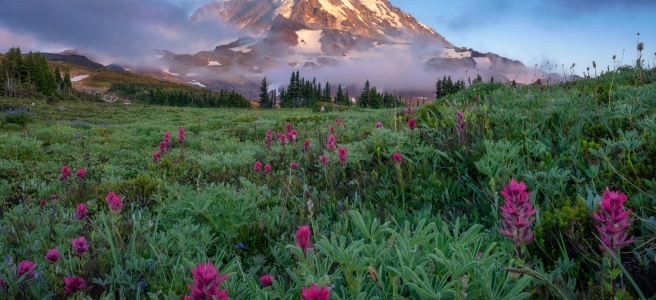

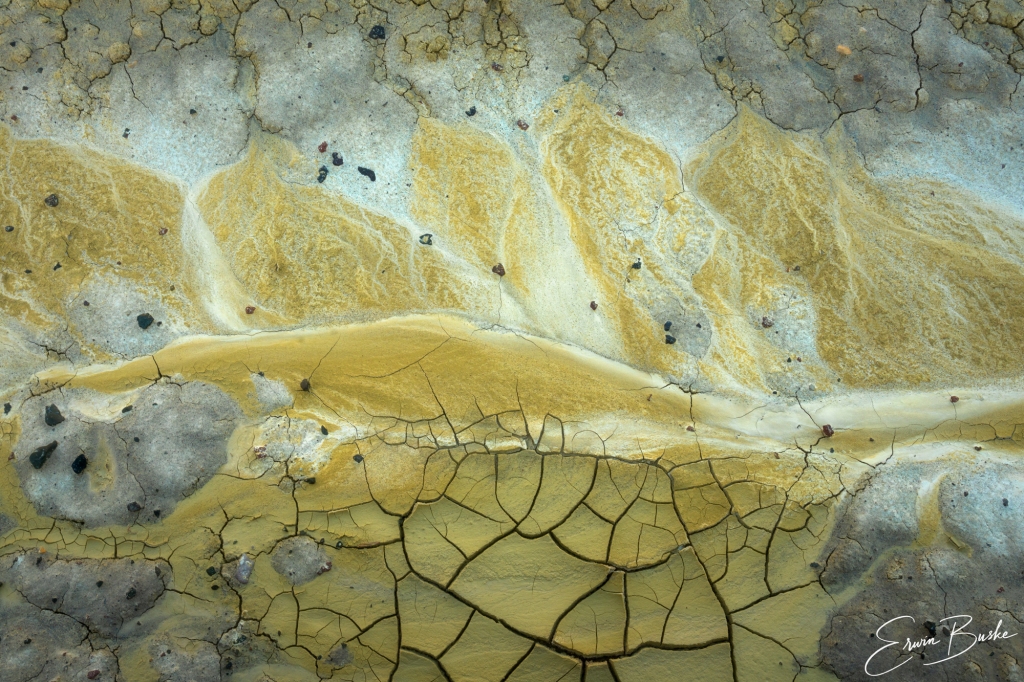
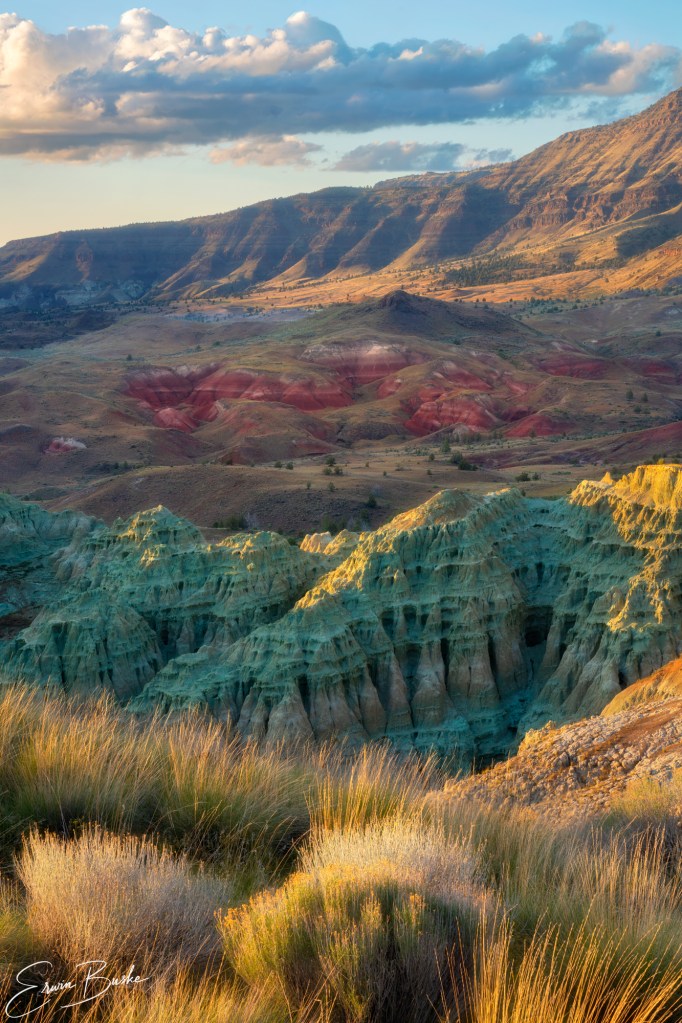
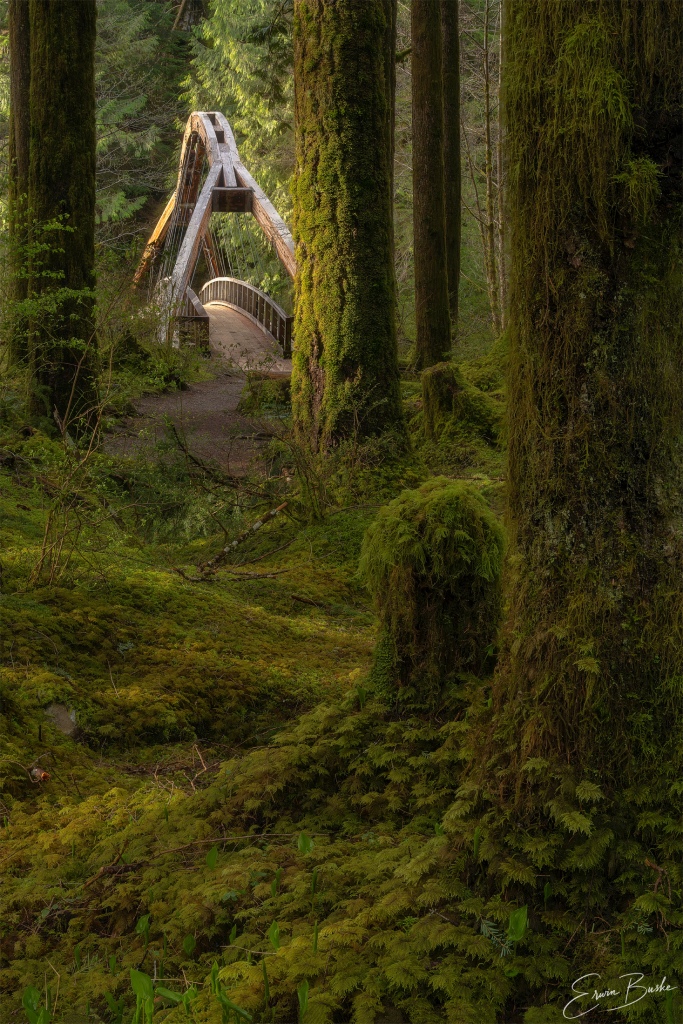
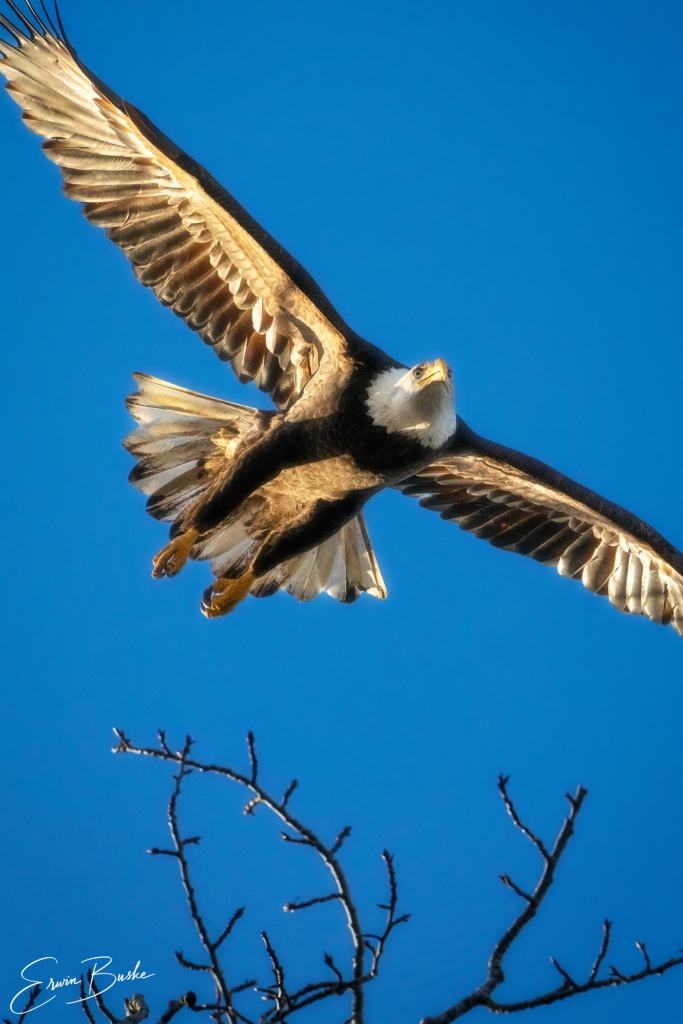


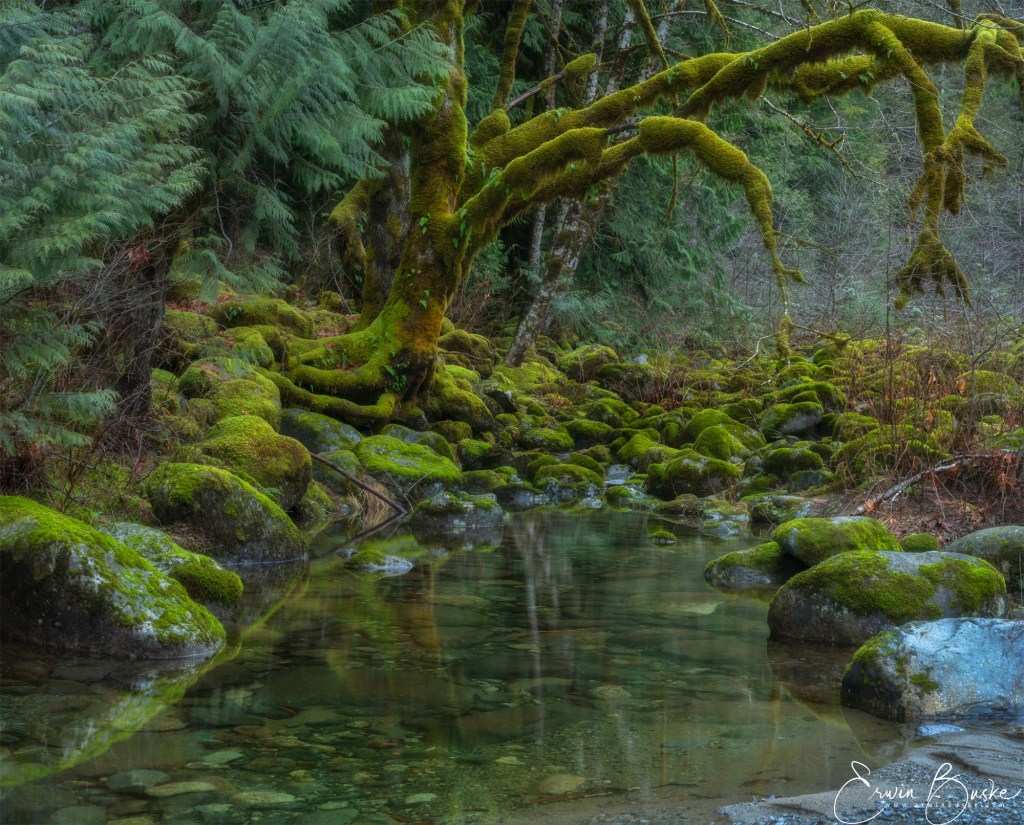

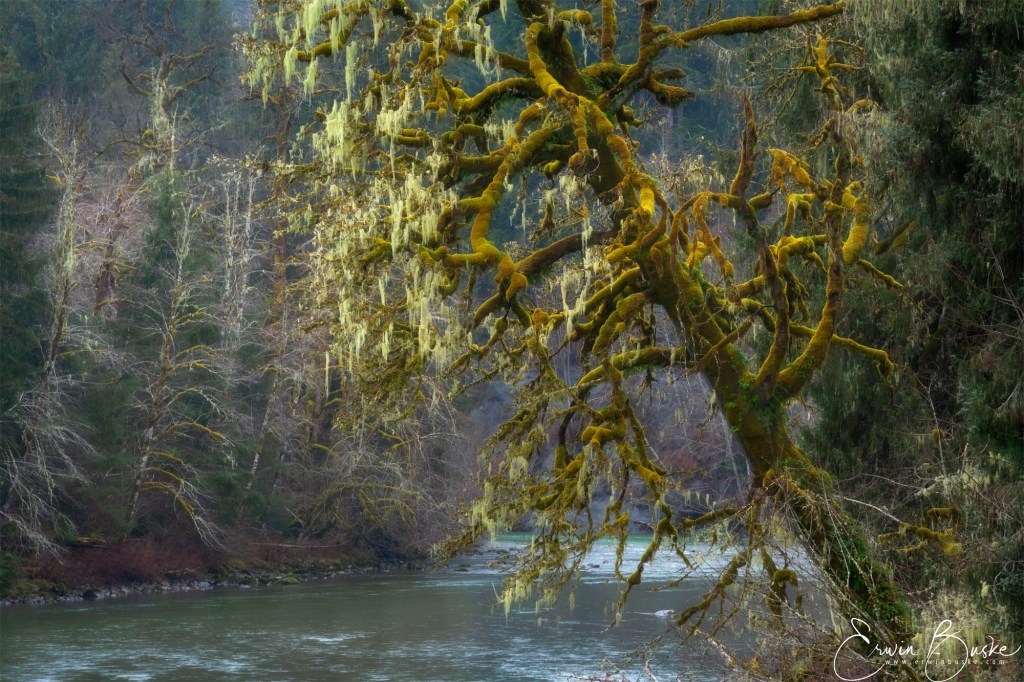


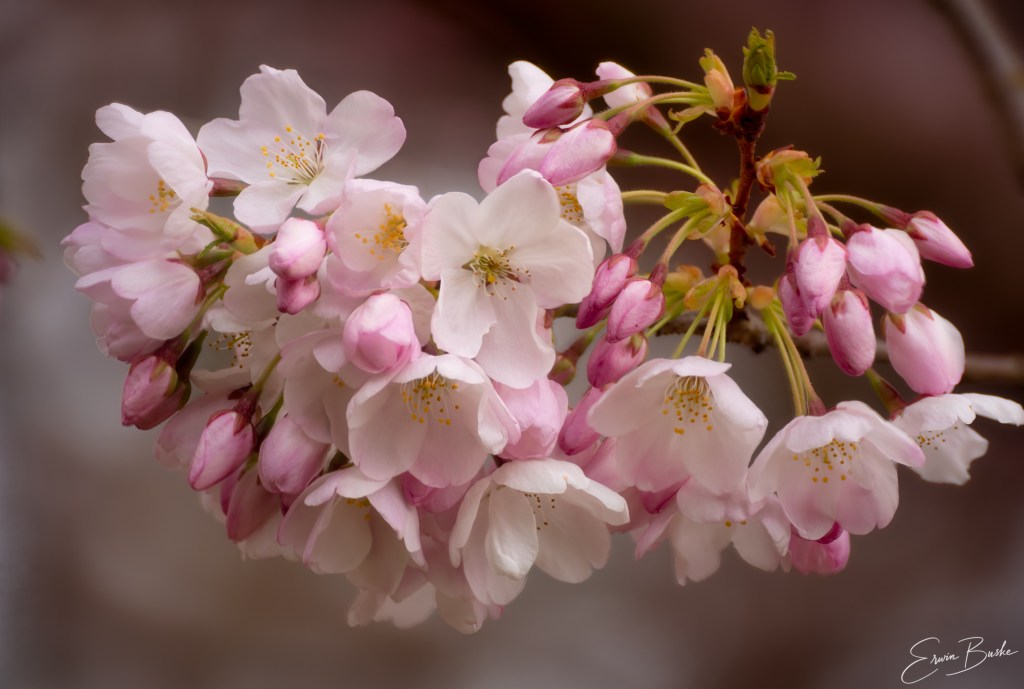
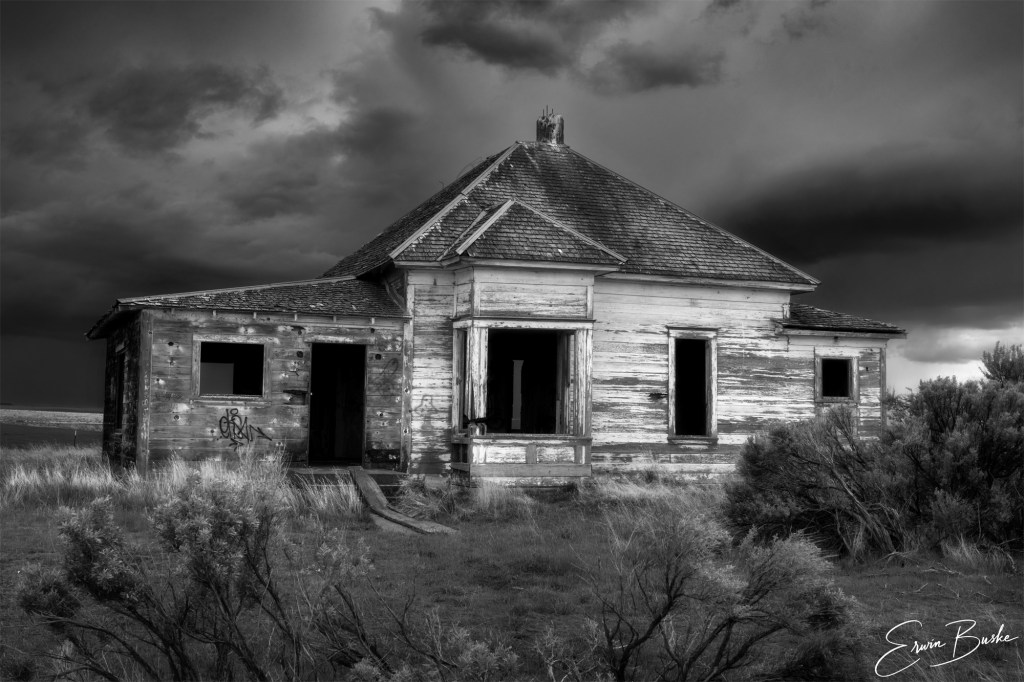
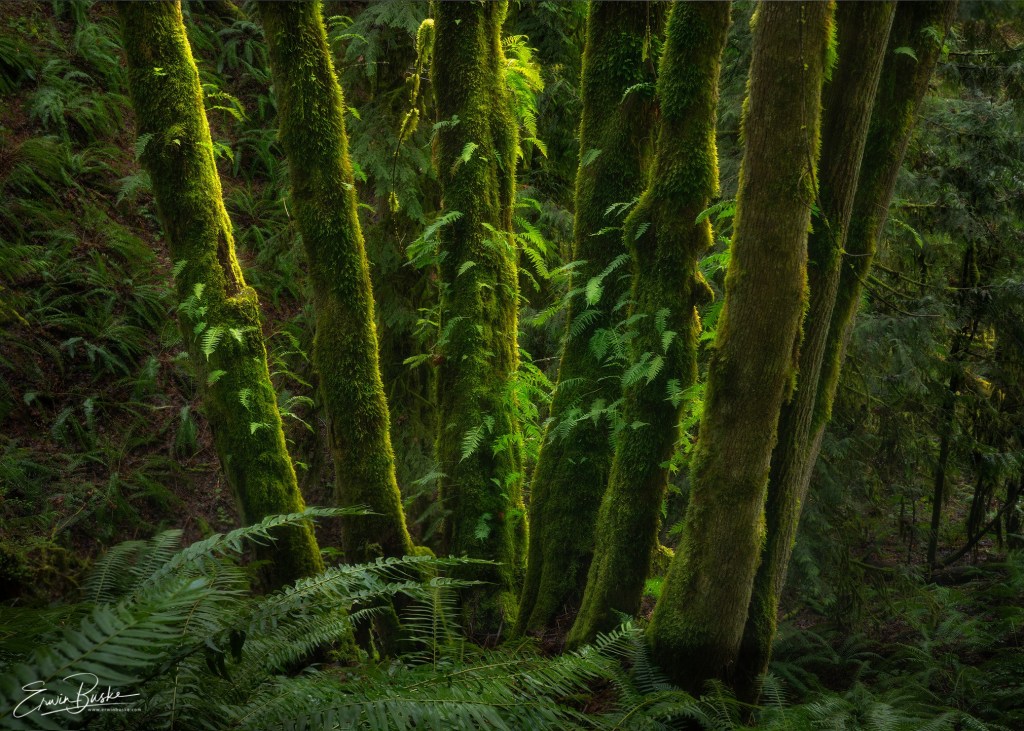
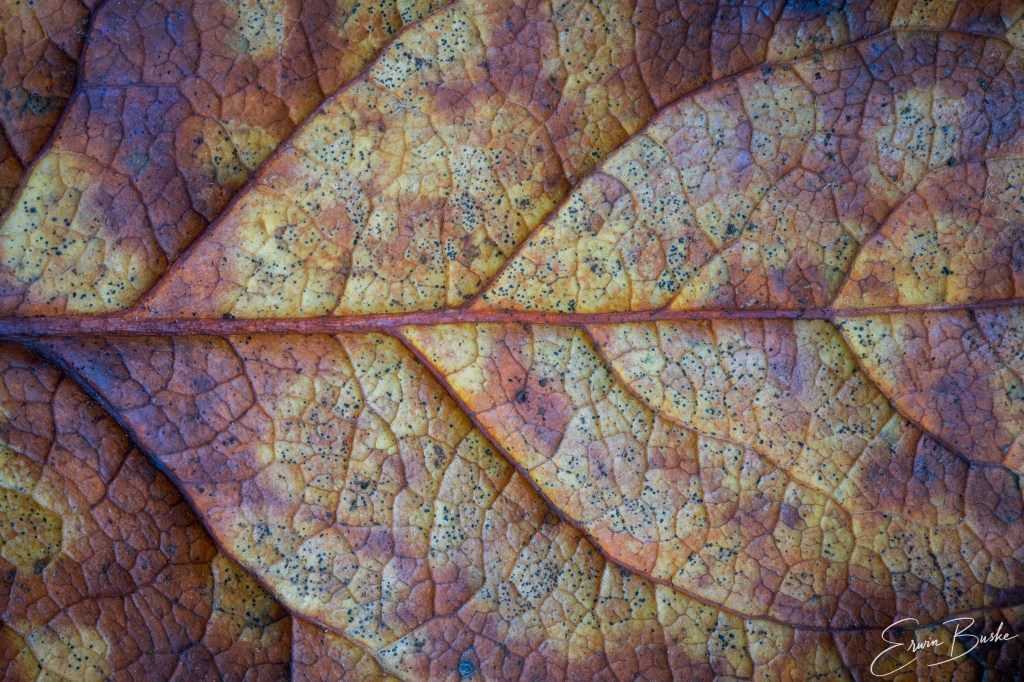
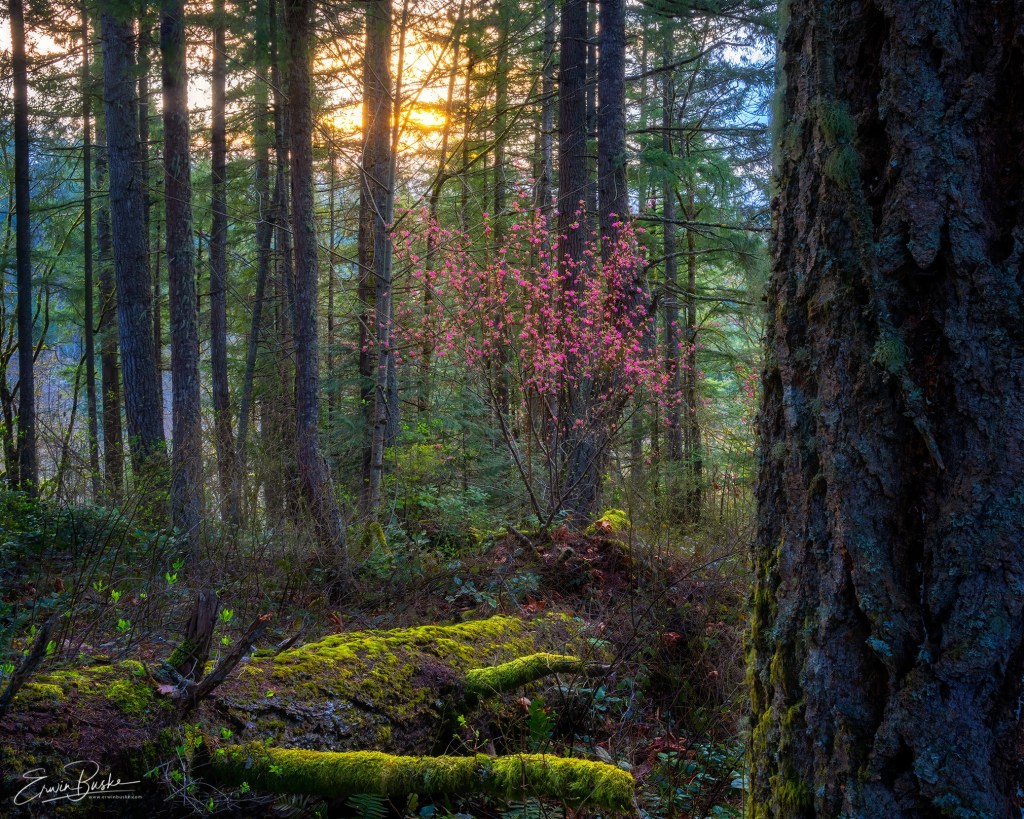

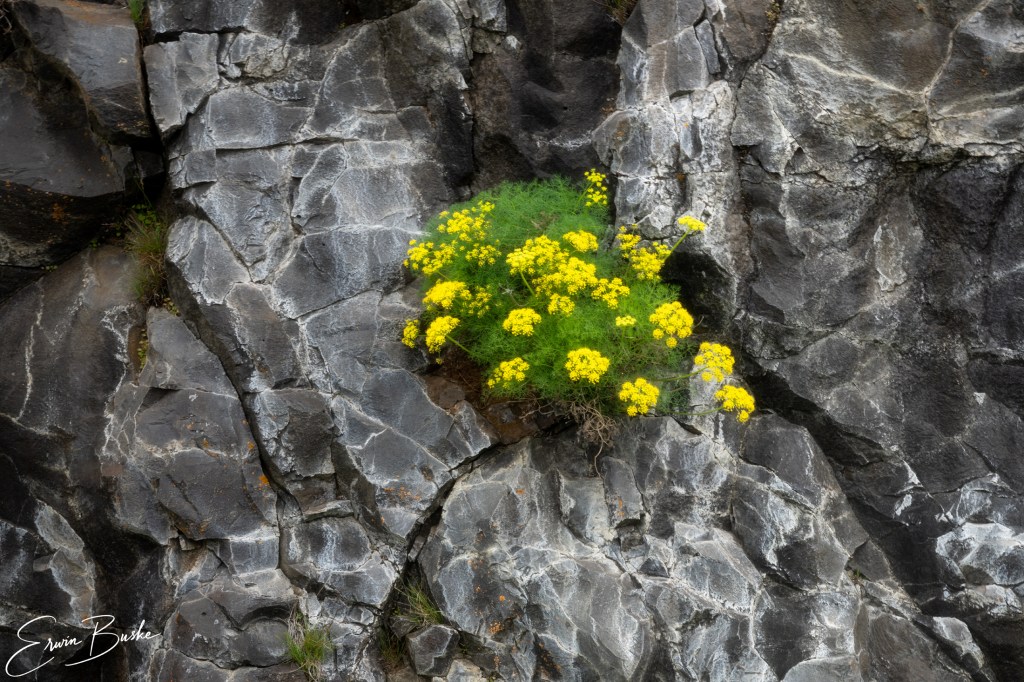
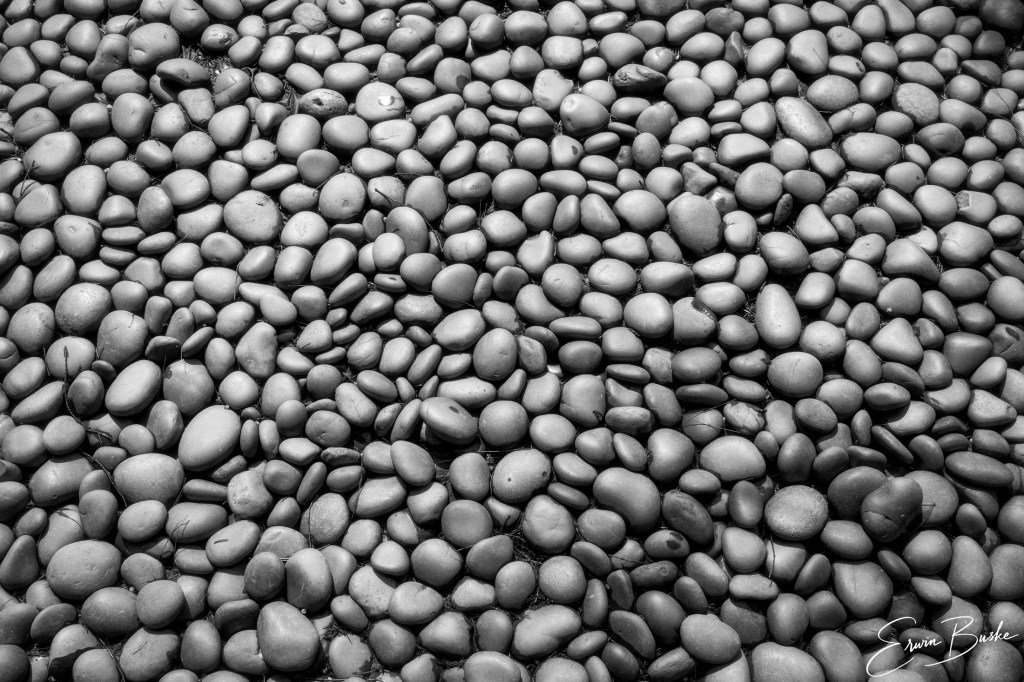
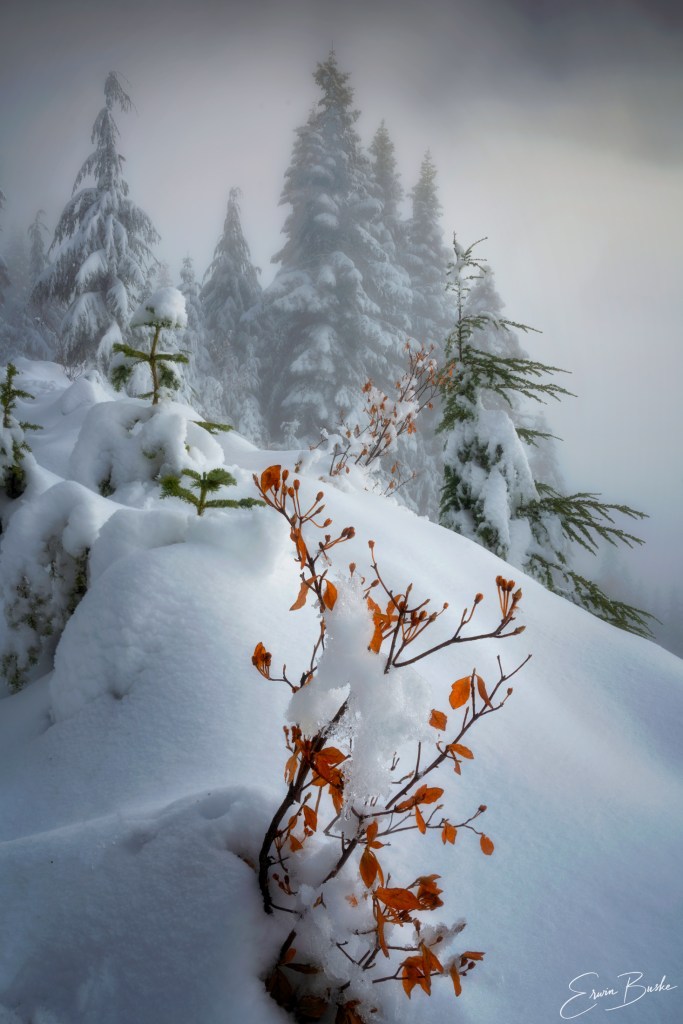



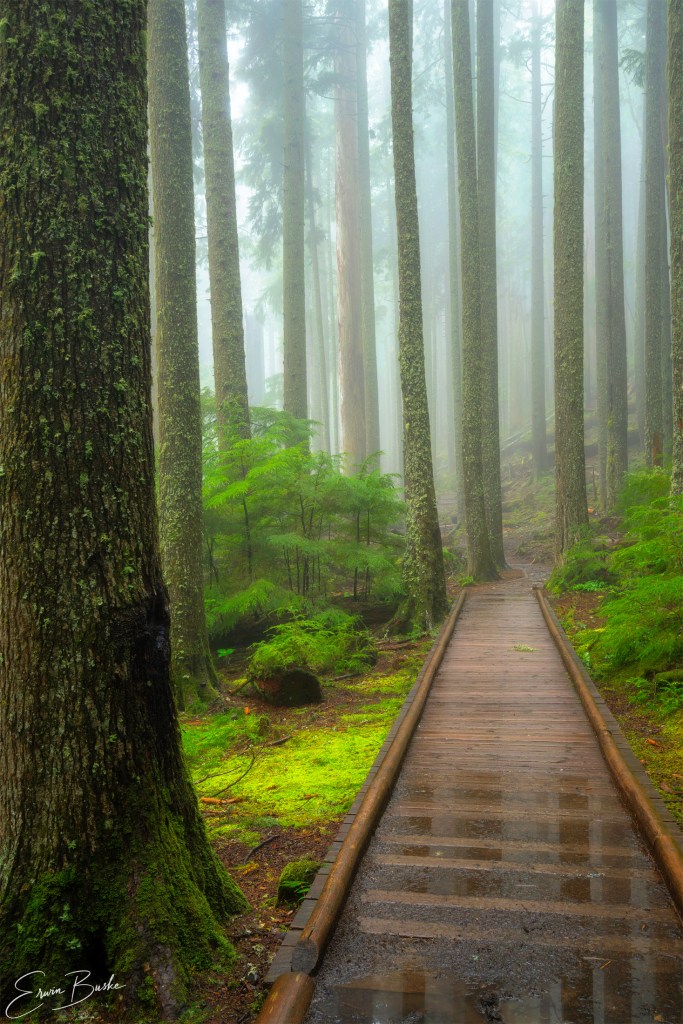

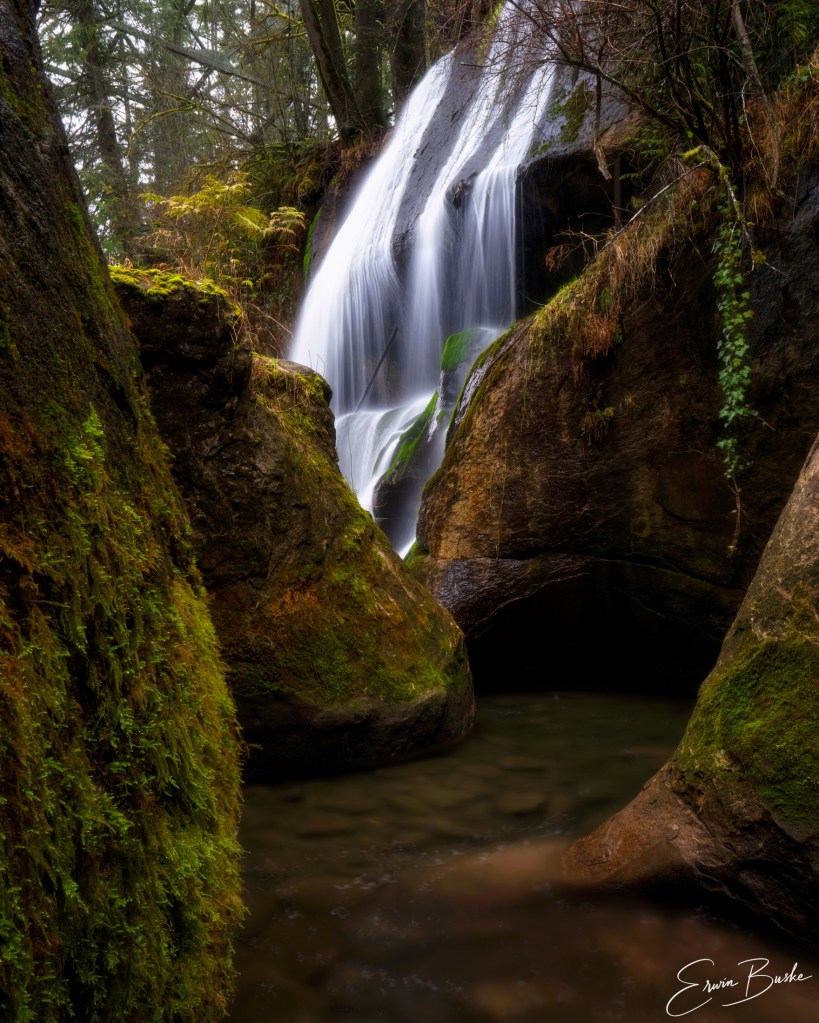

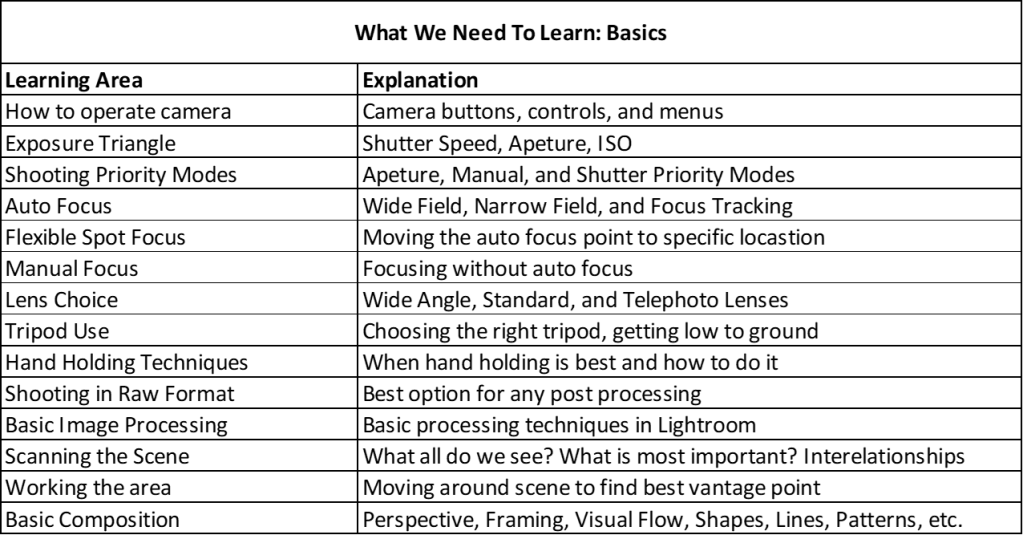
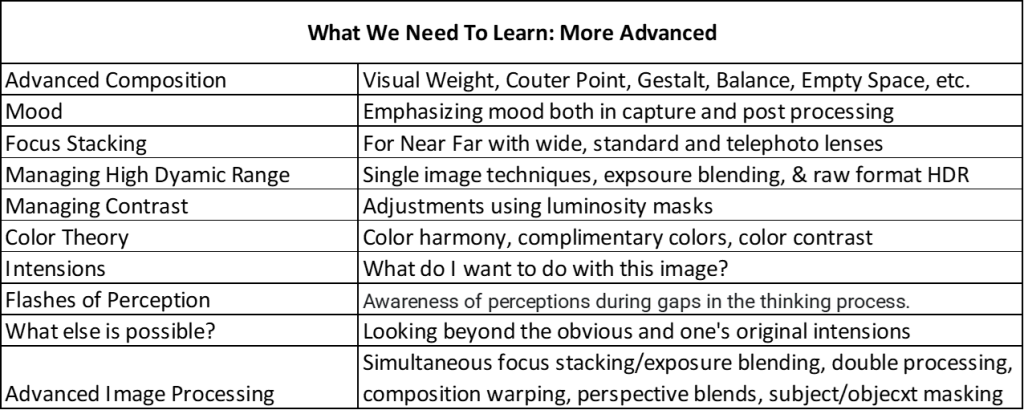
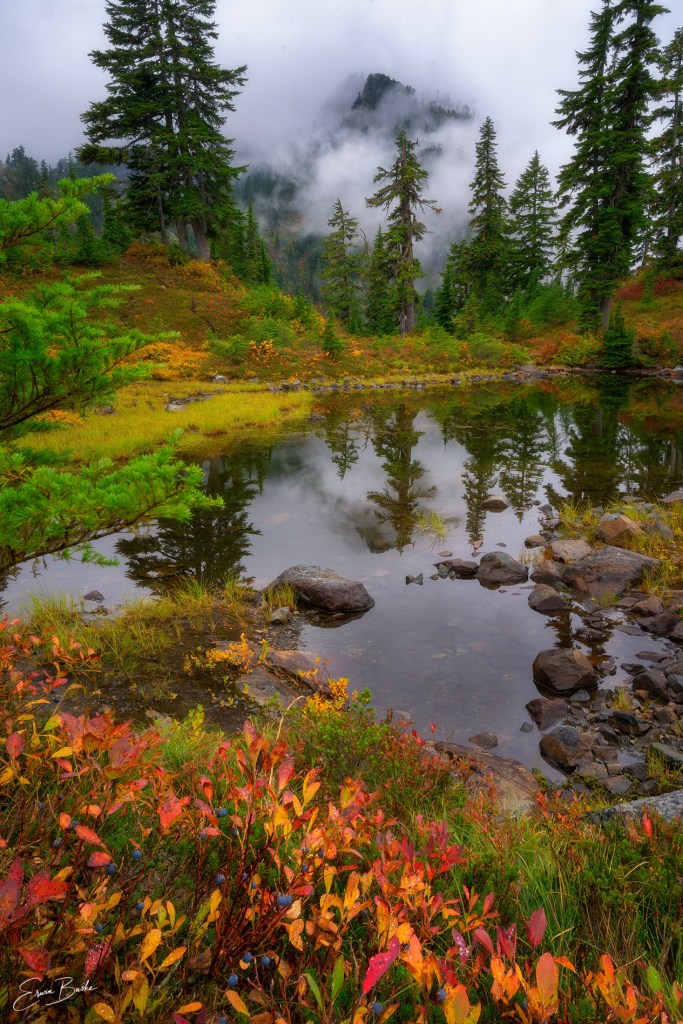
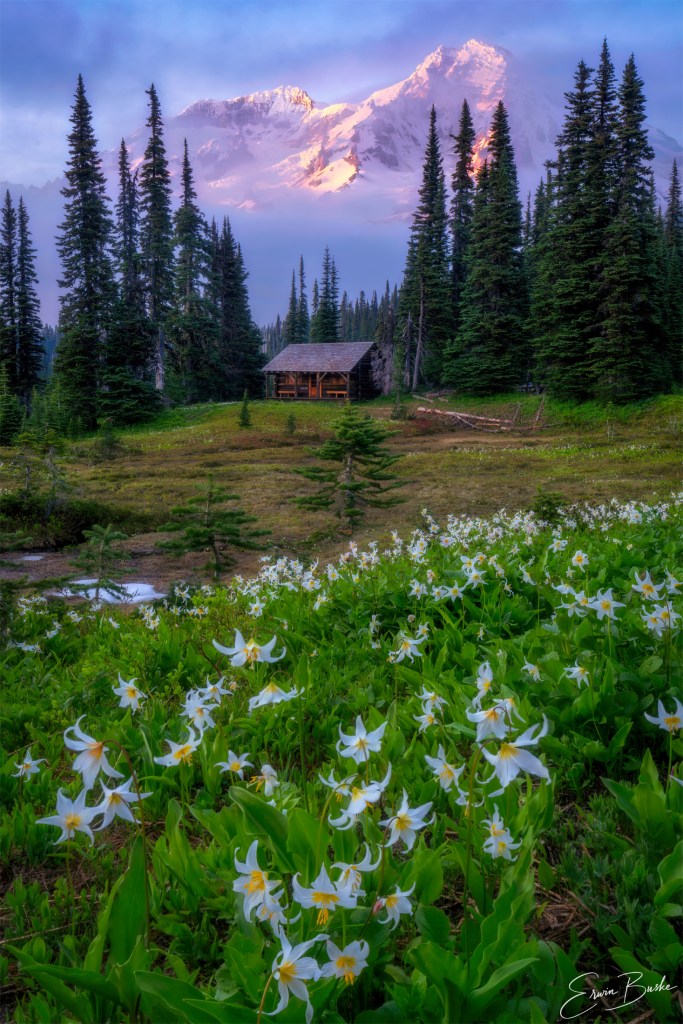

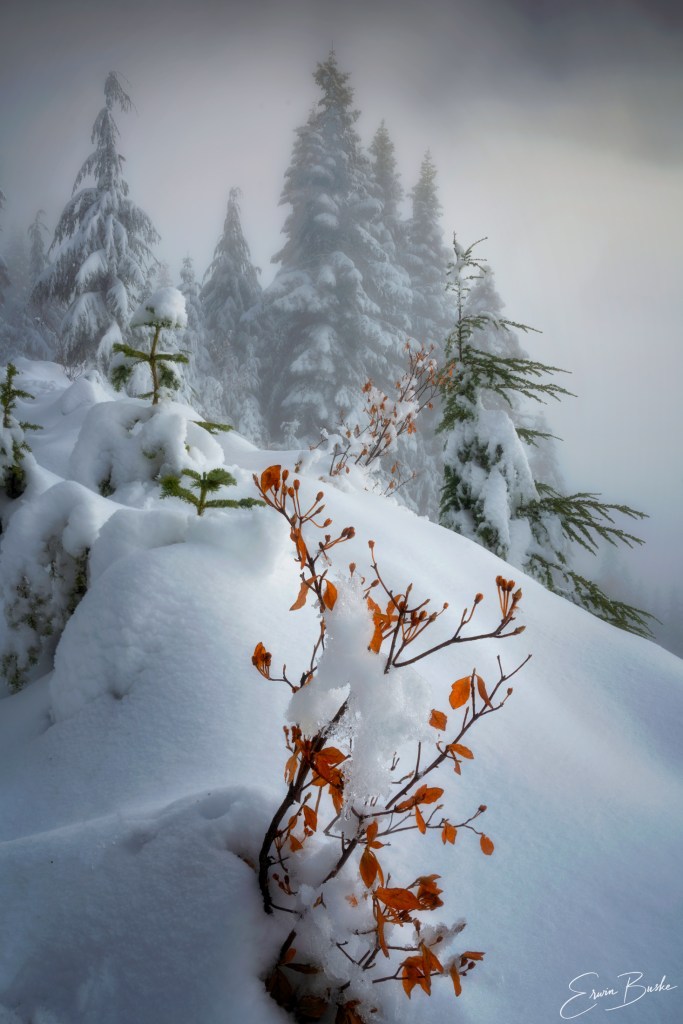
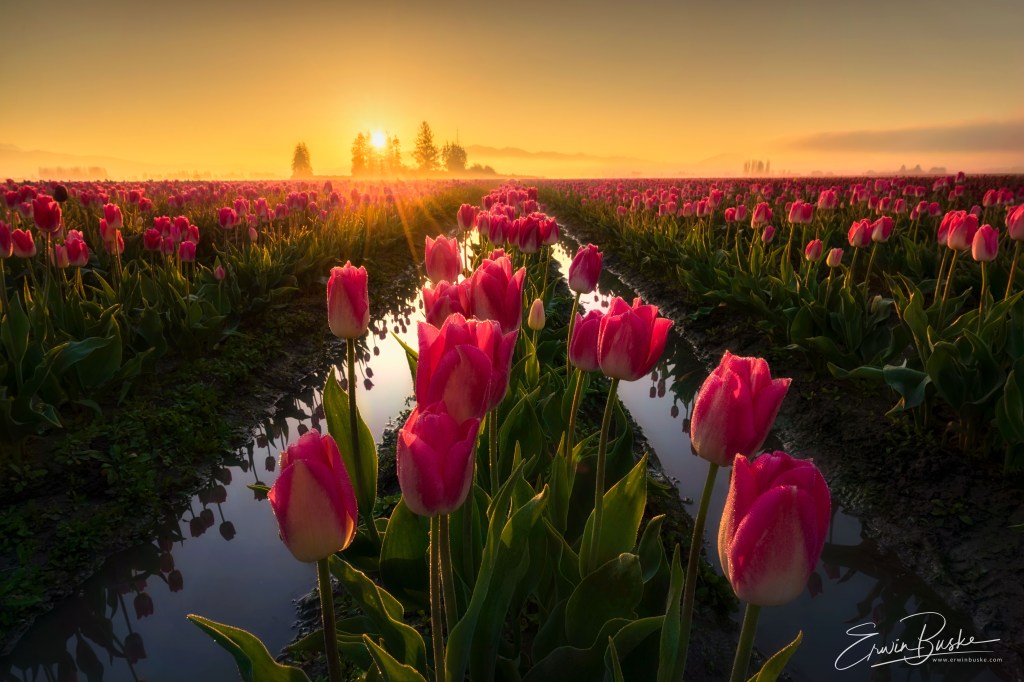


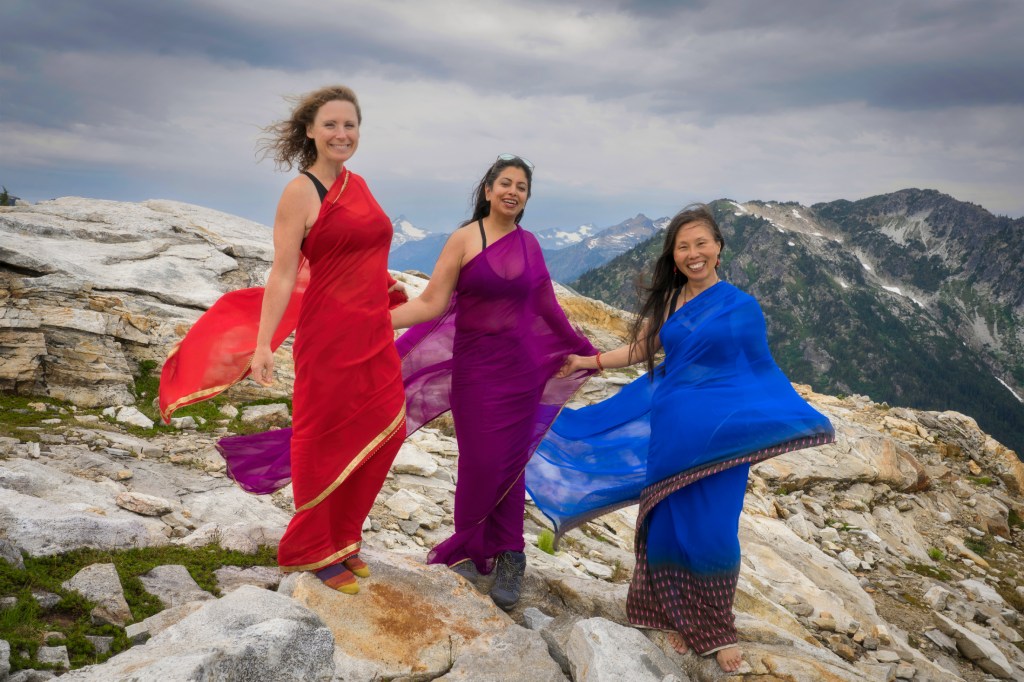
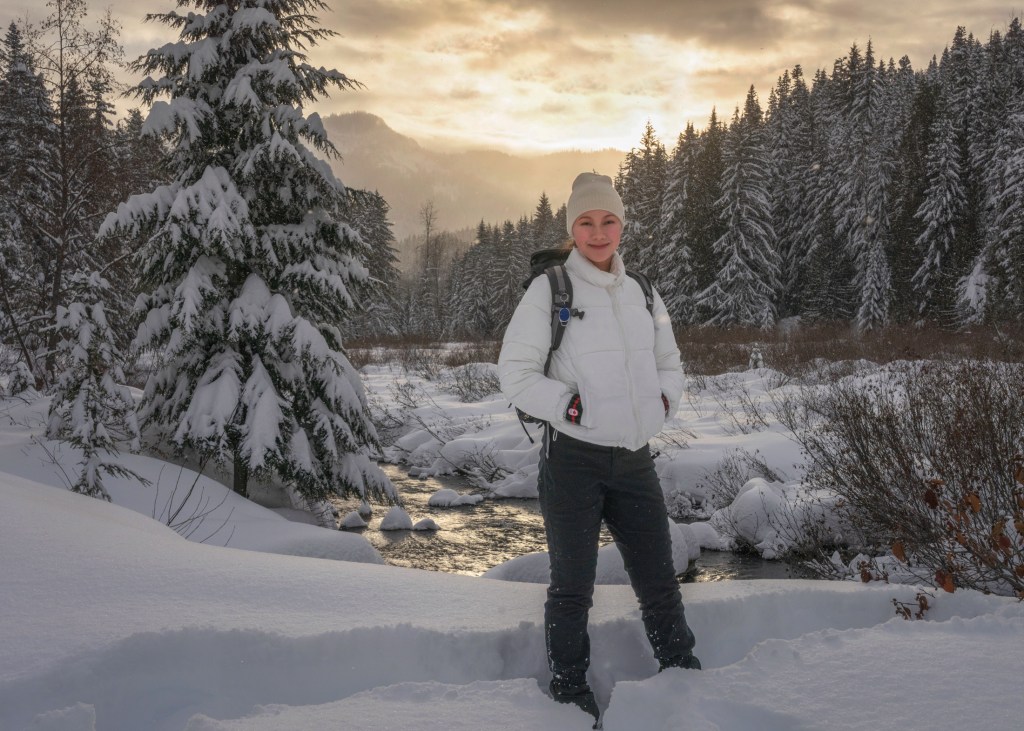
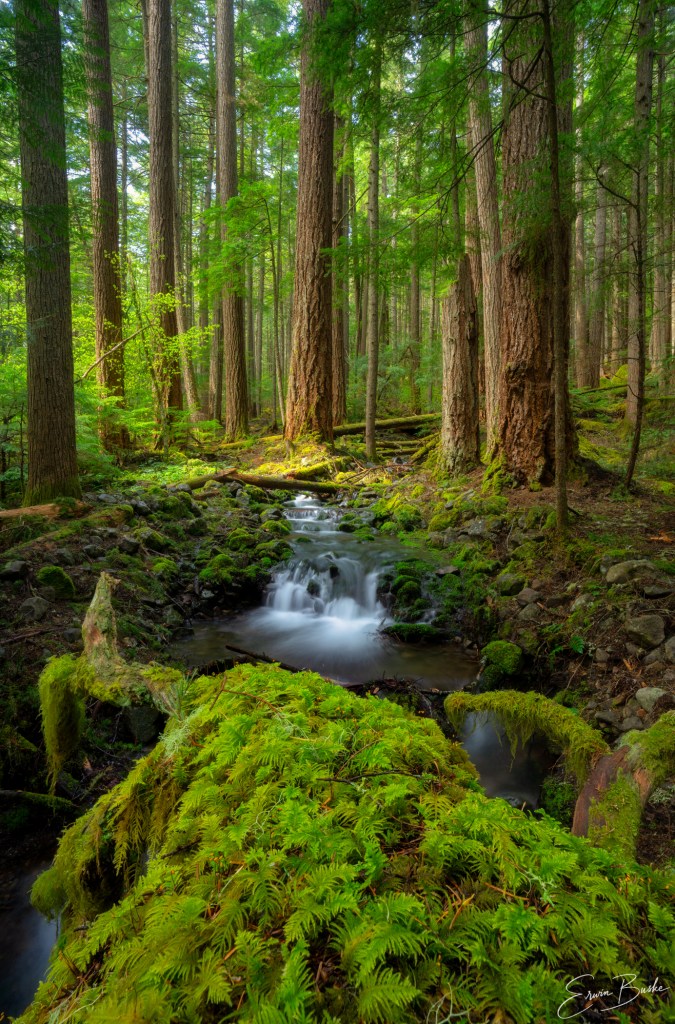
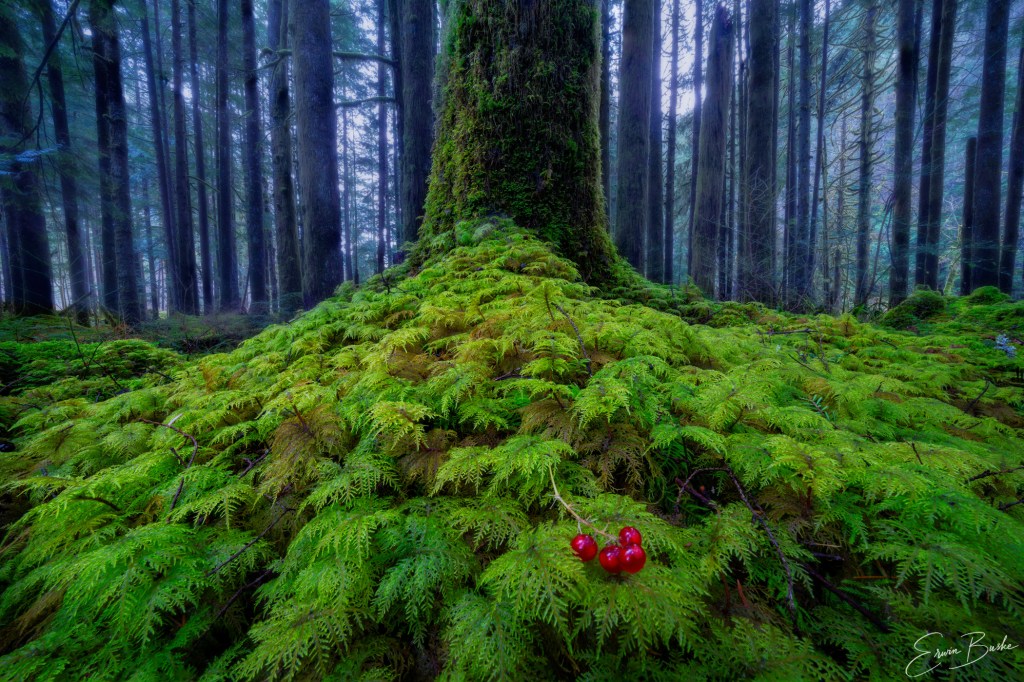

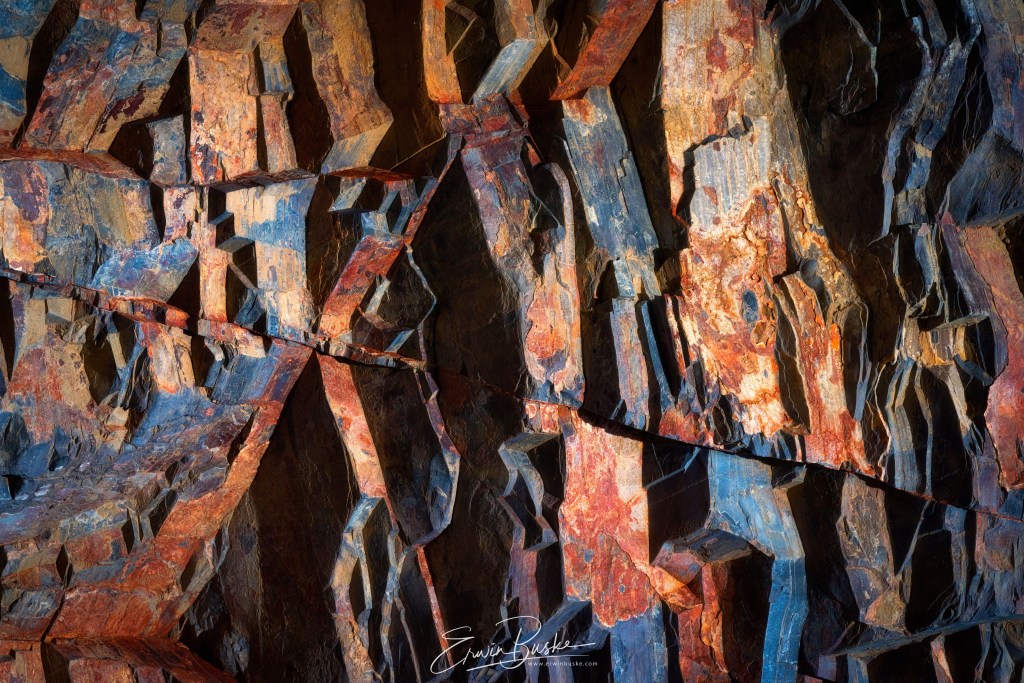
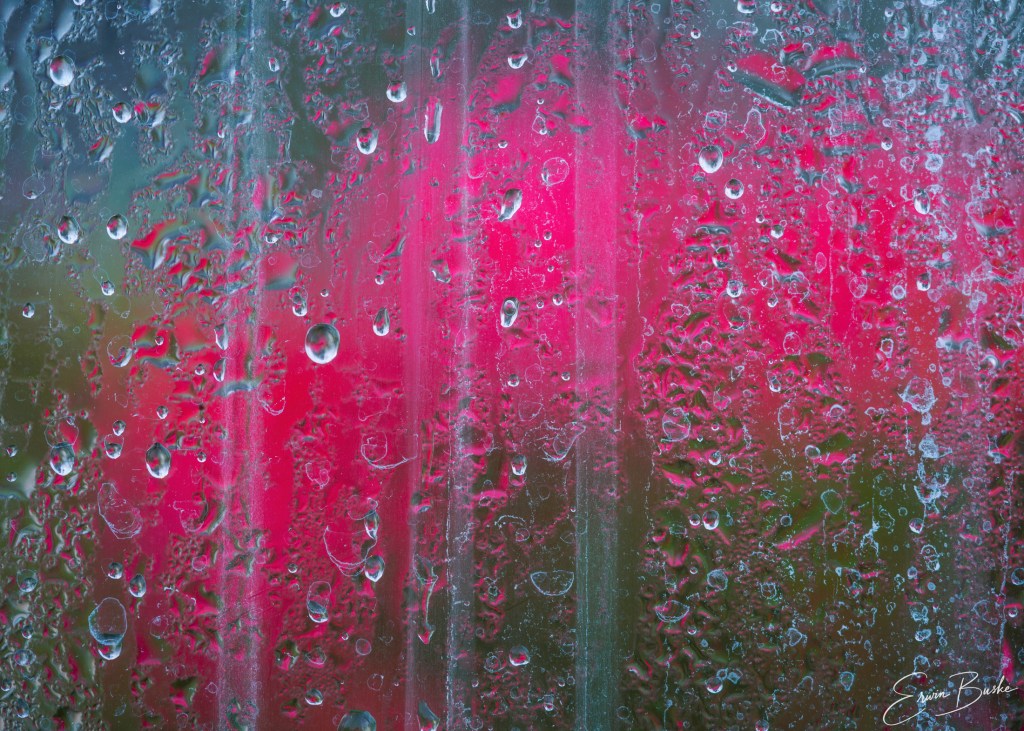
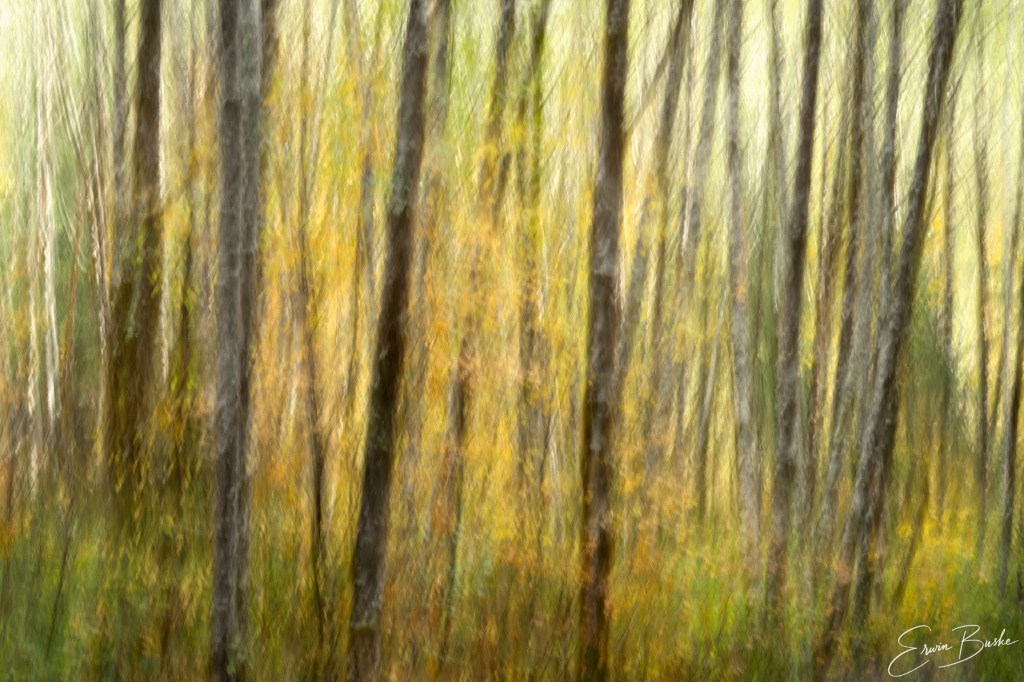


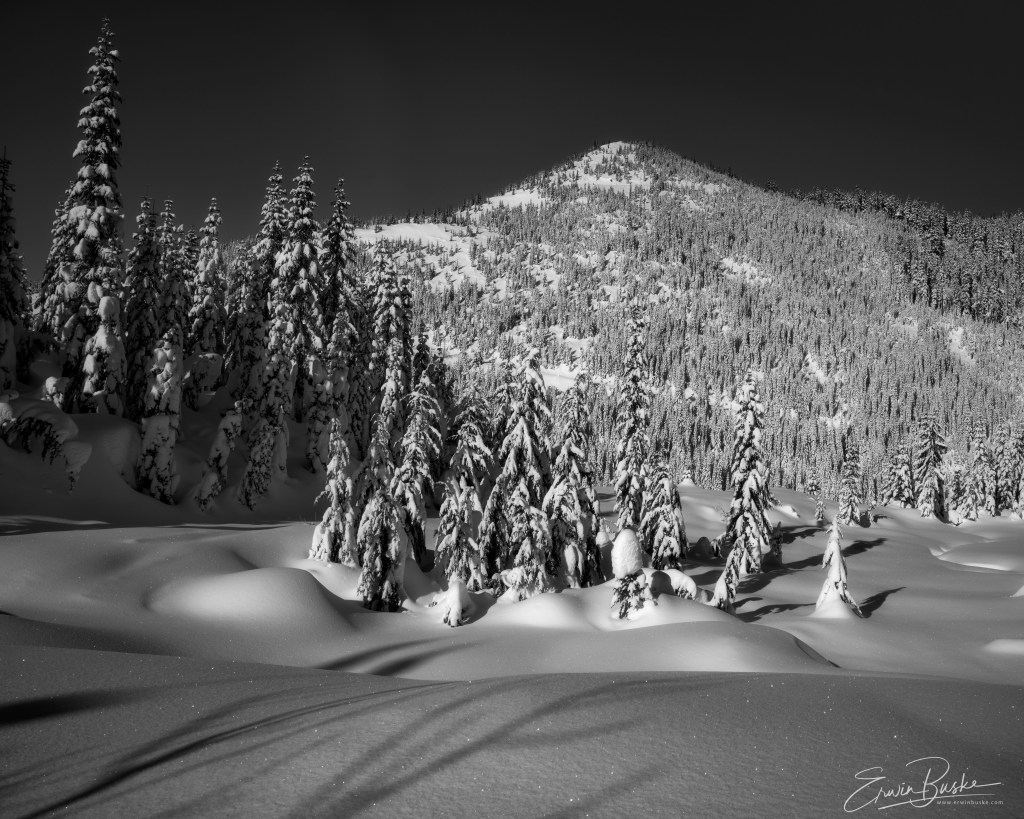
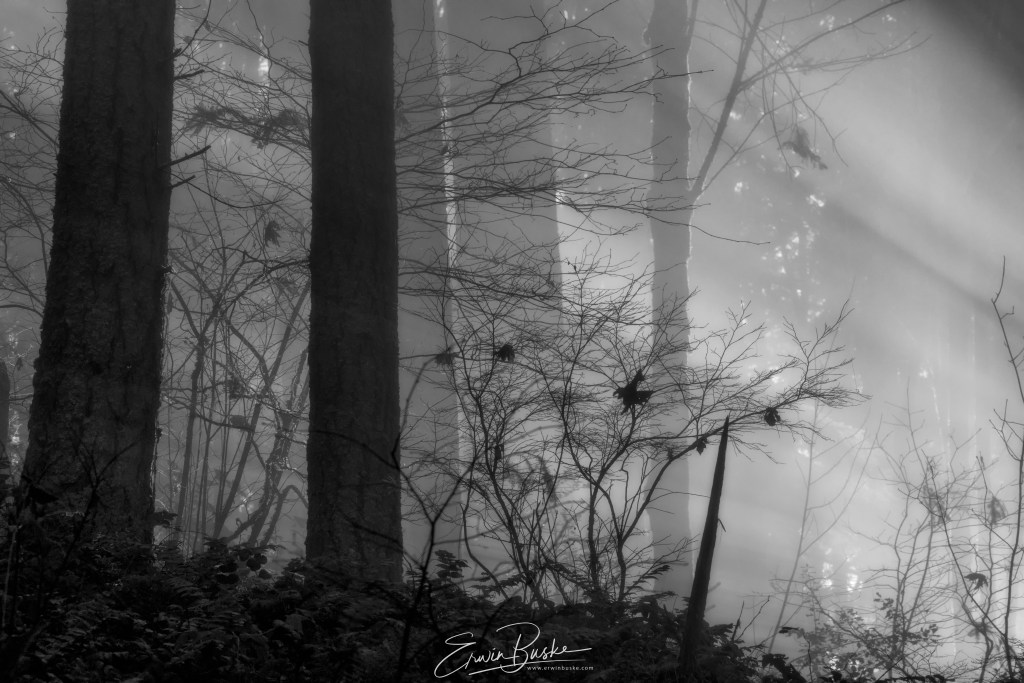

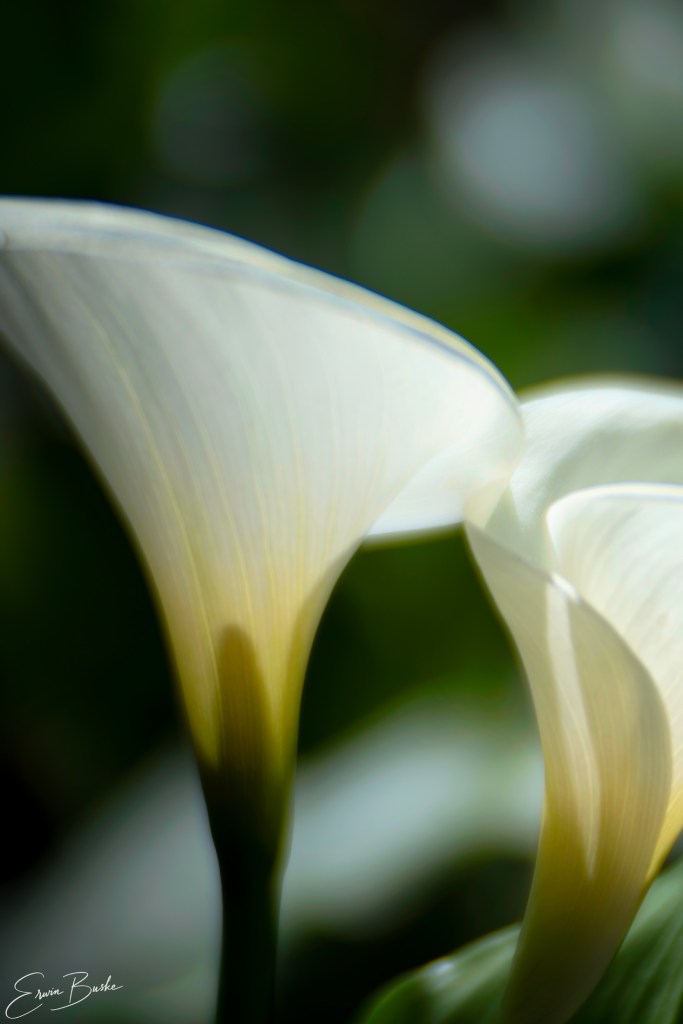
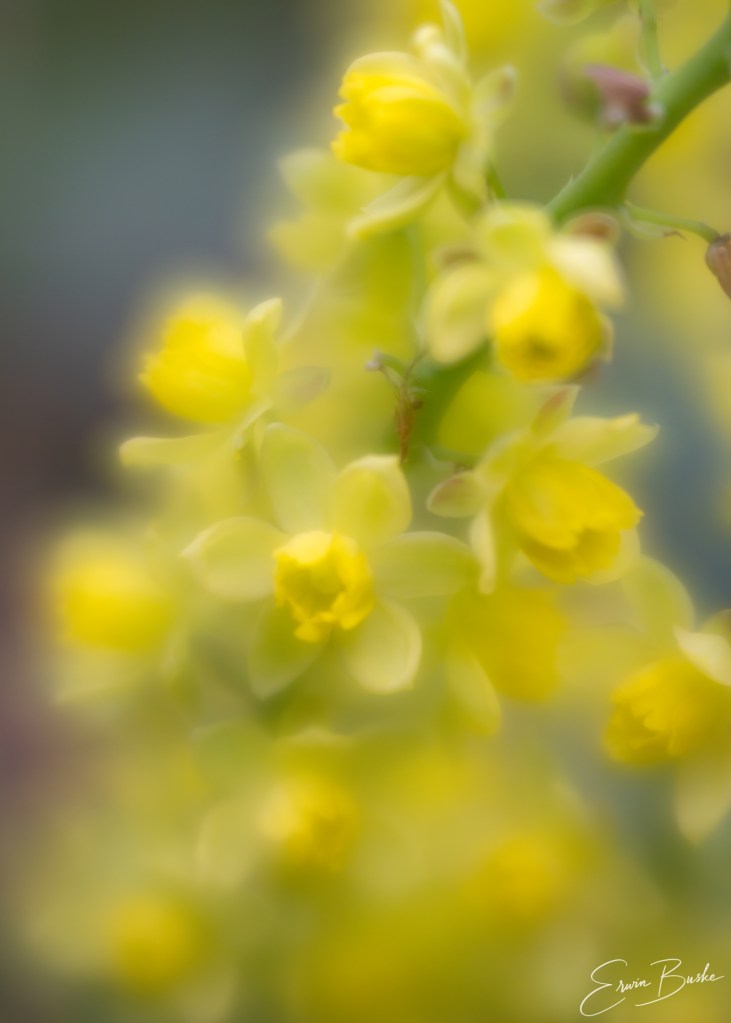

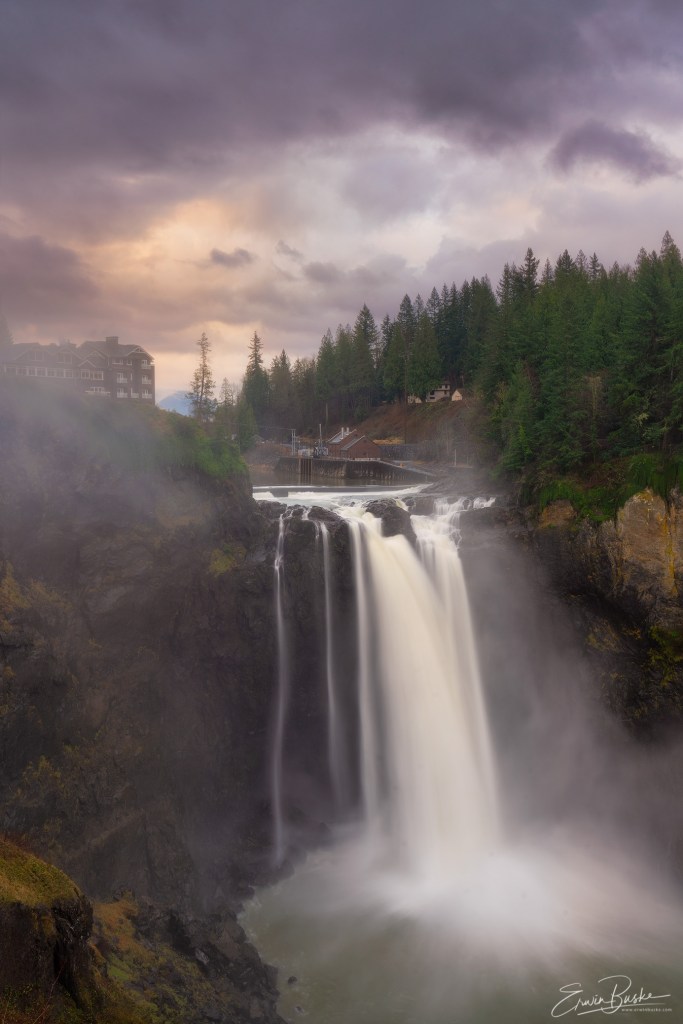
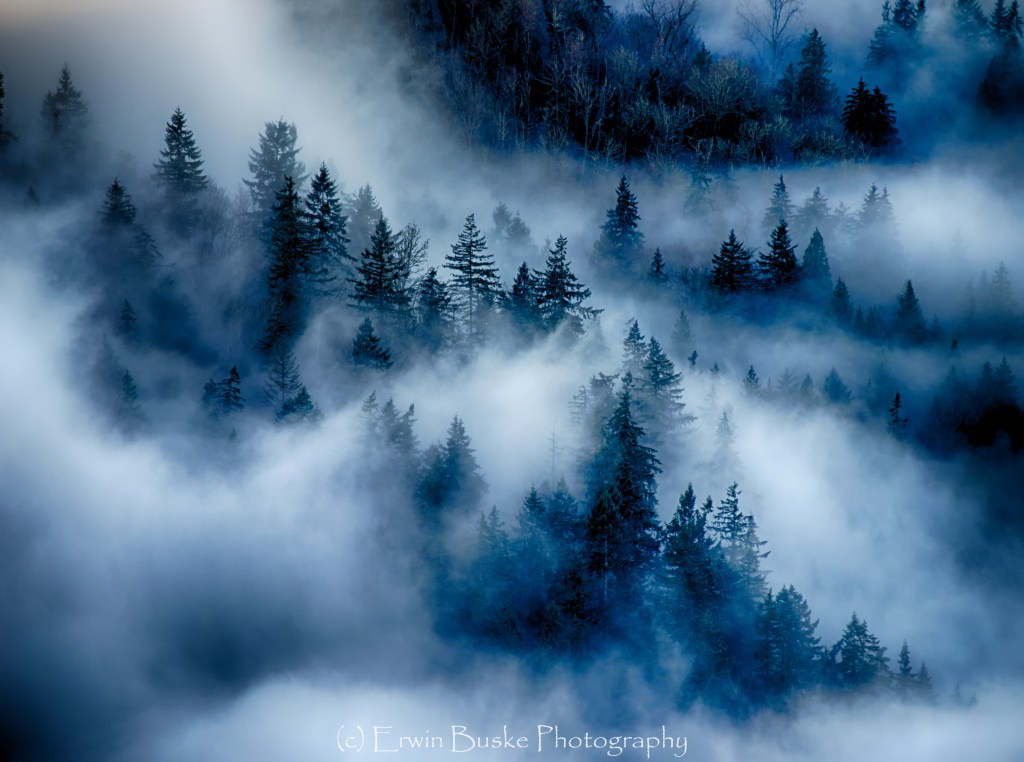
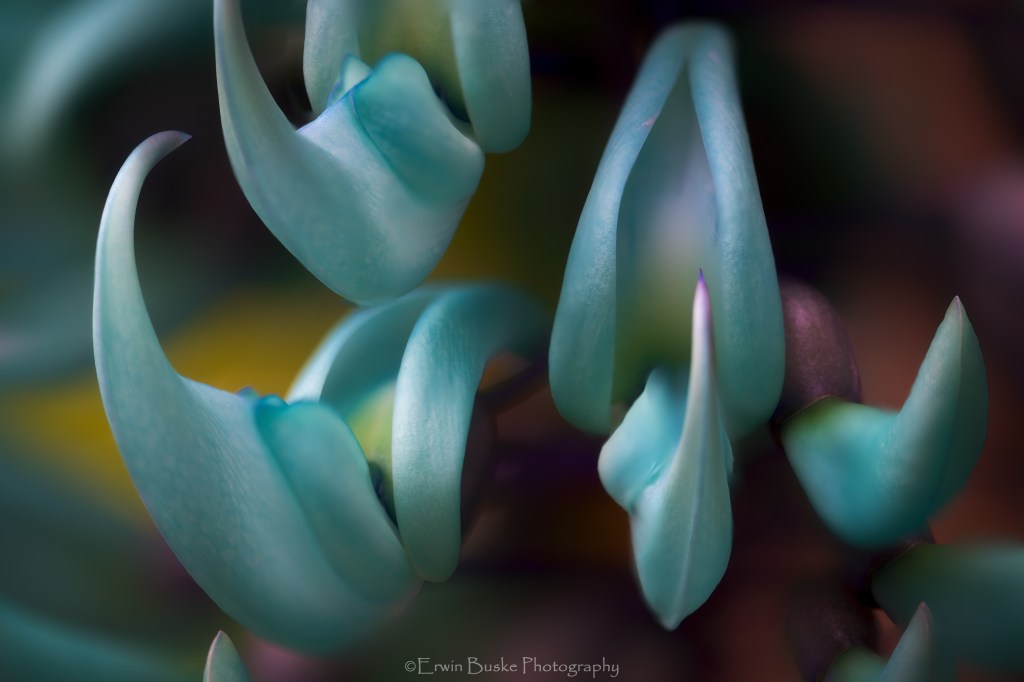
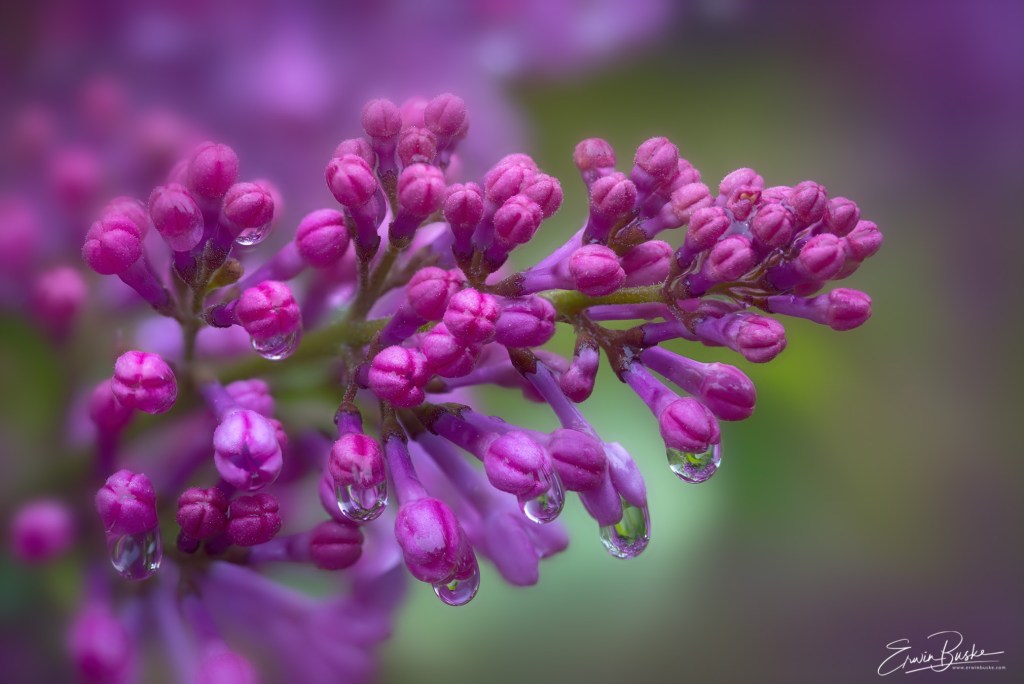
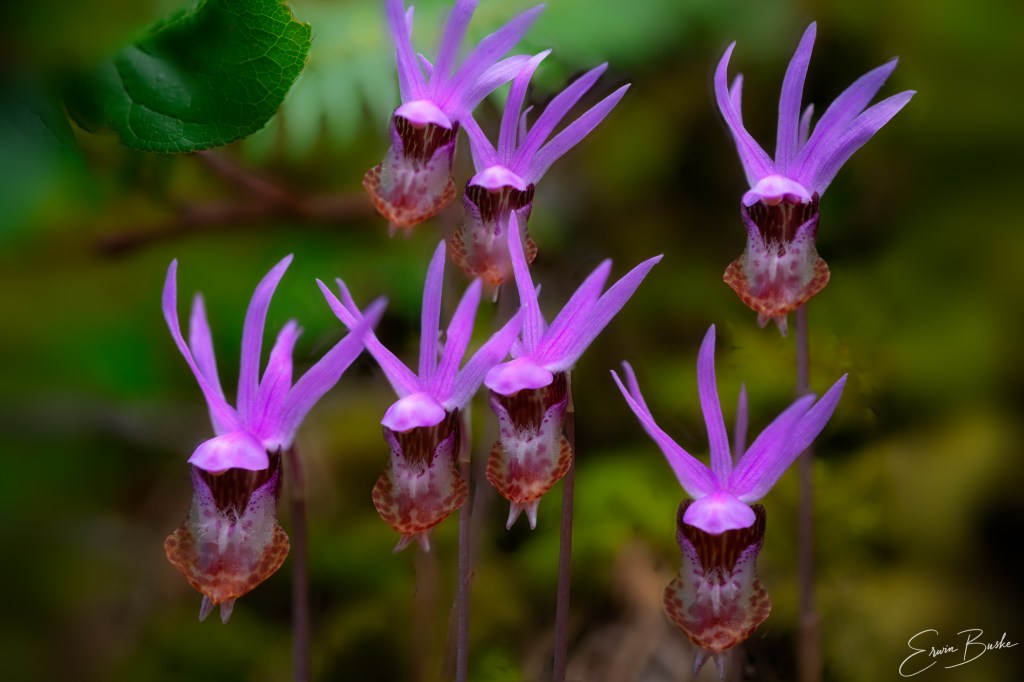

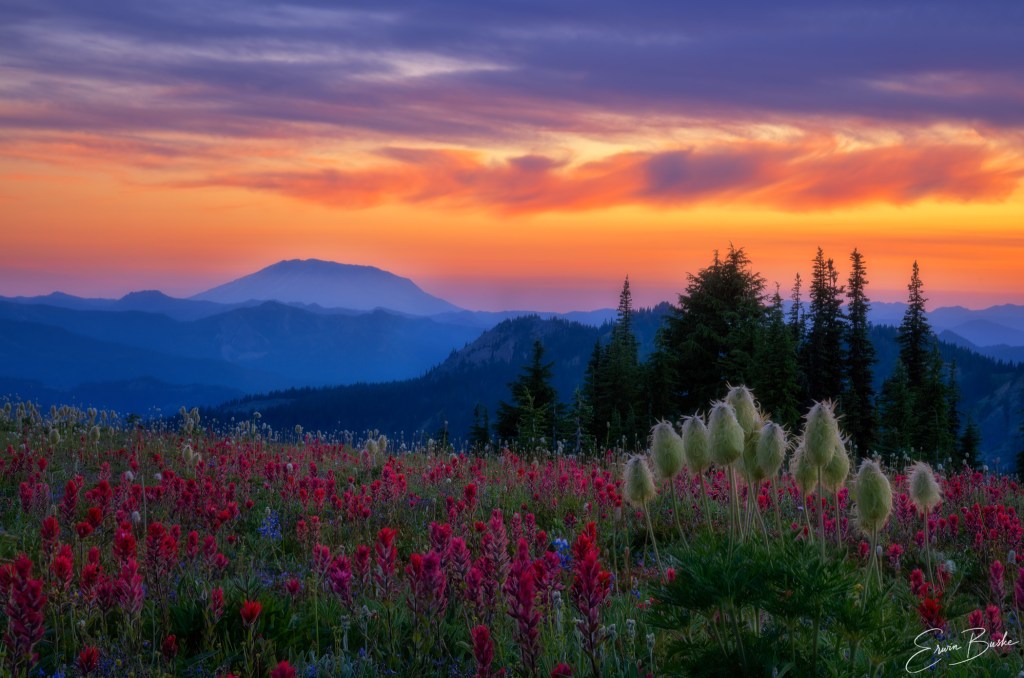


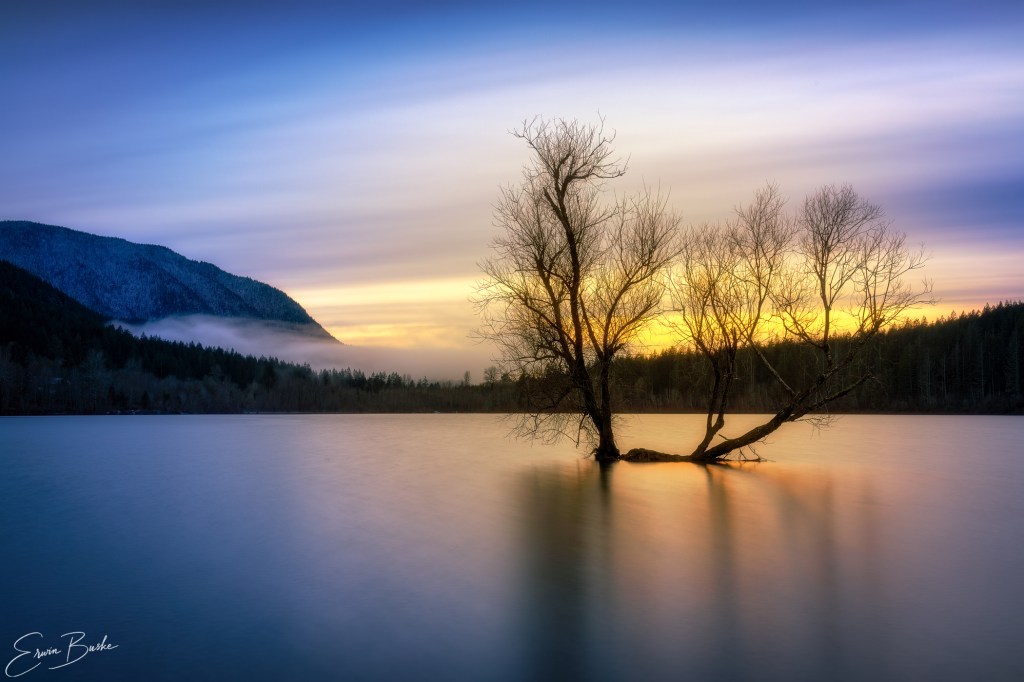

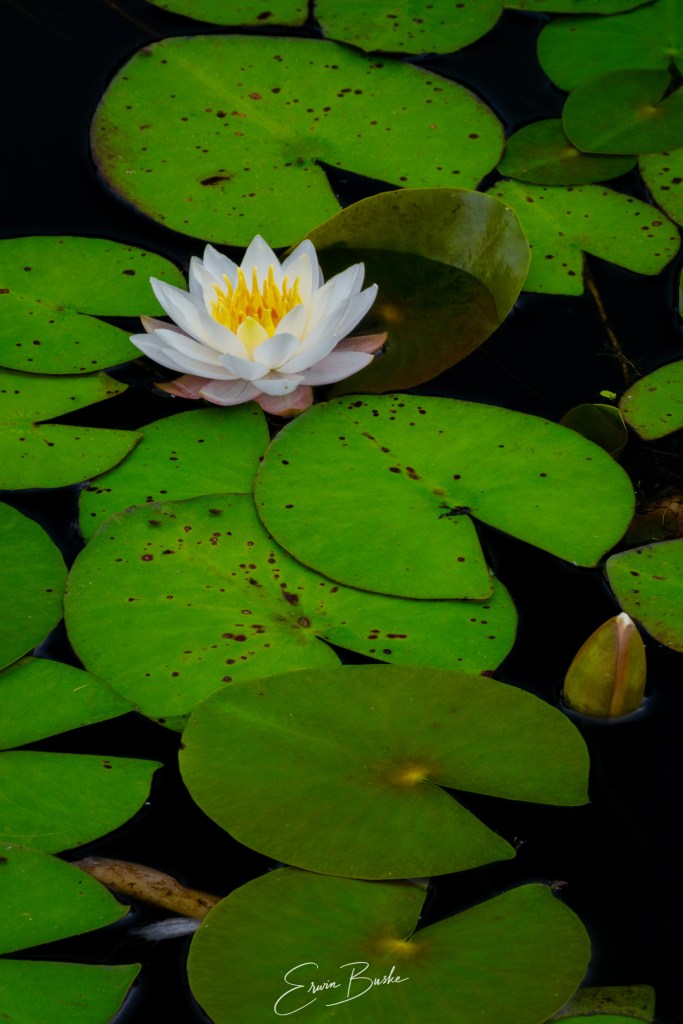
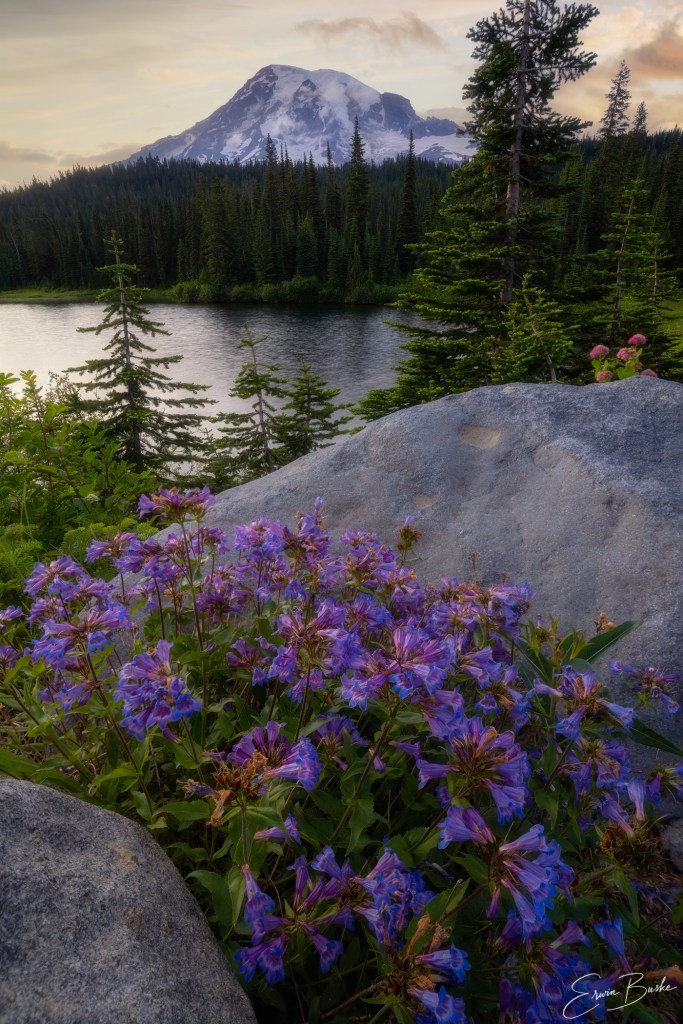


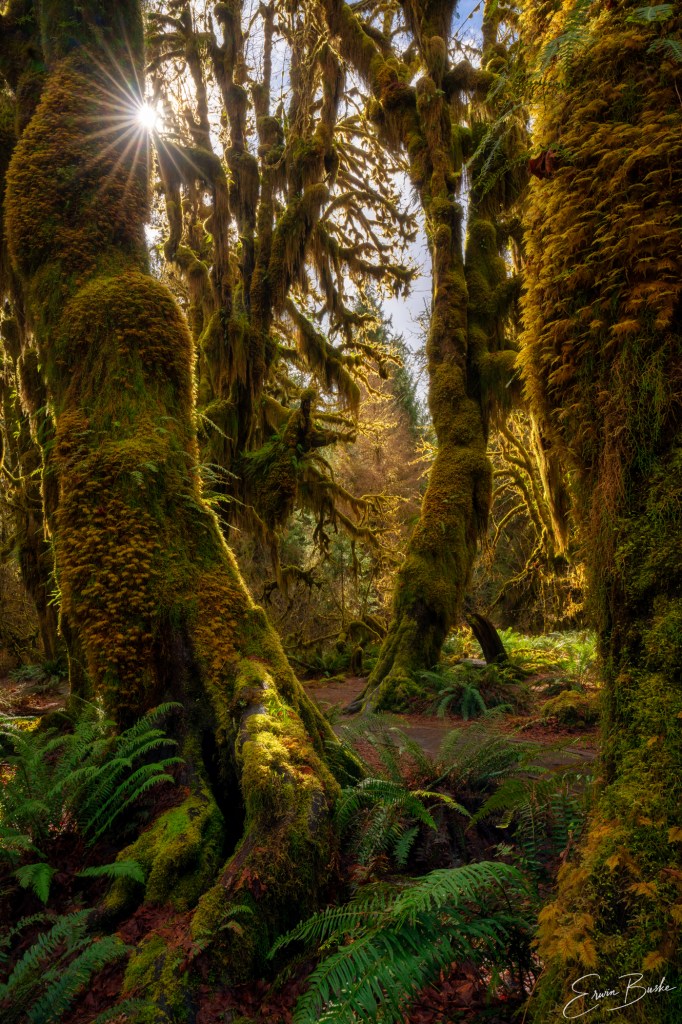
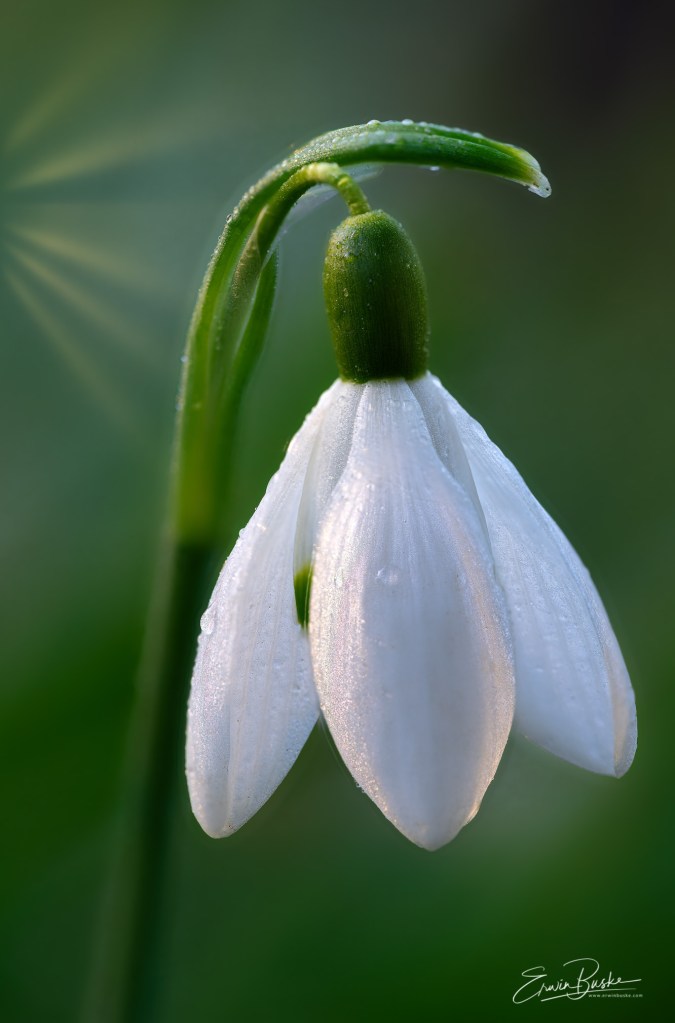


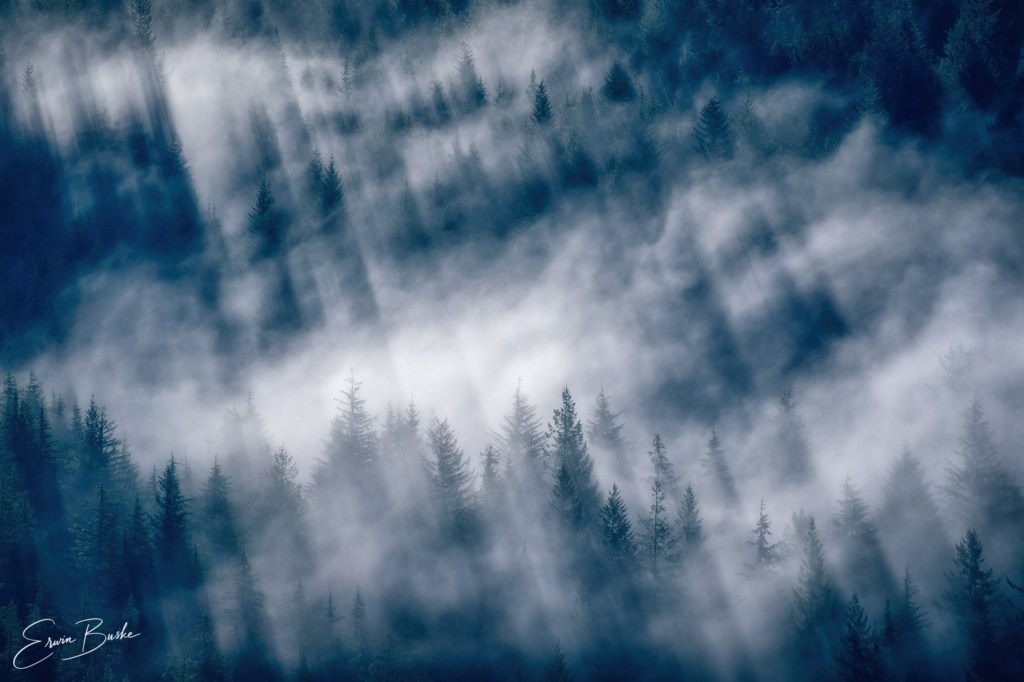

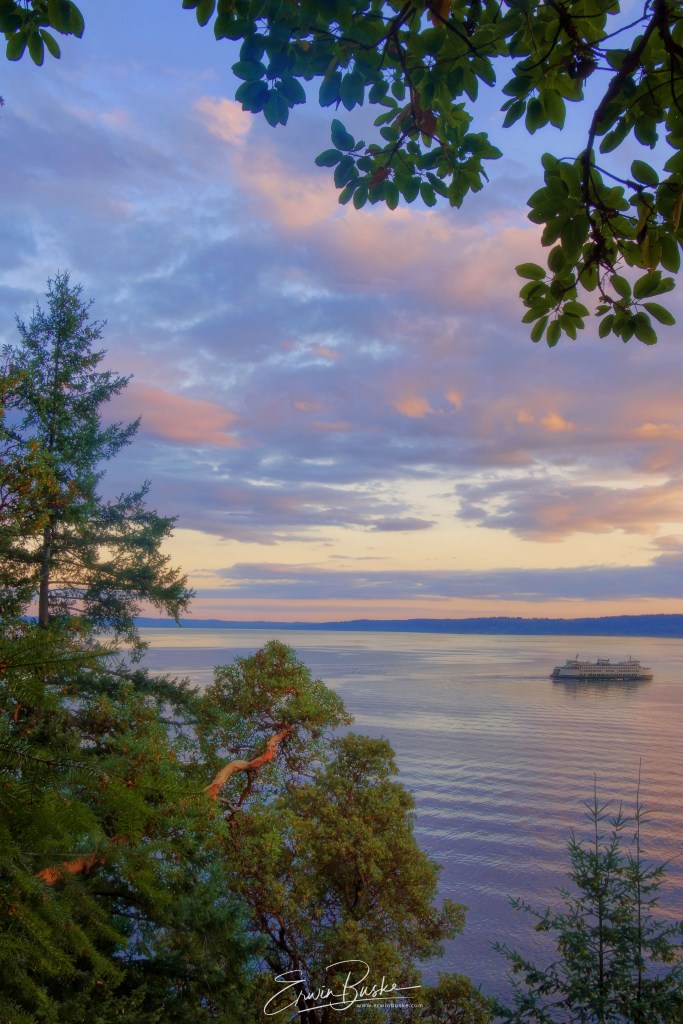

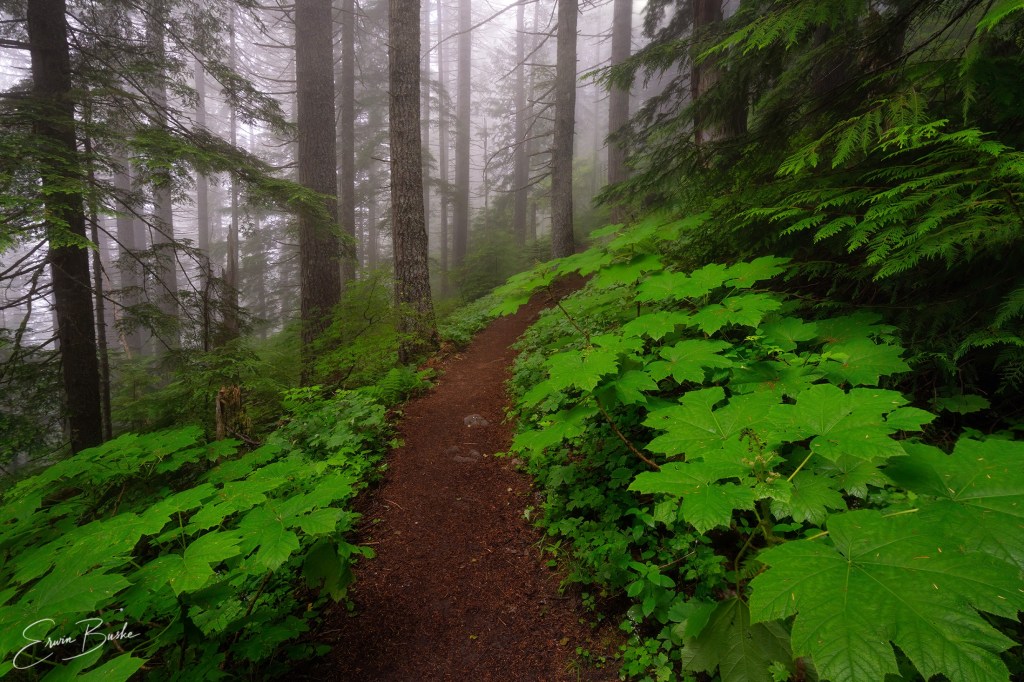
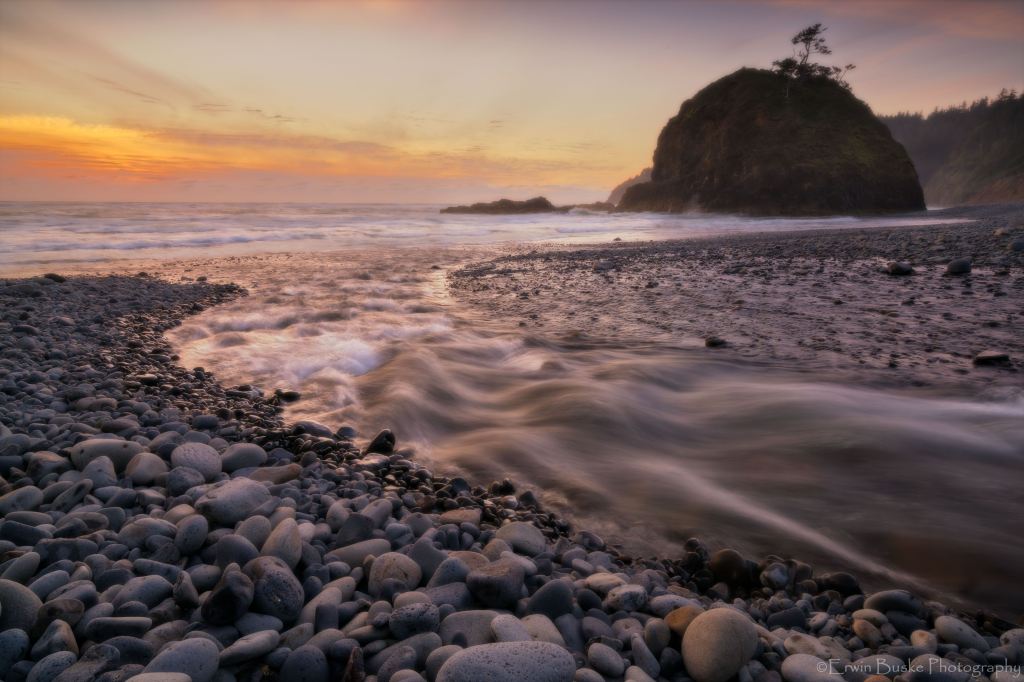
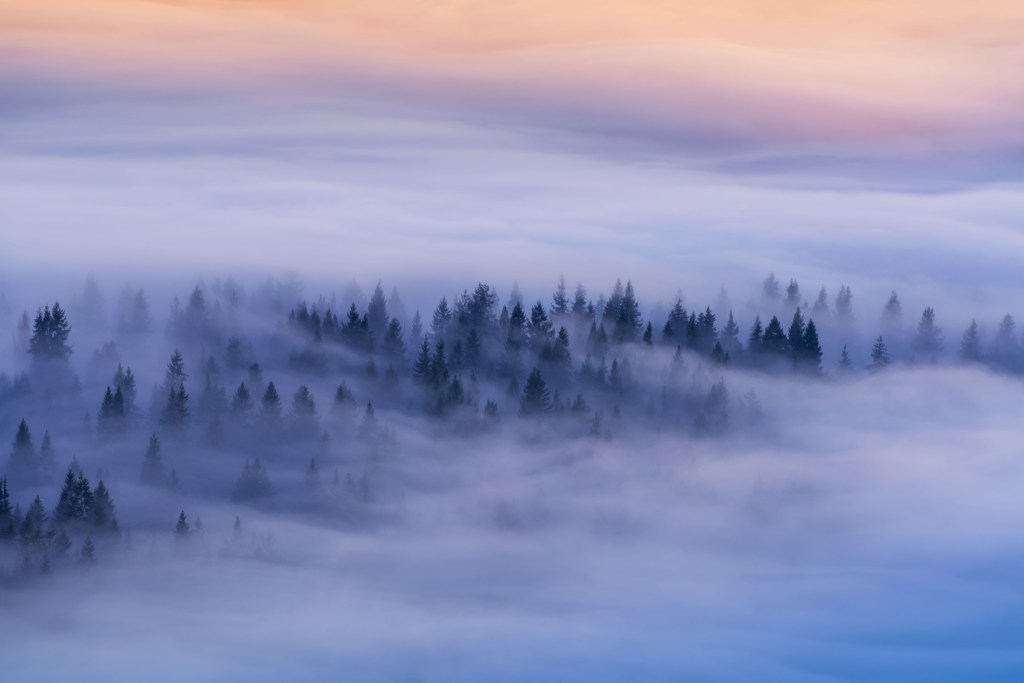


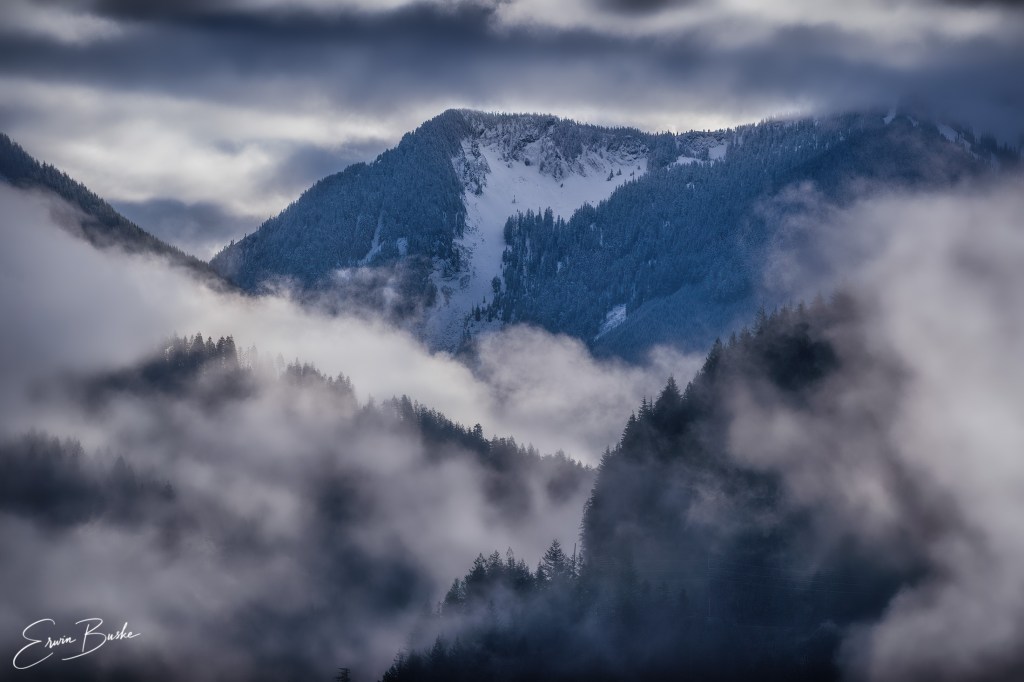
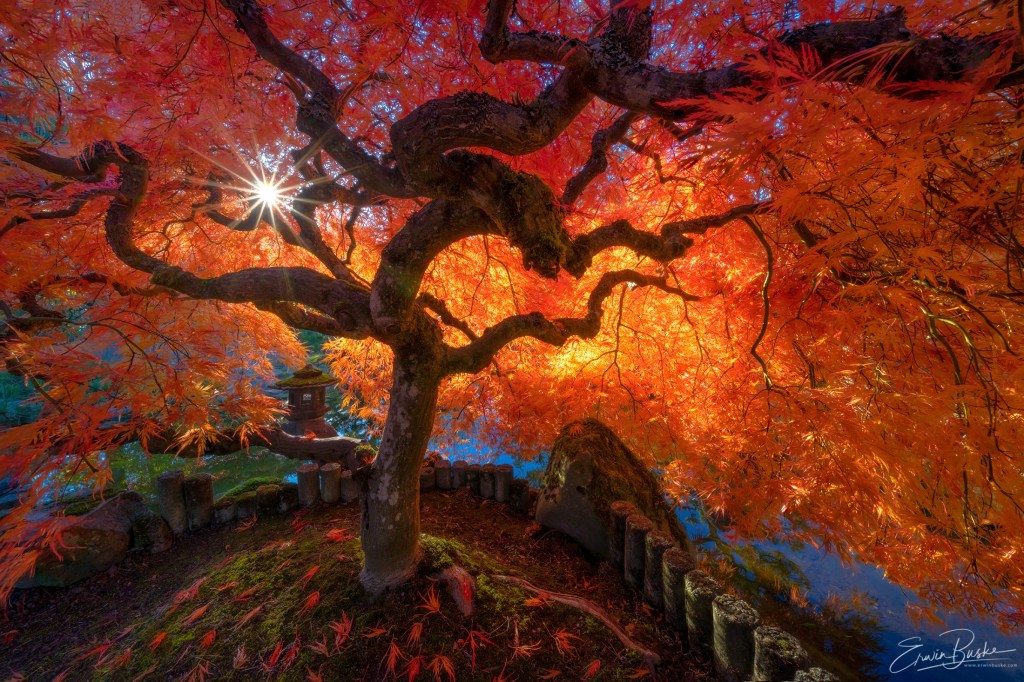

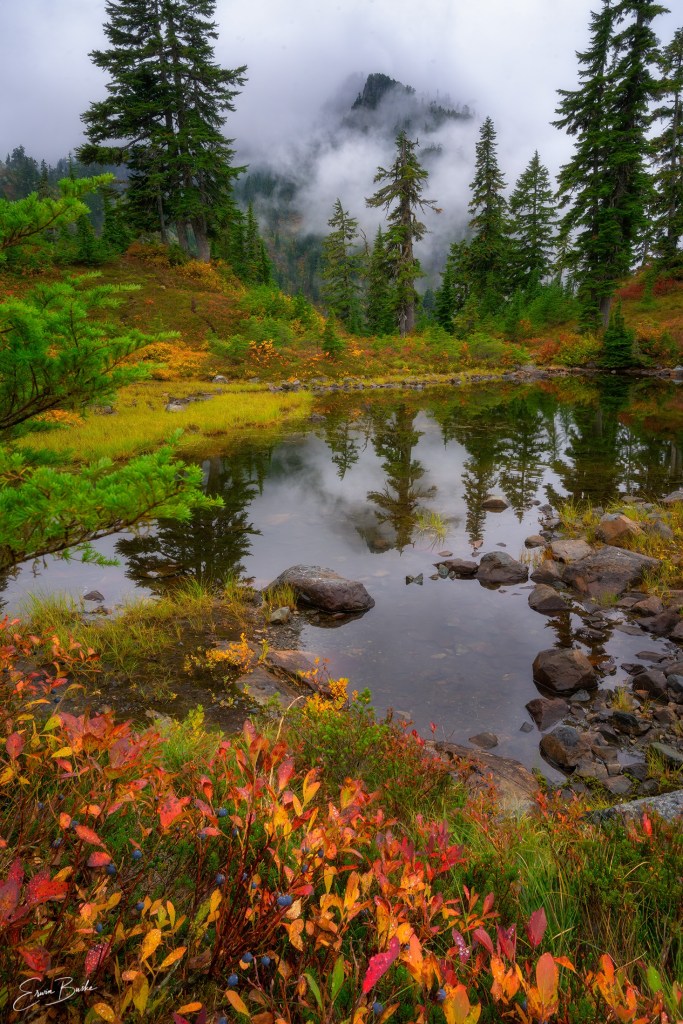

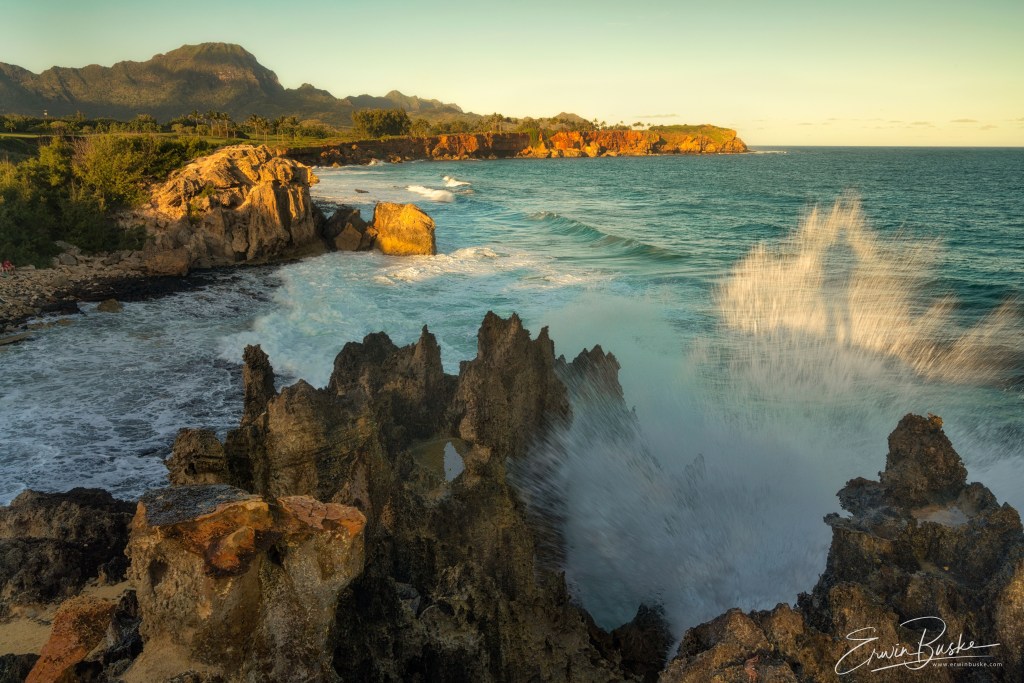
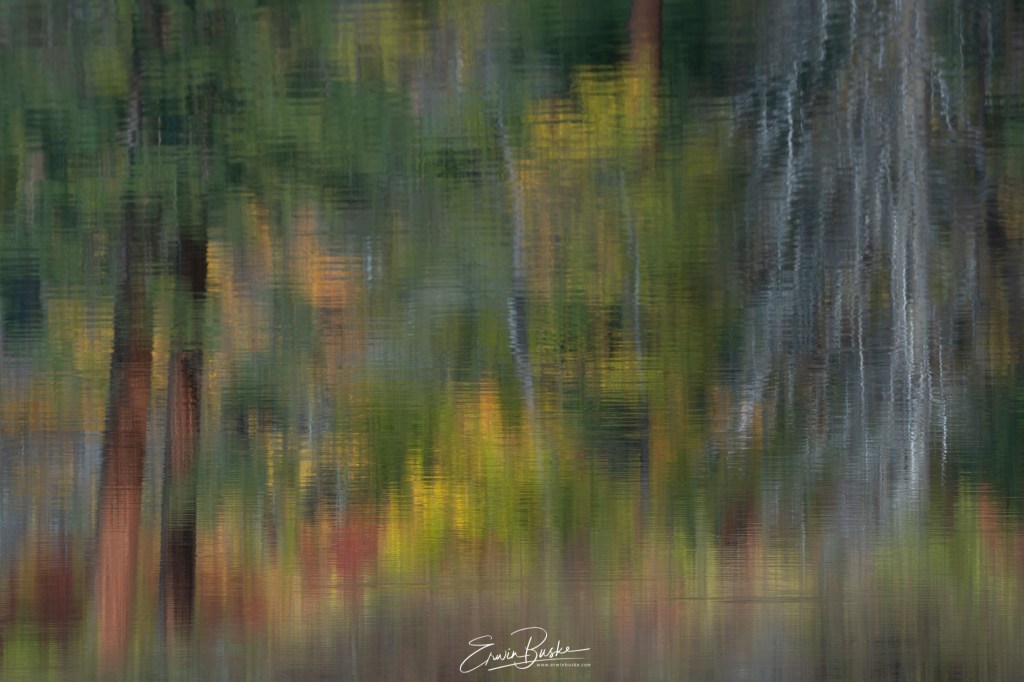


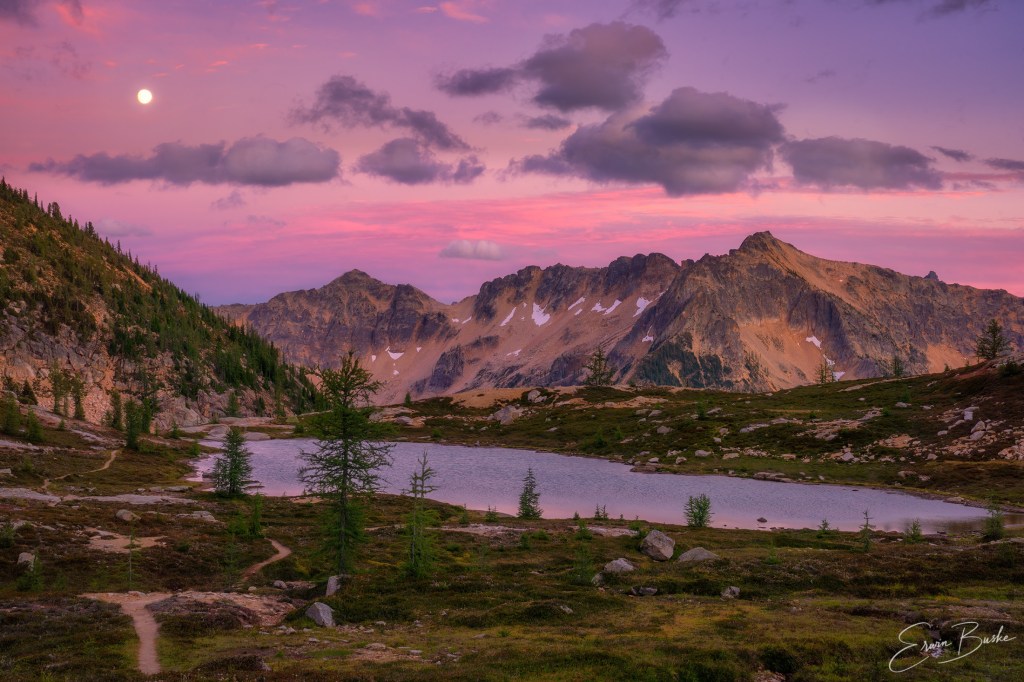
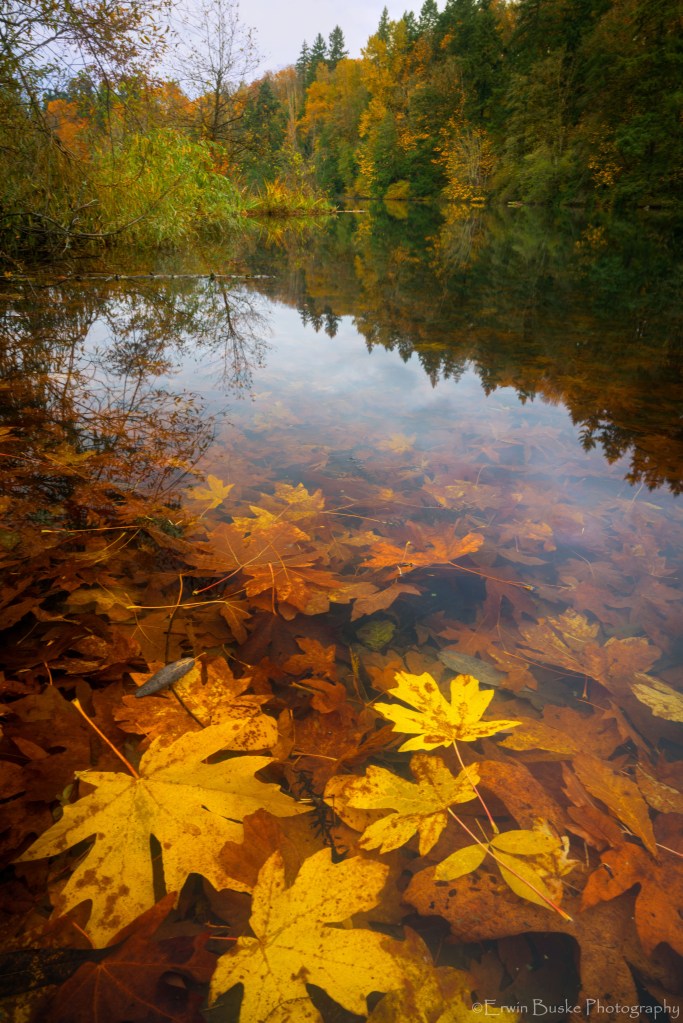
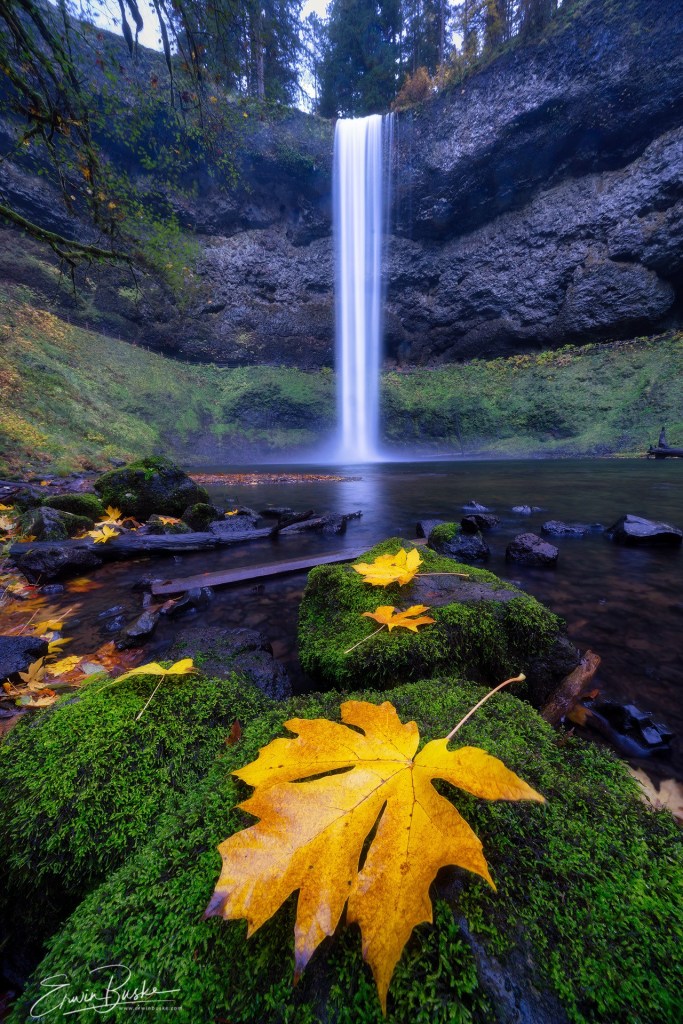
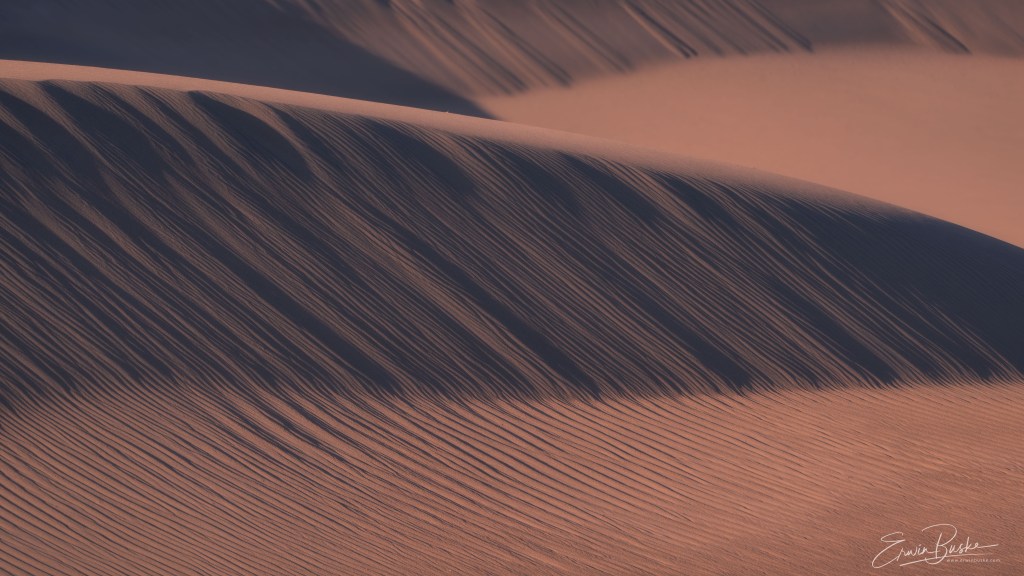
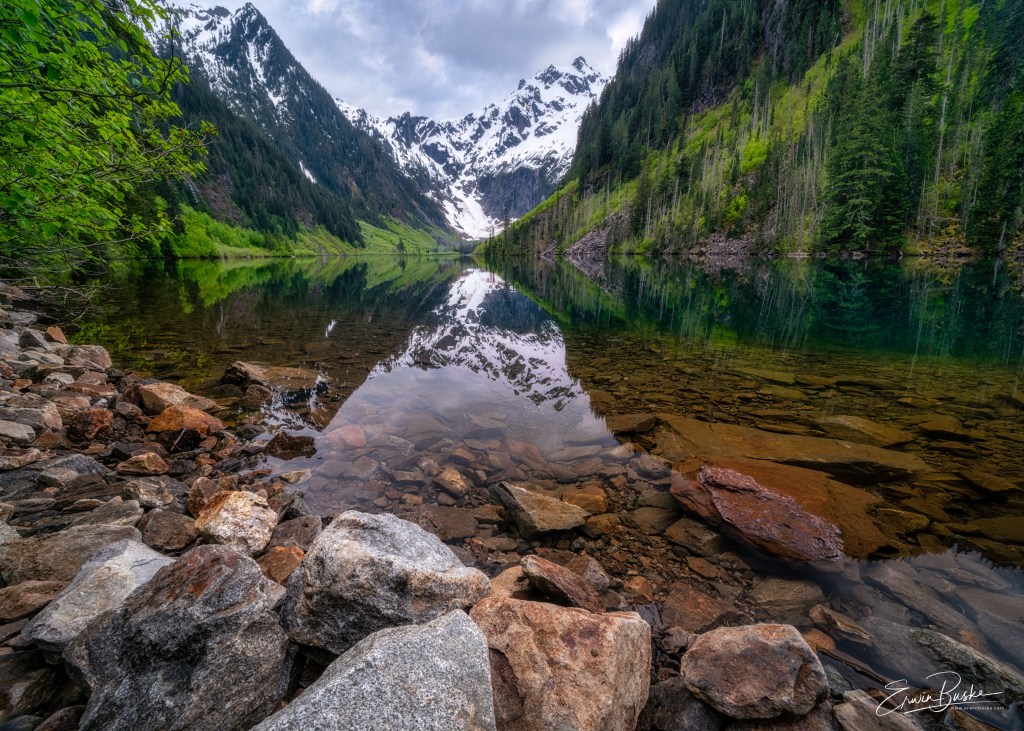


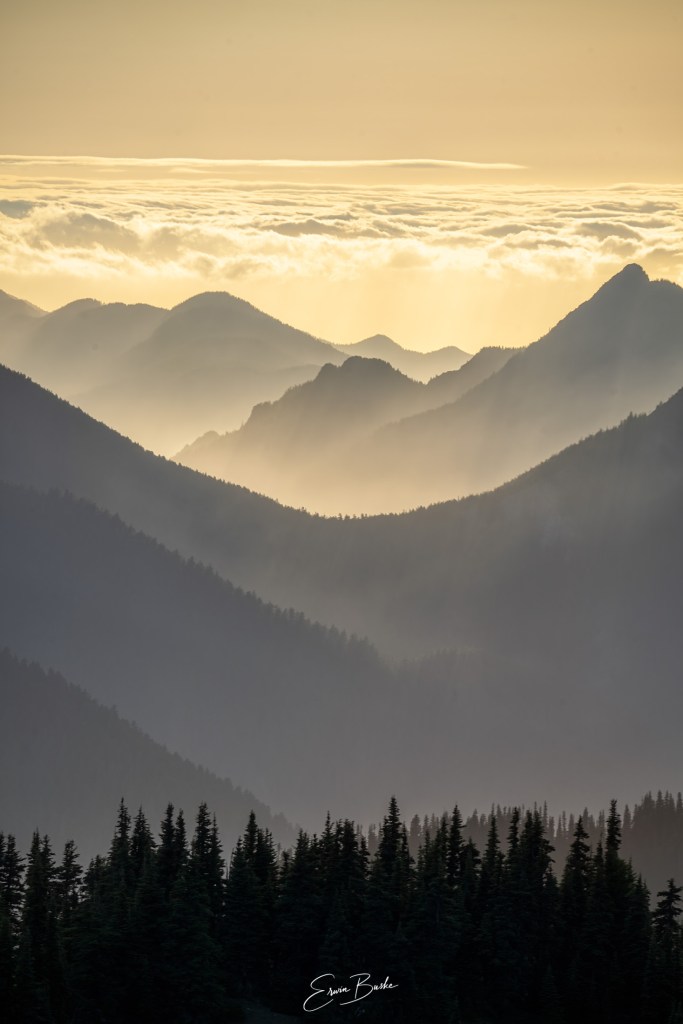


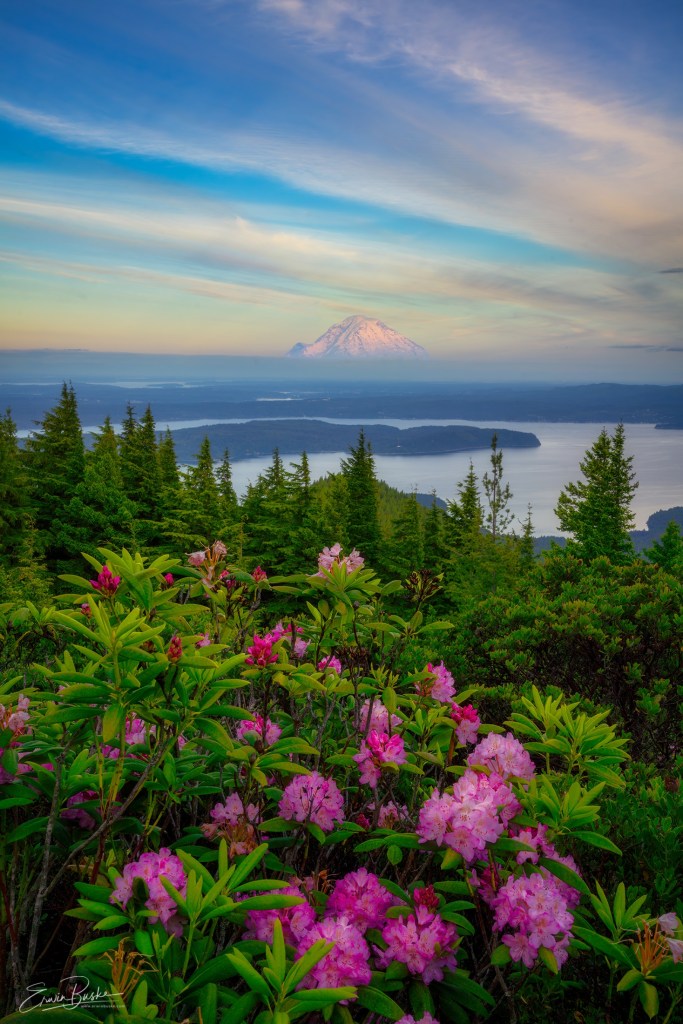
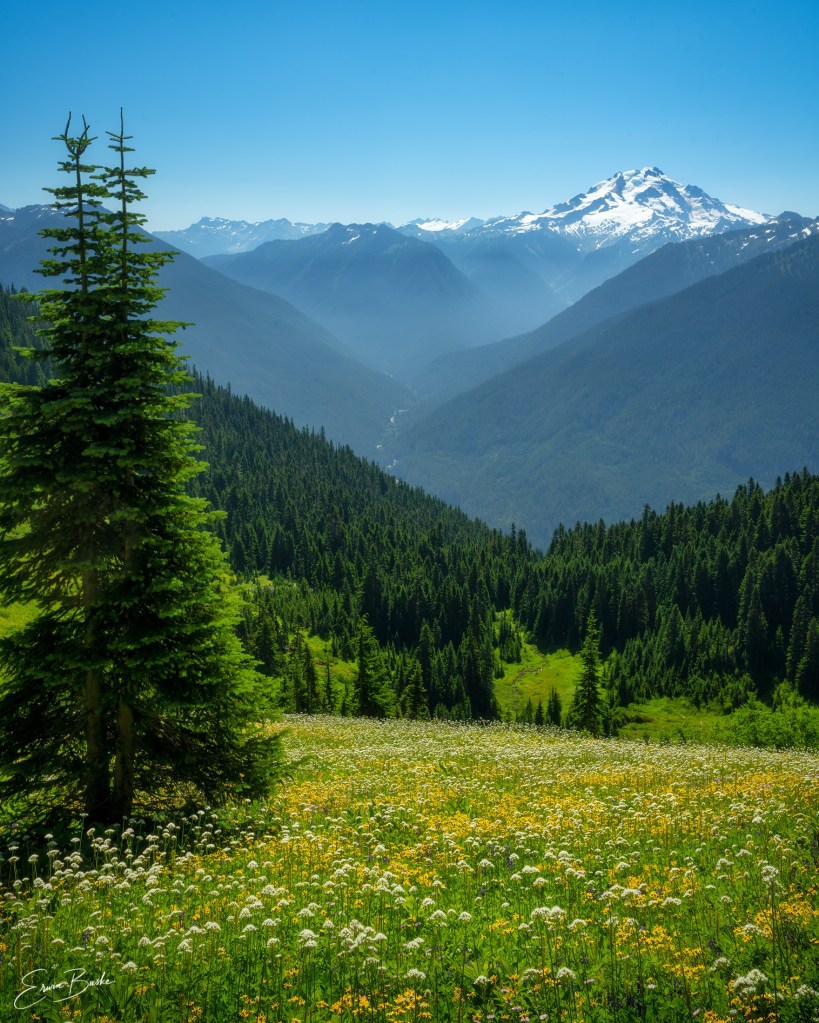

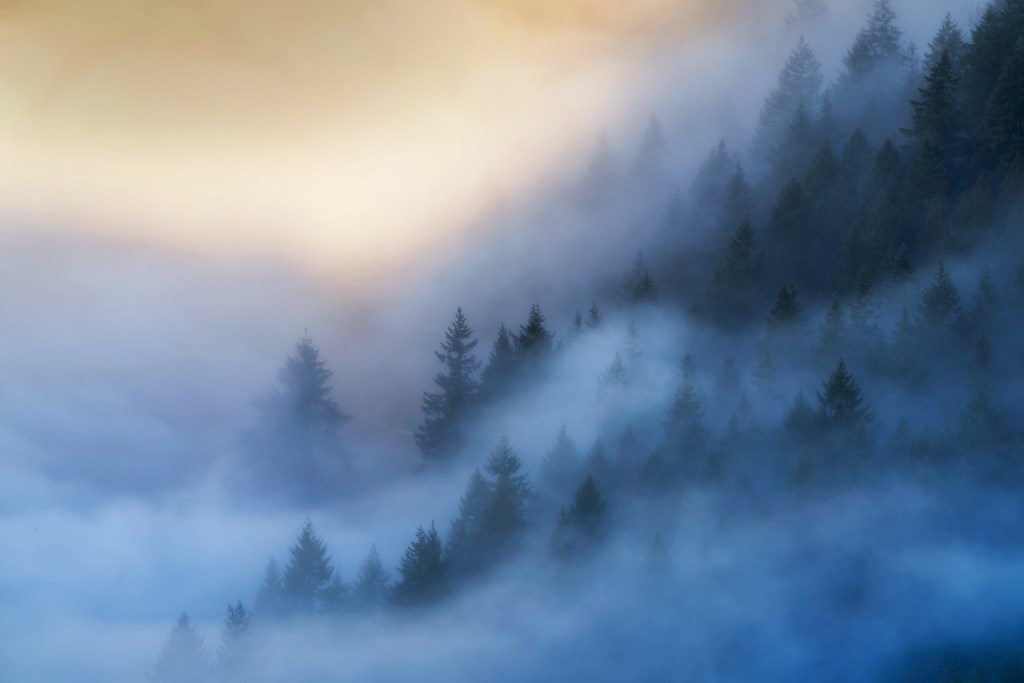


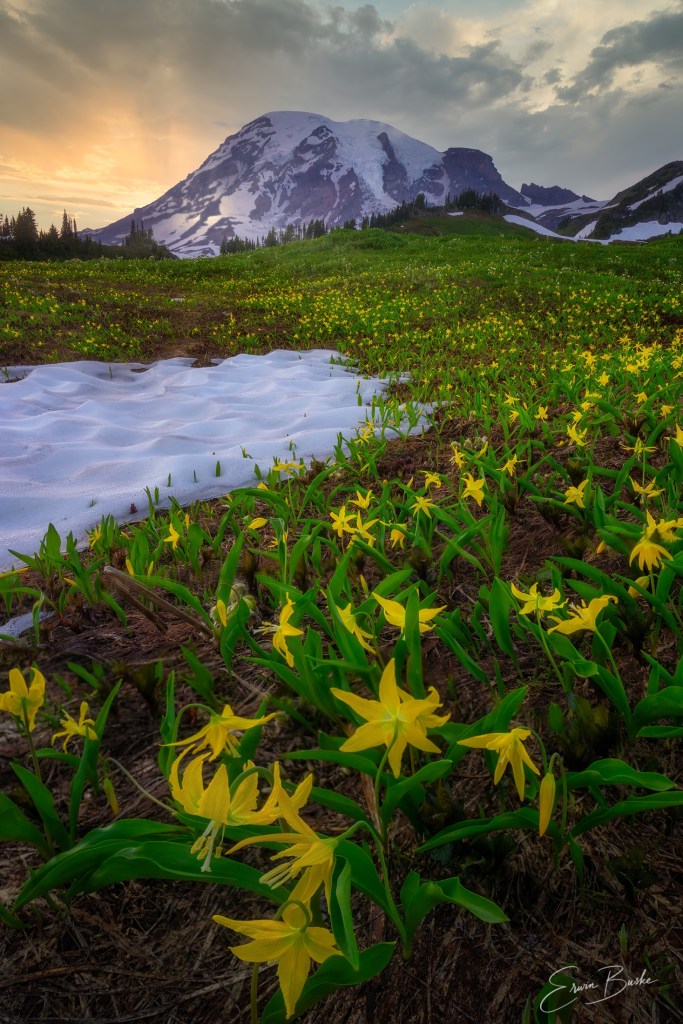


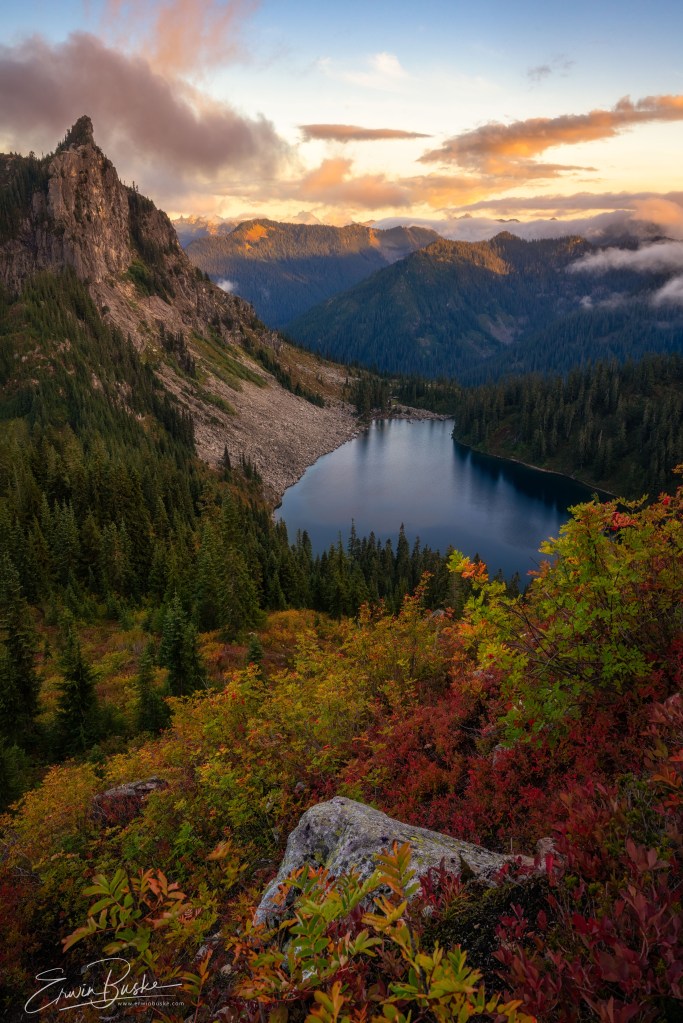


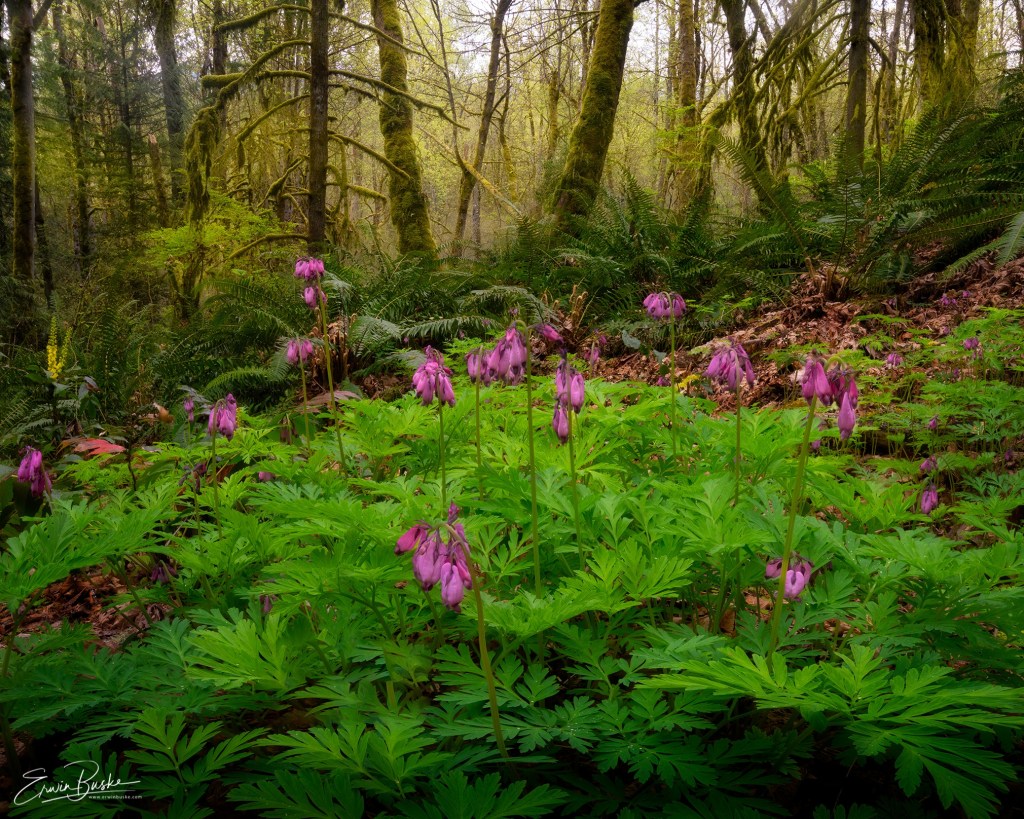


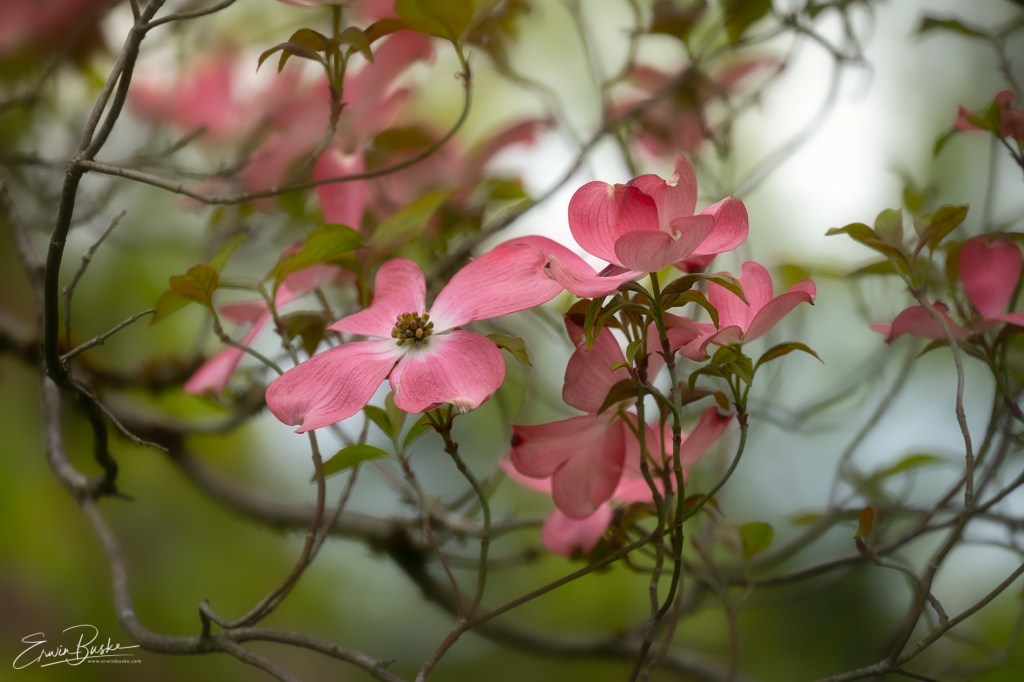

 Erwin Buske Photography Blog