

Wabi-Sabi is an aesthetic for beauty that has its roots in historical Japanese culture, buy also reaches way back to the practices of Zen and Taoism in China. Wabi-Sabi honors all that is authentic in nature by acknowledging three simple truths: nothing lasts, nothing is finished, and nothing is perfect. This stands in sharp contrast to classical western and modern concepts of beauty. In the classical western tradition beauty is associated with perfection with the proper relation of all parts to the whole. The modern tradition takes this classical concept a step further emphasizing clean geometric lines, the bold and spectacular. Wabi-Sabi, however, is more organic and connected to the earth with all its imperfections. In Nature, objects that evoke the spirit of Wabi-Sabi are especially ones that show nature in flux, moving out of or returning to nothingness-for example settling claystone silt and mud (shown below), new flower blossoms, or fallen leaves. Wabi-Sabi arrangements and compositions are not perfect–irregularities and asymmetries can almost always be found.
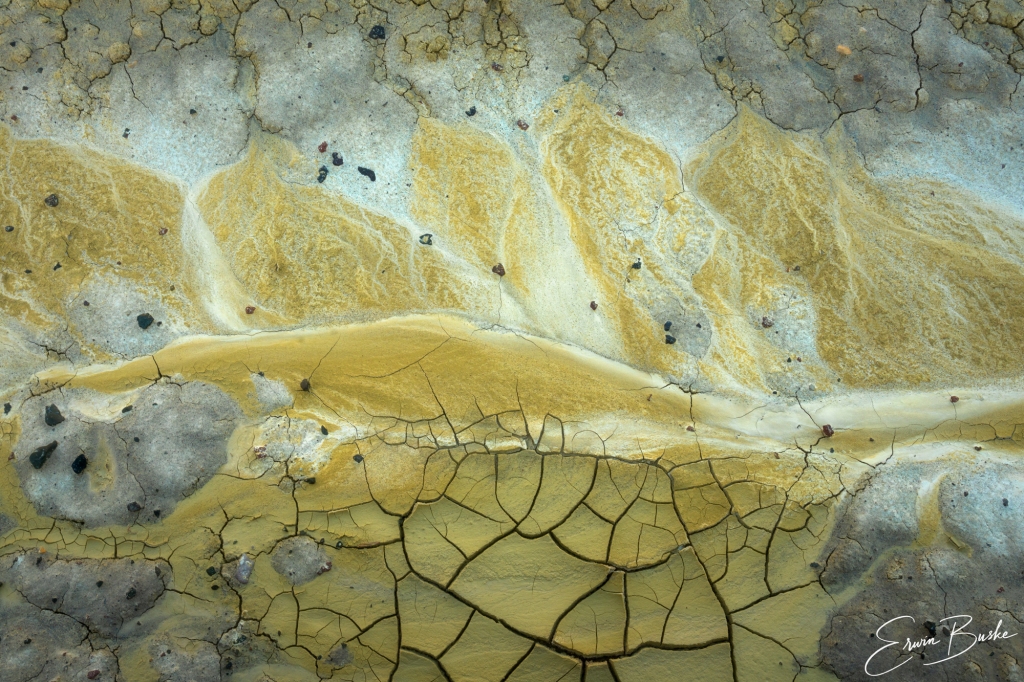
With the heavy rains in the Painted Hills, some of the claystone washes away with the silt quickly drying in streambeds often forming beautiful patterns with contrasting colors. These change from one rainstorm to the next and with different directional light for a constantly changing show. Who says mud cannot also be beautiful! This image is only loosely geometric, and it has more of an organic feel, with many irregularities, that brings us closer to the earth. It is here where we can better feel the oftentimes imperfect rhythms of authentic nature rather than our own projections of a geometric order onto the natural world.
A often sited example of Wabi-Sabi are cherry blossoms, especially at the early stage of the bloom cycle when there are still flower buds or when blossoms begin falling down and decorating the ground below. The cherry blossom cycle is short, at most a week or so, perfectly embodying the spirit of Wabi-Sabi: nothing lasts, nothing is finished, and nothing is perfect.
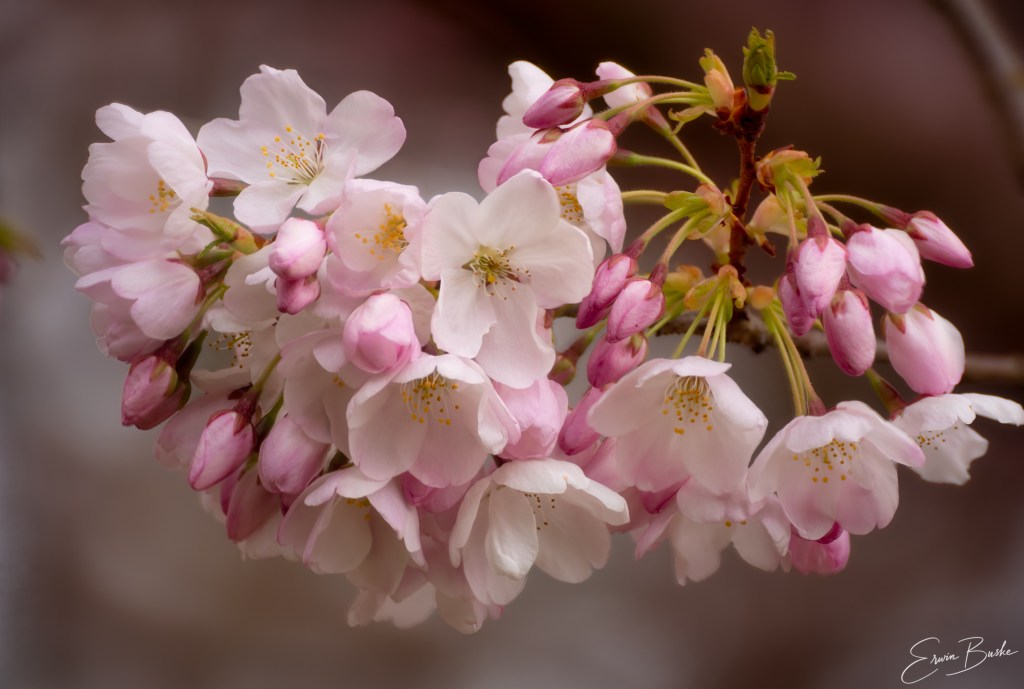
I know spring has arrived when I see the Cherry Blossoms! I especially like them when there are both flower buds and blossoms living harmoniously together! Cherry blossoms opening and in transition also embody the spirit of Wabi-Sabi.
Humanmade structures in nature that show the impact of weather and associated changes over time also show the spirit of Wabi-Sabi, as is the case with this old abandoned farm house in the image below.
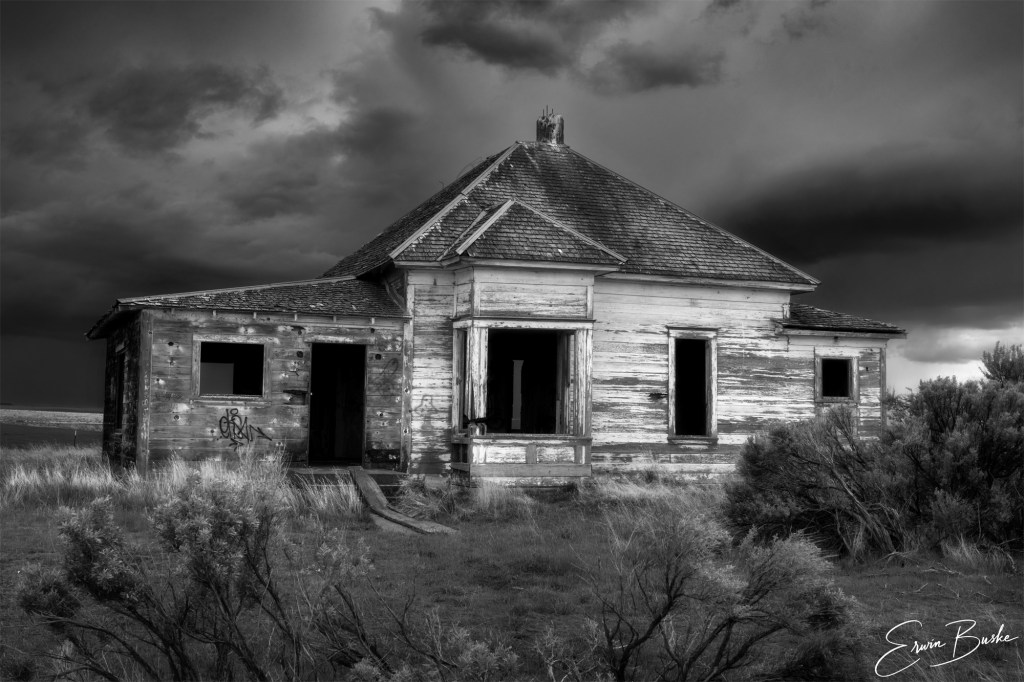
As I made my way to the Painted Hills on a stormy day, I passed this old, abandoned farmhouse and decided to make a roadside stop. I love the old, weathered look of the wooden house against the dark stormy backdrop along with a few tumbleweeds in the front yard. Even the small amount of graffiti seemed to add a interesting touch. Wabi-Sabi is especially evident in weathered structures on their way out, returning to nature in an endless cycle of change
Encounters with Wabi-Sabi
It is impossible to define precisely what Wabi-Sabi is. The ancient Zen masters of Wabi-Sabi did not want to communicate this knowledge in this way. Wabi-Sabi is more of a mood or a feeling that at best lends itself more to a poetic description, rather than anything that can be analyzed and explained in rational terms. Photographers encounter Wabi-Sabi as they grow in their ability to find beauty in ordinary things and places. The best training ground for appreciating Wabi-Sabi is not a well known iconic landscape where bold and spectacular beauty is staring at us in the face. The best training ground is in places usually overlooked, most of time hidden, but often close by, in our ordinary worlds.
My house in the Woodside Neighborhood is located on the urban growth boundary of the greater Seattle area. Out my front door and a short ways down the street is a large area of open-space made up of several interconnected parks. This area is primarily second growth woodland with a pond and a few small forested lakes. Most would not consider this area very remarkable and mainly of interest to people who happen to live close by. One seldom encounters people visiting from other areas and this is primarily a locals only place where they take a casual hike rambling through a quite ordinary forested area.
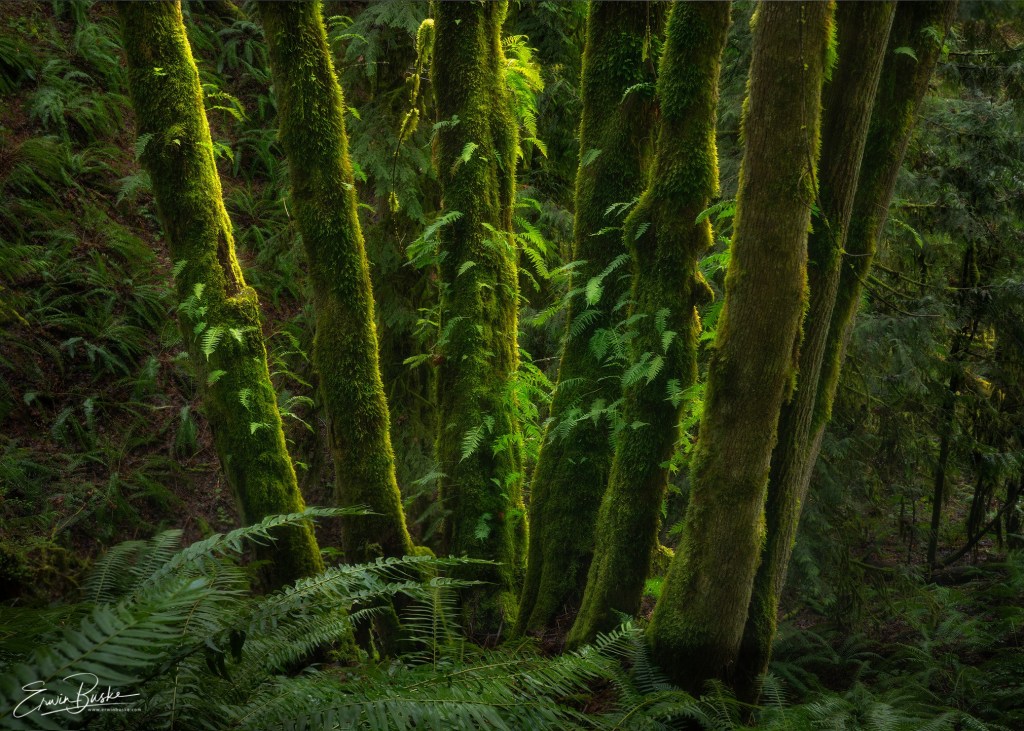
Here is some local beauty across the street from my home on a north facing hillside leading down to the Cedar River. Walking to through this ravine I had the feeling of total immersion in this transparent wall of ferns.
These woods right out my front door are a perfect place for me to have encounters with the spirit of Wabi-Sabi. Because Wabi-Sabi is often hidden, it is up to us to give Wabi-Sabi context and perspective. It does not appear on its own accord. Think of Wabi-Sabi, as more of an altered state of consciousness where the light bulb clicks and we see beauty where we saw none before. Here are a few images from these woods that I believe embody the spirit of Wabi-Sabi.
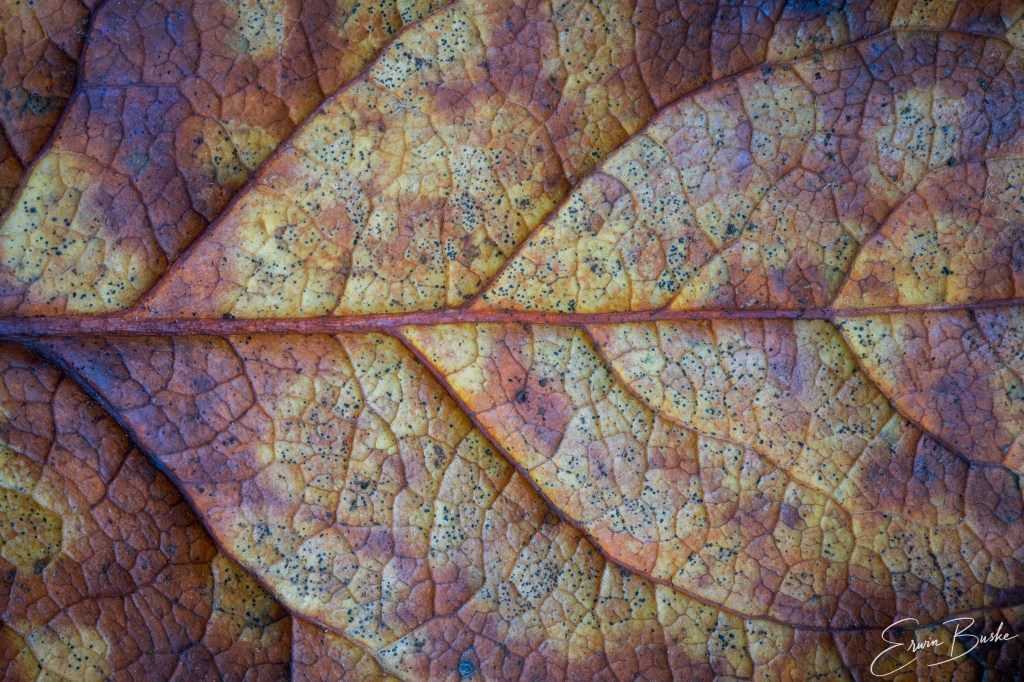
After autumn most leaves darken and slowly disintegrate into the earth, a few find a place in an otherwise wet Pacific Northwest where they can just dry out and maintain their beautiful veins and some of their color, now with some areas of black and blue, after the snow has melted and well into winter. In retrospect, looking at the back of the leaf, for a moment I thought I saw a few angelfish swimming from right to left!
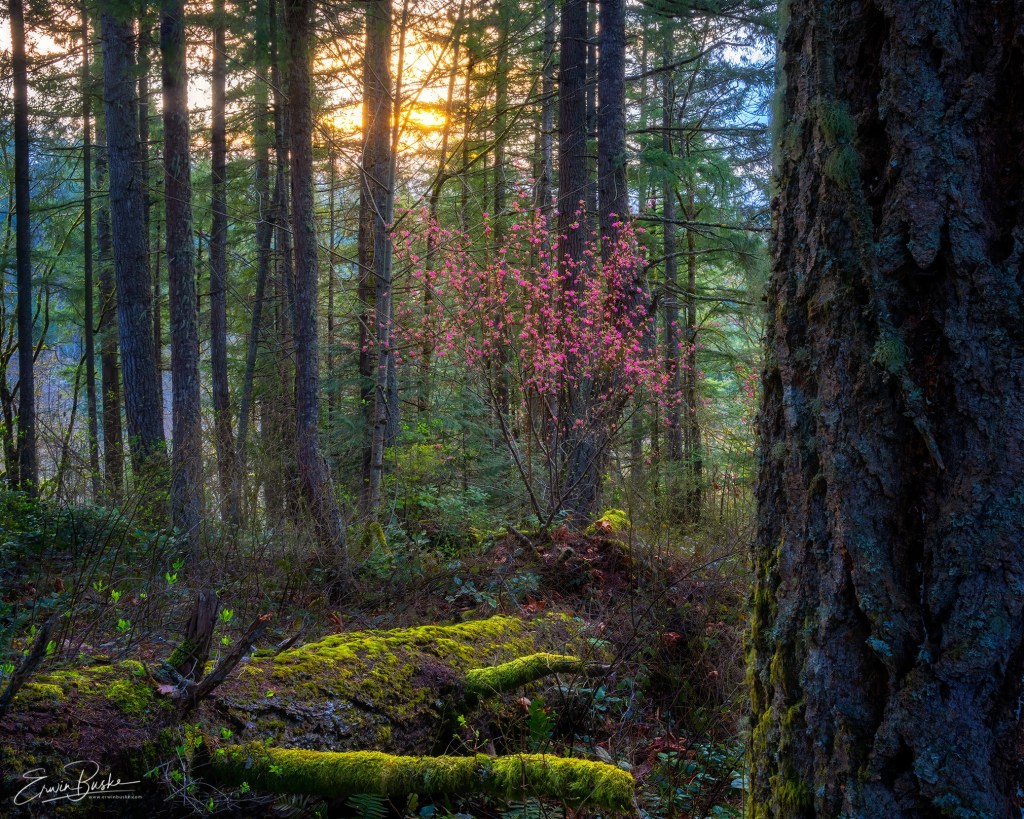
From my sunrise walk on a April morning in the forest outside of my home, here is a welcome sign of spring in the PNW, the blossoms of a wild current bush bringing some color to the forest.
This next image is more of a synthesis of Wabi-Sabi and a more modern perspective. I would not have encountered this beautiful sunset had I not been willing to venture into the quite ordinary woods close to my home. Encounters with Wabi-Sabi made me more open to encountering this extraordinary beauty at this quite humble forested pond.

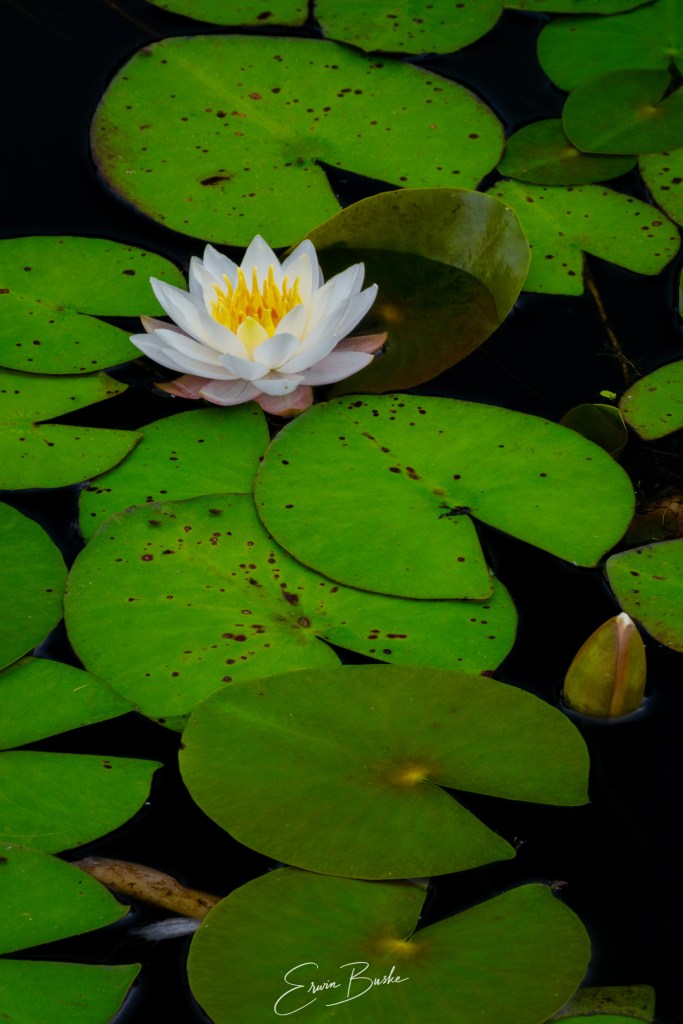
The official name of this pond is Wetland 14 Natural Area. That feels a little overly technical and unimaginative to me, a little like second and third beach in Olympic National Park so I gave it my own name, Erwin’s Pond-but I encourage others to name it as they will! I have heard from a passerby on the trail who has walked this area forever (He is in his upper 80’s) that this was a peat mine that filled with spring water after the mine was abandoned. The woman who lived here had the entire pond in her residence. When she passed on, she willed the land to the park system for enjoyment of everyone. I can imagine the sunsets she saw here living at the pond 365 days a year! It is a simple pond surrounded by second growth trees; most of the time not all that remarkable. But this body of water does collect the light in such a beautiful way, and when there are clouds the reflections for me are beyond beautiful. I find the lily pads in bloom also very attractive. But more than all this, for me this is a place for meditation and reflection I can access frequently-maybe not 365 days a year, but at least 60 times a year!
Wasabi and Popular Movements in Nature Photography
In his landmark book: “Wabi-Sabi for Artists, Designers, Poets & Philosophers”, 2008, Leonard Koren points out that Wabi-Sabi has always associated itself with alternative cultural movements especially in aesthetic tastes. In the 16th century it was a reaction slick, perfect and bold Chinese art and treasures emphasizing instead the organic, imperfect, subtle, and earthy artifacts of the Japanese Tea Ceremony. Koren believes that Wabi-Sabi is also present in more recent cultural movements especially among younger people including the Beat Generation, Hippies, Counter Culture, and other Alternative Cultures. In modern times Wabi-Sabi turns away from slick and bold, exactly packaged, Madison Avenue like presentations of beauty to something much more organic, unique, earthy, irregular, and even murky.
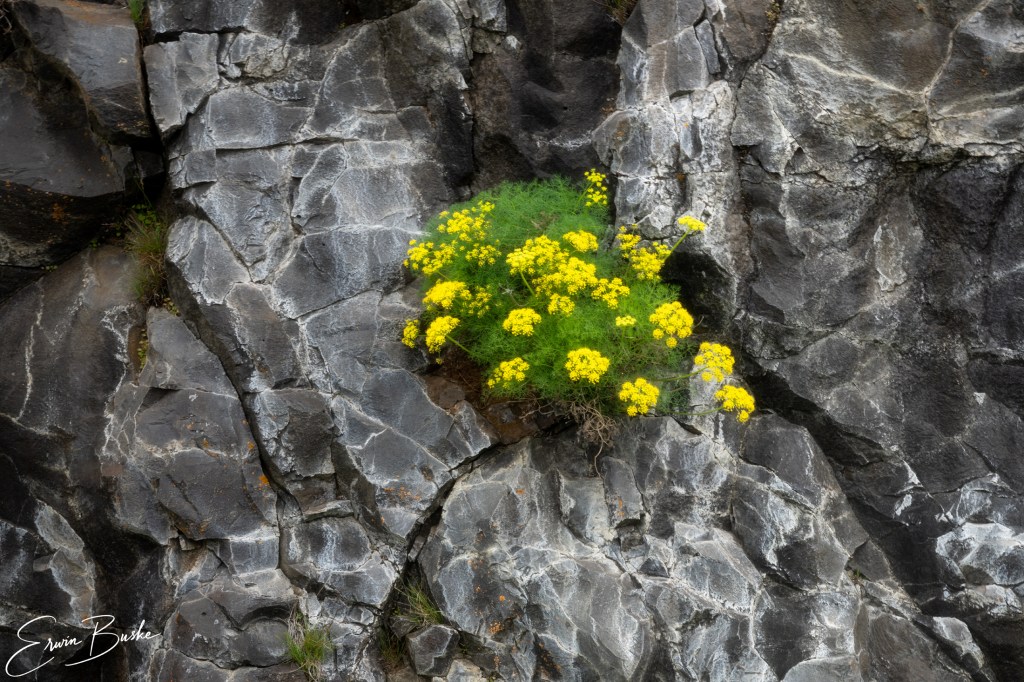
I am truly amazed at the resiliency of these Desert Parsley flowers growing in the cracks of the Coyote Wall. Not only is it challenging to live in this near desert area due to sparse rain fall, but somehow, they manage to thrive in the cracks of rocks where there is even less moisture. I loved how the surrounding patterns of the Columbia Gorge canyon wall helped to feature the beauty of these rock hardy plants.
In this blog post I am primarily interested in how Wabi-Sabi is associated with popular movements in nature and landscape photography. In this context I think it is fair to say that we find the spirit of Wabi-Sabi in the following movements:
- Slow Photography Movement
- Contemplative Photography Movement
- Zen Photography
- Expressive Photography
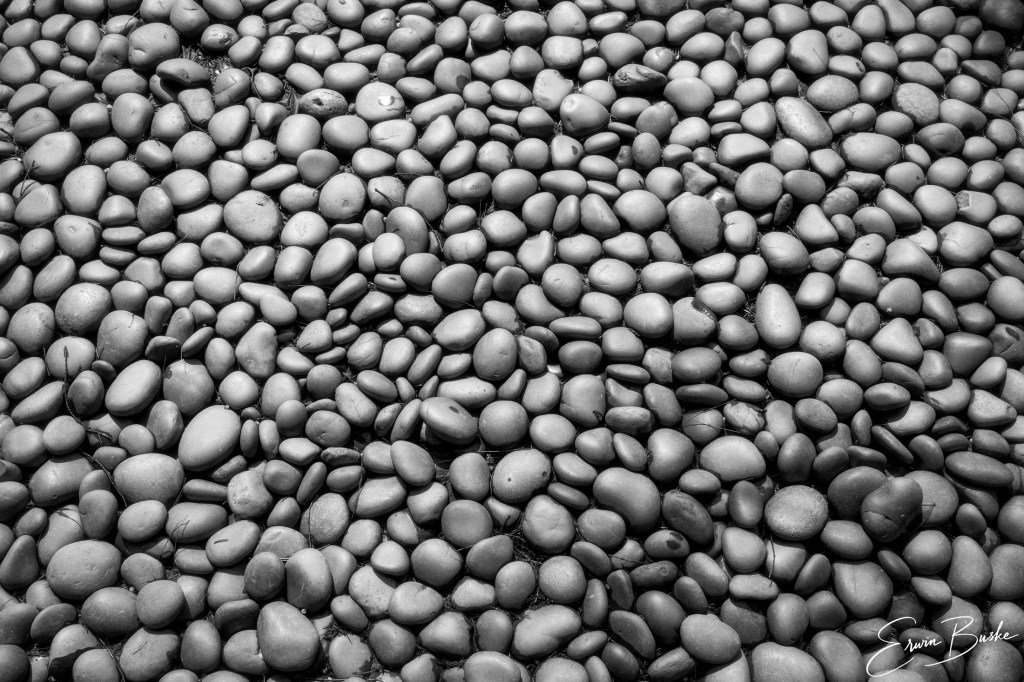
I am not going to get into the philosophies of each of these movements but suffice it to say all four advocate slowing down, paying more attention to details, developing a more meditative, intuitive and mindful approach to photography. All four want us to be internally motivated and not allow the expectations of others to shape our photographic vision. All four also in my opinion struggle to explain in rational terms what their movement involves and there are definitely no exact step by step by the numbers approaches for creating images consistent with the aesthetic of any of these movements.
It is noted that Wabi-Sabi is closely aligned with Zen. In Zen the teachings are not explained in rational terms but rather through the use of koans-a kind of parable that defies logic such as: Two monks are arguing about a flag. One says, “The flag is moving.” The other, “The wind is moving.” A third walks by and says, “Not the wind, not the flag; the mind is moving.” Although our first inclination may be to try to figure the koan out, that is not possible. The purpose of the koan is to move us away from our rational mind to more of an intuitive way of perceiving the world. It is this kind of intuition that shapes our perception of the natural world and opens our senses to the world of Wabi-Sabi.. We begin to notice details we did not see before and interconnections between material things become more apparent. In short our creative minds get in touch with the spirit of Wabi-Sabi.
East Meets West
Without knowing the name Wabi-Sabi until the last couple of years, I believe I have had encounters with the spirit of Wab-Sabi throughout most of the decades of my life. Prior to social media being a thing, I always had a penchant for the small scene, macro, intimate details, and finding beauty in ordinary places and things. With the rise of social media and my involvement in it through the sharing of images, I like most photographers started posting images that I knew, from examining behavior of others on social media, would be popular. But with me this phase did not last long. Although I would not say I am currently immune from the pull of catering to what I know for sure will be popular, this is definitely not my primary motivation any longer. But I would not go so far as to say that I travel only within the realm of Wabi-Sabi either. There is too much of the western and modern influences in me. I do love the bold, colorful, and often dramatic grand scenes that quickly capture my own attention and the attention of others. But my experiences with Wabi-Sabi have forever changed me, so that even when I am photographing the Grand Scene, Wabi-Sabi is shaping how I compose the scene, what I include and exclude, and my tolerance for and even welcoming of imperfections and sloppy geometry!

At sunrise the sky of Garibaldi Lake was mostly blue, but as morning progressed patchy clouds appeared everywhere and were reflected in the beautiful water of the enormous lake. Early morning light filtered through gaps in the clouds help create this beautiful grand landscape. The clouds in this image if viewed somewhat abstractly form an X like shape, but it is imperfect with broken lines and irregular shapes. But with all of these imperfections and Wabi-Sabi we can still sense a modern and crisp vision of the world. I like to think of this image as embodying a synthesis of Modernity and Wabi-Sabi.
Grand Landscape Revisited
Much of the training and instruction in photography workshops today, especially those that are primarily focused on the iconic grand landscape, are about achieving a sort of perfectionist ideal in images. In workshops people are taken to iconic places and even specific scenes within iconic places where much of the planning and thinking has already been done for us. These places are bold and grandiose with clean geometric lines. These places are shutter ready with compositions that are already proven to be popular. Everything is all teed up with the only variable the weather and there are attempts to even plan for the best possible outcome there. Although getting to some of these places may be challenging, either in transportation or physically challenging, they are not the type of places where instructors are providing encouragement to see the scene with fresh eyes in a more creative way. If truth be known many of these instructors lack the skills even to do this. I know this to be the case because I have participated in several of these workshops myself. Sure I came back with some awesome images, but they were not ones that I am particularly proud of from the standpoint of personally expressive creativity.

I love this iconic perspective of Palouse Falls. When I was there all around me were over 30 photographers, most part of workshops, all taking more or less the same image. If you have ever gone to this location, you will know that there are only a couple of compositions in this area that work well. Although I am proud of this image, especially with the beautiful not always present sunset clouds and processing, I cannot claim that it is particularly creative. There are literally tens of thousands of others out there like it!
The march to create a common and ubiquitous commonality in beautiful and perfect images does not stop in the field. It moves forward into the digital darkroom where a uniform style and instantly recognizable aesthetic in processing is taught, so that our images have that same kind of wow look that so many of the most popular images on popular social media sites have. Images are warped so as to obtain more perfect geometric shapes, patterns and relationships. Elements that are less than perfect are cropped or cloned out, and the lighting in the scene is heavily altered to place all of the emphasis on the most perfect elements of the scene. Even nature’s colors are changed so as to obtain a kind of perfect color harmony. It is a march toward perfection. But do we ever truly get there? In our attempts to obtain perfection are we fighting nature itself? In creating perfection do we loose our organic connection to nature?

A photographer friend of mine in Vancouver Canada, Connie Wong, said this about this image upon viewing it when we were also discussing Wabi-Sabi: “It has dimension. It may have imperfections but I think it is a good balance. There is balance of the lines meeting on either sides of the midline. The darker to lighter tones draws the eyes into the photo. The streaks creates movement and flow.” I could not have said it better myself. Thanks Connie. I like to think of this image as a Convergence, not only of lines, but also of the spirit of Modernity and Wabi-Sabi, East and and West.

How might our choice of compositions change if we openly embraced irregularities, asymmetries, incongruities, murkiness, even distractions, and hard to spot details in our images? And if we embraced all of this but at the same time did not abandon our attempts to capture the bold, grand, dramatic, even the geometric–would this result in a creative synthesis between the modern vision of a perfect world and the Wabi-Sabi vision of nature where nothing is perfect and nothing is finished? There is beauty in this tension between the perfect and imperfect, that can provide inspiration to create images that not only capture our immediate attention but also cause us to stay awhile with the image and explore its details and subtleties. This is where I am at today—exploring the beautiful synthesis between Modernity and Wabi-Sabi in both grand landscape and small more intimate scenes.

After climbing up over Elfin Lakes close to sunset, I felt drawn to these split, irregular, and somewhat crushed rocks leading out to the beautiful lake basin and distant peaks. These are likely remnants of past actions of glaciers that were once here leaving intriguing lines, textures and shapes.

Thanks so much for reading and viewing the images of this blog post. I encourage you to share your reactions, thoughts, comments, impressions on this post here. If you think others would enjoy reading this post, please also share it with your friends and communities. If you would like to see more content like this subscribe to the blog so you automatically receive future blog posts. To find out more about my workshops, apprenticeship, and coaching programs click here. To learn more upon my perspectives on nature be sure to check out my Ebook, the Hidden Landscape: The Inside Passage. This image rich book is 248 pages and provides insight how nature, mystery, the Tao, Zen, and the American Transcendentalism of Thoreau inform my photography and can provide sources for you own inspiration. Here is the link to the EBOOK along with a preview. https://payhip.com/b/FCI4z. Thanks again and happy trails!





 Erwin Buske Photography Blog