This is the introduction to my now released ebook: The Hidden Landscape. You can purchase the Ebook here at this embedded link. The paragraphs that follow provide an overview of the book including a lead-in to each of the five chapters. Thanks for looking!
Nature and the Landscape like to play hide and seek. We see a beautiful landscape and yet we do not see all of it. Part of this is nature performing some of its magic tricks: fog rolling through the valley, deep shadows forming in areas out of reach of the everchanging light. But another part of this is that our own perception puts a veil over the landscape. We see only what we want to see. This type of seeing is largely conceptual and a product of our conditioning. We see what we and others have taught our selves are important elements of the landscape. As we gradually develop a closer connection to nature and the landscape, some of these conceptual filters begin dissolve. This is a transformative experience and sets in motion a more intuitive and immediate awareness of the landscape that also is connected to what we are feeling inside. We see through some of the veil and notice more and more of nature. This transformative experience, however, does not diminish the mysteries of nature. As we progress, we also recognize more and more of nature’s illusive qualities. In the words of Thoreau, “One can never get enough of mystery”. We also learn through the art and craft of image creation to include more and more of the often magical and illusory qualities of mysterious nature in our images. Ultimately nature and the photographer dwell in this land of mystery: The Hidden Landscape
.
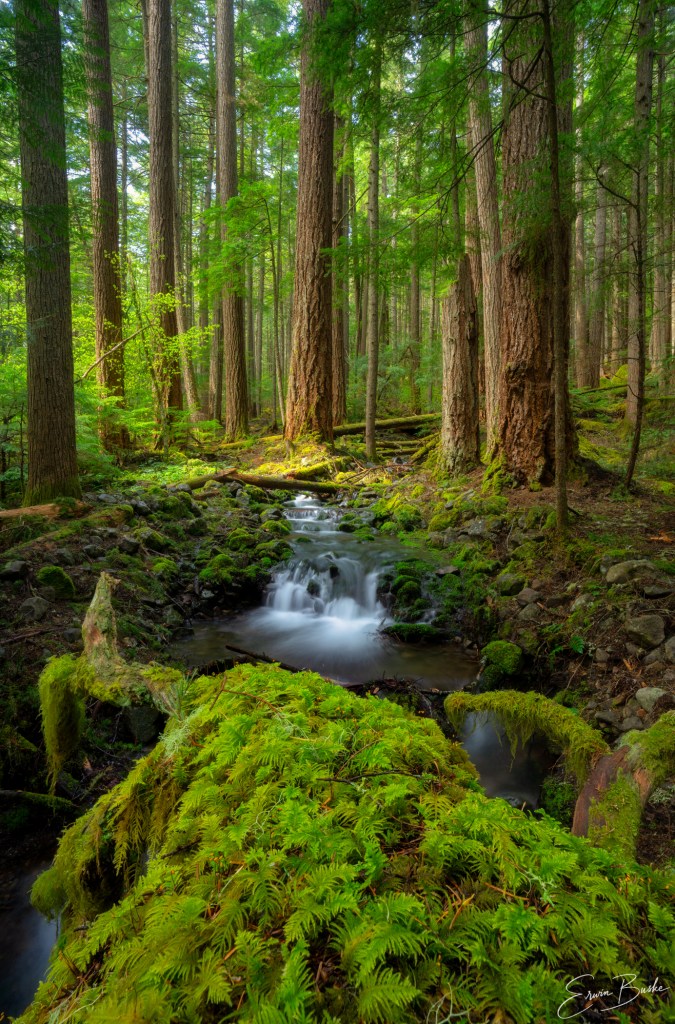
Small Stream in a Hemlock Forest
This book is part one of a series of now integrated blog post essays. In integrating these essays into a cohesive whole, I have made some revisions to the original posts, and also provided transitions from one essay to another so that the reader can better appreciate the book in its entirety. The posts are not necessarily presented in any kind of chronological order, but in an order where the reader can better appreciate the integration of my thought. Blog post essays are not the same thing as traditional essays. Most blog posts show much better than a traditional essay the evolution of the writers thought process. Although for each of my blog posts I had an outline and idea of where I was going, I found it necessary in every case to follow new trails, to follow the mystery around the next bend which had previously not been in my view. This changed my original thought process. Going down these rabbit trails, however, is part of the beauty of blogging. Blogging demands a higher degree of authenticity, transparency, and honesty than has been traditionally the case with traditional essays that are written in more of an objective manner. In a blog post people want to see into our soul. This is perfect for us nature and landscape photographers. There is a marriage between our internal and external landscape. But this marriage does not happen all at once. It is a gradual process that perhaps is never actually fully consummated. At every step along the way those who we connect with notice in our images more and more of the soul of the landscape which is also who we are as a person.
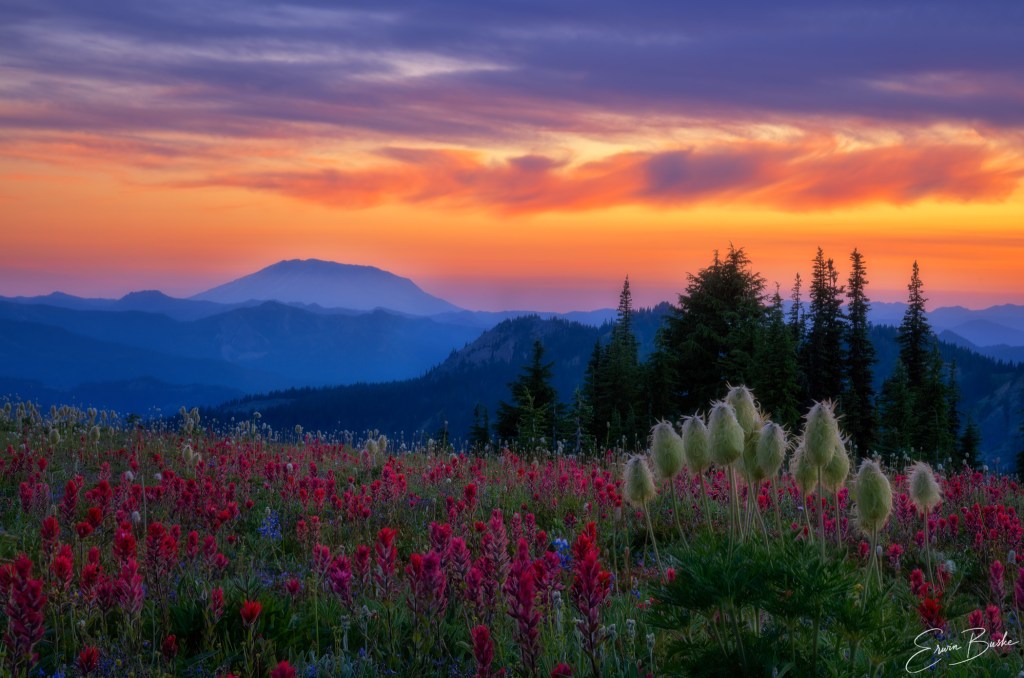
Goat Rocks Sunset Magic
There is nothing more fundamental to the success of a landscape image than how well the image communicates the mystery of nature. It therefore seems fitting I would call the first chapter of this book— “Mystery: The Holly Grail of Nature Photography”. Mystery is presented as the force behind what causes us to feel awe and wonder in our close encounters with nature. This force is also the very ground of our being as we live in nature and nature in us. The mystery of nature has inspired poets, artists, and song writers from the beginning of recorded time. But the mystery of nature often moves in ways that go beyond our common understanding of nature. Much of our conventional understanding of mystery starts with the notion that if we could just find out more about the mystery, more information and more clues, we will eventually solve the mystery. But the mystery of nature ultimately cannot be solved. Like poets who use evocative language and images to take us in the direction of where the mystery points without actually solving or explaining the mystery itself, we as photographers must do something similar. A successful photographic image provides a frame or container that holds some of the tension, wonder and beauty of mysterious nature. This in turn helps others participate in our experience of the mystery of nature.
In Mystery, I discuss some steps we can take as photographers to bring to our images and the viewer the sense of mystery we felt during our experience of the scene. Here are some of the elements of mystery that I will discuss including practical steps we can take as photographers to include these elements in our images.
Wonder
Imagination
Shadow and Light
Atmosphere
Motion and Blur
Bokeh
Subtraction
Seasonal Transitions
Use of Metaphors
Transcendence
Taking steps to include these elements will help lead the viewer closer to the mystery of nature, in other words evoke moods and emotions that we felt in nature’s presence. But the results of taking these steps should not be equated with an exact visual representation of the mystery. After all, if that were the case, then the image would no longer be a mystery! Think of these steps as a tool set from which we can select to help lead the viewer to a greater appreciation of the wonders and mystery of nature.
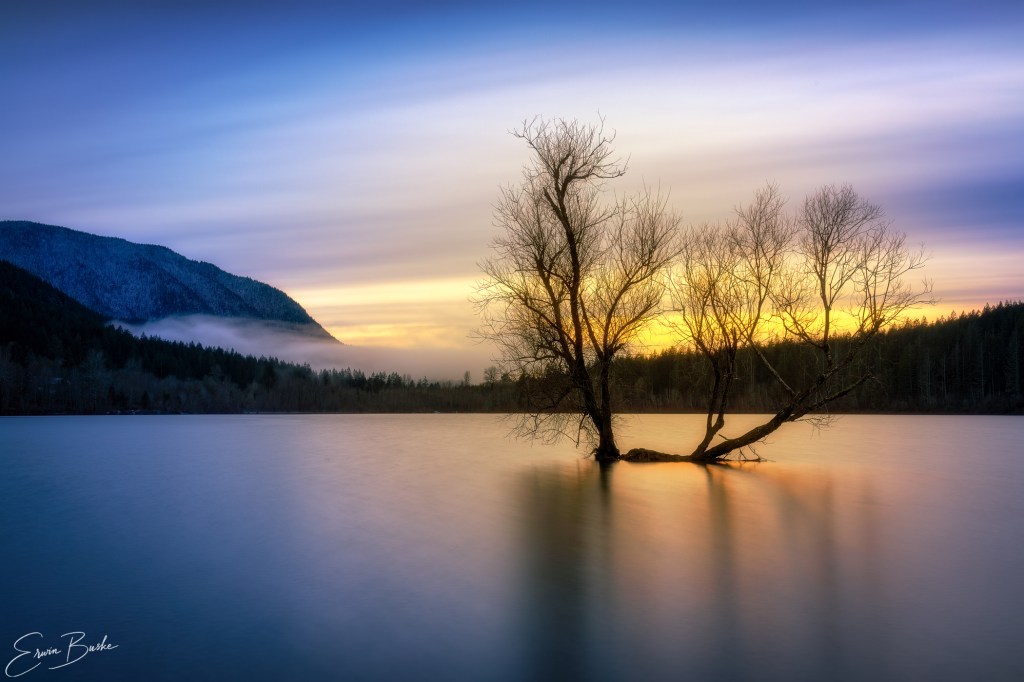
Lake Crescent Misty Morning
Although an appreciation for the mysteries of nature may have sparked the flames that help motivate us to grow as photographers, there are several factors that can move us further and further from our inspirational roots. These include the learning process itself, the drive for social media popularity, and for some the preoccupation with establishing a successful photography business. In chapter two of this book, I look at various sources of inspiration that can help rekindle some of those earlier flames. Although the path begins with external sources of inspiration, the progression is toward more internal sources of inspiration.
Lone Oxalis Flower of the Hoh
Some of the sources of inspiration I will explore include:
Visiting Iconic Places
Published Images
Other Photographers
Going off the Beaten Path
Alternative Perspectives
Going to New Places
Beauty in Familiar and Ordinary Places
Taking a Break from Photography
Keeping a Journal
Internal Sources of Inspiration
In Chapters three through five, I turn my attention to three of the world’s wisdom traditions and what they have to offer for insight into both reconnecting to the mysteries of nature and unlocking our creative potential. These wisdom traditions are Taoism, Zen, and American Transcendentalism. All three of these traditions take us on a more inward journey, call this the Inside Passage, toward self-discovery. This journey, however, uncovers a self that is much different than most of us think of self. This is an expanded sense of self where we participate in the mysteries of nature. Nature is in us and we in Nature. This does not mean we do not have individual identities, but we are also not isolated egos encased in a bag of skin. We can ultimately only know ourselves in a close connection with nature, the world in which we live. This return to a close connection with nature, also known as the beginner’s mind, free from preconceived notions about nature, is also what provides the creative energy for our photography.
Mammoth Hot Springs Waterfall Terrace
In Chapter three I introduce the Ancient Chinese tradition of the Tao, also known as the way of nature. The Tao of Landscape Photography is about the recovery and the illumination of the path to creativity. I say recovery because the way of the Tao is also a recognition that the path was always there. Along our long way we have acquired various forms of learning and knowledge that have helped us grow not only as individuals, but also as landscape and nature photographers. But this learning and knowledge has also helped to restrict our awareness of nature. The Tao of Landscape Photography is about rekindling some spontaneity that brings back a more child-like sense of wonder and unrestricted awareness. This leads to a new awakening as we move away from well-known formulas and instead experience and photograph the natural landscape with the eyes of a child.
The Candle Holder
In the Tao of Landscape Photography I will discuss more in depth what is the Tao and introduce two key source texts, The Tao Te Ching and Chuang Zu. I will then use direct passages from these source texts translated into English to explore several Taoist ideas and how they relate to Landscape and Nature Photography in our own time. The ideas I will discuss include the following:
Return to Nature
Negative Space
Yin and Yang
Flow “Wu Wei”
The Simple Life is the Best Life
Perception: Is this Life a Dream?
Reality is a Seamless Whole
Self-Understanding
There is much debate withing the landscape and nature photography community about the need for realism in photography. The thought of many is that the photographer needs to maintain a close connection in his or her images to the scene as it actually existed at the time of capture. But is what we experience in the natural world truly nature just as it is? Or is what we experience more a product of our habitual way of seeing the world, closely aligned to our learned conceptual thought processes and how we label experience? The adventure of Zen challenges the notion that what we experience in the field is nature just as it is and offers a set of practices that help us move away from our habitual way of experiencing the world, opening the door to flashes of creative perception that can bring a breath of fresh air to our photography.
Mt. St. Helens Bear Grass Rising Above the Clouds
Chapter Four of this book is: The Way of Zen, Love of Nature and Photography. In this chapter I will start out with a discussion of What is Zen and the ultimate futility of defining something that can only be experienced. We will then discuss Zen as a creative synthesis of Buddhism and Taoism. This is important because many of the modern-day misunderstandings of Zen are attributable to a lack of appreciation of how Zen draws upon both of these ancient traditions especially its Taoist roots. We will then explore Zen’s unique connection to nature and how the love of nature itself is part of the full Zen experience. It is this love of nature that for many of us photographers helped establish our “Way of Zen” even if we do not label our experience as Zen. Next, we will discuss Zen and Creativity and how dialoguing with our unconscious self helps fuel the creative process.
Although Zen focuses upon primordial awakening and sudden enlightenment, Zen has always been associated with practices that help tame the discursive mind that stands between us and our own true nature. So in the last part of this chapter on Zen we will focus on practices, especially those appropriate to nature and landscape photography, that will help us on our way with the adventure and experience of Zen. The practices that I will discuss include the following;
Daily Walks in Nature
Journaling
Meditation
Mindfulness
The Process of Photography Itself
Mentorship
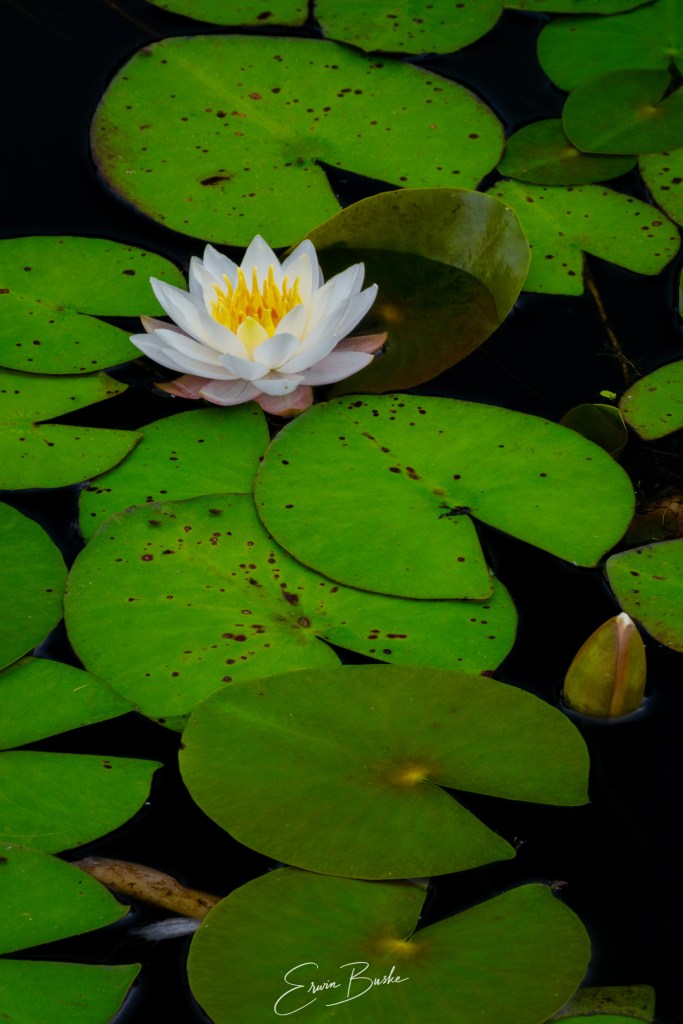
Silver Lake Lily Pad
In Chapter Five we move forward a couple of thousand years to Thoreau and American Transcendentalism. Although Thoreau dabbled in the philosophies and spiritual practices of the east, he had only had cursory knowledge of Zen and likely little or no knowledge of Taoism. But Thoreau finds in the direct and immediate experience of nature a path for self-knowledge, spiritual awakening, and creative growth that closely resembles the “Way” in Taoism and “Enlightenment” in Zen. That Thoreau had only limited knowledge of these eastern traditions to me is actually a good thing. It shows that all three of these wisdom traditions are part of what is known as the perennial philosophy. Not bound by history or a cultural tradition, the perennial philosophy keeps coming back, taking on new outward forms and symbols but pointing to timeless and enduring truths.
This Zen adventure is not unlike the adventure that Thoreau took in his two-year experiment of living in the forest at the shores of Walden Pond. It was only here, in close contact with Nature, did the grip of his preconceived notions surrounding the natural world begin to evaporate as he experienced the natural world in a much more immediate and intuitive way. Thoreau did not transcend the natural world of wonder and beauty at Walden Pond. This was not a journey into some kind of transcendental reality beyond the natural world. Thoreau transcended his perception of himself as something separate from nature, a perception that was largely a function of his societal upbringing and his own conceptual thought. In transcending this false identity, he embraced his true identity with nature. Thoreau lived in nature and nature in Thoreau at Walden Pond.
Heaven and Earth
Although Thoreau’s home at Walden Pond is physical place close to Concord Massachusetts, it is also very apparent that Walden Pond is a symbol for Thoreau’s spiritual journey of self-discovery. We will find our own internalized Walden Pond not in Concord Massachusetts, but close to our own home in the here and now where ever we are. After reading Walden several times I came up with 12 of my takeaways that have helped me on my journey to my own Walden Pond. These takeaways are also directly related to my progression as a nature and landscape photographer. It is my hope that these takeaways will also shed some light for your personal journey to your own Walden Pond.
The Takeaways I will discuss in this chapter include the following.
“We need the tonic of wildness…At the same time that we are earnest to explore and learn all things, we require that all things be mysterious and unexplorable, that land and sea be indefinitely wild, unsurveyed and unfathomed by us because unfathomable. We can never have enough of nature.” ― Henry David Thoreau,Walden
The mystery of nature has inspired poets, artists, and song writers from the beginning of recorded time. But the mystery of nature often moves in ways that go beyond our common understanding of mystery. Much of our conventional understanding of mystery starts with the notion that if we could just find out more about the mystery, more information and more clues, we will eventually solve the mystery. But the mystery of nature ultimately cannot be solved.
I wish I was an island in the Fog
With nature we are not just talking about figuring out what lies just beyond the edge of the frame, even though that may help convey a sense of mystery in a landscape photograph. With nature we are also not just talking about concealing important details in darkness and shadows, even though that might also contribute to the sense of mystery in a landscape photograph. With nature, we stand in awe of its mystery in both the light of day and darkness of night. To those who welcome the message of nature, they sense her mysteries throughout the day and in all environments and places, in the brightest highlights and the deepest shadows and everything in-between. We welcome the mystery of nature both where nature reaches the pinnacle of beauty and in her more widespread and typical humble abodes.
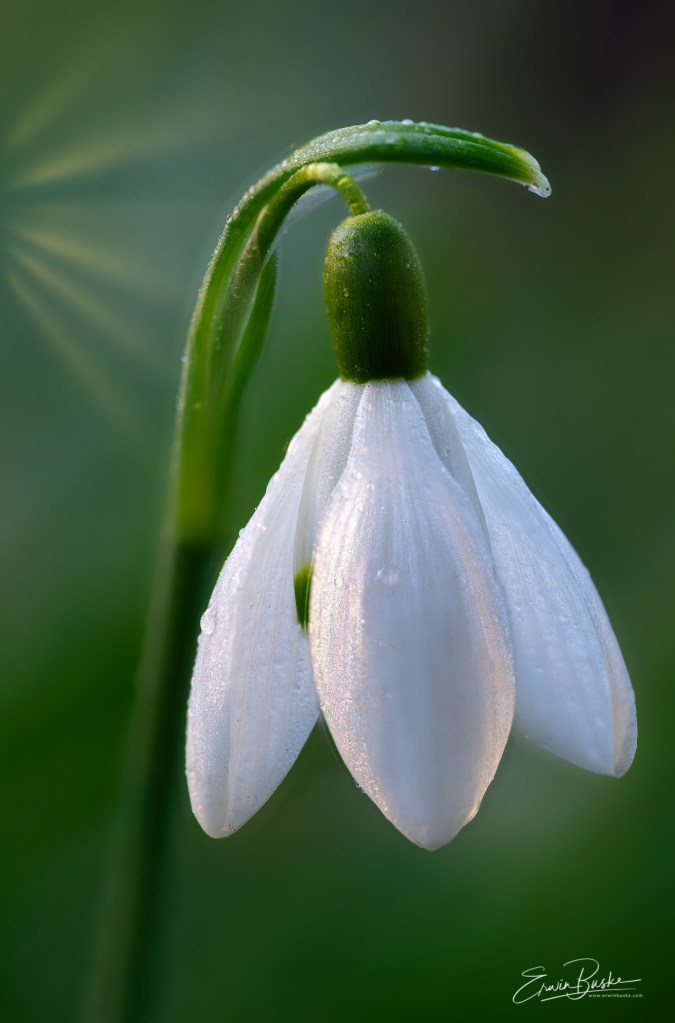
Early Spring Snowdrop
What is Mystery?
The poets likely come closest to describing at least verbally the mystery of nature through their use of evocative language. One passage that immediately comes to my mind is this one from Dylan Thomas’s Fern Hill:
“The force that through the green fuse drives the flower” Dylan Thomas, Fern Hill.
Dylan Thomas’s words in Fern Hill are full of feeling and rich symbolism to describe the mysterious forces associated with new growth and energy of spring which brings to us an appreciation of the mystery of nature. It is impossible to rationally describe what the mystery of nature means in a manner that gives justice to the wonder and awe one feels in the midst of the mystery of nature. For the writer, this is why the use of evocative language is so important, and in the visual space this is also why it is so important for the photographer in pursuit of the art and craft of photography to bring to the viewer an ability to sense the mystery nature.
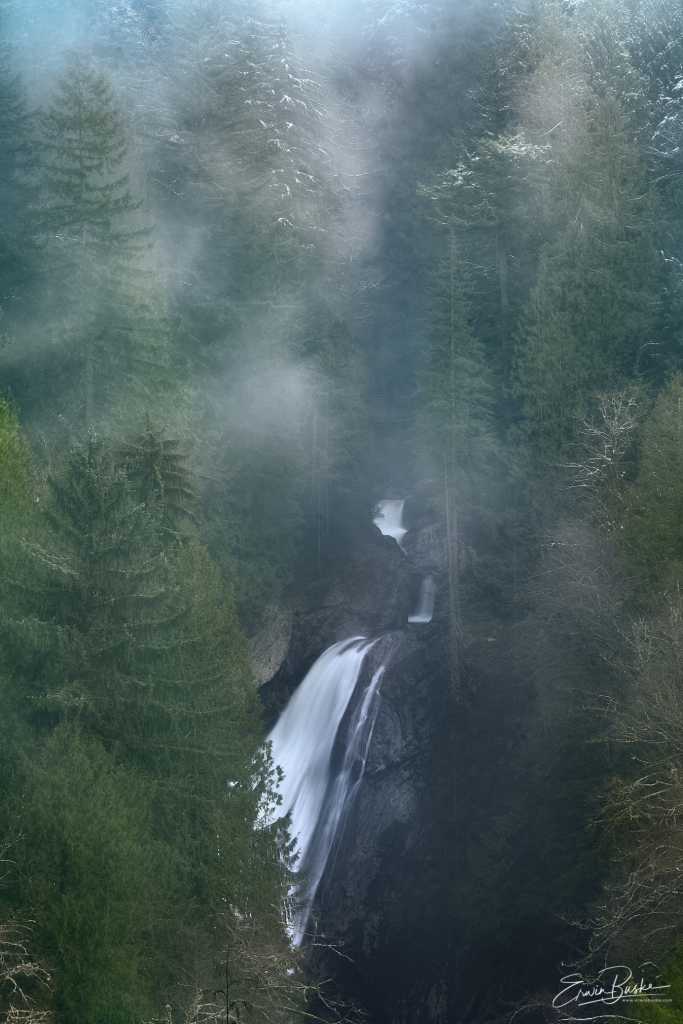
Twin Falls in the Mist
A standard dictionary definition of mystery goes something like this:
” Anything that is kept secret or remains unexplained or unknown”.
But are the mysteries of nature really secret or unknown? Some scenes certainly convey the feeling in the physical sense of something secret and unknown, for example in the above image I titled Twin Falls in the Mist. But when we utter the words “I am in awe of the mysteries and wonder of nature” are we just taking about certain manifestations of nature, lets say dark and foggy scenes punctuated with light? I think not. We are talking about a sense of mystery that pervades all of nature. It may be impossible to describe through rational means or represent through an unedited raw image the mystery of nature, but we all have the capacity to directly experience the mystery of nature. We all also have at least the potential to share this experience through evocative writing and through the art and craft of evocative photography. Evocative photography moves us beyond the visual representation of the scene and evokes emotions, feelings and moods that are associated with the experience of the mystery of nature.
Access to the Mysteries of Nature through Direct Experience
In the current debate over how much is enough in processing images, several photographers who I know and respect maintain that their goal in nature and landscape photography is to create images that are true to their experience of the scene. I find this interesting because in this same discussion many of these photographers maintain there is a close linkage between their “experience of the scene” and “what was really there.” When I look at the work of these photographers, especially images of places I am very familiar with, I notice there is actually quite a gap between their “experience of the scene” and “what was really there.” Sure these photographers shy away from more aggressive manipulations of the image, but nevertheless the images are heavily edited with shifts of hue and saturation, and alterations of highlights, shadows, brightness and tonality to help direct the the viewers attention to parts of the image, along with removal or deemphasis of distractions, etc. Now this actually does not bother me in the slightest, because it is as it should be. We edit images to bring to the viewer something that can transcend a purely accurate journalistic documentation of the scene. We introduce mystery.
A purely accurate representation of the scene will rarely evoke the sense of mystery we experienced in the field . This is because our highly individualized perception impacts how we experience mystery in ways that simply cannot be recorded by our highly accurate camera sensors. Our emotional state at the time and who we are as individuals both shape our perception of reality resulting in our “experience of the scene”. This does not mean that mystery is not inherent in a purely accurate rendering of the scene, but it does acknowledge that this mystery is significantly transformed through the mechanisms of human perception. The experience of the scene to me has everything to do with expressing some of the mystery of nature that I felt at the time of capture. For more on human perception and photography I recommend the book: Perception and Imaging by John Suler and Richard D. Zakia (1).
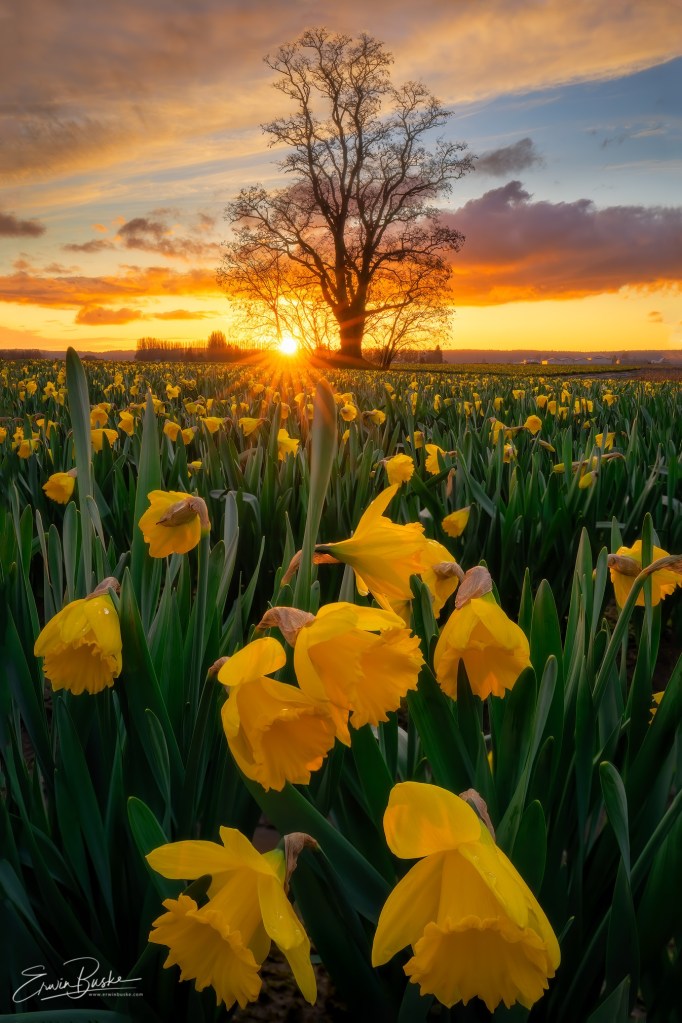
Daffodils under the Tree of Golden Spring Daffodils are some of the first flowers to bloom in the Spring and their arrival stirs in me a sense of wonder and mystery of the every returning cycles of the seasons.
Elements of Mystery
In the sections that follow I will discuss some steps we can take as photographers to bring to our images and the viewer the sense of mystery we felt during our our experience of the scene. These steps will help lead the viewer closer to the mystery of nature, in other words evoke moods and emotions that we felt in nature’s presence. But the results of applying these steps should not be equated with an exact visual representation of the mystery. After all, if that were the case, then the image would no longer be a mystery! Think of these steps as a tool set from which we can select to help lead the viewer to a greater appreciation of the wonders and mystery of nature. Here are the steps I will discuss.
Wonder
Imagination
Shadow and Light
Atmosphere
Motion and Blur
Bokeh
Subtraction
Seasonal Transitions
Use of Metaphors
Transcendence
Wonder
The Wonders of Nature
“If you really want to know what Middle-earth is based on, it’s my wonder and delight in the earth as it is, particularly the natural earth.” J.R.R. Tolkien
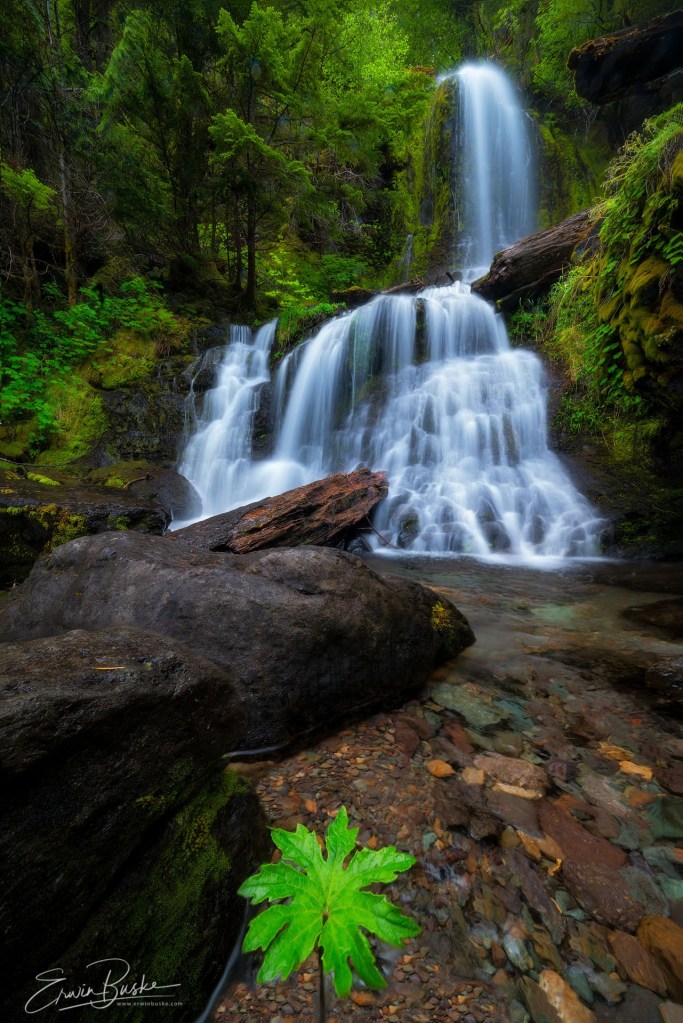
In the review of the elements of mystery I am putting wonder in the first position. A sense of wonder is the common denominator of all of nature and the starting point for mystery. There are many factors that contribute to the feeling of wonder: nature in seasonal transitions, changing light and weather, patterns, colors and shapes. As photographers we want to feature elements that help instill in the viewer the same sense of wonder that we experienced at the scene. In the above images I feature a lone leaf, flower, or tree as elements that bring a sense of wonder. The first image is titled Aqua Leaf. How did this single almost tropical leaf rise from the water in front of this waterfall at Mt. Rainier? Nature knows the answer. The second image is a lone Trillium in the Forest. How did such a beautiful flower establish itself in such a shady environment devoid of lower story life other than moss and ferns? Nature know the answer. The third image is titled Lone Larch. It is not common to see a lone larch in the open meadow as larches are a communal tree. One wonders how this tree established itself in this meadow when no others were able to do so? Nature knows the answer. All of nature is filled with wonder. Find the element or elements that bring to you a sense of wonder to be featured in your image and you will also communicate mystery.
Imagination
Spider Man
“When I’m ready to make a photograph… I quite obviously see in my mind’s eye something that is not literally there… I’m interested in something which is built up from within, rather than just extracted from without.” Ansel Adams
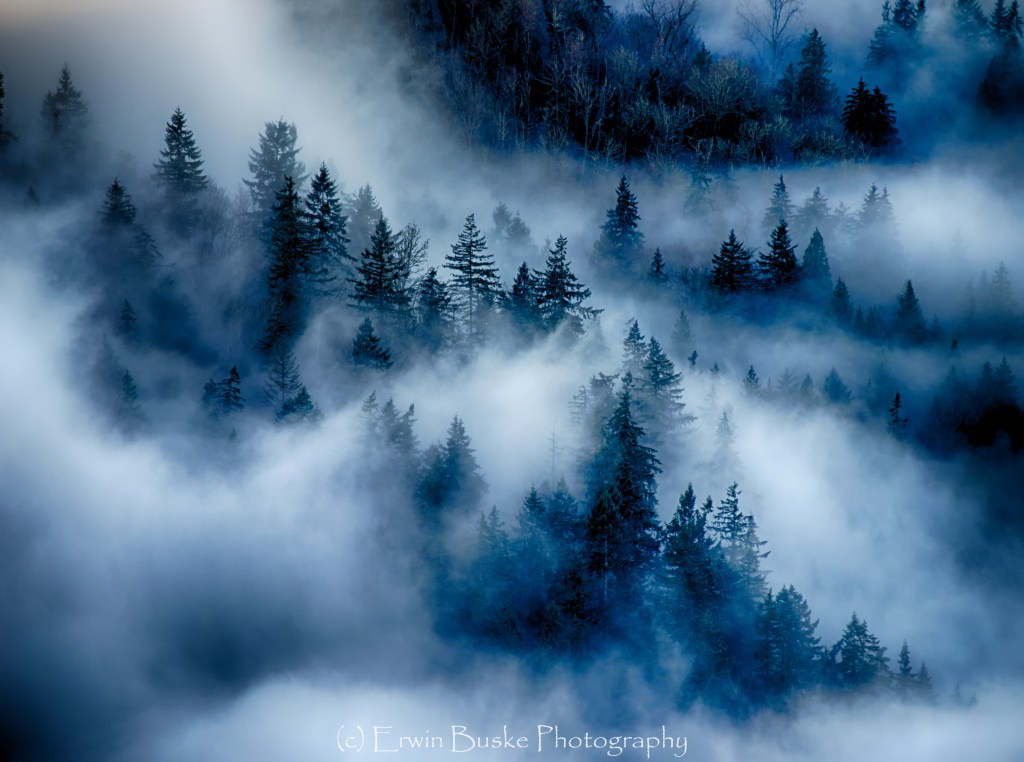
Through the imaginative use of perspective and angles the photographer can bring to the image some of the mystery of nature that might otherwise go unnoticed. The above image I titled “Spider Man” because the branch extending from the lower right appears to be reaching out in several directions in a manner that looks both human and spider like. With the wide angle lens I used, this perspective would have been lost if I stood further back and attempted to capture the entire tree. Imagination and composition are often closely related. The composition approach can magically transform a scene which stirs the imagination to marvel at the mysteries of nature. In the image below titled “Spirit Angels in the Forest”, this view would not at all be apparent looking out from the top of Tiger Mountain where I took the image. A long 500 telephoto lens allowed me to isolate a small portion of the forest emerging out of the clouds at the transition point of the cool light of dawn and the warm light of the rising sun. Diagonal layers of clouds and forest lift the eyes up and out to the light spreading inwards from the upper right portion of the image. For more on the Imagination see my blog post: Forest in the Mist: Windows into the Active Imagination.
Spirit Angels in the Forest
Shadow and Light
Revelations
“Everything that we see is a shadow cast by that which we do not see.” Martin Luther King
The large sensors on our modern cameras often allow us to open up our shadows to a degree that we can see all details in even the deepest shadows of the image. But in doing so we may be unwittingly also removing the chance for mystery. Mystery often demands some areas be kept dark. Highlights only stand out and draw our attention when there are contrasting shadows. But just as a good mystery novel offers the reader some clues, the darker areas of our image should not be devoid of all clues. We should still be able to see some subtle texture and detail, however dim, in some of the shadowy areas-this will help build a little suspense and tension into our images that will keep the viewer interested. The one exception to this would be in high contrast usually black and white images where we are concentrating on the form of the subject.
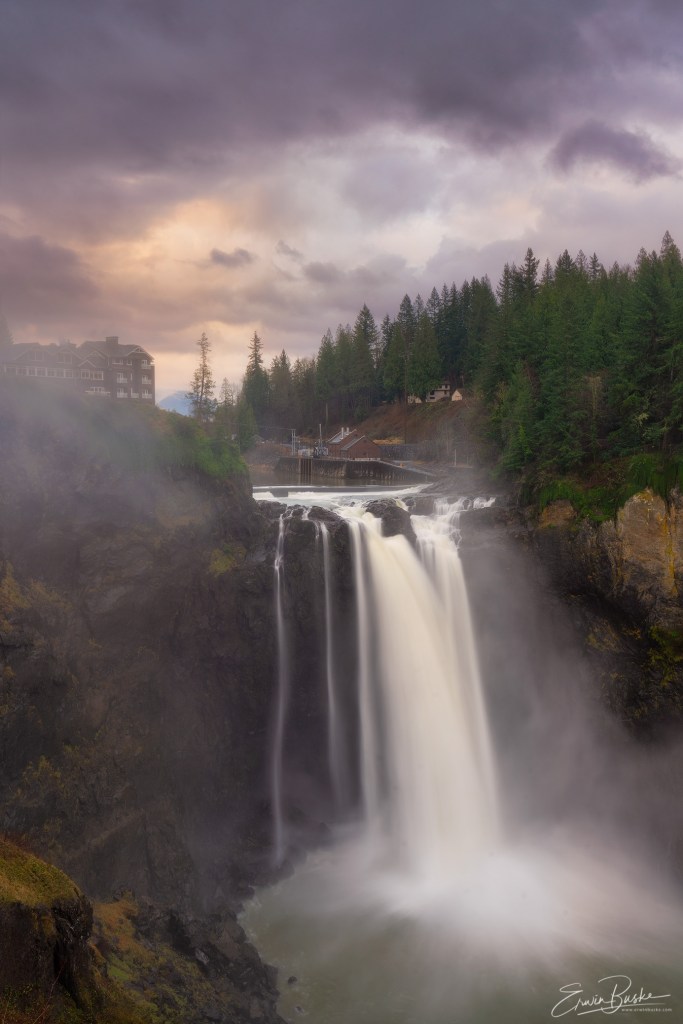
Snoqualmie Falls December Moods
Letting shadows be shadows helps preserve the mystery of the scene where there are strong and contrasting highlights and shadows in the original scene. This is especially true for backlit landscapes and seascapes when looking right into the rising or setting sum. I however do not advocate exposing for the highlights and letting the shadow go pure black. This made sense in the film days because with a high dynamic range scene, the photographer could either expose properly for the highlights or shadows, but not both. With digital photography it is possible to capture the entire dynamic range of the scene in a natural and believable way without overplaying the deepness of the shadows or the brilliance of highlights.
Shadows almost always look best when they kept looking somewhat airy and natural with some areas remaining almost but not entirely opaque. With natural shadows some detail will be evident in at least some of the shadowy areas, but this detail will be dim and only barely visible. Aggressive exaggeration of the difference between shadows and highlights almost always looks overdone and preserving the sense of mystery will require a more subtle treatment. Proper treatment of shadows and highlights represents a fine line that is easy to cross and is one of the biggest challenges in photo processing even today. Few of us, including myself, get this right 100% of the time, but effectively conveying a sense of mystery in our images demands that we do the best job possible.
Atmosphere
Twin Peaks
“To me dreams are part of nature, which harbors no intention to deceive but expresses something as best it can.” –Carl Jung
Images with atmosphere especially with fog, mist, low clouds, haze, sand, and rain can all evoke a sense of dream like mystery. What all of these atmospheric conditions have in common are particles in the air interacting with sources of light. This awakens our feelings and emotions to cultivate the sense mystery. Particles in the air soften the scene, and with the interaction of light this helps direct our attention to essential forms while hiding others which deepens the mood.
Morning Fog
It would be a mistake however to reduce our reaction to the scene’s atmosphere to just feelings and emotions. The mystery also points to something beyond even what we are feeling at the time, to a sense of wonder at the experience of being in nature. With the softer rendering of the scene made possible through atmosphere, the scene can often seem dream like and a little other worldly. In post processing, contrast must be carefully and selectively controlled to preserve this dream like mood. We may need to actually lower contrast in some areas to capture the mood and only strengthen the contrast in selective areas where we want to attract some added attention.
Young Tree in the Forest
Motion and Blur
Dream Time Stepping Stones
“The job of the artist is always to deepen the mystery” – Francis Bacon
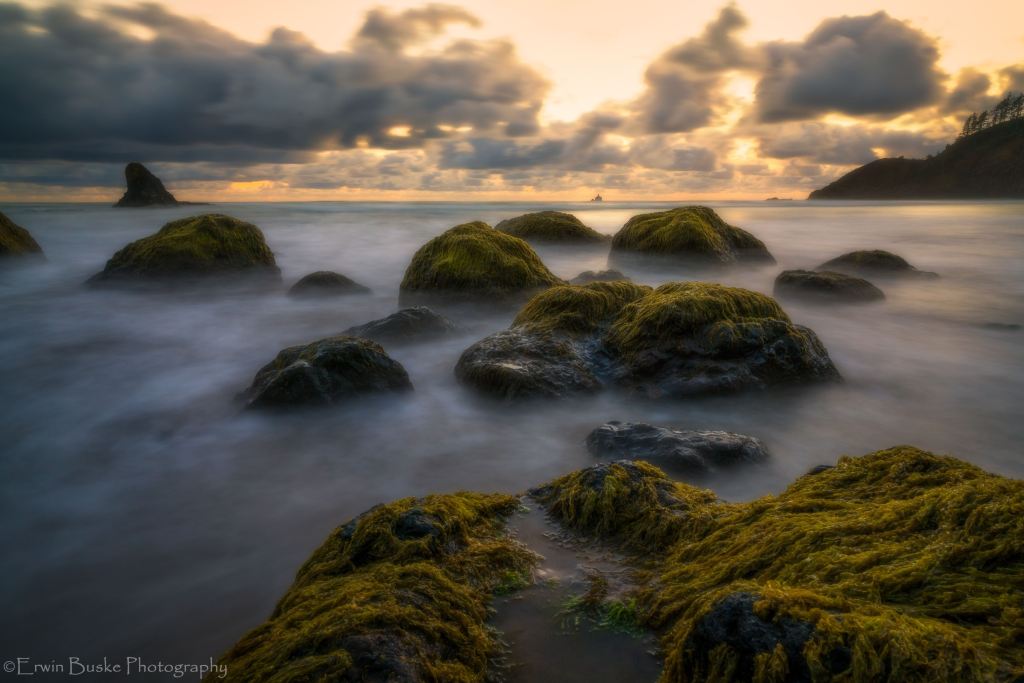
When it comes to still imagery photography there is no illustrative way to capture motion that is truly realistic. When taking still images we have a couple of choices, we can either arrest motion or blur motion. Both of these are departures from reality, but therein also lies their strength and ability to tease the viewer with mystery and stir the imagination. Just as the use of shadows and particles in the atmosphere have the ability to hide details, simplify compositions and focus our attention on forms, patterns and or the primary subject, blurring motion can do the same. This is evident in the image above titled “Dream Time Stepping Stones”. The blur smooths out the movement of the ocean and focuses attention to the seaweed covered rocks leading out into the vast ocean under a cloud filled horizon just after sunset.
The effect of blurring motion is often all the more mysterious when the effect is subtle and perhaps not even detectable. Such an image can leave the viewer with a sense of mystery even if the viewer does not fully understand why the image is mysterious. When it comes to mystery incomplete understanding is a good thing and helps deepen the mystery and light up the imagination.
Secrets of the Forest
In the above image “Secrets of the Forest” I took several images in the early morning light at different slower shutter speeds and blended the images together accentuating the impression of cloud movement and subtly altering the shape of the cloud forms. This blending of several images with blurred movement was an important factor creating the sense of mystery in this image.
Flock of Birds
Creating a sense of mystery of course is not limited to blurring motion. A sense of mystery can also make itself apparent through arresting or freezing motion. This is evident in the above image “Flock of Birds” where one of the layers in the image are birds flying in from the right side of the church and heading out to the west into the Skagit Valley. The church, birds and Mt. Baker all catch the side lighting of the setting sun. A large flock of birds flying in a narrow directional pattern almost always seems somewhat mysterious, and the juxtaposition of the church, village and a partially visible Mt. Baker under the clouds deepens the mystery.
Bokeh
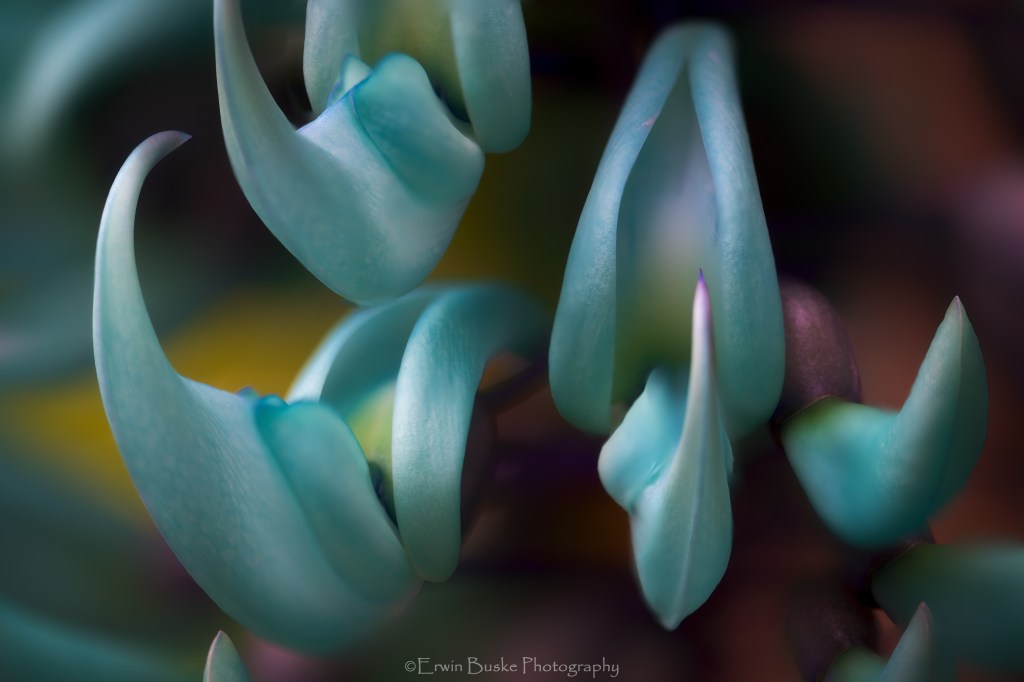
Jade Vines
“Every Aspect of Nature reveals a deep mystery and touches our sense of wonder and awe.” Carl Sagan
In some ways Bokeh is similar to the effects of motion blur, fog, haze and other atmospheric conditions. In all of these details are softened and sometimes darkened, often to the point where they are barely visible or even hidden. Bokeh, however, is somewhat unique in that it is created optically through the use of a lens and a wide open aperture to transition between areas of the image that are in focus and out of focus. I say transition because the hallmark of good bokeh is a smooth and almost undetectable transition between in focus and out of focus areas.
Bokeh can contribute to the sense of mystery in many ways. When the bokeh is darker than the main subject of the image we sense the presence of something emerging out of near darkness or the void. There may be hints at what lies beyond, but these hints are only vague and somewhat ambiguous. Blurry elements, some suggesting movement, challenge the viewer to figure out what these blurry elements might be. How might these blurry elements also shape the viewers attitude about the element/s that are in focus?
In the above image Jade Vines, we see blue green mouth like forms with spiked tongues emerging out of opaque dark bokeh patterns. Would the effect be the same if details in the background were clear-absolutely not. In the next image the use of bokeh effects our perception of the in focus areas to the point where these subjects are no longer recognizable and become almost abstractions. These are actually tiny autumn colored red leaves of a plant that grows on mountain boulders, but most people have indicated to me that they look like flowers. This is a good example of how the use of bokeh can alter our perception of reality and in doing so deepen the mystery of our experience in nature.
Its a Small World After-all
Subtraction
Oregon Coast Moon Set
“Nature conceals her mystery by her essential grandeur.” Albert Einstein.
Subtraction is strongly related to both improving the composition and deepening the mystery. Subtraction is the notion that less is better, and there is a beauty and elegance in removing as many elements from the scene as possible. In photography, the world as it presents itself to us is often cluttered with extraneous detail. But the skilled eye using a good choice of lens and angle of view can always simplify the scene to primarily include those elements which are integral to the composition and deepening the mystery. This does not necessarily mean always using a longer focal length lens with a narrower field of view, as that would be an over simplification of the process. But it does mean a keen awareness of what attracts you to the scene and the skills to arrange as few elements as possible in a pleasing composition. What is left out strengtheners the mystery for the elements that still remain. With mystery there is almost always something concealed and held back.
Indian Paintbrush: Quiet Morning Mist Although I used a moderate wide angle lens for this image, there are few elements other than the paint brush, a few trees and fog in the image.
There are varying degrees of subtraction, from a moderate tightening of elements and tones in the scene as in the two images above, Mystery at the Seashore and Quiet Morning Mist, to a major emphasis of just the subject and its form silhouetted in black and white, as in the image below titled: Tree Dances with Fog and Light.
Tree Dances with Fog and Light
Abstraction takes the process of subtraction to an extreme degree and can often result in images with a heightened sense of mystery, especially those images where we are in awe and wonder at the beauty of the small intimate details of nature. But some would argue that for a true abstract photo we need to have no idea whatsoever of what the larger scene from which the abstraction was derived represents. Although still possible, such images are less likely to be mysterious. With mystery some but not all clues lie hidden. It is the subtle interplay between the two that deepens the mystery.
Rock Tapestry
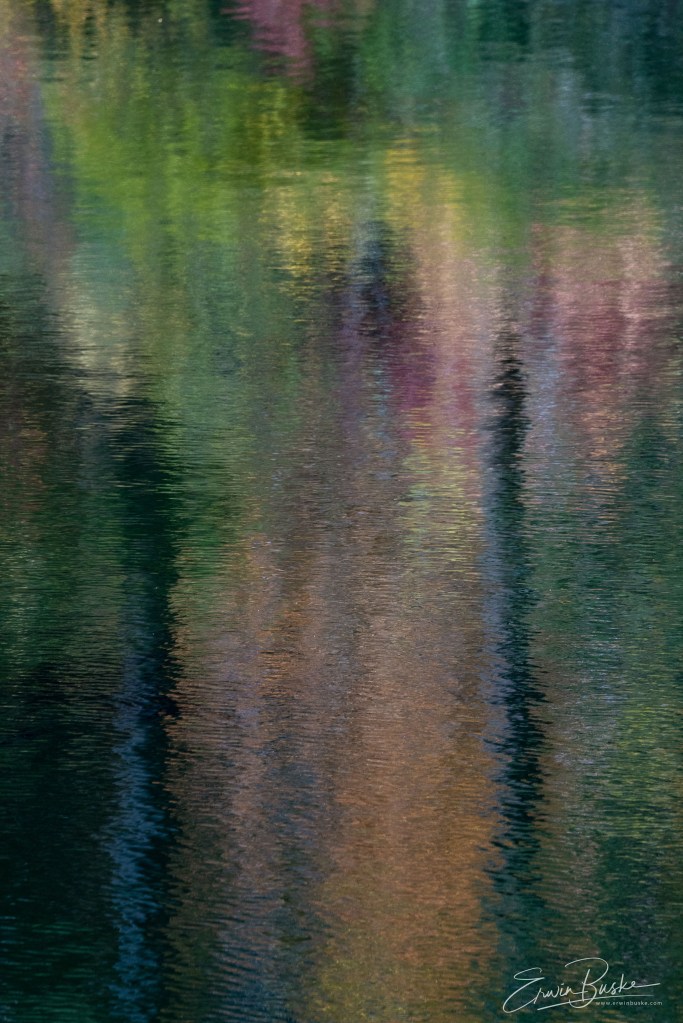
Using the principles of subtraction, ones composition approach itself can imaginatively transform the scene to bring into view the mysteries of nature. An example of this is the image above titled Rock Tapestry. Walking through a slot canyon I noticed some most interesting patterns over a small section of the canyon wall. It was, however, not until I got very close and studied even smaller sections of the wall did I find the strong diagonals, the X shape and patterns featured in this image. In the next image I found some beautiful Monetesque reflections on an Autumn day at a slow moving portion of the Wenatchee River. Through isolation and careful choice of area selection I was able to capture these mysterious almost brushstroke like patterns of the river’s slow moving waters.
Tumwater Reflections
Seasonal Transitions
“April is the cruelest month, breeding lilacs out of the dead land, mixing memory and desire, stirring dull roots with spring rain.” T.S. Elliot
The seasons are filled with mystery and symbolic meaning and often the natural world mirrors our own emotional states. With Spring there is rebirth and the sense of excitement of having one more life to live. With Summer there is a sense of comfort and maturity in having arrived at the prime of our life. With Autumn there is a sense of warmth, change and letting go. Winter is a time of reflection and detachment with the realization things have come to and end. But there is also a beauty in the silence and quiet of Winter, knowing that the seasonal cycle will repeat itself as long as the world turns. But as mysterious as the seasons are in and of themselves, the mystery is all the more deepened during the time of seasonal transitions. With seasonal changes there is a movement from one state of life to another, part of what was will now be hidden, and part of what will be has not yet come into to view. As in our previous examples throughout this article, when something remains hidden and unknown, the mystery deepens. But the mystery also comes from what is in view, as we stand in awe and wonder of the new season beginning to unfold. It is the interplay between what we see and do not see that creates the ultimate mystery of seasonal transitions.
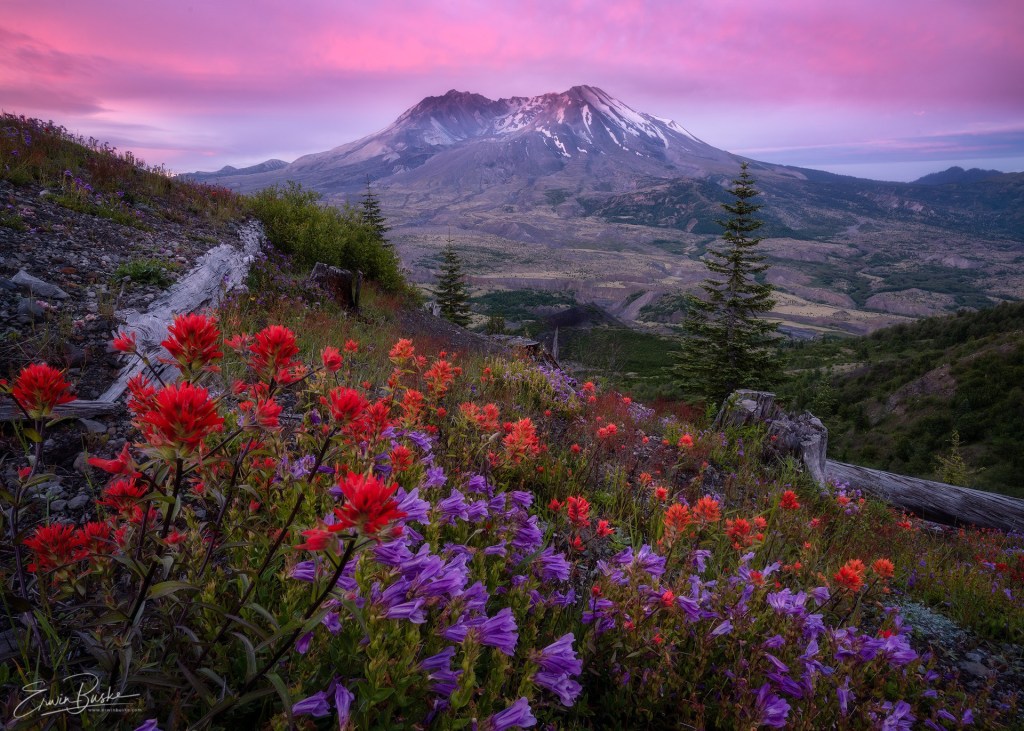
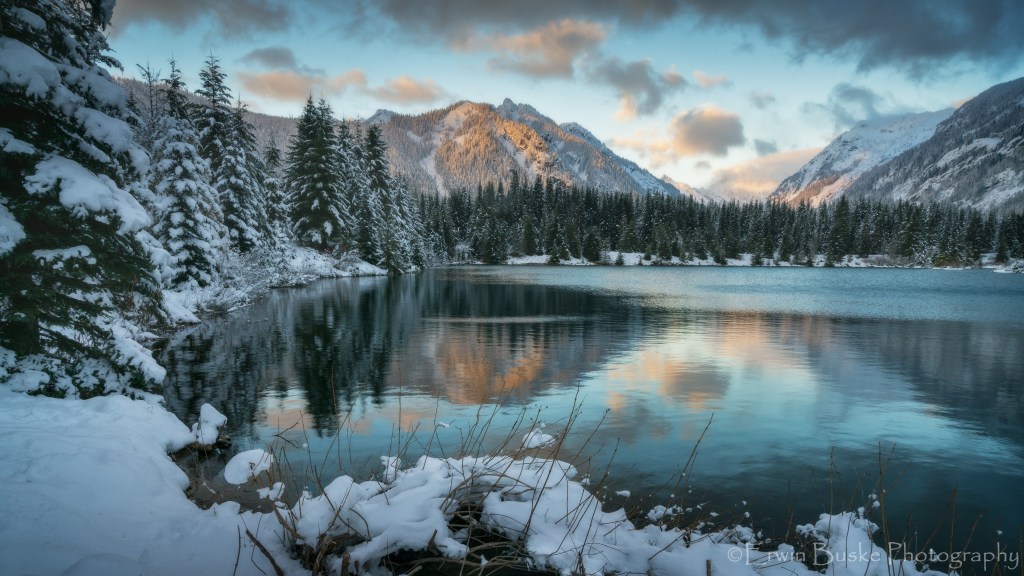
Daffodils under the Tree of Spring’s Golden Light In this field the Daffodils have just begun to open and the bare tree in the distance provides evidence that some of the spirit of Winter is still present.From Ashes to Nature’s Majesty The wildflowers at Mt. St. Helens are at peak bloom at the transition from Spring to Summer. This area is somewhat dry and as can be seen in the image the foliage of the flowers is already starting to dry out and turn to the mellow yellow-green of summer.Autumn Passage Peak fall color is of course beautiful, but what I find even more interesting are seasonal transitions. Seasonal transitions often make us more aware of changes in our own lives and consciousness. The passage this year from Summer to Fall has during this particular year was more beautiful than I can recall in previous years. Early Winter Magic There is a short window of time between when the first snow falls in the cascades and the pond freezes when there are still beautiful reflections on Gold Creek Pond.
Use of Visual Metaphors
In Landscape and Nature Photography visual metaphors are powerful means of communication because they raise the possibility of a shared vision. This shared vision moves beyond a visual message that is purely personal and finds a path that touches upon common experiences of all of humanity while in nature. Because visual metaphors invite participation through a shared vision, we often hear responses to such images like “I feel I am right there with you”. As a longtime landscape and nature photographer I can tell you that there is no greater source of inspiration and fulfillment for both the photographer and the viewer when someone feels they are right there with you, participating in your image at both a mental and emotional level.
The best way to demonstrate the concept of a visual metaphor is to provide a couple of examples.
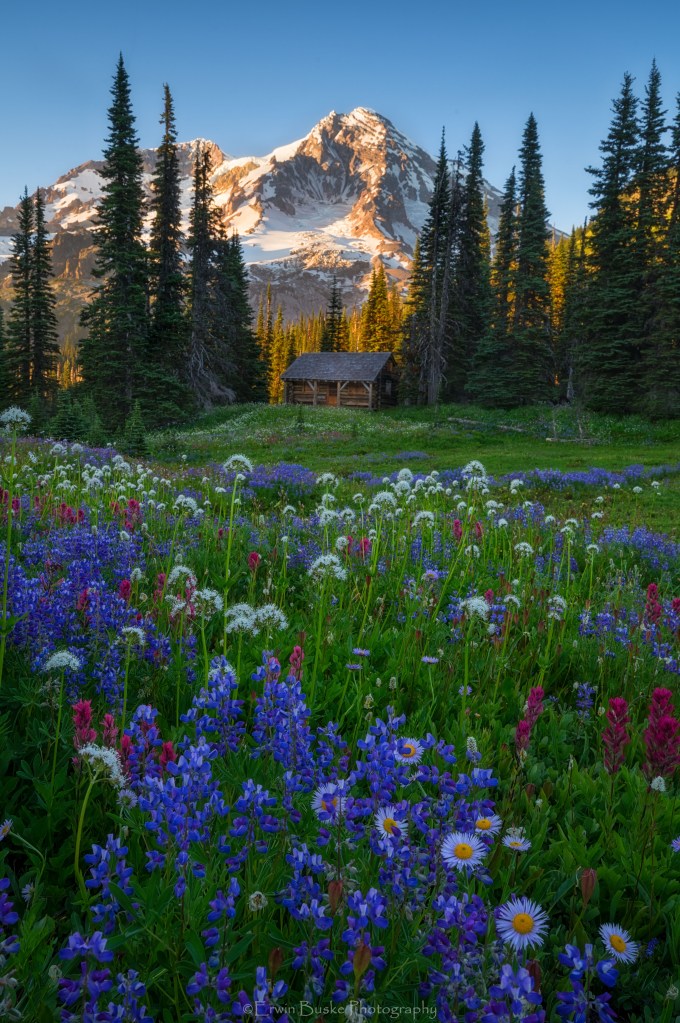
Walking into a Dream
The above image, Walking into a Dream, was taken at Indian Henry’s Hunting Ground, Mount Rainier National Park. This cabin is in as beautiful setting as I could ever imagine and is like walking into a dream. In this dream I am finding my way back to where I truly feel I am more at home, in Nature and the Wilderness. This is a common dream shared by many as was evidenced by the thousands of reactions I received from this image. Indian Henry, known as Soo-Too-Lick, early on (1883) guided several familiar names to Mt. Rainier including the Hunting Grounds, these familiar names include James Longmire Philemon Beecher Van Trump and John Muir. Indian Henry was a Cowlitz Indian, beloved by many people. For more on the metaphor of finding our home in nature see my blog post: Journey to your own Walden Pond: Thoreau’s Legacy and Message to a Modern World.
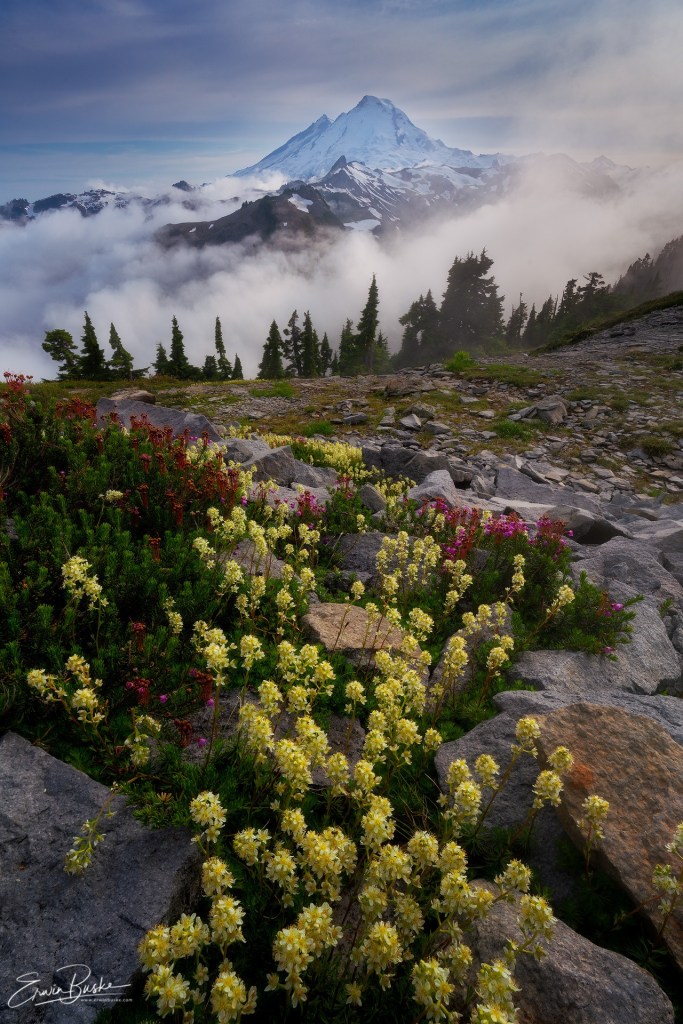
Mt. Baker Rising above the Cluds The moment when something changes after a long day in the clouds and fog, Mount Baker has risen.
Not until we are lost do we understand ourselves.–Henry David Thoreau
Looking into a scene like the image above just before the image was taken, when the mountain was still lost in the clouds, to me is like soul searching and the process of self discovery. I know the mountain is out there and will eventually emerge from the fog, clouds and mist. Just as I know my authentic self, the essence who I am, has always been there just waiting to be rediscovered. When the mountain comes into view, this validates the process of self discovery. The image and story is something others can relate to, share in the vision, and participate in the metaphor of self discovery. For more on the authentic self and self discovery see my blog post: Finding your Vision and the Search for the Authentic Self.
Transcendence
“The possession of knowledge does not kill the sense of wonder and mystery. There is always more mystery.” ― Anais Nin
The use of visual metaphors and the creation of a shared vision moves the photographer beyond the confines of his/her individual self and provides a glimpse of our larger self that is common to all of humanity. Although individually felt emotions and our own personality type help guide the creation of the transcendent vision, the transcendent reaches even beyond feelings and emotions toward something mysterious, inexplicable, evading any attempt to articulate what exactly the mystery is. Nevertheless we experience the mystery as real and the mystery is nature itself. This is no lofty woolly eyed vision, but is anchored firmly to the ground.
“To see a World in a Grain of Sand And a Heaven in a Wild Flower, Hold Infinity in the palm of your hand And Eternity in an hour.” William Blake
Some may refer to transcendence as pointing to the spiritual realm and for me at least it does just that, but no faith, creed or religion is required to sense its presence. One could be a spiritual person or a non believer and still sense its presence. It is the “force that guides through a green fuse a flower,” and it is what causes us “to see a world in a grain of sand”, it is nature itself.
Erwin Buske Photography, Copyright 2020
Mt. Rainier National Park: Where the Angels Roam
Thanks for reading this blog post. For more on the subject of Transcendence see my blog post: Transcendental Nature Photography and Creating images with Lasting Impact. I invite everyone to share with me their reactions to this blog post on Mystery. I would love to hear your comments, thoughts, and point of view. If you like the kind of content I am creating on this blog please let me know and consider subscribing to blog. Thanks again and may the mysteries of nature always be with you.
Erwin Buske Photography (c) 2020
References:
(1) Perception and Imaging by John Suler and Richard D. Zakia, Fifth Addition, Copyright 2018



















 Erwin Buske Photography Blog