My Encounters with Wabi-Sabi and the Quest for Perfection in Nature Photography

Wabi-Sabi is an aesthetic for beauty that has its roots in historical Japanese culture, buy also reaches way back to the practices of Zen and Taoism in China. Wabi-Sabi honors all that is authentic in nature by acknowledging three simple truths: nothing lasts, nothing is finished, and nothing is perfect. This stands in sharp contrast to classical western and modern concepts of beauty. In the classical western tradition beauty is associated with perfection with the proper relation of all parts to the whole. The modern tradition takes this classical concept a step further emphasizing clean geometric lines, the bold and spectacular. Wabi-Sabi, however, is more organic and connected to the earth with all its imperfections. In Nature, objects that evoke the spirit of Wabi-Sabi are especially ones that show nature in flux, moving out of or returning to nothingness-for example settling claystone silt and mud (shown below), new flower blossoms, or fallen leaves. Wabi-Sabi arrangements and compositions are not perfect–irregularities and asymmetries can almost always be found.
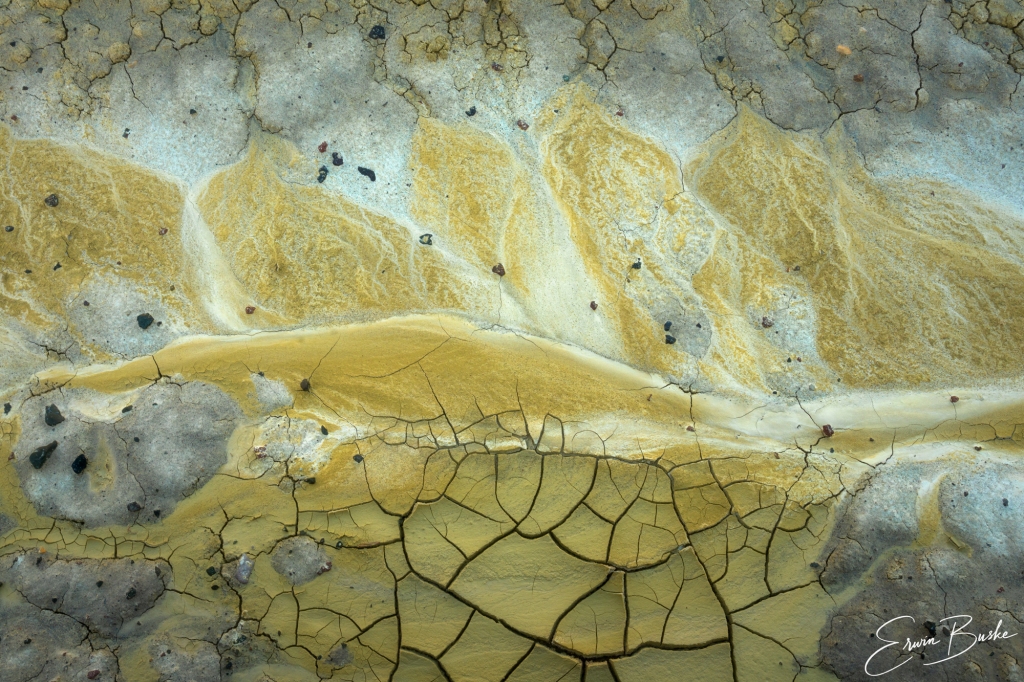
Painted Hills Claystone Silt Abstract
With the heavy rains in the Painted Hills, some of the claystone washes away with the silt quickly drying in streambeds often forming beautiful patterns with contrasting colors. These change from one rainstorm to the next and with different directional light for a constantly changing show. Who says mud cannot also be beautiful!
This image is only loosely geometric, and it has more of an organic feel, with many irregularities, that brings us closer to the earth.  It is here where we can better feel the oftentimes imperfect rhythms of authentic nature rather than our own projections of a geometric order onto the natural world.  

A often sited example of Wabi-Sabi are cherry blossoms, especially at the early stage of the bloom cycle when there are still flower buds or when blossoms begin falling down and decorating the ground below. The cherry blossom cycle is short, at most a week or so, perfectly embodying the spirit of Wabi-Sabi: nothing lasts, nothing is finished, and nothing is perfect.
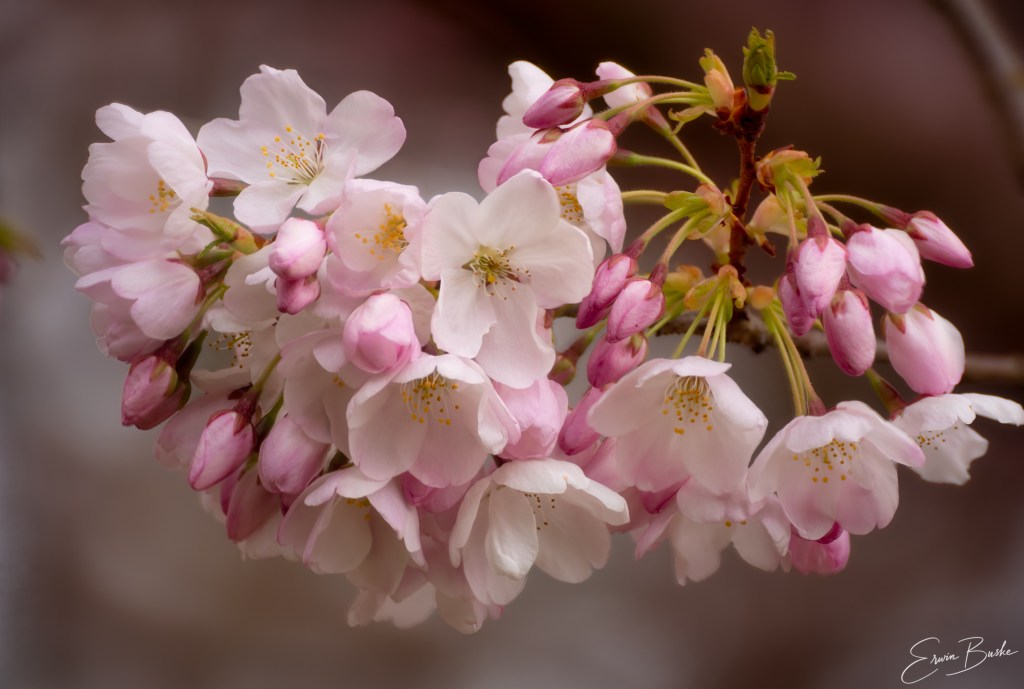
Cherry Blossom Time
I know spring has arrived when I see the Cherry Blossoms! I especially like them when there are both flower buds and blossoms living harmoniously together! Cherry blossoms opening and in transition also embody the spirit of Wabi-Sabi.

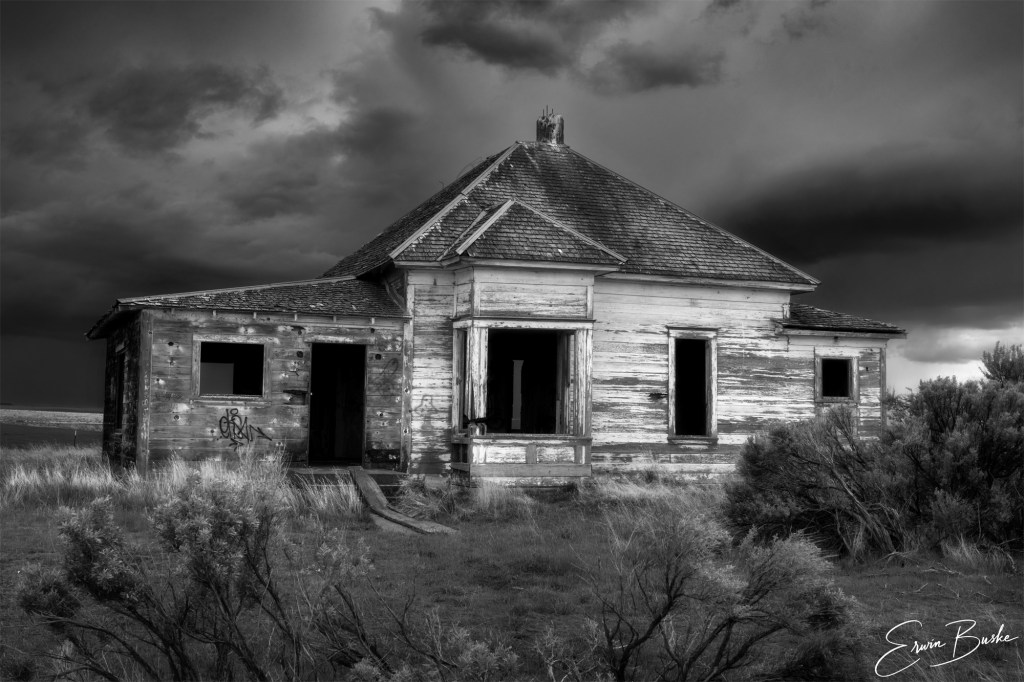
Humanmade structures in nature that show the impact of weather and associated changes over time also show the spirit of Wabi-Sabi, as is the case with this old abandoned farm house in the image below.
This Old Farm House
As I made my way to the Painted Hills on a stormy day, I passed this old, abandoned farmhouse and decided to make a roadside stop. I love the old, weathered look of the wooden house against the dark stormy backdrop along with a few tumbleweeds in the front yard. Even the small amount of graffiti seemed to add a interesting touch
. Wabi-Sabi is especially evident in weathered structures on their way out, returning to nature in an endless cycle of change

Encounters with Wabi-Sabi

It is impossible to define precisely what Wabi-Sabi is. The ancient Zen masters of Wabi-Sabi did not want to communicate this knowledge in this way. Wabi-Sabi is more of a mood or a feeling that at best lends itself more to a poetic description, rather than anything that can be analyzed and explained in rational terms. Photographers encounter Wabi-Sabi as they grow in their ability to find beauty in ordinary things and places. The best training ground for appreciating Wabi-Sabi is not a well known iconic landscape where bold and spectacular beauty is staring at us in the face. The best training ground is in places usually overlooked, most of time hidden, but often close by, in our ordinary worlds.

My house in the Woodside Neighborhood is located on the urban growth boundary of the greater Seattle area. Out my front door and a short ways down the street is a large area of open-space made up of several interconnected parks. This area is primarily second growth woodland with a pond and a few small forested lakes. Most would not consider this area very remarkable and mainly of interest to people who happen to live close by. One seldom encounters people visiting from other areas and this is primarily a locals only place where they take a casual hike rambling through a quite ordinary forested area.
Fern Hill Forest
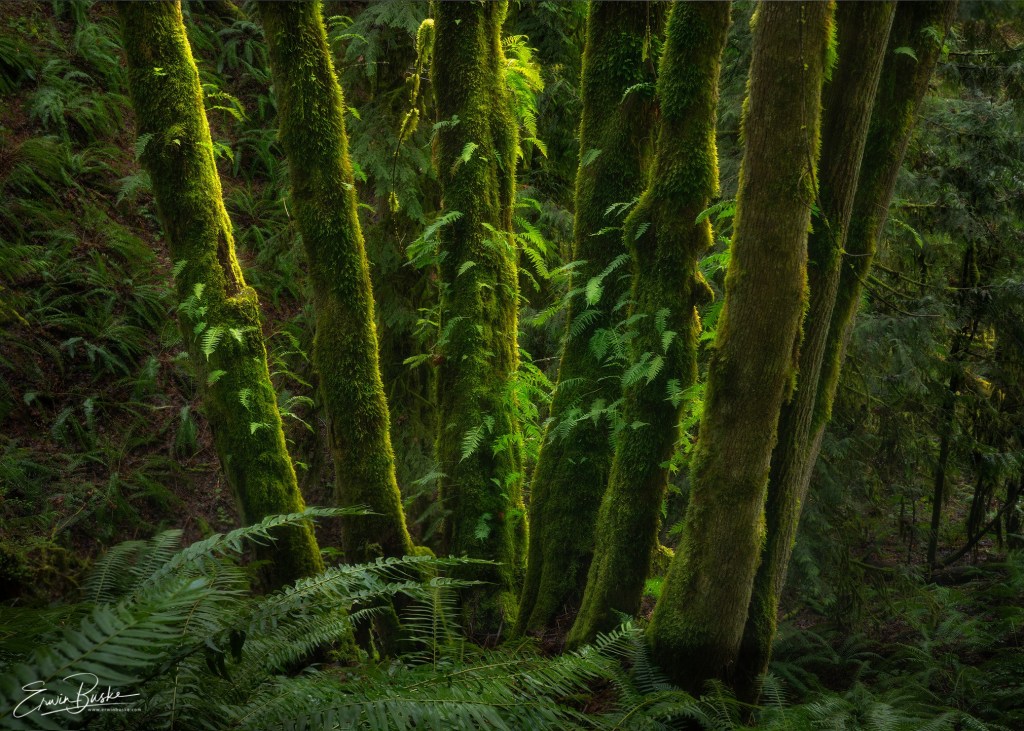
Here is some local beauty across the street from my home on a north facing hillside leading down to the Cedar River. Walking to through this ravine I had the feeling of total immersion in this transparent wall of ferns.

These woods right out my front door are a perfect place for me to have encounters with the spirit of Wabi-Sabi. Because Wabi-Sabi is often hidden, it is up to us to give Wabi-Sabi context and perspective. It does not appear on its own accord. Think of Wabi-Sabi, as more of an altered state of consciousness where the light bulb clicks and we see beauty where we saw none before. Here are a few images from these woods that I believe embody the spirit of Wabi-Sabi.
Winter Leaves
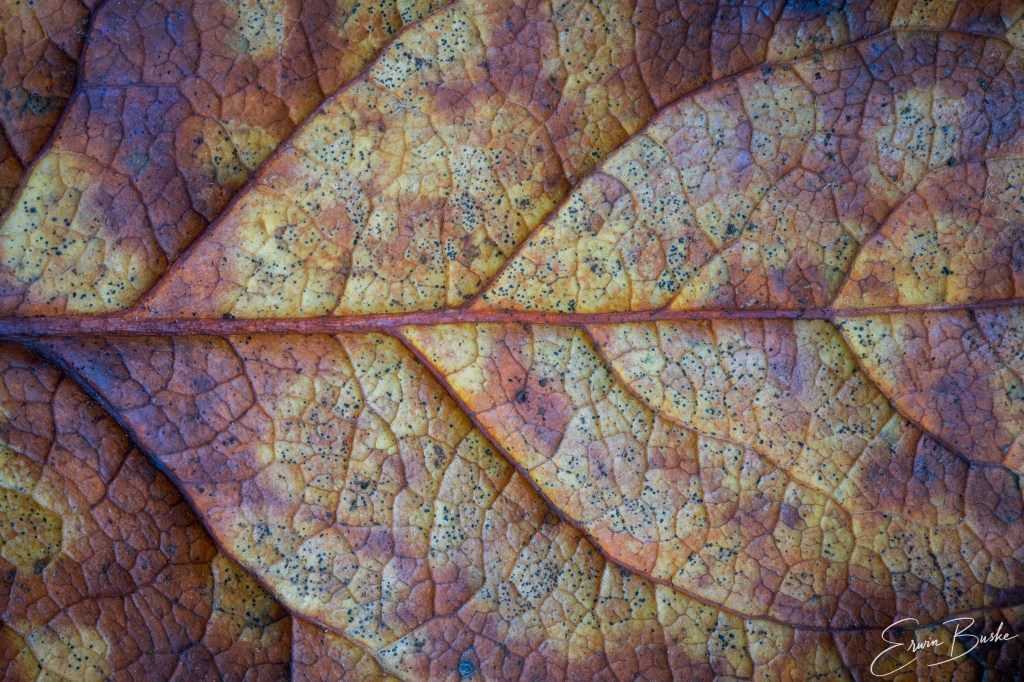
After autumn most leaves darken and slowly disintegrate into the earth, a few find a place in an otherwise wet Pacific Northwest where they can just dry out and maintain their beautiful veins and some of their color, now with some areas of black and blue, after the snow has melted and well into winter. In retrospect, looking at the back of the leaf, for a moment I thought I saw a few angelfish swimming from right to left!
Wild Current Blossoms in the Forest
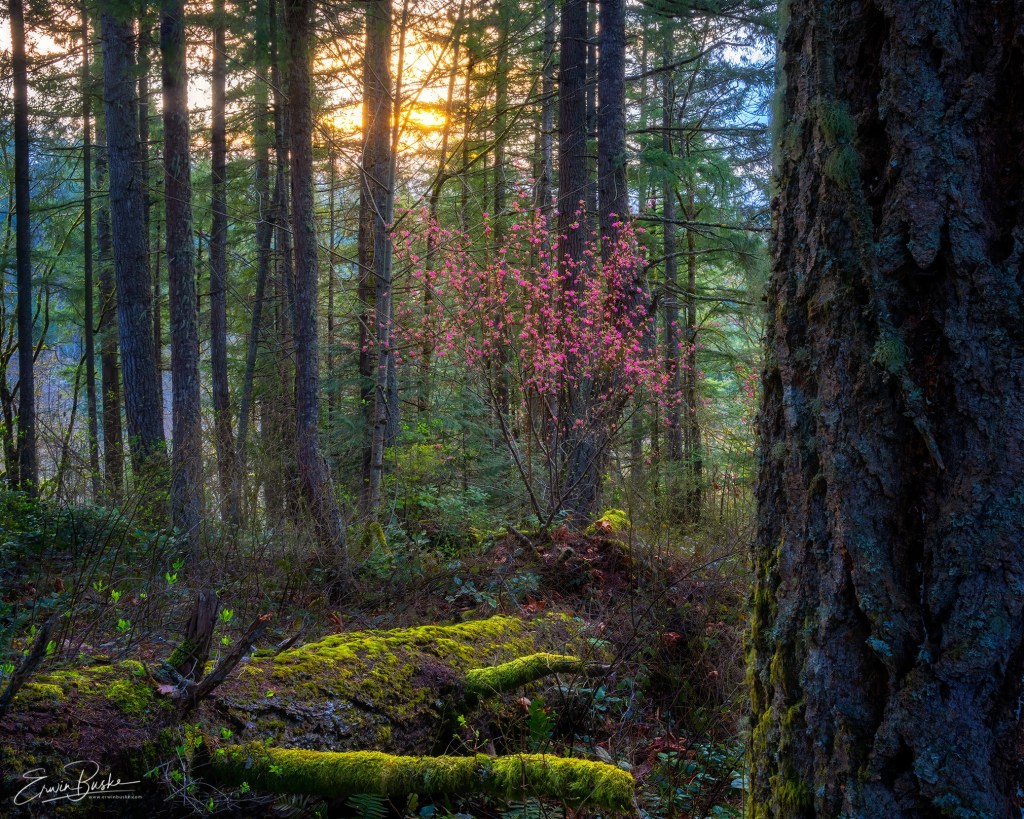
From my sunrise walk on a April morning in the forest outside of my home, here is a welcome sign of spring in the PNW, the blossoms of a wild current bush bringing some color to the forest.

This next image is more of a synthesis of Wabi-Sabi and a more modern perspective. I would not have encountered this beautiful sunset had I not been willing to venture into the quite ordinary woods close to my home. Encounters with Wabi-Sabi made me more open to encountering this extraordinary beauty at this quite humble forested pond.

Erwin’s Pond
The official name of this pond is Wetland 14 Natural Area. That feels a little overly technical and unimaginative to me, a little like second and third beach in Olympic National Park so I gave it my own name, Erwin’s Pond-but I encourage others to name it as they will! I have heard from a passerby on the trail who has walked this area forever (He is in his upper 80’s) that this was a peat mine that filled with spring water after the mine was abandoned. The woman who lived here had the entire pond in her residence. When she passed on, she willed the land to the park system for enjoyment of everyone. I can imagine the sunsets she saw here living at the pond 365 days a year! It is a simple pond surrounded by second growth trees; most of the time not all that remarkable. But this body of water does collect the light in such a beautiful way, and when there are clouds the reflections for me are beyond beautiful. I find the lily pads in bloom also very attractive. But more than all this, for me this is a place for meditation and reflection I can access frequently-maybe not 365 days a year, but at least 60 times a year!

Wasabi and Popular Movements in Nature Photography

In his landmark book: “Wabi-Sabi for Artists, Designers, Poets & Philosophers”, 2008, Leonard Koren points out that Wabi-Sabi has always associated itself with alternative cultural movements especially in aesthetic tastes. In the 16th century it was a reaction slick, perfect and bold Chinese art and treasures emphasizing instead the organic, imperfect, subtle, and earthy artifacts of the Japanese Tea Ceremony. Koren believes that Wabi-Sabi is also present in more recent cultural movements especially among younger people including the Beat Generation, Hippies, Counter Culture, and other Alternative Cultures. In modern times Wabi-Sabi turns away from slick and bold, exactly packaged, Madison Avenue like presentations of beauty to something much more organic, unique, earthy, irregular, and even murky.
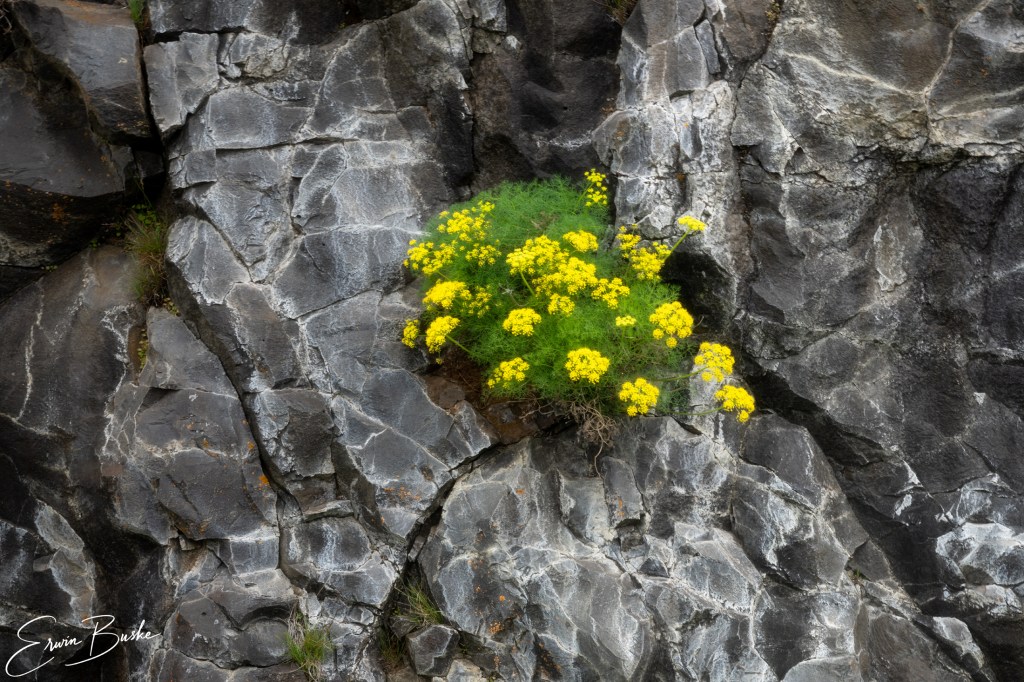
Coyote Canyon Garden Wall
I am truly amazed at the resiliency of these Desert Parsley flowers growing in the cracks of the Coyote Wall. Not only is it challenging to live in this near desert area due to sparse rain fall, but somehow, they manage to thrive in the cracks of rocks where there is even less moisture. I loved how the surrounding patterns of the Columbia Gorge canyon wall helped to feature the beauty of these rock hardy plants.

In this blog post I am primarily interested in how Wabi-Sabi is associated with popular movements in nature and landscape photography. In this context I think it is fair to say that we find the spirit of Wabi-Sabi in the following movements:

  • Slow Photography Movement
  • Contemplative Photography Movement
  • Zen Photography
  • Expressive Photography
Zen Wet Rocks

I am not going to get into the philosophies of each of these movements but suffice it to say all four advocate slowing down, paying more attention to details, developing a more meditative, intuitive and mindful approach to photography. All four want us to be internally motivated and not allow the expectations of others to shape our photographic vision. All four also in my opinion struggle to explain in rational terms what their movement involves and there are definitely no exact step by step by the numbers approaches for creating images consistent with the aesthetic of any of these movements.

It is noted that Wabi-Sabi is closely aligned with Zen. In Zen the teachings are not explained in rational terms but rather through the use of koans-a kind of parable that defies logic such as: Two monks are arguing about a flag. One says, “The flag is moving.” The other, “The wind is moving.” A third walks by and says, “Not the wind, not the flag; the mind is moving.” Although our first inclination may be to try to figure the koan out, that is not possible. The purpose of the koan is to move us away from our rational mind to more of an intuitive way of perceiving the world. It is this kind of intuition that shapes our perception of the natural world and opens our senses to the world of Wabi-Sabi.. We begin to notice details we did not see before and interconnections between material things become more apparent. In short our creative minds get in touch with the spirit of Wabi-Sabi.

East Meets West
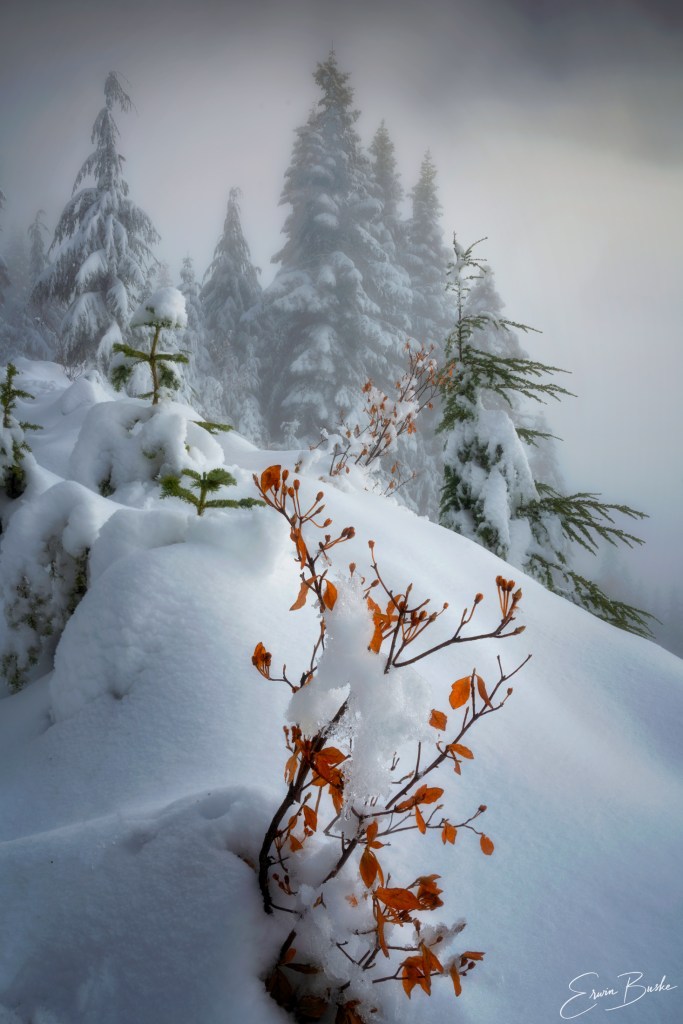
Touch of Autumn in Winter

Without knowing the name Wabi-Sabi until the last couple of years, I believe I have had encounters with the spirit of Wab-Sabi throughout most of the decades of my life. Prior to social media being a thing, I always had a penchant for the small scene, macro, intimate details, and finding beauty in ordinary places and things. With the rise of social media and my involvement in it through the sharing of images, I like most photographers started posting images that I knew, from examining behavior of others on social media, would be popular. But with me this phase did not last long. Although I would not say I am currently immune from the pull of catering to what I know for sure will be popular, this is definitely not my primary motivation any longer. But I would not go so far as to say that I travel only within the realm of Wabi-Sabi either. There is too much of the western and modern influences in me. I do love the bold, colorful, and often dramatic grand scenes that quickly capture my own attention and the attention of others. But my experiences with Wabi-Sabi have forever changed me, so that even when I am photographing the Grand Scene, Wabi-Sabi is shaping how I compose the scene, what I include and exclude, and my tolerance for and even welcoming of imperfections and sloppy geometry!

Clouds Float in My Eyes
At sunrise the sky of Garibaldi Lake was mostly blue, but as morning progressed patchy clouds appeared everywhere and were reflected in the beautiful water of the enormous lake. Early morning light filtered through gaps in the clouds help create this beautiful grand landscape. The clouds in this image if viewed somewhat abstractly form an X like shape, but it is imperfect with broken lines and irregular shapes. But with all of these imperfections and Wabi-Sabi we can still sense a modern and crisp vision of the world. I like to think of this image as embodying a synthesis of Modernity and Wabi-Sabi.

Grand Landscape Revisited

Much of the training and instruction in photography workshops today, especially those that are primarily focused on the iconic grand landscape, are about achieving a sort of perfectionist ideal in images. In workshops people are taken to iconic places and even specific scenes within iconic places where much of the planning and thinking has already been done for us. These places are bold and grandiose with clean geometric lines. These places are shutter ready with compositions that are already proven to be popular. Everything is all teed up with the only variable the weather and there are attempts to even plan for the best possible outcome there. Although getting to some of these places may be challenging, either in transportation or physically challenging, they are not the type of places where instructors are providing encouragement to see the scene with fresh eyes in a more creative way. If truth be known many of these instructors lack the skills even to do this. I know this to be the case because I have participated in several of these workshops myself. Sure I came back with some awesome images, but they were not ones that I am particularly proud of from the standpoint of personally expressive creativity.

Palouse Falls Dream
I love this iconic perspective of Palouse Falls. When I was there all around me were over 30 photographers, most part of workshops, all taking more or less the same image. If you have ever gone to this location, you will know that there are only a couple of compositions in this area that work well. Although I am proud of this image, especially with the beautiful not always present sunset clouds and processing, I cannot claim that it is particularly creative. There are literally tens of thousands of others out there like it!

The march to create a common and ubiquitous commonality in beautiful and perfect images does not stop in the field. It moves forward into the digital darkroom where a uniform style and instantly recognizable aesthetic in processing is taught, so that our images have that same kind of wow look that so many of the most popular images on popular social media sites have. Images are warped so as to obtain more perfect geometric shapes, patterns and relationships. Elements that are less than perfect are cropped or cloned out, and the lighting in the scene is heavily altered to place all of the emphasis on the most perfect elements of the scene. Even nature’s colors are changed so as to obtain a kind of perfect color harmony. It is a march toward perfection. But do we ever truly get there? In our attempts to obtain perfection are we fighting nature itself? In creating perfection do we loose our organic connection to nature?

Convergence
A photographer friend of mine in Vancouver Canada, Connie Wong, said this about this image upon viewing it when we were also discussing Wabi-Sabi: “It has dimension. It may have imperfections but I think it is a good balance. There is balance of the lines meeting on either sides of the midline. The darker to lighter tones draws the eyes into the photo. The streaks creates movement and flow.” I could not have said it better myself. Thanks Connie. I like to think of this image as a Convergence, not only of lines, but also of the spirit of Modernity and Wabi-Sabi, East and and West.

How might our choice of compositions change if we openly embraced irregularities, asymmetries, incongruities, murkiness, even distractions, and hard to spot details in our images? And if we embraced all of this but at the same time did not abandon our attempts to capture the bold, grand, dramatic, even the geometric–would this result in a creative synthesis between the modern vision of a perfect world and the Wabi-Sabi vision of nature where nothing is perfect and nothing is finished? There is beauty in this tension between the perfect and imperfect, that can provide inspiration to create images that not only capture our immediate attention but also cause us to stay awhile with the image and explore its details and subtleties. This is where I am at today—exploring the beautiful synthesis between Modernity and Wabi-Sabi in both grand landscape and small more intimate scenes.

Elfin Rocks
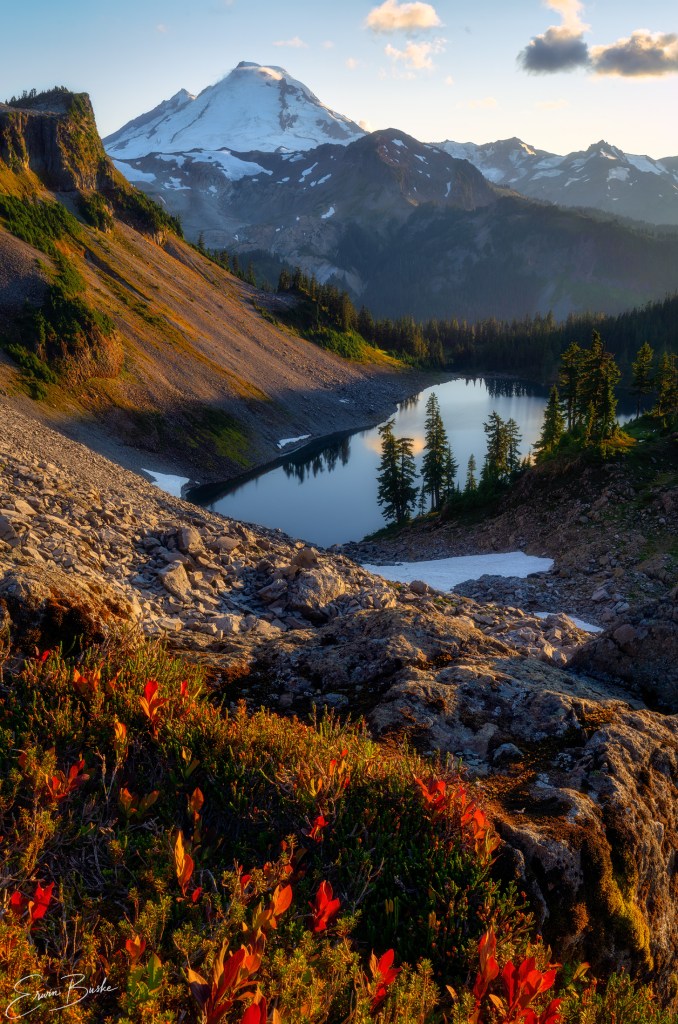
After climbing up over Elfin Lakes close to sunset, I felt drawn to these split, irregular, and somewhat crushed rocks leading out to the beautiful lake basin and distant peaks. These are likely remnants of past actions of glaciers that were once here leaving intriguing lines, textures and shapes.
Fallen Blossoms and Umbrellas in the Rain

Thanks so much for reading and viewing the images of this blog post. I encourage you to share your reactions, thoughts, comments, impressions on this post here. If you think others would enjoy reading this post, please also share it with your friends and communities. If you would like to see more content like this subscribe to the blog so you automatically receive future blog posts. To find out more about my workshops, apprenticeship, and coaching programs click here. To learn more upon my perspectives on nature be sure to check out my Ebook, the Hidden Landscape: The Inside Passage. This image rich book is 248 pages and provides insight how nature, mystery, the Tao, Zen, and the American Transcendentalism of Thoreau inform my photography and can provide sources for you own inspiration. Here is the link to the EBOOK along with a preview. https://payhip.com/b/FCI4z. Thanks again and happy trails!

2022: Beginnings and Endings, Lines and Circles, and Somewhere Over the Rainbow

“We do not come into this world; we come out of it, as leaves from a tree. As the ocean waves, the universe peoples. Every individual is an expression of the whole realm of nature, a unique action of the total universe.”

Alan Watts

In our modern goal driven western world, we have grown accustomed to thinking about progress in terms of beginnings and endings, starts and finishes. This helps us fulfill our need for accomplishment and closure. There is a mountain ahead of us, a definite starting point and a clear goal of reaching the top. We love lines, a straightforward way of thinking about progression, and are not very tolerant of ambiguous goals. Nature often has other ideas. Before the starting point there was multitude of events and happenings that brought us there, and the ending is usually not an ending at all but merely a brief resting point on an infinite circle of life. Nature is more of a circle than a line and repeats itself again and again. Witness the turning of days, seasons, generations even millenniums.

In the words of Alan Watts “We do not come into this world; we come out of it, as leaves from a tree. As the ocean waves, the universe peoples. Every individual is an expression of the whole realm of nature, a unique action of the total universe.” We are not so much starting point as we are a reflection of mother nature who gave us life. When we leave this world, nature and our unique imprint will have fully merged together and live on for generations to come. Which is to say the circle will not only repeat itself but will change, forever expanding as it breathes in our unique contributions to the circle of life. When we climb to the mountain most of us want to think of our accomplishment as an act of personal will that gets us from the starting point to the top. But it is easy to forget who is lifting us up. We are not putting nature beneath feet and finally conquering her once we make it to the summit. Nature and the ground beneath us are lifting us up every step of the way. We are moving with her, and she will also be there at the beautiful summit to transport us to ever expanding circles as our journey continues.

“The life of man is a self-evolving circle, which, from a ring imperceptibly small, rushes on all sides outwards to new and larger circles, and that without end. The extent to which this generation of circles, wheel without wheel, will go, depends on the force or truth of the individual soul..”
― Ralph Waldo Emerson, Circles

Emerson published his famous essay Circles in 1841 and his usage of the English language may seem a bit archaic to us today, but the central ideas of his essay are as relevant to us today as they were back then. Early in the essay Emerson references St. Augustine who described circles as an infinite sphere, whose center is everywhere and whose circumference is nowhere. I have read the essay several times, and each time I draw new insights to help me on my journey. Circles reflects on the endless circles found in nature and the fluidity of all experience. The natural state for each of us is to forever expand our circles which is also a metaphor for personal growth. Emerson, however, also points out that for many of us our circles stop expanding, often in middle age and older, when we believe we have somehow already arrived at our destination. For Emerson there was no destination to arrive at, only a continuous journey. To settle down and stop reaching out to new circles is a kind of metaphorical death. Emerson did not fear actual physical death, because this is just part of the endless cycle of nature. The only thing to fear is not reaching one’s true potential before the time of our passing. Unlived potential happens because one gives up too early, settles into old habits and just good enough. This causes the death of the spirit whose natural inclination is always for us to move forward.

“There are no fixtures in nature. The universe is fluid and volatile.”
― Ralph Waldo Emerson, Circles

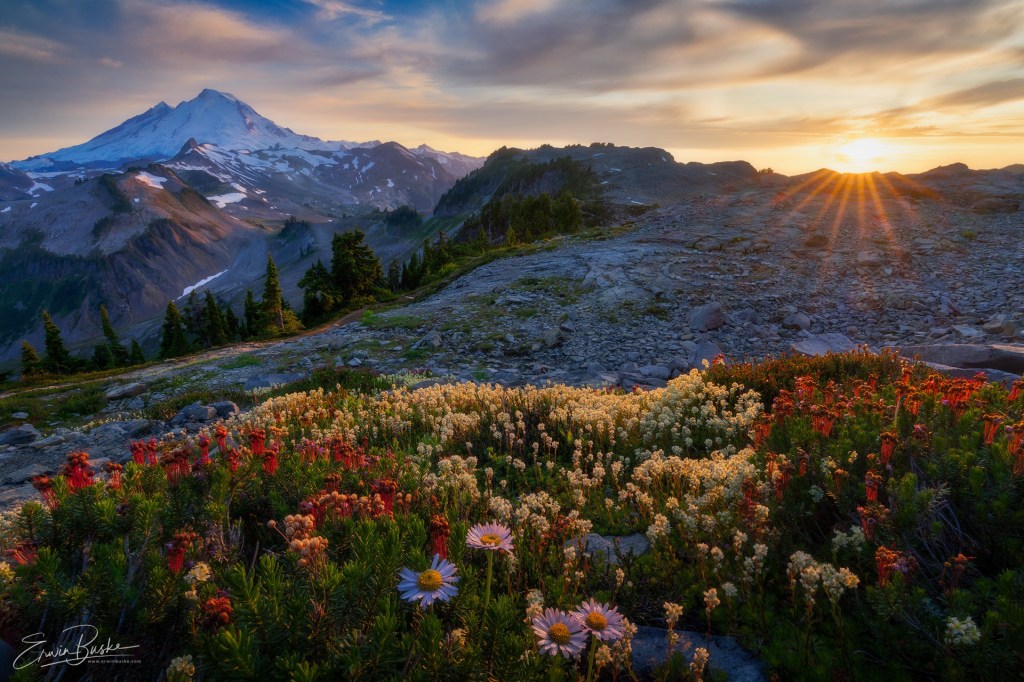
This was a most memorable sunset at Artist Point during my weekend stay at the Mountaineers Mount Baker Lodge. I am not sure how the rocks forming the sundial or labyrinth below the sunburst came to be. Although it seems like an interesting feature, someone definitely left a trace through the construction of the dial. Part of me wanted to disperse the labyrinth, but I thought if the forest service did not want it there, they would have done the same long ago. A few of my viewers mentioned that it was a meditation circle put there to guide circular walks in nature. I often find myself going around in circles when in the beauty of nature. Circles and nature seem to walk hand in hand!

I myself have experienced some apparent endings in the past year, my daughter Caroline leaving home for College at the UCSD and Julia and I finalizing our divorce. But these events are also gateways to ever expanding circles. Caroline will make new friends and connections in Southern California, learn to surf and grow in both her mind and her heart. Julia will also expand her circles as she establishes her new home in California and tries out new activities, forms new relationships, and reshapes her identity. I am still listening to my heart for where to go from here, but I do have some plans. These plans are notional and a bit like looking out “Somewhere Over the Rainbow”. The rainbow points in a direction but what is over the horizon remains to be seen. I will move forward with abandonment trusting my heart that I will create new and ever-expanding circles. Emerson concludes his essay Circles with this quote where he instructs us to follow our heart and move forward with a kind of abandonment.

“The one thing which we seek with insatiable desire, is to forget ourselves, to be surprised out of our propriety, to lose our sempiternal memory, and to do something without knowing how or why; in short, to draw a new circle. Nothing great was ever achieved without enthusiasm. The way of life is wonderful: it is by abandonment”. ― Ralph Waldo Emerson, Circles

Juanita Bay Golden Hour Rainbow

I am excited about some of the new friendships I have formed and how these friendships will support collaborations in photography. Friendships are so important in providing the spark to expand our circles into previously unexplored areas. I also have a couple of books in process that hopefully will soon be published along with several trips planned, including one to the Italian Dolomites. Near term I will travel to Southern California both to see my daughter Caroline and to photograph Anza Borrego, Joshua Tree and other places that are calling me. I am also excited about taking my photography in new directions, integrating music more closely with photography, photographing people (models) in the landscape, intentional camera movement, photographing birds and wildlife in the landscape, building new theme portfolios and more closely integrating my writing with photography. And by the way there are a few peaks I still want to climb, but they will just be departure points into ever expanding and newer circles!

Here is a collection of my best and favorite images from 2022, along with the backstory for many of them, my thoughts, impressions and a few photography tips. They are not in any particular order, some were very popular some not so much so, but all are meaningful to me. Thanks for looking!

1. Two Tree Point

Two Tree Point

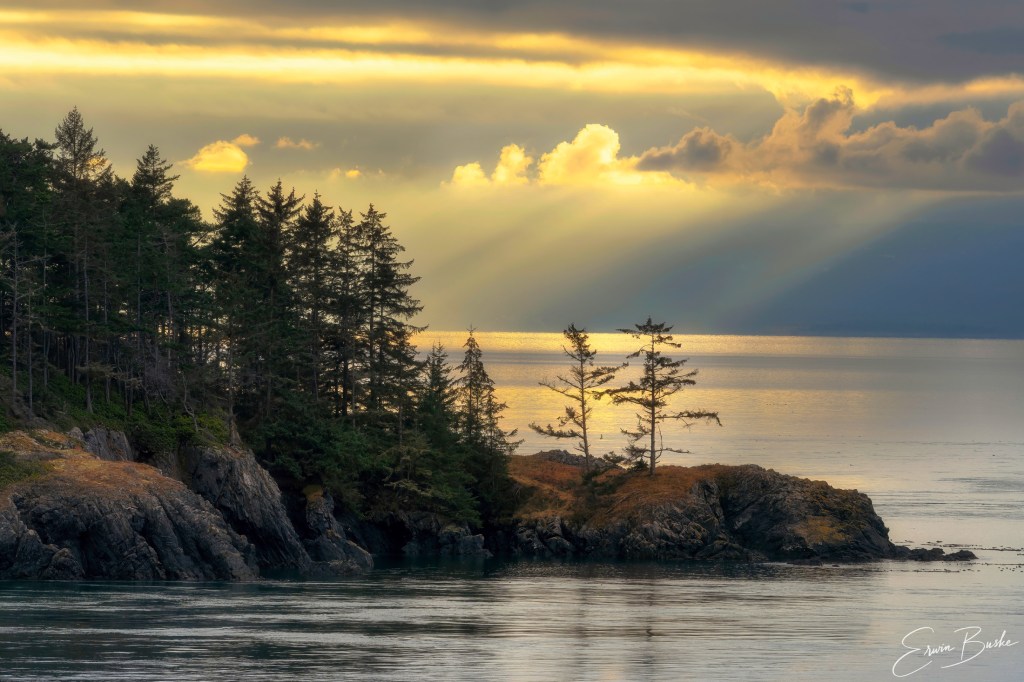
Before moving to Woodside, I used to live on Three Tree Point, but there were no Three Trees on the Point. In early December I was at Deception Pass Rosario Head at sunset looking out to Deception Island where there are Two Trees on the Point. My eyes were immediately drawn to these Two Trees with rays of light breaking through an otherwise cloudy day illuminating the Salish Sea and the two lovely trees. The two trees seem to be enjoying each other’s company underneath rays of light and hope! As Bob Ross always said, “Everyone or Tree needs a friend!”

2. By the Light of the Setting Sun and Rising Moon

By the Light of the Setting Sun and Rising Moon

A Waxing Autumn Gibbous Moon rises above Eunice Lake just as the sun is setting at Mount Rainier National Park. This was taken one day before the October Hunter’s Full Moon. From my perspective this is better than the Full Moon which rises well after the sun has set. This moon is at 97% and the convergence of sun and moon in the warm autumn atmosphere is spellbinding and simply amazing.

In the interests of full disclosure this image was taken with a very wide 12mm lens to capture both the red huckleberries and a large portion of the sky which also renders the moon very small. To get the moon to the size as our eyes see it, I took a second image at 105mm and blended the two images together in photoshop. Although both images were taken around the same time, in the time period between changing lenses the moon moved. I am not aiming at absolute accuracy but rather giving emphasis to how the scene impacted me at more of an emotional level, in other words I am shooting from the heart. Originally, I had the reflected moon offset more to the right and few individuals let me know that this is not possible from a physics point of view, so I corrected this. But in the end, I make no apologies that this is a time blend along with a focal length blend. Both were necessary to convey my personal vision. To me photography is not so much about documenting a precise moment, as it is about conveying my sensibility surrounding an experience. We do not experience the landscape through either a wide angle or telephoto perspective as our eyes quickly toggle from one to the other seamlessly as we process the scene both physically and at an emotional level. That was also my intention for this image that resonated so well with most of viewers, without a doubt my most popular image this year!

3. Touch of Autumn in Winter

Touch of Autumn in Winter

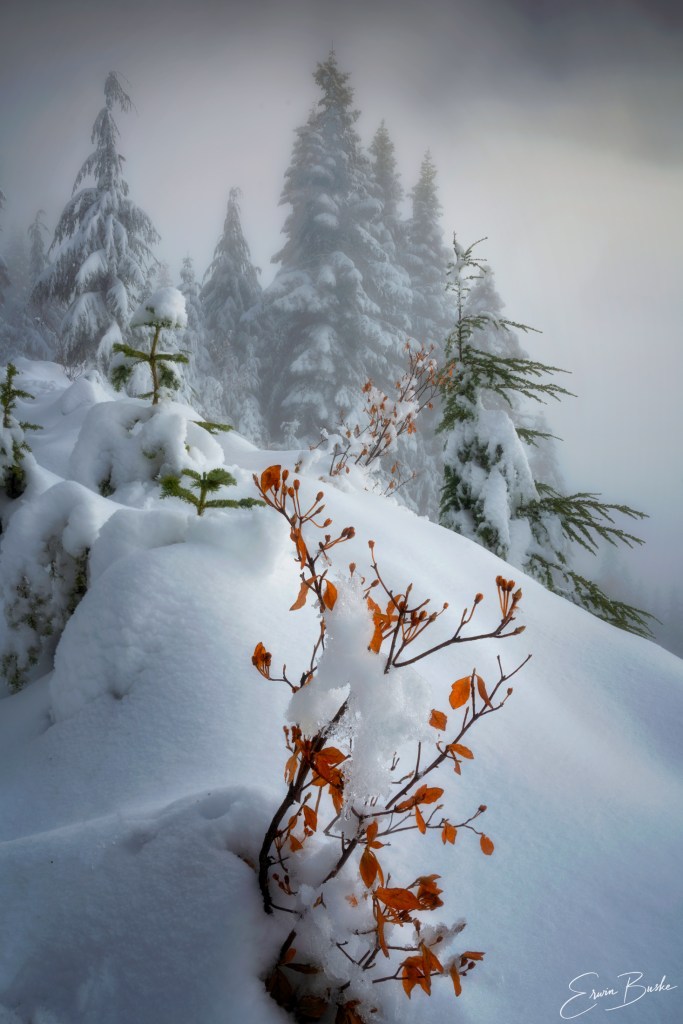
In late November I hiked seven miles up an old, abandoned logging road. The higher up the road I went the narrower the path became. At first there was just a little snow but as I wound my way up the mountain the snow steadily deepened until I got to this point where further travel was not possible without snowshoes which I did not bring. Views were far and few between, so I just sat down and took in my surroundings. Snow helps make even the ordinary beautiful, seemingly brings a sense of calm and tranquil order to an otherwise chaotic forest and ground. My eyes soon gravitated to these beautiful orange leafed bushes holding on to Autumn even as Winter was firmly settling in. I knew this was the moment the capture the mood and feeling of this experience heading into the Winter Season with Autumn still on my mind!

Shortly after taking this image somehow my iPhone slipped out of my hands and vanished without a trace into the still smooth texture of the winter snow. I did not have a clue as to where it was because the snow was so white and fluffy it just absorbed the phone without making any imprint. As I started to gently comb through the snow to find it I began to think why I took this phone out in the first place. It was an automatic impulse to take it out without even thinking why I needed it. I began then to realize that this may be a signal to be a bit less dependent on this devise, especially when out in a beautiful place like this. I eventually found the phone, but only after about 20 minutes of effort!

4. Mother Goat and Kid

Mother Goat and Kid

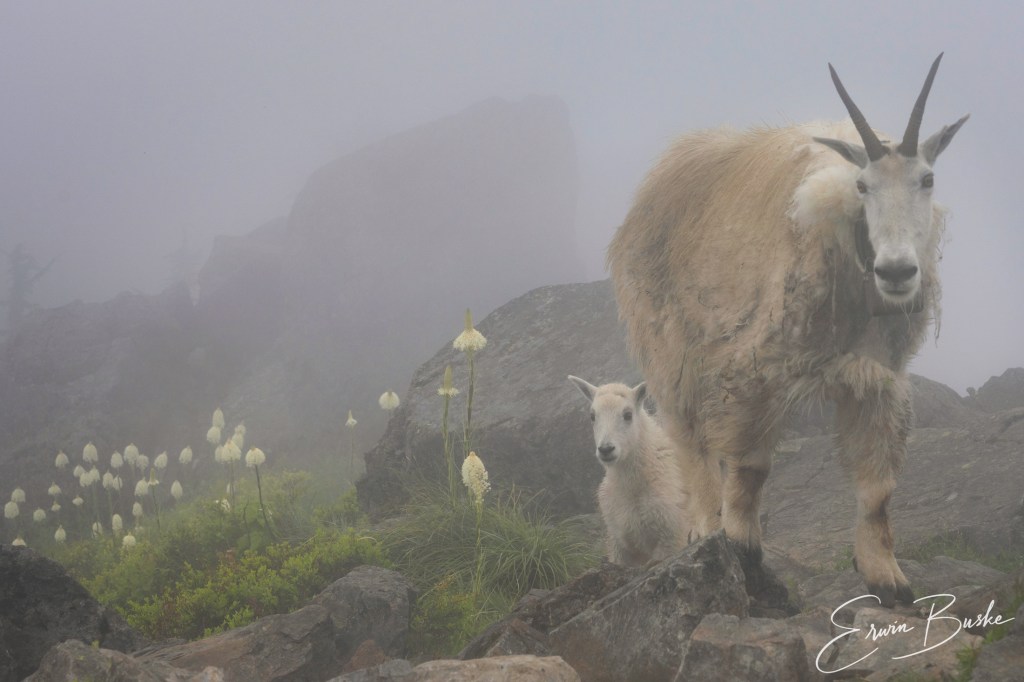
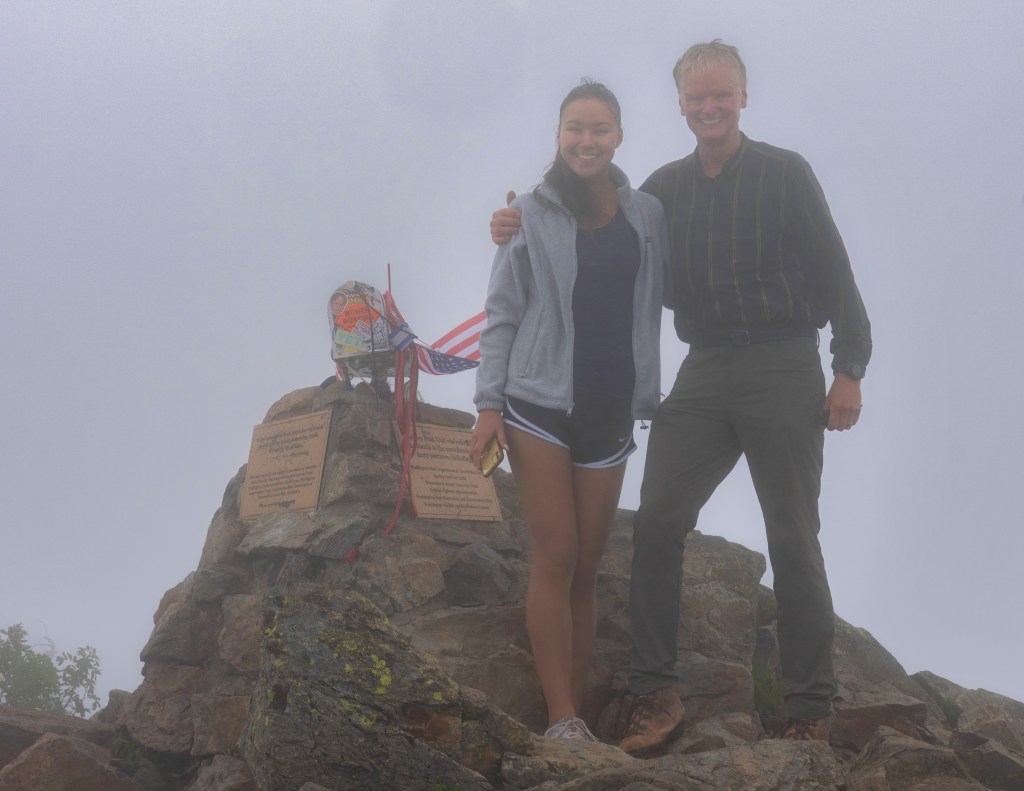
My Daughter Caroline and I last hiked together to the tope of Mailbox Peak when she was seven. As a Father’s Day gift, she offered to go up Mailbox with me again, this time at 18! We could not do the hike on Father’s Day because she was visiting her soon to be college at UCSD. But on this day in early June, although very foggy, it was the perfect day to make the trek! The bear grass was lovely, and we even had unexpected visitors, a Mama Goat and her Kid!

5. Rows of Green Stones at the Harbor

Rows of Green Stones at the Harbor

I am not sure what natural and organic marine and geologic forces created these lines of stones covered with seaweed at the Point of Arches. But they sure look like they were designed with intention reaching out to the gorgeous sea stacks also reflected in the calm waters of a natural harbor. This image was taken close to sunrise at a very low tide on my August backpacking trip to Shi Shi Beach.

This was my first trip to Shi Shi Beach and I am so surprised I have never been here before. I liked everything about it, from the long drive to Neah Bay on the northwest tip of Washington, the hospitality and friendliness of the Makah Tribe who provide recreational permits for access to their native land, the beautiful four mile hike through the woods and down onto the beach, to the camp sites close to the Point of Arches, not to mention the delicious smoked salmon to pick up on the return journey home!

6. You are my Shining Star

You are my Shining Star

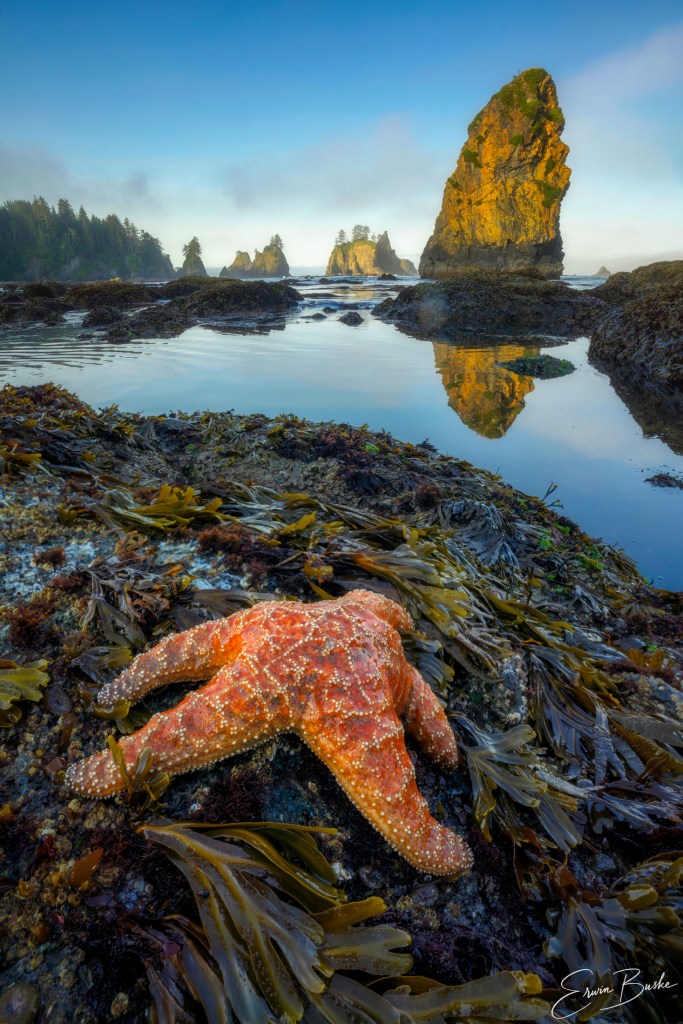
At a very low tide at the Point of Arches, a starfish seemingly bathes in the sunlight until the tide rises. I think it is safe to say, at least for this period of time between tides, this starfish was a little “Laid Back”!

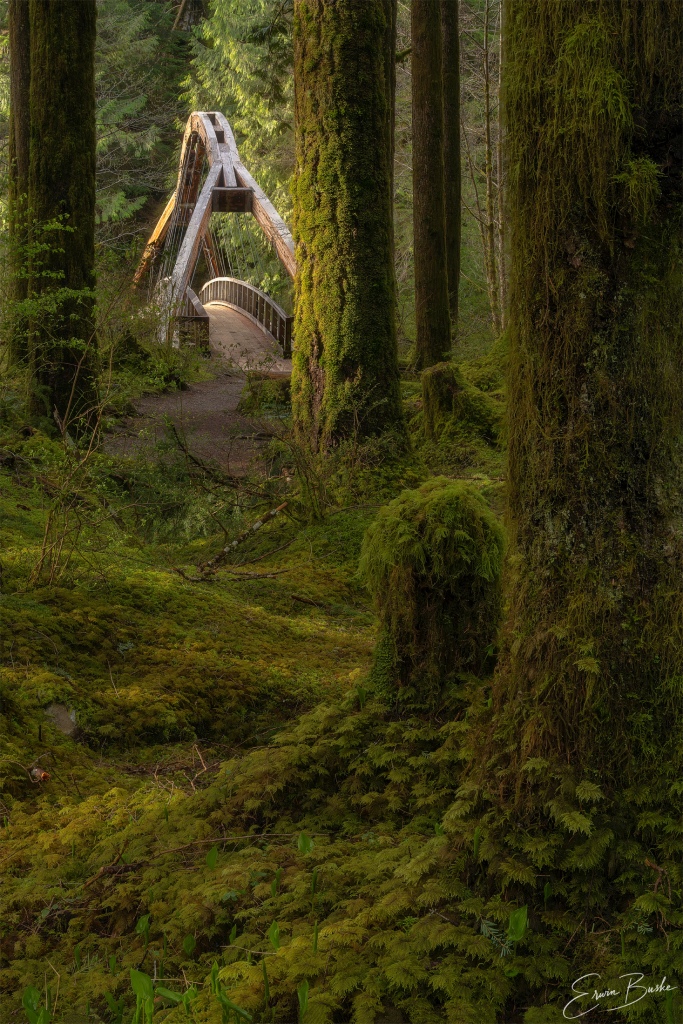
7. Middle Fork Bridge to the Spirit of the Shire

Middle Fork Bridge to the Spirit of the Shire

This has to be my favorite hiking suspension bridge and I return here often to visit this beautiful, lush forest of the wild Middle Fork of the Snoqualmie River. The forest approach of the Gateway Bridge reminds me so much of Tolkien’s world and the spirit of the Shire. I have tried to capture this feeling many times walking through this forest, and this is one of the few times I think I actually succeeded. Capturing the mood of a place and what it means to us personally, and still staying rooted in the reality of the experience is not nearly as simple as some would think. When the two come together then one gets the feeling of “magic”! Here what certainly did help were the spotlighting on the bridge, and the soft rays of overhead light filtering through the forest and onto the moss, tree trunks.

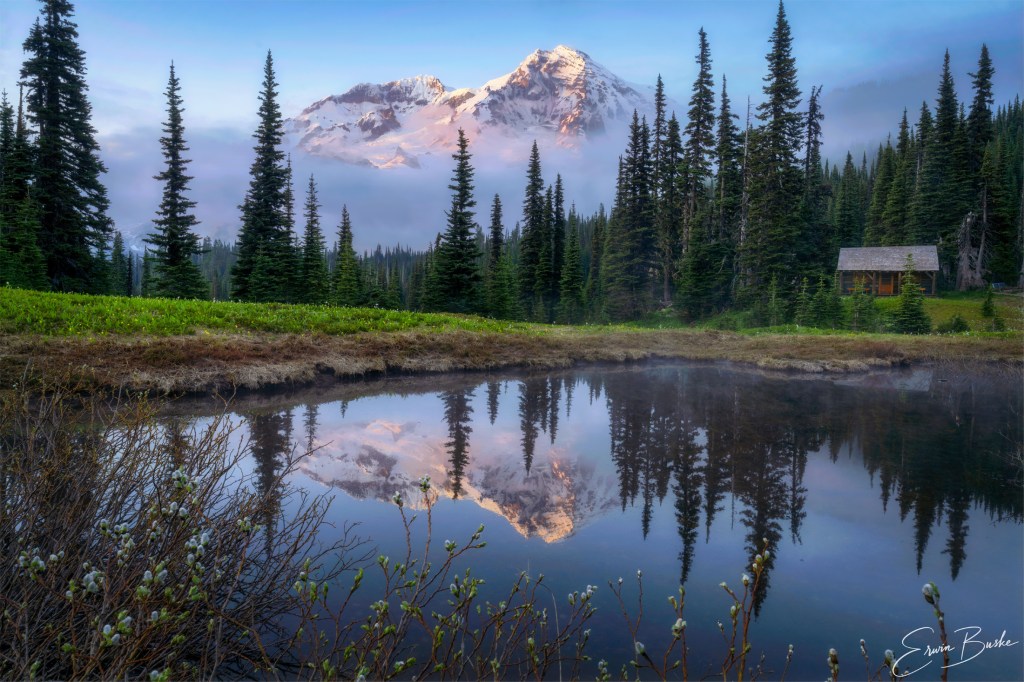
8. Indian Henry’s Reflection Pond

Indian Henry’s Reflection Pond

Indian Henry, known as Soo-Too-Lick, early on (1883) guided several familiar names to Mt. Rainier including the Hunting Grounds, these familiar names include James Longmire Philemon Beecher Van Trump and John Muir. Indian Henry was a Cowlitz Indian, beloved by many people.

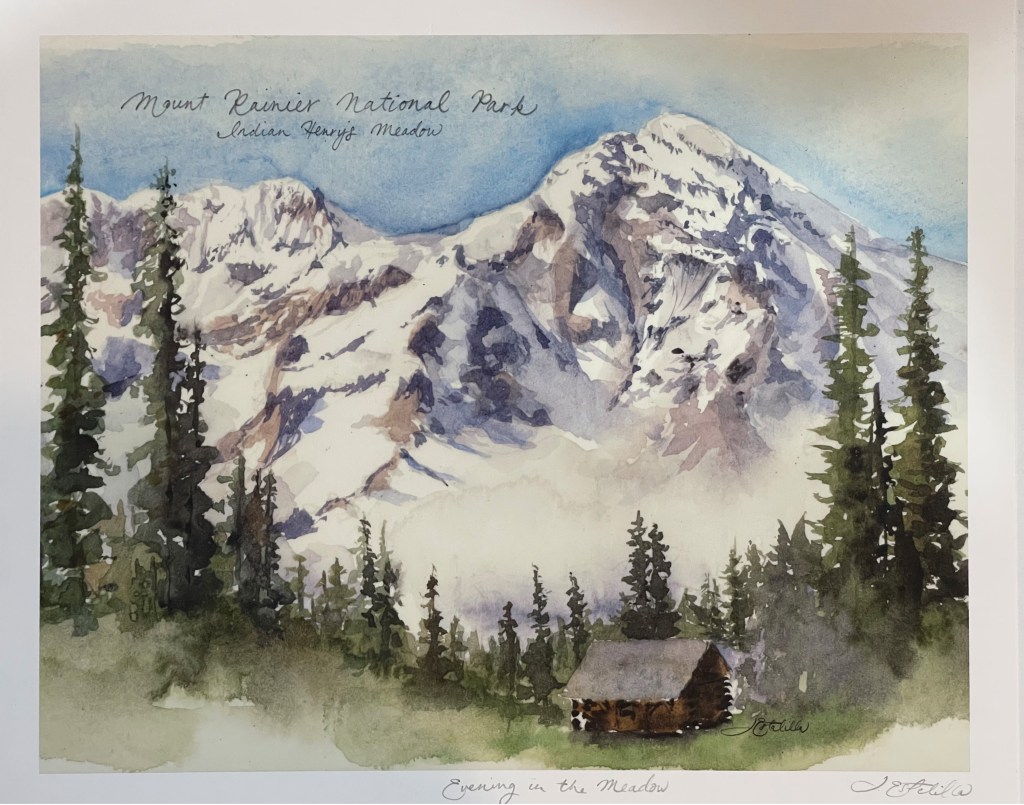
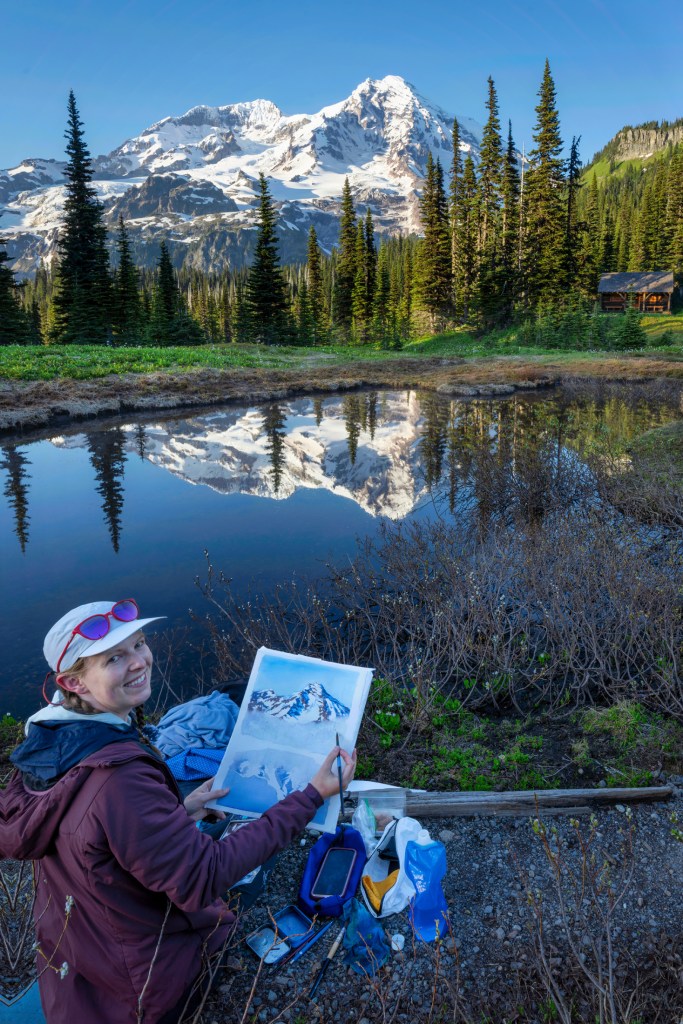
On this backpacking trip to Indian Henry’s Hunting Ground, I was joined by a small group of painting and pencil artists. We backpacked in from Longmire along the Wonderland Trail fording Kautz Creek. We arrived fairly early at Devil’s Dream where we had first pick of campsites. After setting up camp we then headed up to Indian Henry’s and Mirror Lake staying until sunset hiking back to camp with headlamp. Both Clair and Jodi created original works of art on site while I photographed the constantly changing mood and atmosphere of my all-time favorite place to be on Mt. Rainier! Claire also recorded an online training session for her Adventure Art Academy. We had some inspiring discussions on the trail and camp on the overlap of painting art and photography, similarities and differences. You can see more of Clair’s work and offerings at https://www.claireswanderings.com/ Also check out Jodi’s wonderful art at https://jomiekoart.com/

9. Going Home

Going Home

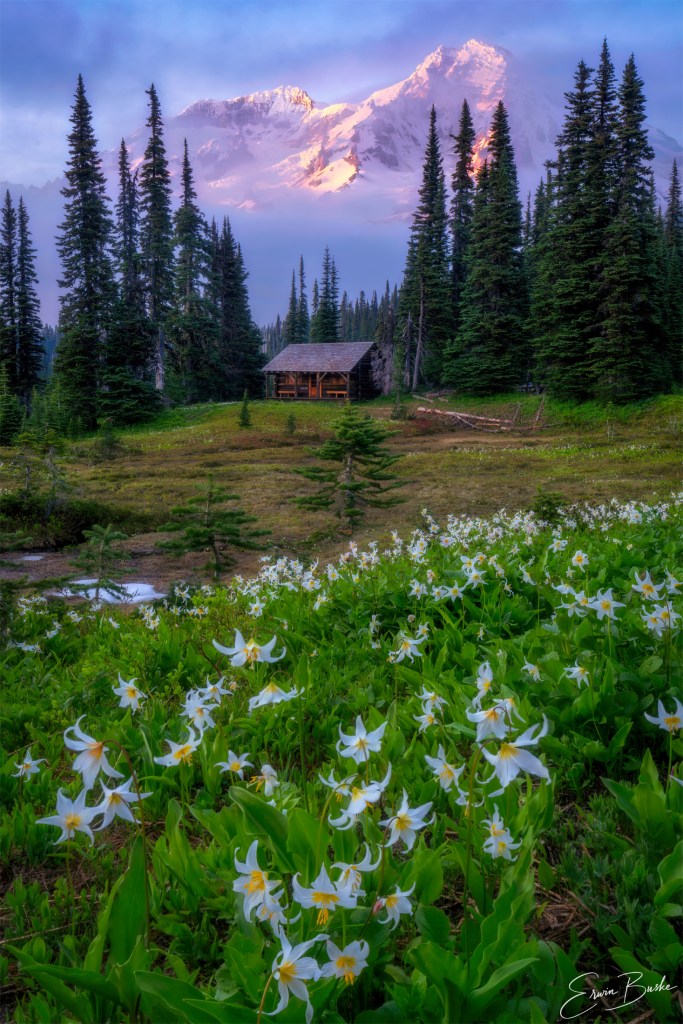
This cabin is in as beautiful setting as I could ever imagine and is like walking into a dream. In this dream I am finding my way back to where I truly feel I am more at home, in Nature and the Wilderness. This is a common dream shared by many as was evidenced by the thousands of reactions I received from this image. Although this was late July, the Avalanche Lilies were at peak, about one month later than when they usually peak in June. We had an usually cool late spring and early summer causing snow to linger which impacted the bloom cycles in many areas.

10. Snow Lake Mountain Ash Sunset

Snow Lake Mountain Ash Sunset

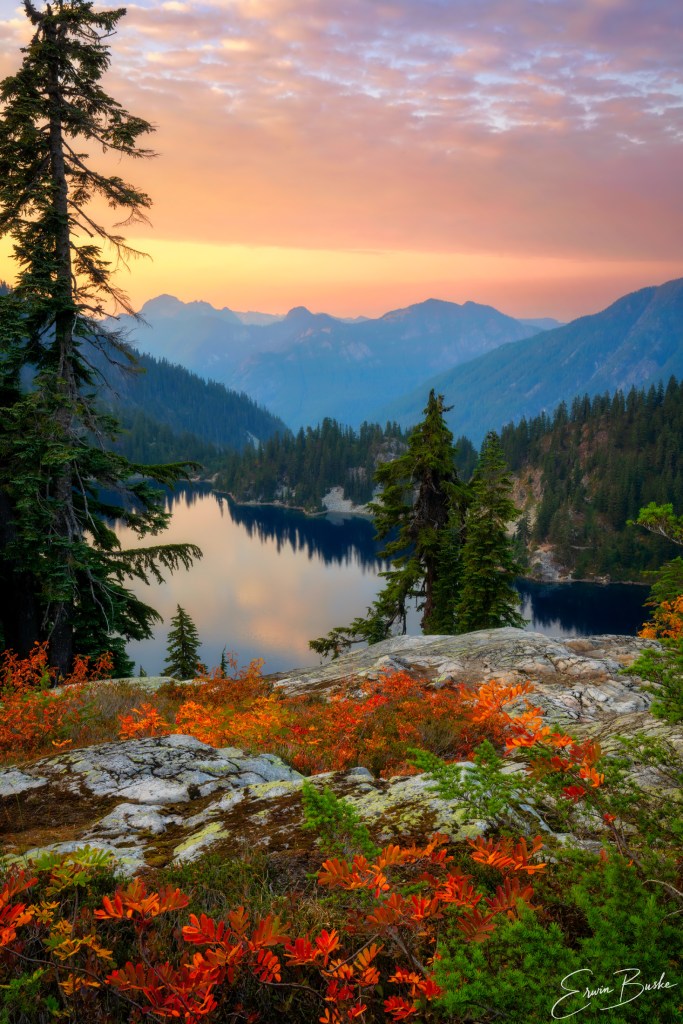
On a Sunday morning in the later part of September, I heard about the Snow Lake trail reopening and decided to check it out. The reports I heard that the trail was turned into a multilane freeway were definitely a huge exaggeration. What I mainly saw was the original trail refined in the upper part where there were rocks to climb over. The trail is now more or less smooth all the way to the top of the ridge and made for a more comfortable exit in the dark!

Snow Lake was crowded so I headed further to Gem Lake picking deliciously ripe and plump huckleberries along the way. For sunset, I made my way to what would be my evening home along the southern ridge overlooking Snow Lake. This is where I experienced this beautiful sunset with orange mountain ash in the foreground and colors ranging from purple, orange, yellow, and mauve in the sky-a most memorable evening and I am thankful I was able to experience it!

As the light changed steadily from the golden hour to right before actual sunset, I experimented with several compositions and vantage points before settling on this one. I needed to be low and close to bring attention to the orange mountain ash, but not too low because then I would lose sight of much of the lake. Although a wider angle would have given greater emphasis to the mountain ash, Snow Lake would have been rendered too small in size resulting in an unbalanced image. The soft light took on magical colors in the minutes just before actual sunset. I went all the way out to 35mm on my 16-35 zoom lens and did a focus stack of two images to render the entire scene sharp.

11. North Cascades Light of the Angels

North Cascades Light of the Angels

On this trip to the North Cascades, I was looking for an entirely different composition about a half a mile from this spot. But it was hard to notice this clump of heather looking out toward this soft early evening angelic light settling over the western peaks. Several very well-known photographers who I have been so lucky to meet in person including Candace Dyar and David Thompson have shared “follow the light” as a guiding principle for choosing what to photograph and putting together a composition. That principle certainly helped here, and this ended up being my most successful and impactful image from this three-day trip.

12. Inner Glow

Inner Glow

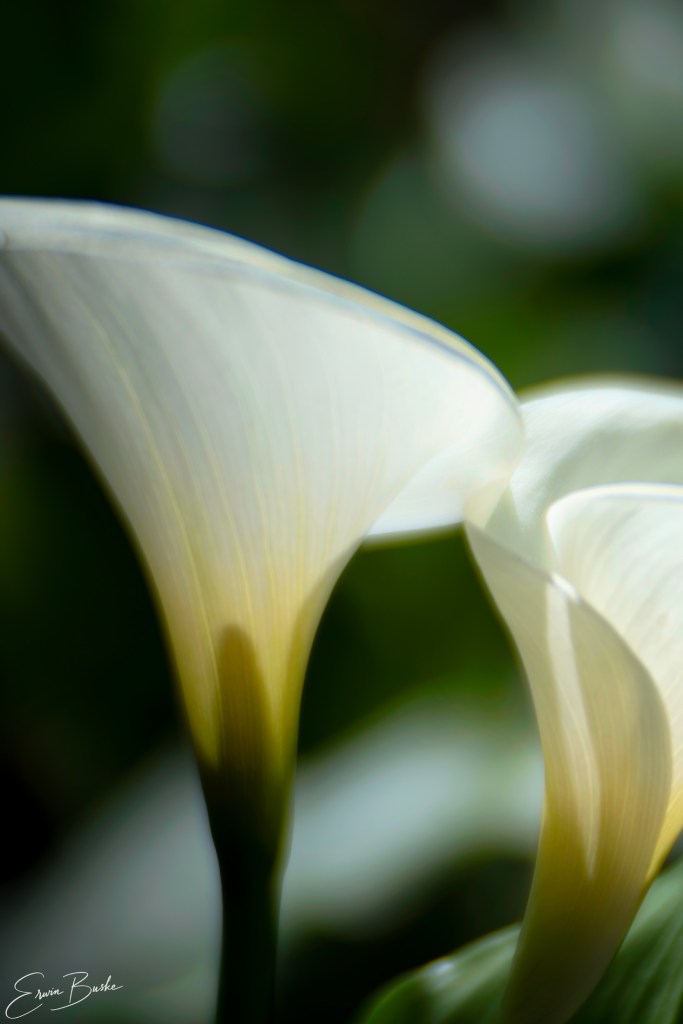
This was taken with a soft-focus lens at the Point Defiance Rose Garden which also has Calla Lilies. and provides another lesson in following the light. Although I normally do not take images in strong midday light, I loved how this light rendered the lilies almost translucent revealing their inner glow. In softer light toward the edges of the day this translucent inner glow would not have been nearly as well pronounced. It is acknowledged that use of my Lensbaby soft focus Velvet 85mm lens helped tame the harshness of contrasty midday light. Most of us landscape and nature photographers have been programed with the mantra to take pictures only during the edges of the day in the golden hours. Creativity, however, knows no such limit and invites us to explore the possibilities of light during all hours of the day.

13. Silver Falls in a Mossy Forest

Silver Falls in a Mossy Forest

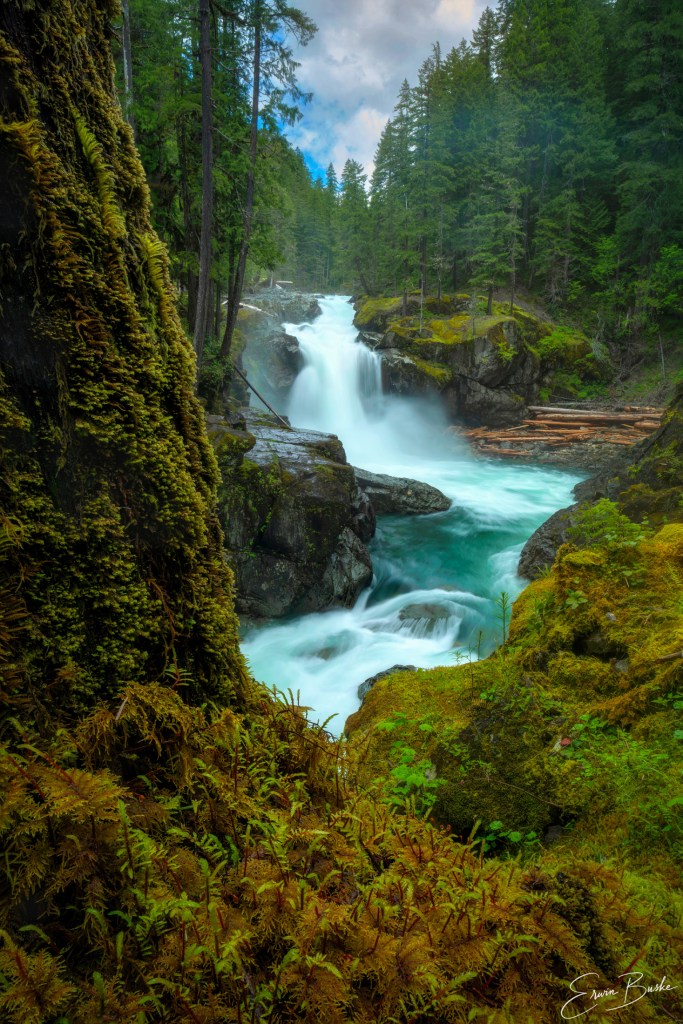
I always enjoy this Silver Falls loop hike in Spring when the water is running high! Silver Falls provides another example of breaking through the myth that good light is only to be found during the golden hours. The recessed rocky forested walls of this river valley are sufficiently high that during the golden hours little light penetrates down to the riverbed leaving just the blueish cast of deep shadows for images. I took this image more toward the middle of the day in broken clouds that helped diffuse the light but still allow the light to reach down into the river valley. The light reflects and bounces off the forested and rocky river walls further enhancing the effect. To me a major part of the appeal of this area is the mossy forest, so I emphasized that in the foreground while still looking out to the turquoise glaciated water running high at Silver Falls.

14. Autumn Flame

Autumn Flame

On a cool but sunny November Day, I headed down to Kubota for a picnic in the Garden and to pay a visit to one of my all-time favorite trees! Yes, I have lunch with trees! Photographing the brilliant backlit leaves of this tree also requires shooting toward the middle of the day. Much of Kubota Garden is at the base of a steep hill that blocks the westerly light toward evening. The position of this sun stars also depends on midday light. Getting a good exposure of course in these kinds of conditions is challenging due to high dynamic range between dark shadows and brilliant highlights. But with under exposure, the raw files produced by many of our modern camera sensors are up to the challenge. I just love the symmetry of this tree swirling and reaching out in all direction like octopus’s arms in a kind of chaotic order!

15. Sunrise through the Lupines

Sunrise through the Lupines

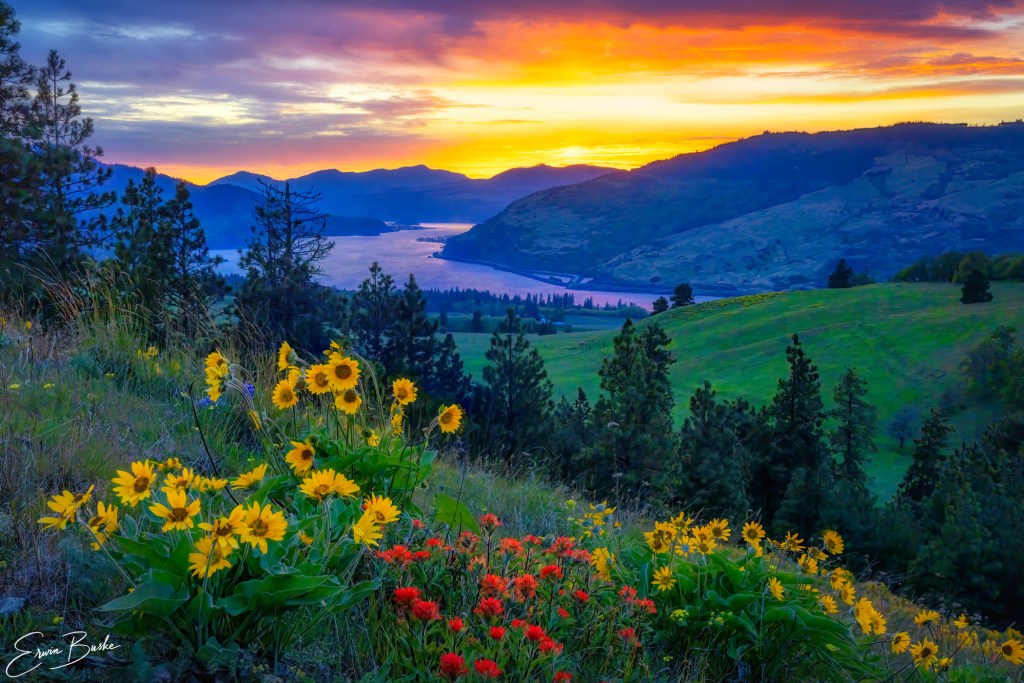
What a wonderful feeling it was to experience this sunrise looking through the Lupines and out to the Balsam Root at Rowena Crest. It’s a wonderful world! Although I have photographed this flower field overlooking the Columbia River many times at Rowena Crest, I thought this time was the first time I captured the delicate first rays of light subtly illuminating the lupine flowers in a way that is consistent with my experience of sunrise. Although the dramatic colors of sunrise in the sky are often what we hope for in our sunrise shots, equally and in this case even more important is what the light is doing to the foreground elements.

New Horizons

In photography as in any other creative art form, we must continuously reach out and extend ourselves into larger and larger circles. The price of not doing this is essentially withering on the vine, and the death of creativity. As artists we can never rest on our laurels and draw oxygen from merely yesterday’s accomplishments. We must continuously move forward and find breaths of fresh air. Some of the ways in which I moved forward this past year include forays into taking images of people (actually a Sun and Nature Goddess!) in the landscape, Bird Photography, Intentional Camera Movement, and new processing techniques I learned from David Thompson. I also extended my reach through visiting some new areas (at least to me) including the Redwoods of California.

16. Sun Goddess

Sun Goddess

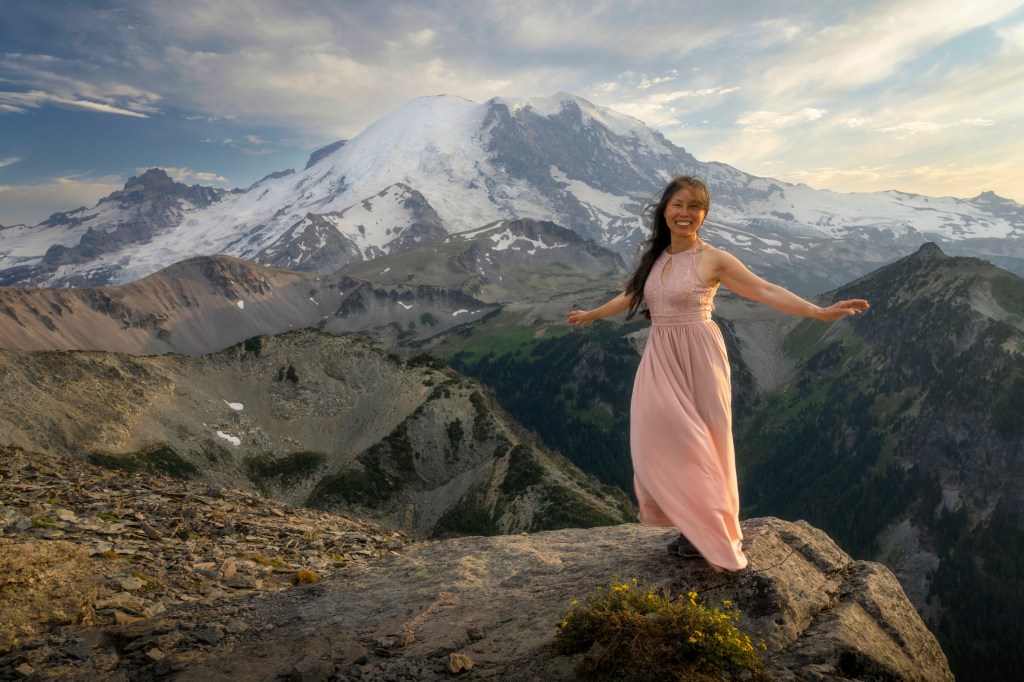
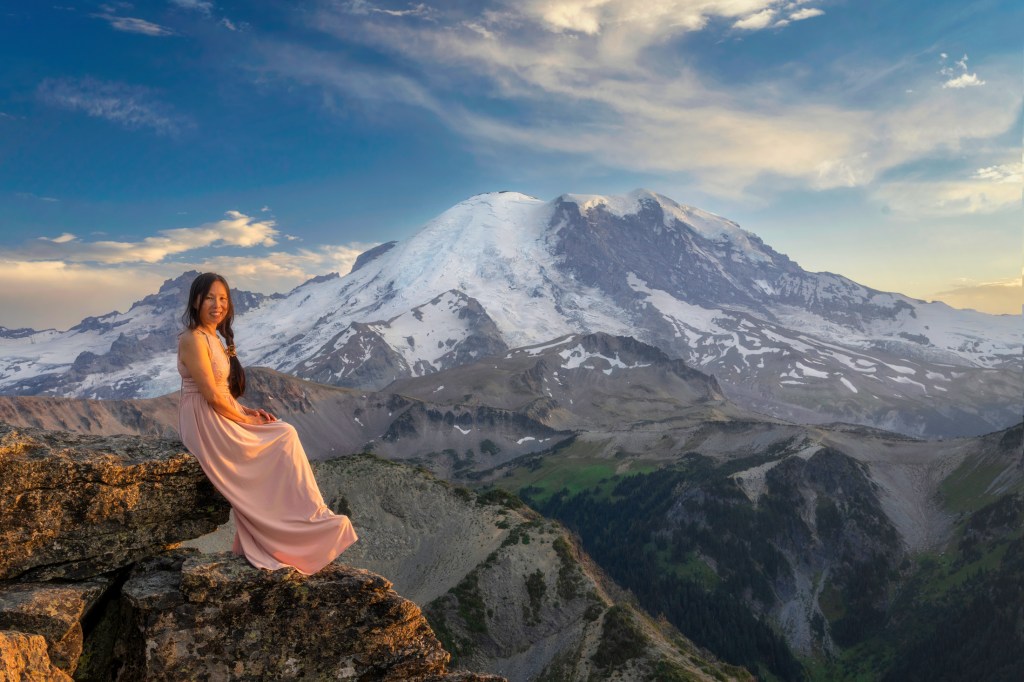
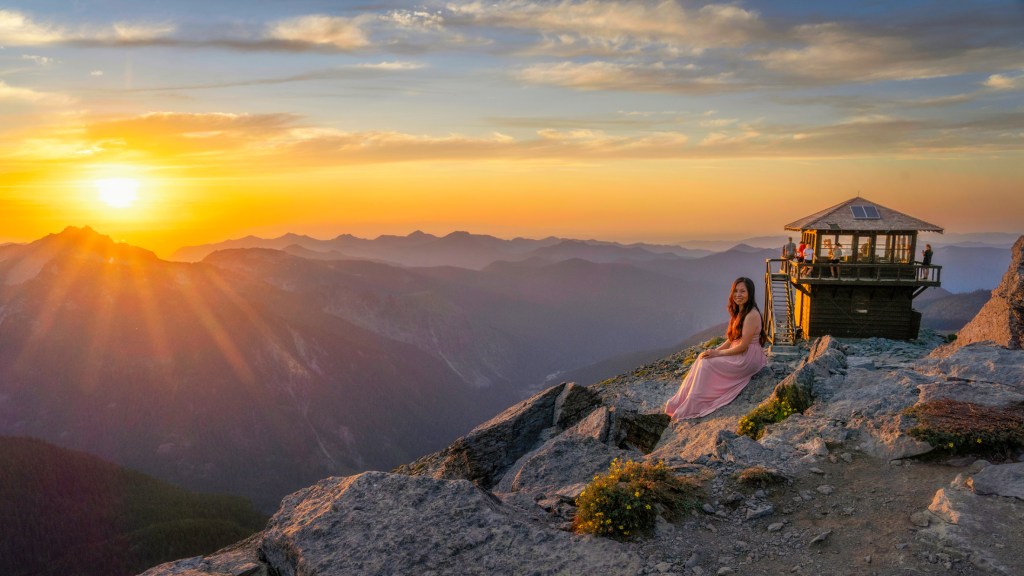
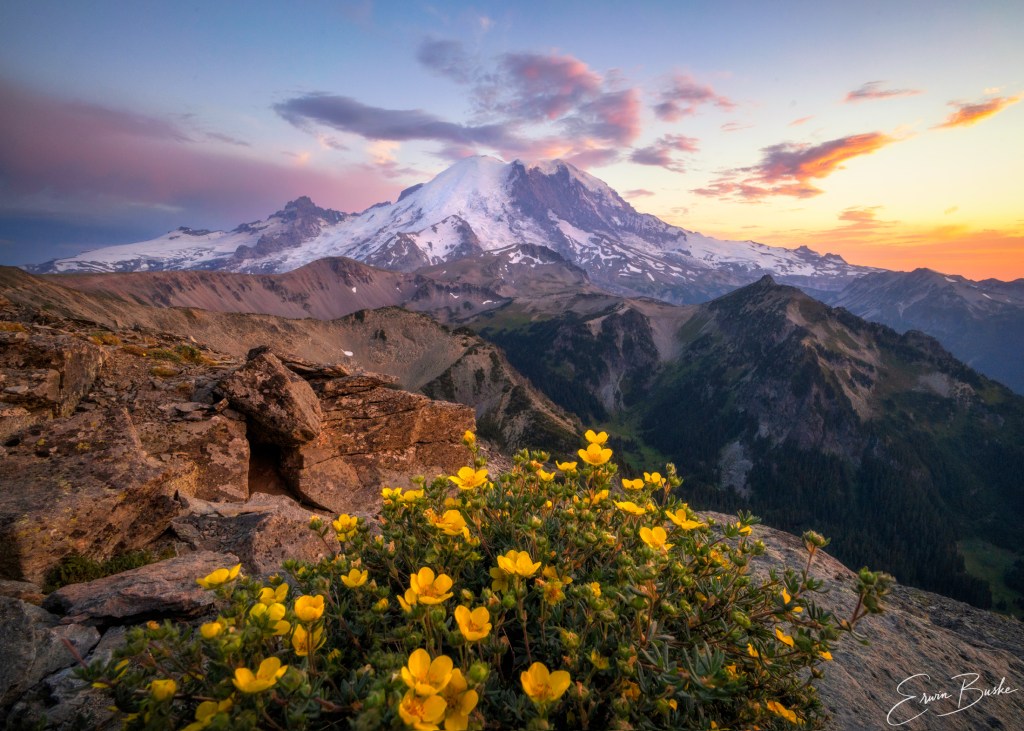
In August, my friend Shaping joined me for a sunset hike to Mt Fremont. Although when we started hiking it was a bluebird kind of a day and also very hot, as we approached the top a breeze moving down from the glaciers of Mt. Rainier helped keep us cool and comfortable. Wispy clouds slowly filled the sky. The wildflowers were still in peak form and Shaping in her beautiful dress reminded me of a Sun Goddess as the sun slowly dipped below the horizon.

Although I called this image the Sun Goddess, Shaping also represents to me the spirit of a “Nature Goddess”. When she wears this flowing dress and reaches out from Fremont Mountain to the sun she is celebrating and honoring mother nature. Shaping feels the same way. A few people confronted me when I originally displayed the series of images that this image is a part of and accused me of chasing Instagram popularity. I can assure you that that was the last thing on my mind. For me the event was completely unplanned and just arose spontaneously out of the happenings on this wonderful day. Sometimes I think some are too quick to jump to conclusions about other photographer’s intentions. Their accusations may be more of a reflection of their own inner state of mind than anything else.

17. Blue Heron and Turtle on a Log

Blue Heron and Turtle on a Log

When I visited the Union Bay freshwater estuary close to the UW campus, my eyes immediately gravitated to this scene. The turtle and blue heron almost seemed engaged in a kind of meditation, looking out toward tow bonsai like tree branches, where new life appeared to be rising from this old decaying log.

This image is one of my first Birding images. I decided to try out Birding after observing Shaping taking bird images on a few of our trips and decided to give it a try. I acquired a 200-600 Sony Lens that provided me the tool I long needed for birds and wildlife. I am looking forward to many more bird and wildlife images on my horizon!

18. A Walk in the Forest

A Walk in the Forest

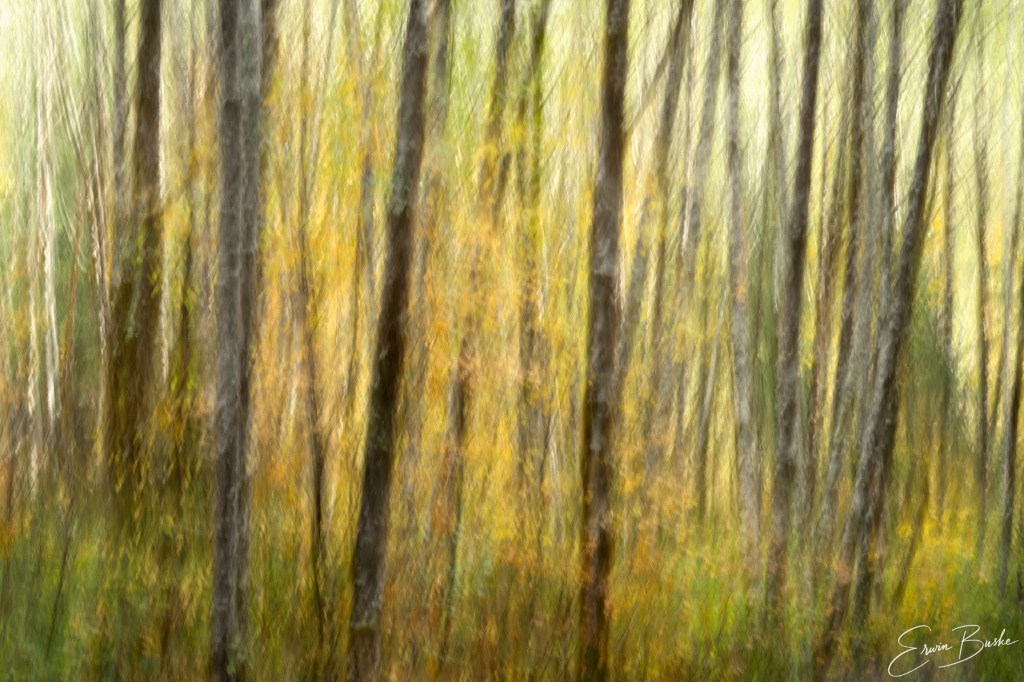
These white bark alders were lit by the diffused light reflecting off the walls of the Middle Fork valley on a beautiful Autumn Day, perfect for a walk in the forest. For this image I handheld the camera and gently panned up and then back down during .6 second time period. Intentional Camera Movement (ICM) can work great in the forest where a somewhat chaotic scene can be reduced down to the essence of lines, shapes, blotches of merged colors and tones yielding an effect the many have told me is like an impressionistic watercolor. Although this technique involves a lot of trial and error, successful ICM still requires careful selection of a suitable scene, previsualization, and good composition skills.

19. Autumn Fire in the Forest

Autumn Fire in the Forest

For this image I previsualized that intentional camera movement would simplify an otherwise chaotic forest scene into the basic elements of trees and blotches of colors that bleed into one another. I also eagerly anticipated that the orange vine maples would resemble flames rising from the forest floor.

20. Don’t You Feel Small

Don’t You Feel Small

On the trail through a mystical redwood forest filled with fog and mist, I pass ancient trees and an occasional rhododendron. I am in my happy place. Going to new places, or at least new to us, helps build a sense of excitement of visiting a place that we may have heard great things about but never have experienced firsthand in nature itself.  This was the case with me on my recent trip to the Redwood National and State Parks.  I had passed through these parts a few times before on road trips, but never had taken the time to get more intimately familiar with these ancient forests.  With my first few steps out of the car and out into the misty forest I felt my sense of enthusiasm starting to build.  These trees were like nothing I had experienced before—so tall, majestic and grand–a kind of life altering experience that goes straight to the heart.  There was seemingly no end to them and the deeper I went into the forest I felt like I was finding what could be a new home for many more photographic adventures.  I was most impressed by the amazing sense depth and scale of these forests. This in turn was a reflection of the enormous size of these trees, layers of fog and mist, naturally filtered light, and the beautiful undergrowth of Rhododendrons and Ferns. I began to see the world around me in a different way.  This location helped separate me from my habitual way of viewing the world which helped open the gate to fresh visions.

21. Green Goddesses with White Sails

Green Goddesses with White Sails

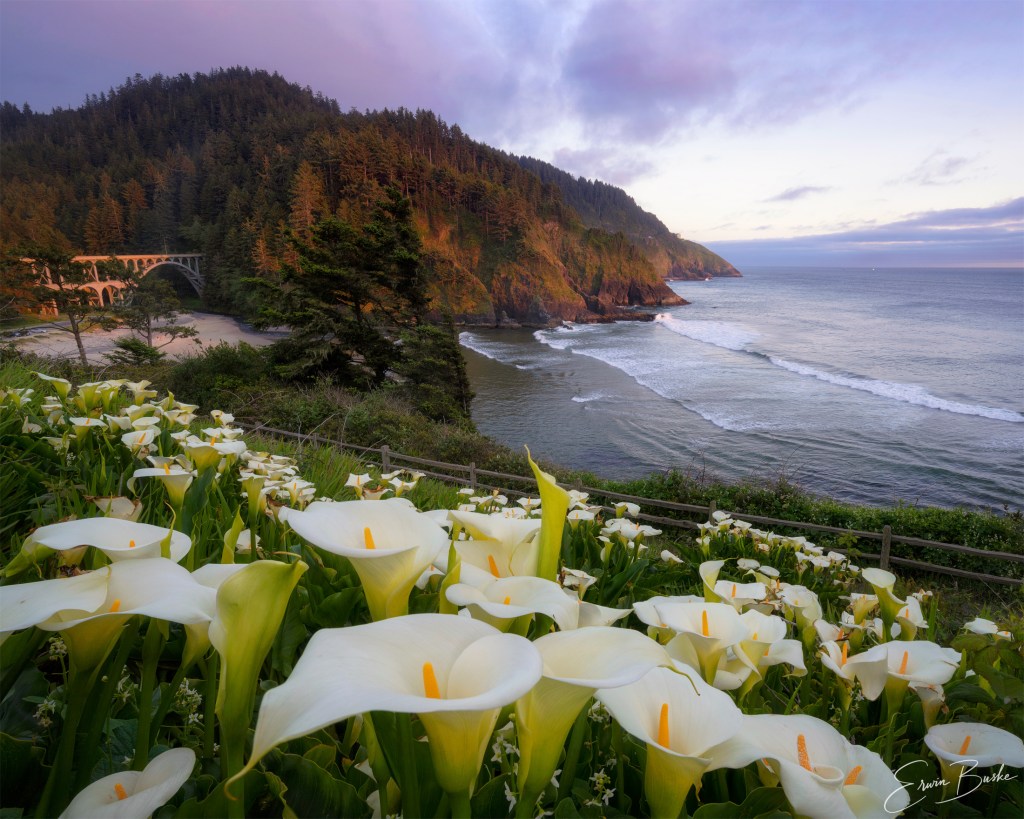
Sometime ago I heard that Cala Lilies, while native to Southern Africa, have naturalized in California and also parts of the Oregon Coast. On my recent trip to the Southern Oregon Coast, I stumbled upon this patch. I love the way these flowers catch the light, seemingly changing their subtle hues as the sun sets. The center of the flower is deep and invites one to look inside, but their deep interiors are always still a mystery.

22. Irises and Islands in the Sea

Irises and Islands in the Sea

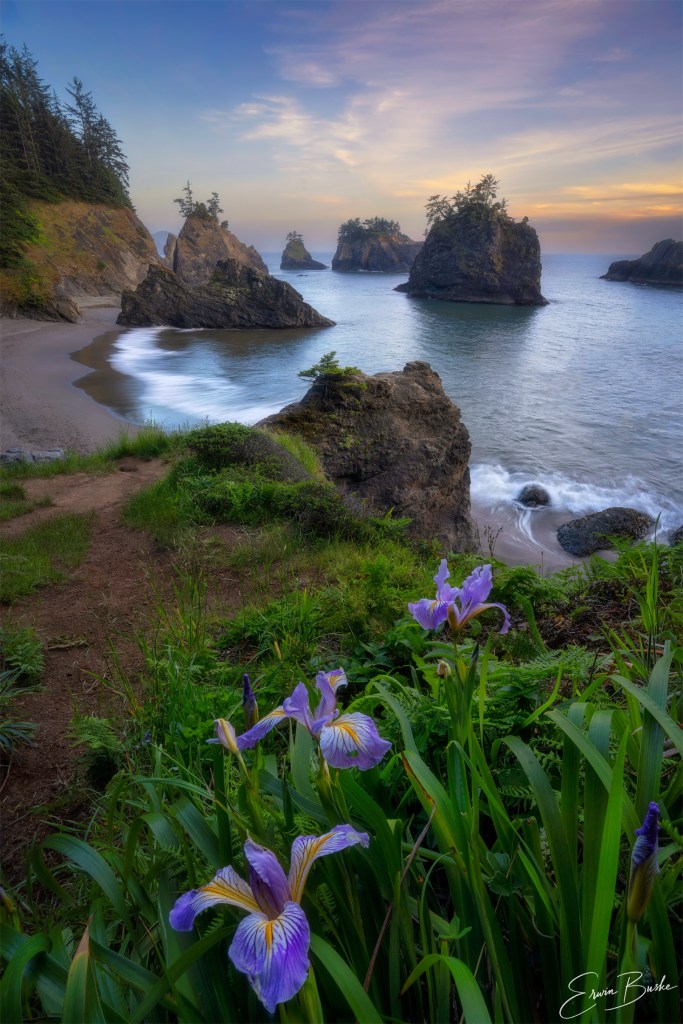
This was such a beautiful Spring evening along the Southern Oregon Coast, warm temperatures, a gentle breeze, waves gently moving across the shore, irises collecting the evening light of the setting sun, and islands floating on the sea.

23. Cattails

Cattails

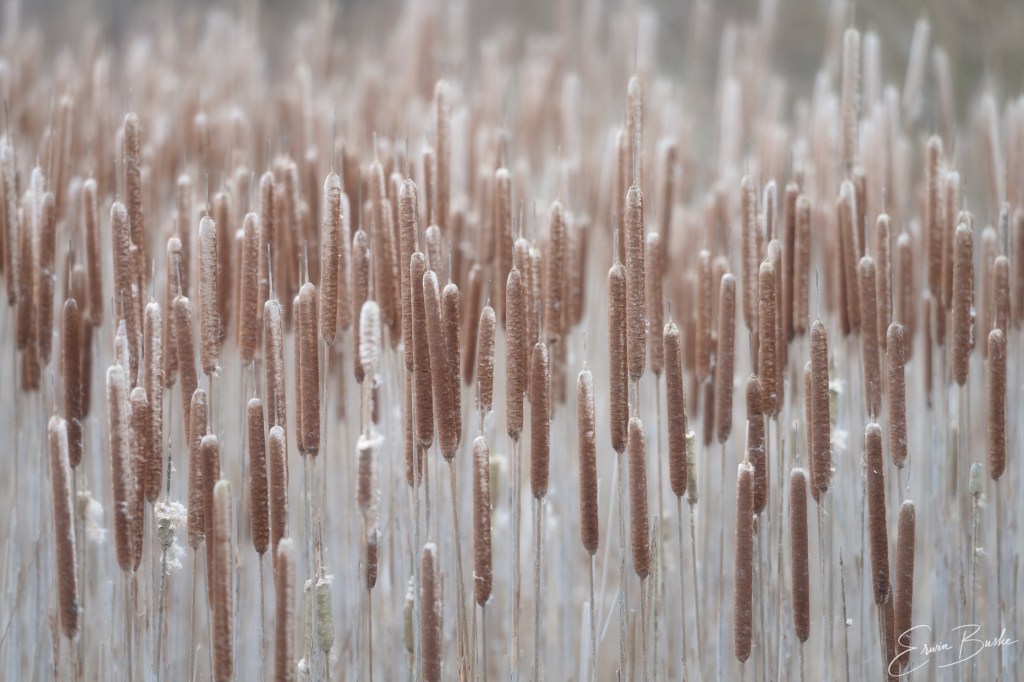
Walking through the Fir Island estuary my eyes were drawn to the soft patterns of these winter cattails. I liked the simplicity of this composition and in processing I maintained a lower contrast high-key look with somewhat muted colors to match my visual experience of this estuary scene.

24. Snoqualmie River Foggy Morning

Snoqualmie River Foggy Morning

It’s a foggy morning along the Snoqualmie River. Sounds are muffled except for the gentle movement of the water. These quiet sounds almost seem amplified in the quiet of the new day.

25. Fire and Ice

Fire and Ice

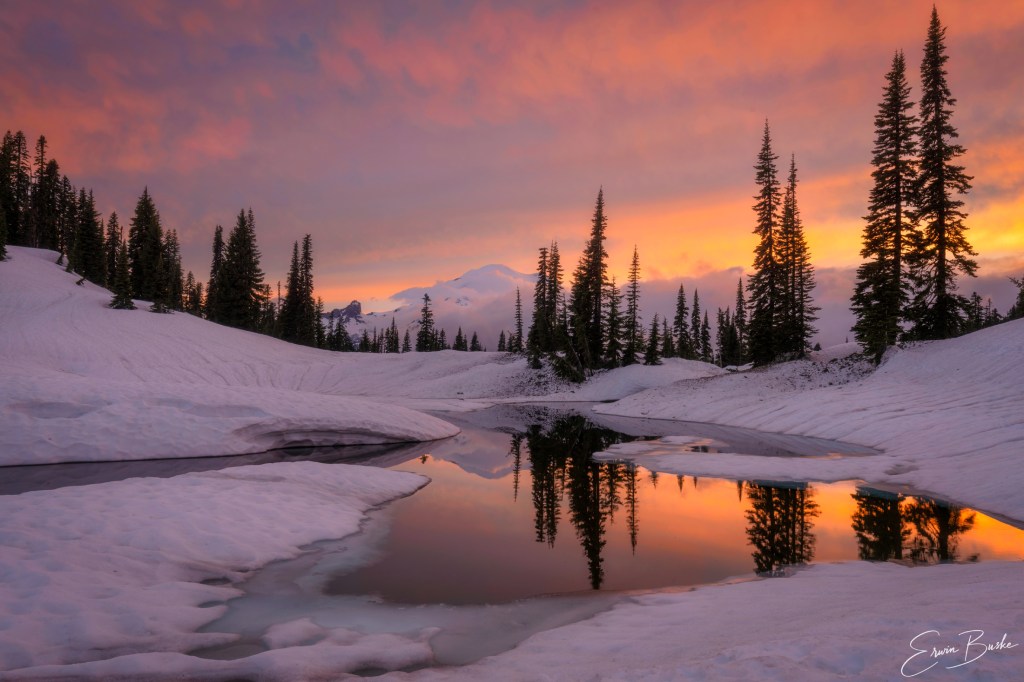
The afterglow of the sun that has just set spreads out over Mt. Rainier and Tipsoo Lake. Although the lake here is just starting to thaw, this is almost summer!

26. Pacific Northwest Lighthouse Moods

Pacific Northwest Lighthouse Moods

The Heceta Head Lighthouse casts a guiding light into a moody Pacific Northwest morning.

27. Mt. Si Boardwalk into the Fog and Mist

Mt. Si Boardwalk into the Fog and Mist

My favorite conditions for heading up Mt. Si are fog and mist which is what I found this morning in mid-June! I love this section of trail about half-way up. I later went to the peak where the mist turned more into a freezing rain, then crossed over to the Teneriffe connector trail and out through Roaring Creek to complete a loop. Wonderful day!

28. At Home Along the Ocean Shore

At Home Along the Ocean Shore

“We do not come into this world; we come out of it, as leaves from a tree. As the ocean waves, the universe peoples. Every individual is an expression of the whole realm of nature, a unique action of the total universe.”
Alan Watts

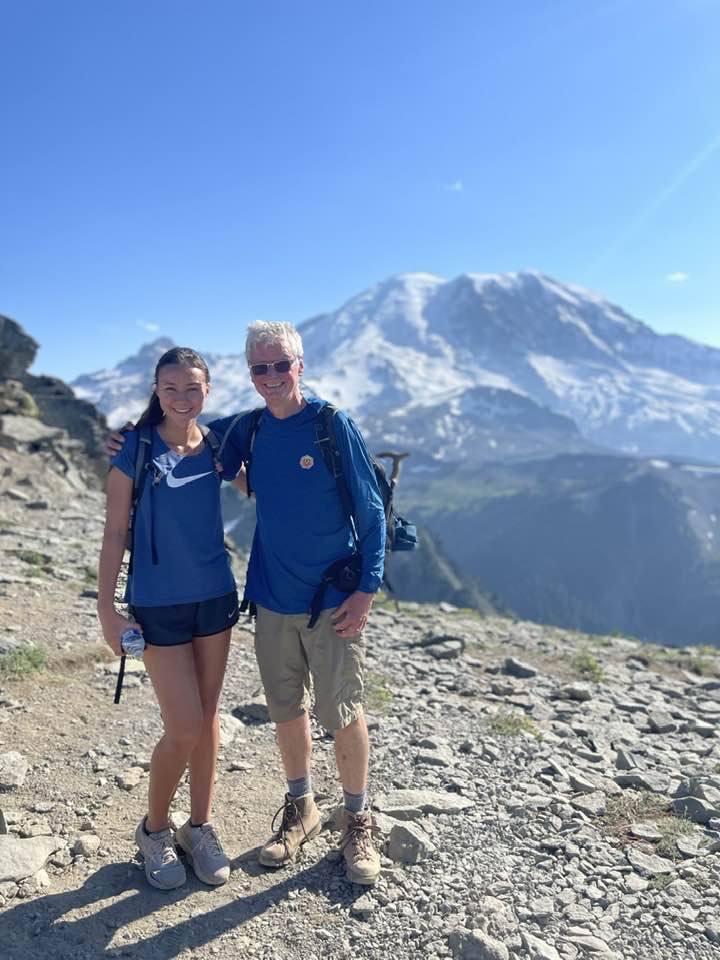
Father and Daughter Hike July

Thanks so much for reading and viewing the images of this blog post. I encourage you to share your reactions, thoughts, comments, impressions on this post here. If you think others would enjoy reading this post, please also share it with your friends and communities. The full resolution images from this blog post can be viewed on my website where they are also available for purchase. Here is the link  https://www.erwinbuske.com/Print-Store/2022-Beginnings-and-Endings-Lines-and-Circles/ . If you would like to see more content like this subscribe to the blog so you automatically receive future blog posts. To learn more upon my perspectives on nature be sure to check out my Ebook, the Hidden Landscape: The Inside Passage. This image rich book is 248 pages and provides insight how nature, mystery, the Tao, Zen, and the American Transcendentalism of Thoreau inform my photography and can provide sources for you own inspiration. Here is the link to the EBOOK along with a preview. https://payhip.com/b/FCI4z. Thanks again and happy trails!

2021: Following the Open Trail and Still Searching for a Heart of Gold

The Open Road has been an enduring and unforgettable symbol of the American Landscape as long as I can remember. Reflecting back, when I think of the Open Road I visualize a two lane highway heading out into a vast western landscape usually desert with snow capped mountains in the distance, much like one of the highways we traveled this year on our way to the Tetons. But our roads were not always highways or heaven forbid the modern multilane freeways that now do most of the heavy lifting. If one goes back far enough roads were mostly dirt and the dominant mode of travel was by foot. Walking these roads one could feel the earth.

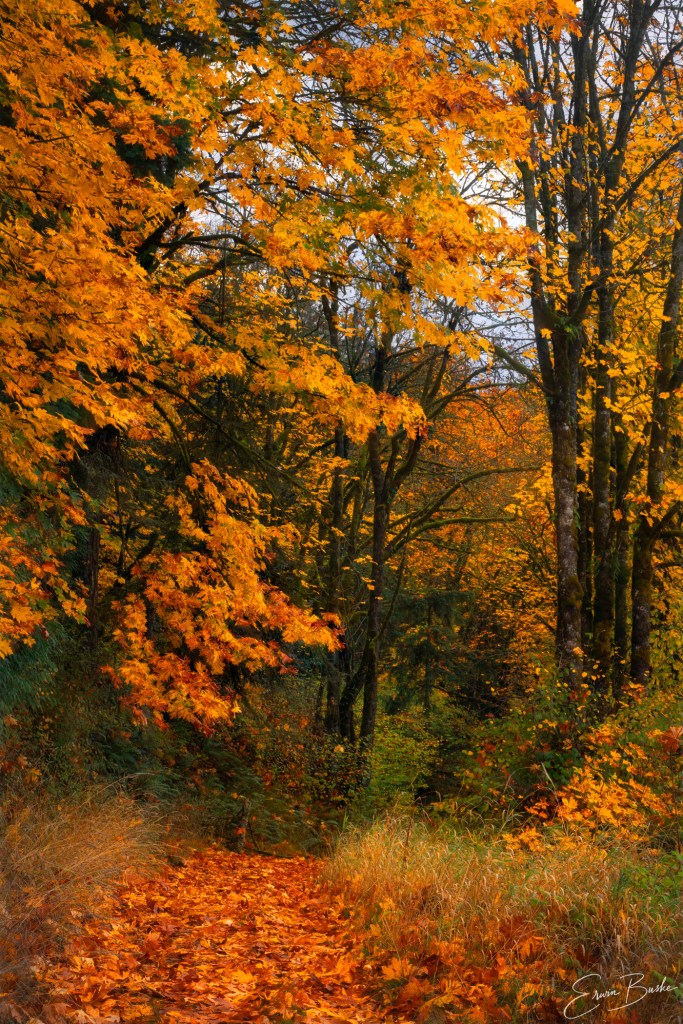
Autumn Country Road–I walk this lonely path often through a broadleaf maple forest close to my home in Fairwood, Washington.

Walt Whitman started his poem “Song for the Open Road” this way

A-foot and light-hearted I take to the open road,

Healthy, free, the world before me,

The long brown path before me leading wherever I choose.

Walt Whitman-Song for the Open Road

Whitman’s roads took us on a journey of freedom and independence where we could sing our own song of who we are in each moment of time and at every step along the way.

Moving forward about a century, Jack Kerouac took us on a similar journey in his novel later made into a movie the “Open Road”. This journey took place just after the second world war and prior to the development of the interstate freeways. Back then one could still pick up some of the frontier spirit along these two lane highways especially in the western part of the United States. For Kerouac, one of the quintessential influencers of the beat generation and the later counter cultural movement that still influences us today, the open road was a way to free oneself from the crippling influences of the rigid “organization man” and “Madison Avenue” culture of the day and get back to the more raw elements of life. Kerouac’s novel celebrates non-conformity, spontaneous creativity and living a life closer to the rhythms of nature–along with with I might add sometimes unhealthy doses of pleasure seeking hedonism!

We see this symbol of the open road again and again in the American experience. But with the development of the multiple lane interstate freeway system, it became hard for most people to even imagine these freeways as somehow connecting us to a more fundamental and raw experience of nature. To still feel the four strong winds of nature, a different mode of travel was required. In his landmark book “Zen and the Art of Motor Cycle Maintenance” published in the seventies, Robert Pirsig provides an autographical story of how he and his son cross America in the open air on motorcycle taking only backroads. Prisig had been a University Professor but went insane trying to figure out the nature of reality. He underwent electroshock treatment totally wiping out any memory of his former self. The motorcycle journey of Prisig and his son bring them in close contact with nature and the elements and this helps Pirsig reconcile himself to his former identity. He call his new reality quality, a blend of rational modes of thought (Motorcycle Maintenance) and a more intuitive awareness focused on direct experience (Zen). Quality moves in synch with the way of nature, and Prisig acknowledges that it has much in common with the ancient wisdom of the “Tao”.

As we move forward to more recent times we find more and more people discovering a new sense of self and who they are, not along roads and highways, but along the open trail. The stage was set for this kind of experience in the autobiographical book and film “Wild: From Lost to Found Along the Pacific Crest Trail”. At twenty-six Cheryl Strayed thought she had lost everything: witnessing a horrific death of her mother to cancer, the unravelling of her marriage without her understanding why, the disintegration of her family after her mother’s death, along with involvement with dangerous drugs. She sets out impulsively and barely prepared on a 1,100 journey from the Mohave Desert to the Bridge of the Gods on the Columbia River. Along the way she encounters multiple difficulties that break her down: a monster backpack that she can barely pick up, hiking boots that do not fit, record snow fall in the Sierras, dehydration, and others. But at the same time she slowly she starts to move with the rhythms and flow of nature that surrounds her. Nature itself helps build back her new sense of self.

With the arrival of the Pandemic now almost two years ago, many of us took to the open trail. We did this for a few reasons: (1) being out in nature seemed less risky than congregating in indoor settings, and (2) hiking allowed us to stay fit when we could no longer go to the Gym. Many of us found we could even socialize on the trail with friends and acquaintances. I think this trend was mostly a good thing, because in nature people began to develop an awareness of something that seemed more authentic, original, raw and unfiltered. This is nature itself. With awareness focused on the natural world, some of the other trends that rose to a toxic level–political bickering, irrational beliefs in conspiratorial theories, even family squabbles–all seemed miles from nowhere.

There is, however, a downside when so many people take to the open trail if they congregate in just a few overvisited areas, and we did see much of this in the past year. But this has also had the effect of raising awareness of the fragility of especially our alpine areas when there is too much foot traffic. Love for nature eventually moves us beyond checking off our bucket list of places made popular through too much attention to social media. We want to meet nature on her own terms, everyday, especially in places close to our homes and more easily accessible. It is in this daily contact with nature, in mundane and ordinary places, where we experience the greatest transformation of our self. For most of us it is simultaneously like a return to our natural home, and an opportunity for something better, as we keep searching for the heart of gold. We will never find that heart of gold, but the trail ahead moves us and others forward to a better life, one that moves more in synch with the heart beat and rhythms of nature itself.

This year I visited nature everyday. Sometimes hiking and other times on my hybrid Trek bicycle. The vast majority of these trips are right out my front door. I am blessed to have so many opportunities for access to nature so close to our home. Oftentimes my wife Julia would accompany me, and a few times my daughter Caroline. She is seventeen now and balancing Running Start, Track and Cross Country, socializing with friends, playing piano, along with work. Cross country puts her also in close contact with nature as she runs through open spaces. Soon she will be off to college! I am so happy for her and the promise of a bright future.

Julia and I took several road trips including to Teton and Yellowstone National Parks along with the Oregon Coast. These road trips, however, also involved almost daily hikes in nature, many off the beaten path. I did many other trips conducted as private workshops with my clients. I also did a couple of awesome solo backpacking trips, one to the Goat Rocks and the other to the Mount Baker area. These almost felt like retreats to me, a time to fully unwind and for me to live in nature and nature in me. Who could ask for more? I am so thankful for these opportunities. My wish for everyone reading this blog is that in the coming new year to get out on your open road and trail where ever that might be for you. Welcome the healing power of nature, and keep searching for your own “Heart of Gold”!

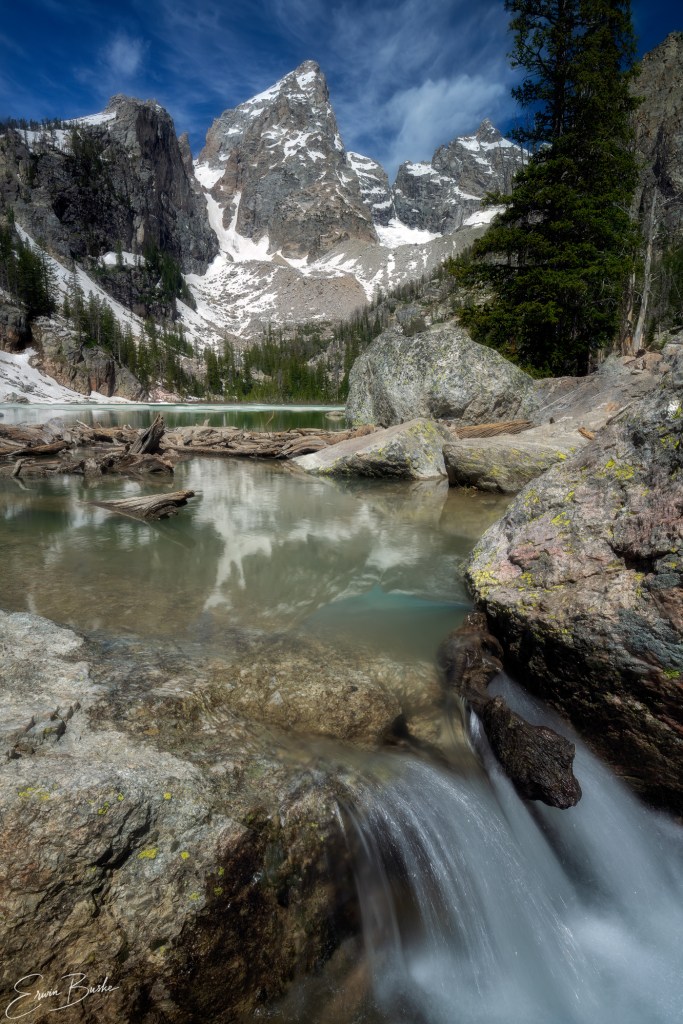
The Call of Grand Teton–Julia and took a wonderful trip this year to Grand Teton and Yellow Stone National Parks filled with both familiar sites and new adventures. As beautiful as some of the familiar sites were: Antelope Flats, Oxbow Bend, Jenny Lake Shore, Jackson Lake, Schwabacher Landing, and Signal Mountain Overlook–we were looking for some adventure off the well known path. I often wondered what it would be like above, much higher up, at the upper base of Grand Teton Peak. After doing some research we found a trail along with about a one mile steep scramble to this awe inspiring place and the chance to experience Grand Teton National Park in a much different way!

Here is a collection of my favorite images from 2021, not in any particular order. Thanks for looking!

#1. Saying Goodbye to Autumn

Saying Goodbye to Autumn

With fresh snow on the mountain peaks, I can still see splashes of Autumn color here and there at river’s bend, soon to fall and scatter into a Winter landscape. Clouds and fog move across the peaks as I welcome the change of seasons.

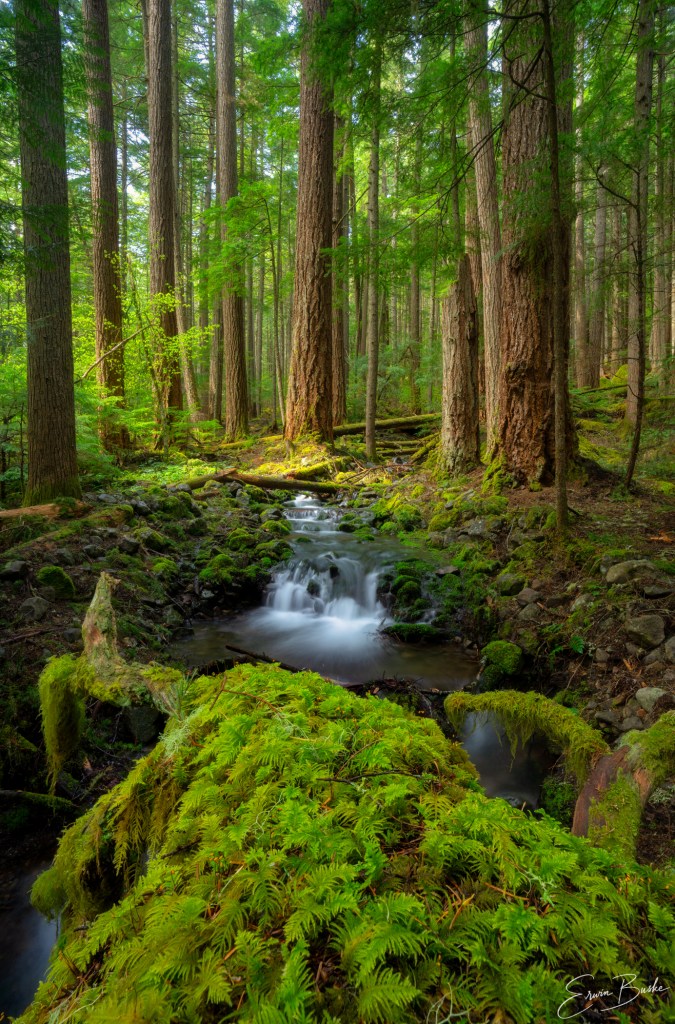
#2. Small Stream in a Hemlock Forest

Small Stream in a Hemlock Forest

One of the most rewarding experiences of hiking, is coming across small scenes like this and being stopped in my tracks to slow down and appreciate the beauty. Sometimes these experiences can be more memorable than what I thought was the final destination. It is by now a platitude, but it still rings true-its the journey not the destination.

#3 The Way of Hope

The Way of Hope

The conditions along the Oregon Coast were starting to get us down with the gloomy overcast, wind and on and off again rain. Then we came across these rocks with layers of sea salt turned orange pointing out to the sea stacks and sun breaking through the gloom. There is hope in just about any situation and in photography there is no such thing as bad light. One just needs to rise to the occasion!

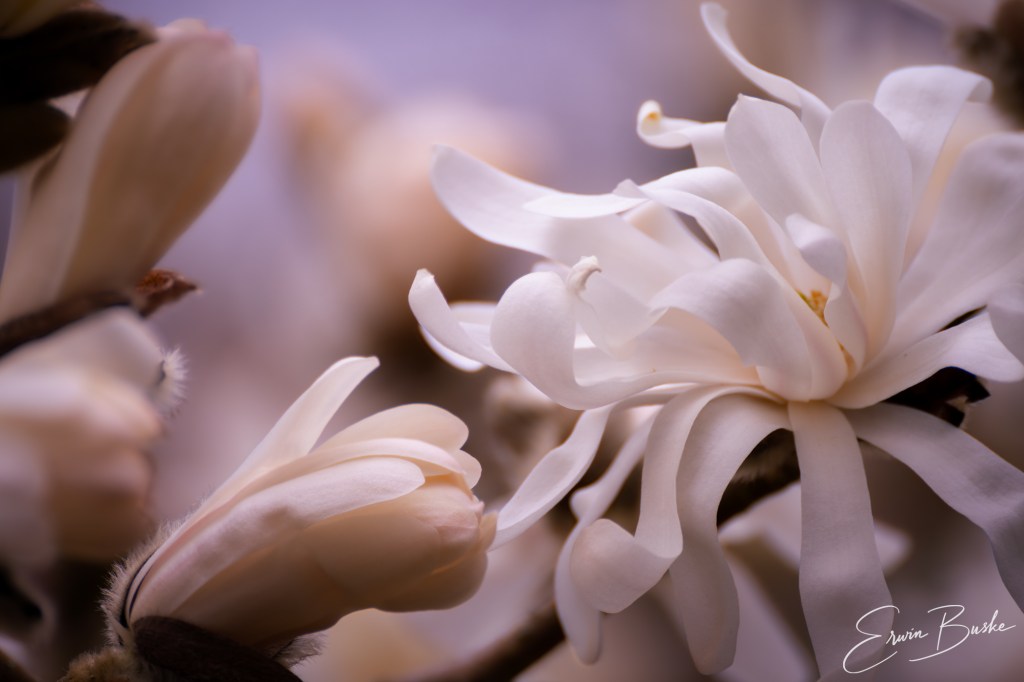
#4. Star Magnolia Extraterrestrial

Star Magnolia Extraterrestrial

Walking through my neighborhood on Easter Morning I found this Magnolia tree next to an old wooden fence. The budding flower and the more mature octopus like flower seemed to be communicating with each other. Their reaching for each other almost struck me as otherworldly in appearance, even extraterrestrial–even though I knew this is just mother nature, close to this earth, expressing herself and the mystery of spring.

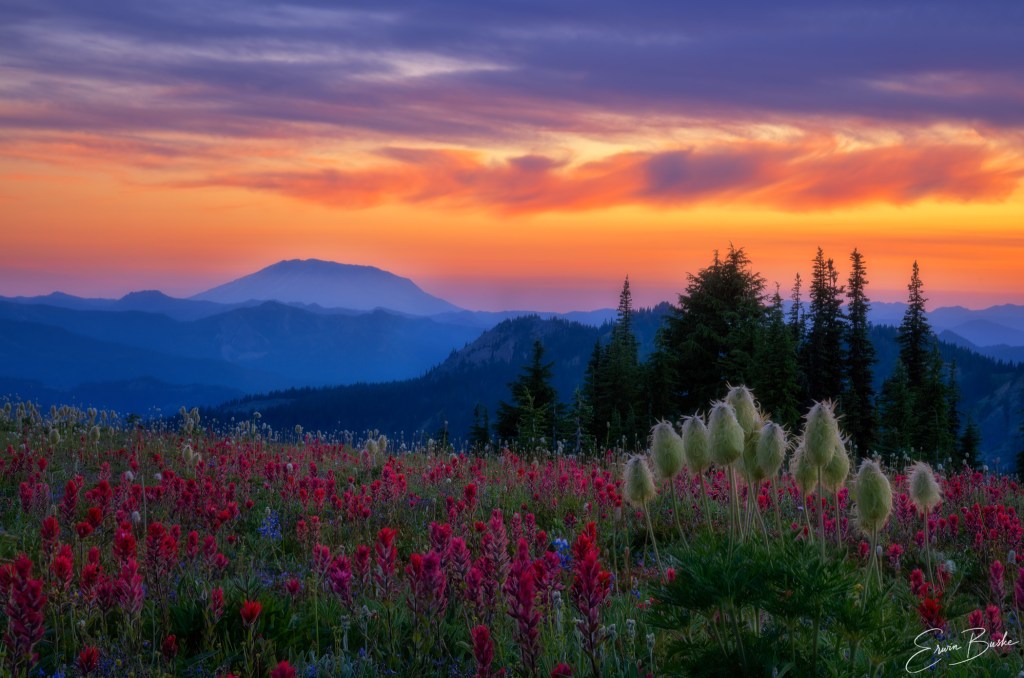
#5. Goat Rocks Fire in the Mountains

Goat Rocks Fire in the Mountains

There was some beautiful color in the direction of Mt. St. Helens on this evening of my Goat Rocks backpacking trip. I felt drawn to the slightly compressed layers of beauty–the paint brush, mop-heads, forest, mountains and beautiful sunset sky that are all featured in this image. Originally I was going to do this backpacking trip in early August but moved it up to late July instead due to a growing fire danger in the region along with extremely high temperatures previously unheard of in the Pacific Northwest. At the time this image was taken, there were already major uncontrolled fires in Norther California, Central Oregon, Eastern Washington and British Columbia. The smoke was not bad on this day and may have even helped contribute to the color of this sunset. But I could tell with each passing day of my trip that the smoke was getting thicker and on my final day it worsened to the point where creating images of grand scenes like this one was not even possible.

Smoke has been a major factor in alpine environments in the month of August for the past six years. This was not always the case, and I cannot recall smoke being a significant factor limiting visibility in my alpine adventures in the prior thirty or so years. There are several causes of for the increase in numbers of large forest fires. Forestry management practices resulted in planting trees too densely and also put fires out that would have created natural fire breaks. Global warming has increased temperatures and more frequent extreme weather events also make fires more likely. This situation will likely get worse before it gets better and reminds us the global warming is not just an abstract subject but is now effecting our day to day lives. This is natures wake up call for us to take action and support efforts to slow and ultimately reverse global warming.

#6 The Eye of the River

The Eye of the River

Misty mountain tops rise above the Middle Fork of the Snoqualmie on a December Day. When I first crawled out of the bush and stickers I thought I was looking directly into the eye of the river. The river formed a perfect bend from mysterious upriver to mysterious down river with a peninsula of bare and evergreen trees in the middle. The clouds and fog were barely moving but at five or ten minute intervals dramatic changes in the atmosphere were still noticeable.

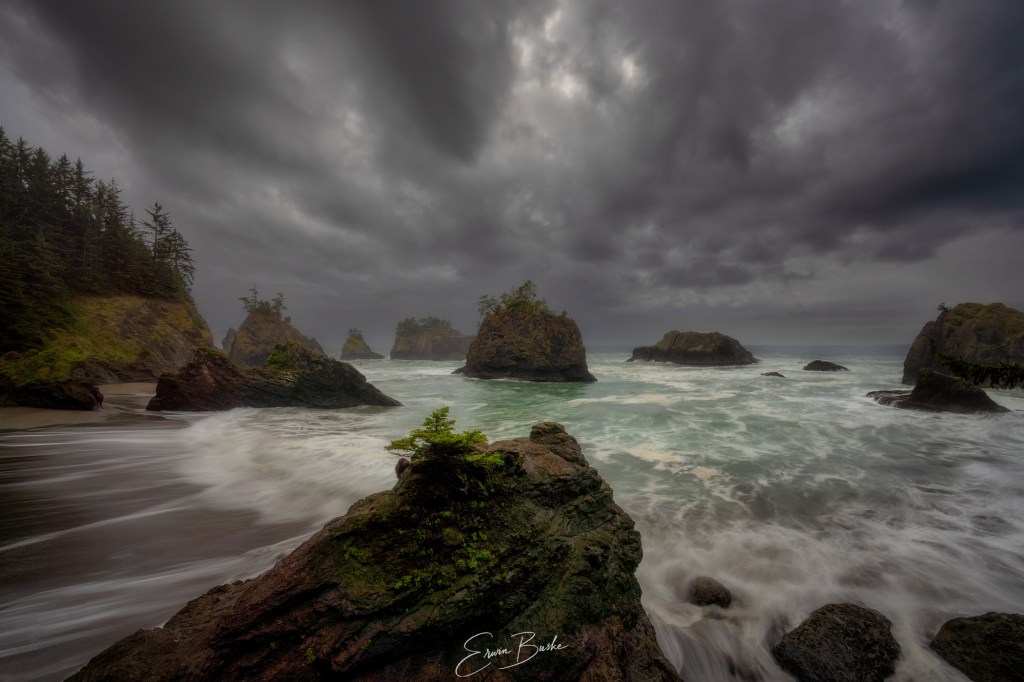
#7 Storm-A-Brewin

Storm-A-Brewin

Dark clouds move onto a secluded beach foreshadowing an approaching storm. This was the second time I visited this location along the Oregon Coast. Although I originally was hoping for more pleasant skies, I rubbed my eyes and I could see through the doom and gloom there was a picture in the making. I rubbed my eyes again and I could swear I saw Captain Sparrow of the Pirates of the Caribbean making landing through the turquoise waters onto this lovely beach in what could not be more perfect conditions!
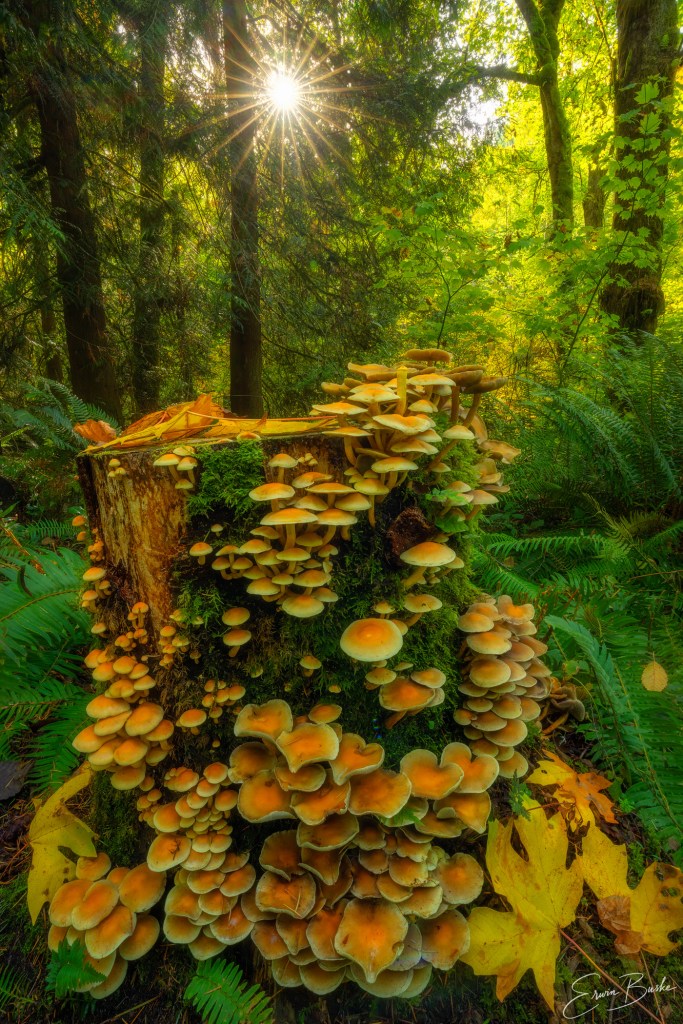
#8 Mushroom Ladder into a PNW Forest

Mushroom Ladder into a PNW Forest

The woods across from my house are really for the most part a quite ordinary mix of second growth deciduous and evergreen trees. But every once in a while on my frequent walks I stubble across an extraordinary moment and beauty.

#9. Red Berries on the Forest Moss

Red Berries on the Forest Moss

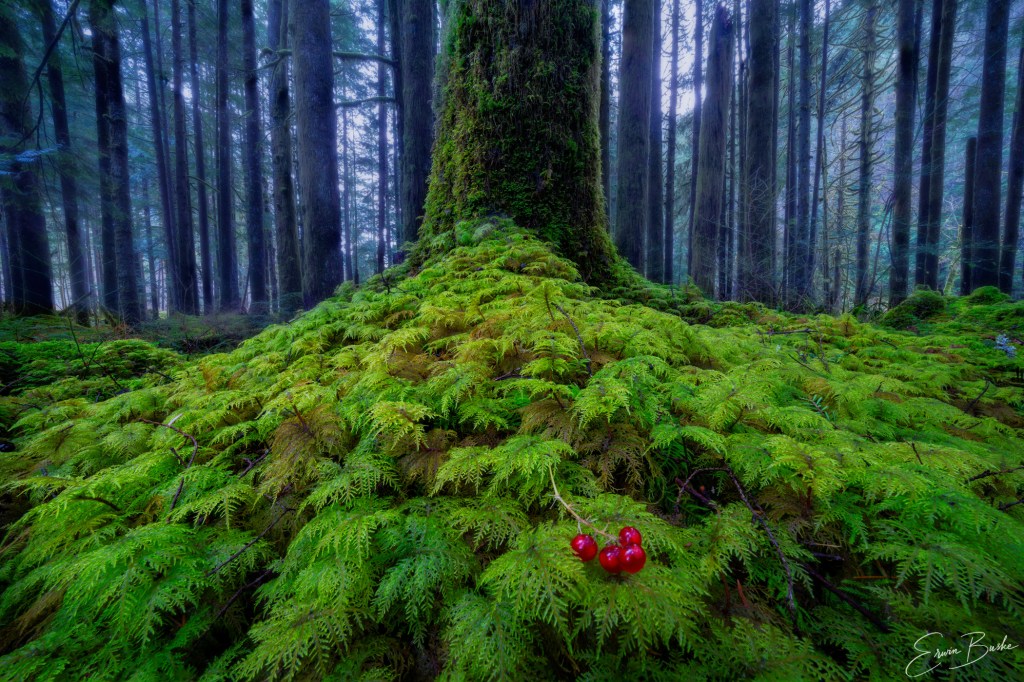
If I had to choose just one environment to experience the beauty and wonder of nature it would most certainly be the forest, and there is none that compares to this forest so close to my home along the Middle Fork of the Snoqualmie River. It may be primarily second growth, but what it lacks in grandeur it certainly makes up for with these beautiful displays of moss.

The redberries on a stem are the winter remnants of a bunchberry plant also known as Canadian Dogwood. In autumn the dogwood like leaves of this short plant turn a burgundy red but with the arrival of winter wither away leaving just the berries on a short stem fallen onto the green moss.

#10. The Candle Holder

The Candle Holder

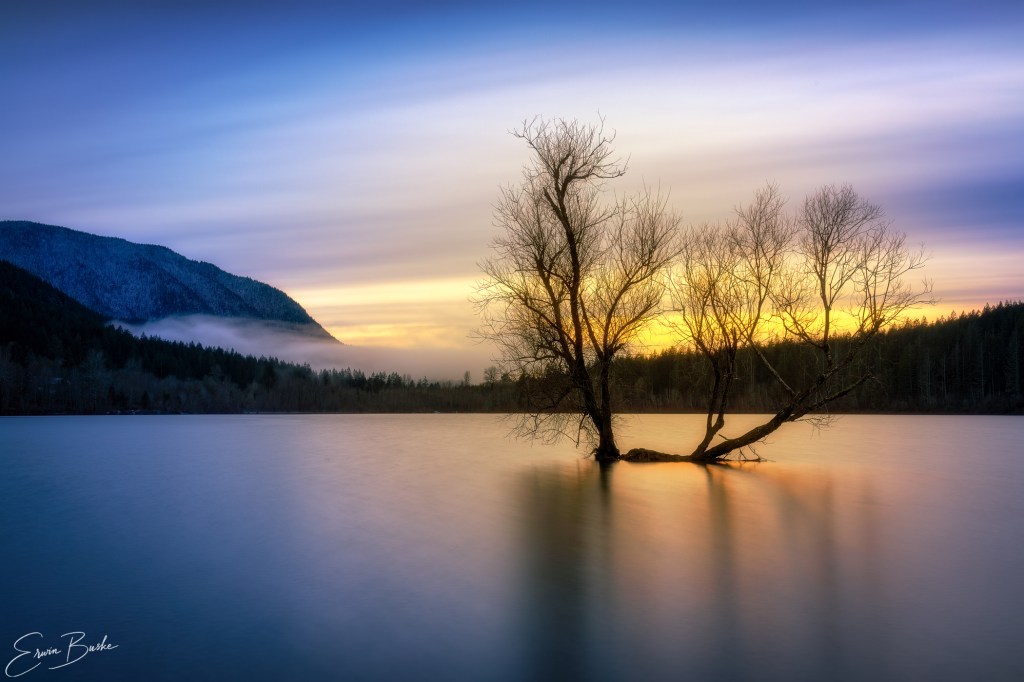
A lone multitrunked tree, seemingly floats on the water, bathed in the warm light of the setting sun.

#11. Bear Grass Luminaries Rising Above the Clouds

Bear Grass Luminaries Rising Above the Clouds

This was sure a beautiful scene as the fog rolled in below the mountain perch where I photographed these Bear Grass flowers rising above the clouds with Mt. St. Helens in the distance. As the scene unfolded, however, it did pose some major navigation challenges hiking out in the thick fog in the dark with headlamp. I literally could not see the trail in places because the fog was so thick making me completely reliant on my GPS cell phone navigation. Luckily my battery held out until I was out of the danger zone! Bear Grass flowers seem so sensual, lighting up like luminaries as the sun sets, raising their heads upward toward the twilight skies. They rate among my favorite of all the flowers I have had the pleasure of experiencing in the Pacific Northwest.
#12. Grand Teton Fields of Gold

Grand Teton Fields of Gold

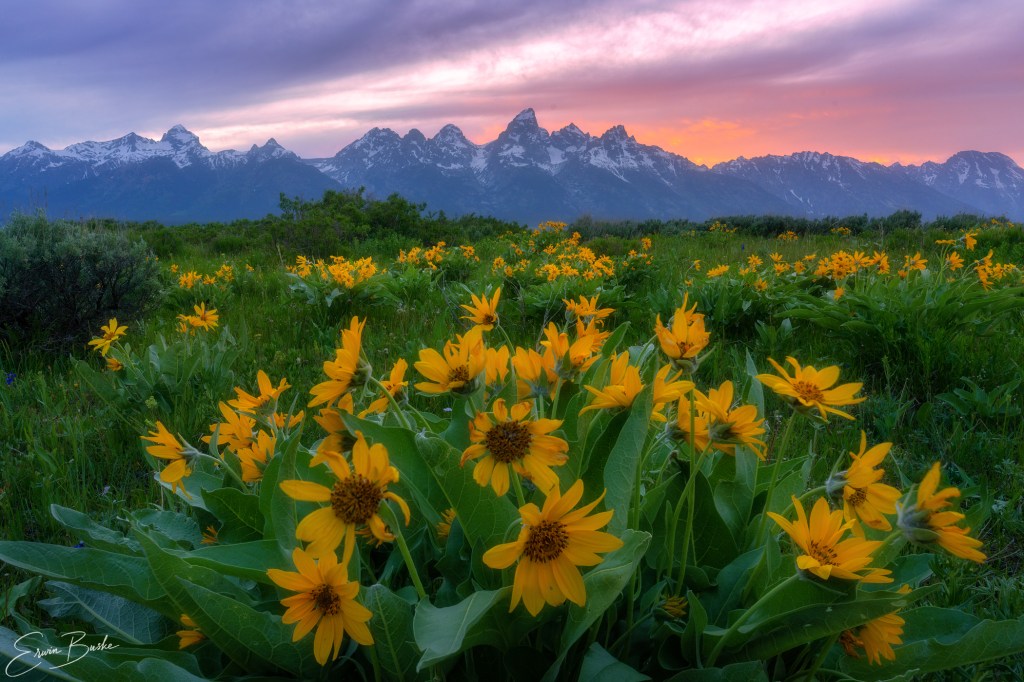
I have visited Grand Teton National Park three times and I think just now I am beginning to get to know the place. One needs to spend significant time here to get to know the rhythm’s of the evolving seasons and explore the depths of even the well known places, let alone exploring others well off the beaten path. I have photographed this location, Antelope Flats, all three times and only now do I think I came away with something consistent with my experience of this beautiful place I feel good about sharing. Some say this location is overshot and it is impossible to come away with anything different. Although I appreciate this sentiment, one should not underestimate the symbolic value of iconic locations like Grand Teton in the overall psyche of the American (and global) experience. People see images of these iconic places often early in life and long to tap into this rich symbolism and experience the beauty themselves. When this is integrated into who we are as individuals and we bring our own self to the place and the creation of the image, this is when our experience and the resulting images become unique, even if they are powered with the symbolism of the iconic that so many can readily relate to.

#13. Mammoth Springs Waterfall Terrace

Mammoth Springs Waterfall Terrance

This steamy waterfall cascading over the terraces and staircases of Mammoth Hot Spring certainly stirred my imagination. It was almost like a dream that seemed so real that the dream is reality and reality a dream! Here I can easily imagine elf royalty making their way up the stairwell to make a blessing to the God’s at the waters source.

#14. Three Small Trees in an Autumn Winter Forest

Three Small Trees in an Autumn Winter Forest

One of the best things I like about hiking to a destination are the flashes of perception I experience along the way-images I was not necessarily looking for but reveal themselves in the corners of my eyes. This gives me pause to enjoy the beauty that is part of the journey.

#15. Mt. Dickerman Autumn Glory

Mt. Dickerman Autumn Glory

In early Autumn, I headed up Mount Dickerman, arrived around noon, and staid on top all the way until sunset. I found a spot that looked out to the west to capture the magic of autumn and the sun setting over the western peaks including Mt. Pilchuck. It is a bit of a challenge staying until sunset but the good comes with the bad. An hour or so before sunset, I had the place all to myself! It is a 4,000 foot descent back to the trail head, but it the experience justified any hardship!

#16. Asters at the Seashore

Asters at the Seashore

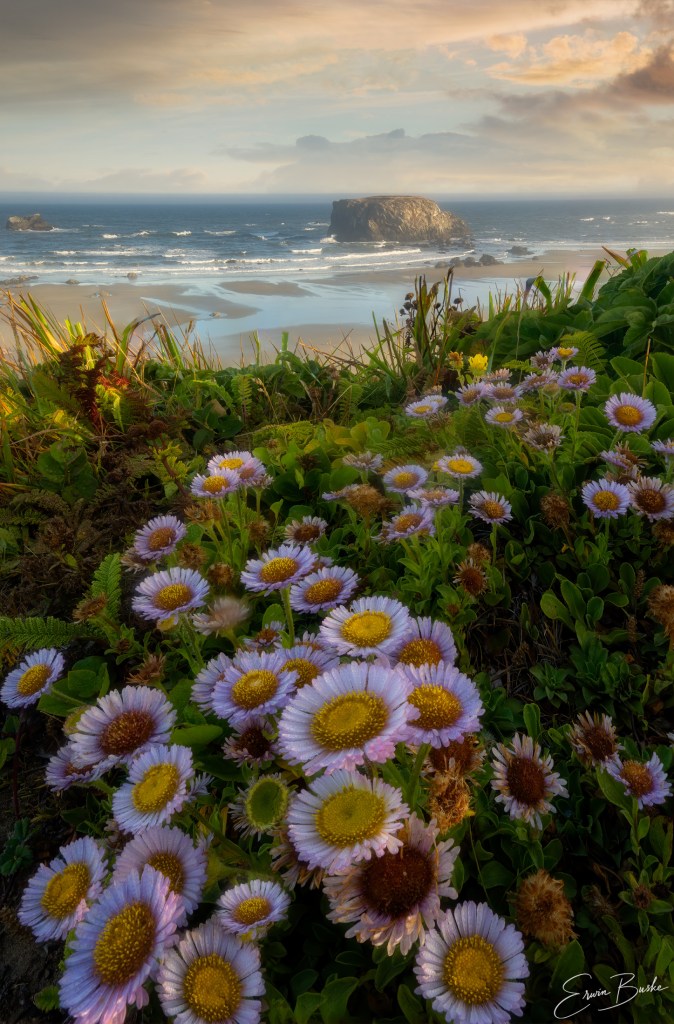
This is looking out from the Headlands of Bandon Beach to Table Rock. I was surprised and in a state of wonder to see these very short daisies thriving in this windy and cool place well into August of this unusually hot summer.

#17 Tide Pools of the Setting Sun

Tide Pools of the Setting Sun

In August, Julia and I escaped some of the heat and smoke where we live and headed down to a cooler climate at Bandon Beach. I just loved how these tide pools collected some of the light from the sun that just set below the horizon. There was a fairly thick off shore flow and cloud layer so I do not know how the sun found its way in, but I embraced the light all the same!

#18 Lensbaby Unplugged: The Dahlia Garden

Dahlia Garden

This year I decided to purchase a Lensbaby 85mm Velvet Lens. Lensbaby lenses create optically beautiful soft focus and glowing painterly effects with minimal processing. This encourages a more spontaneous and immediate approach to photography where the in camera image is already in synch with my vision in the present moment. This is very welcome in this day and age where many images are the function of much technical planning and pre-visualization of post processing requirements. This latter approach is so far removed from one’s flashes of perception and immediate experience of the scene that often all spontaneity is lost. With a lensbaby I can approach nature and the landscape more with a beginners mind, in others words with the eyes of a child which I find very refreshing.

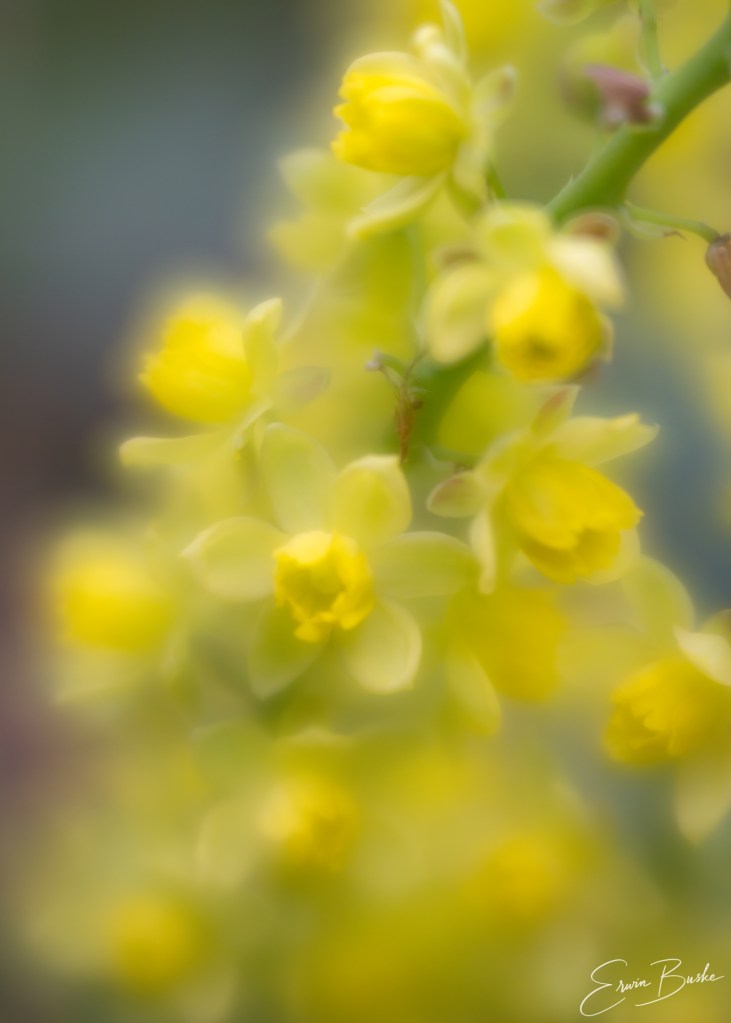
#19 Oregon Grape Blossoms

Oregon Grape Blossoms

When viewed very close, these tiny blossoms take on quite a different appearance and almost remind me of the shapes of Daffodils. Lens Baby Soft Focus Velvet 56 Lens on a Sony A74 @ F1.6

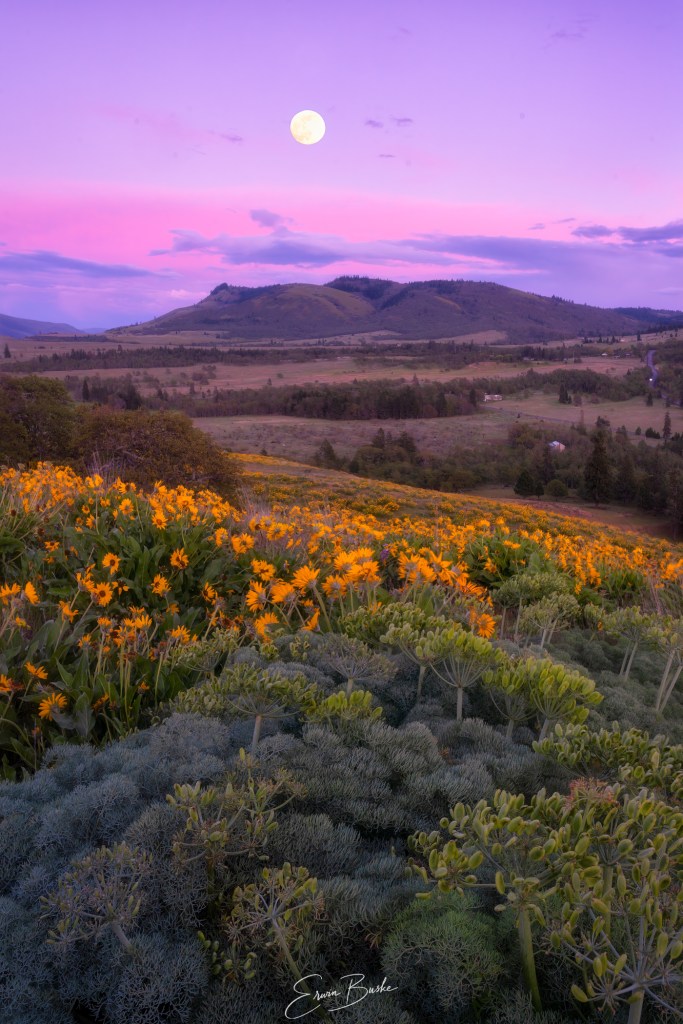
#20 Columbia Gorge Super Pink Moonrise

Columbia Gorge Super Pink Moonrise

Well I have to confess this was actually one day before the actual Super Pink Moon. At this particular location, however, the moon was actually brighter, and definitely surrounded by more pink! The moon rose somewhat earlier so that it would be in an optimal position over the Columbia Gorge Hills during twilight just after the sun set. Sometimes actual days do not matter and we must think a little out of the box and go with the flow! I just loved the way the moon light accented the texture and seed pods of the desert parsley in the foreground and brought out the brilliant yellows of the Balsam Root flowers-a most memorable experience.

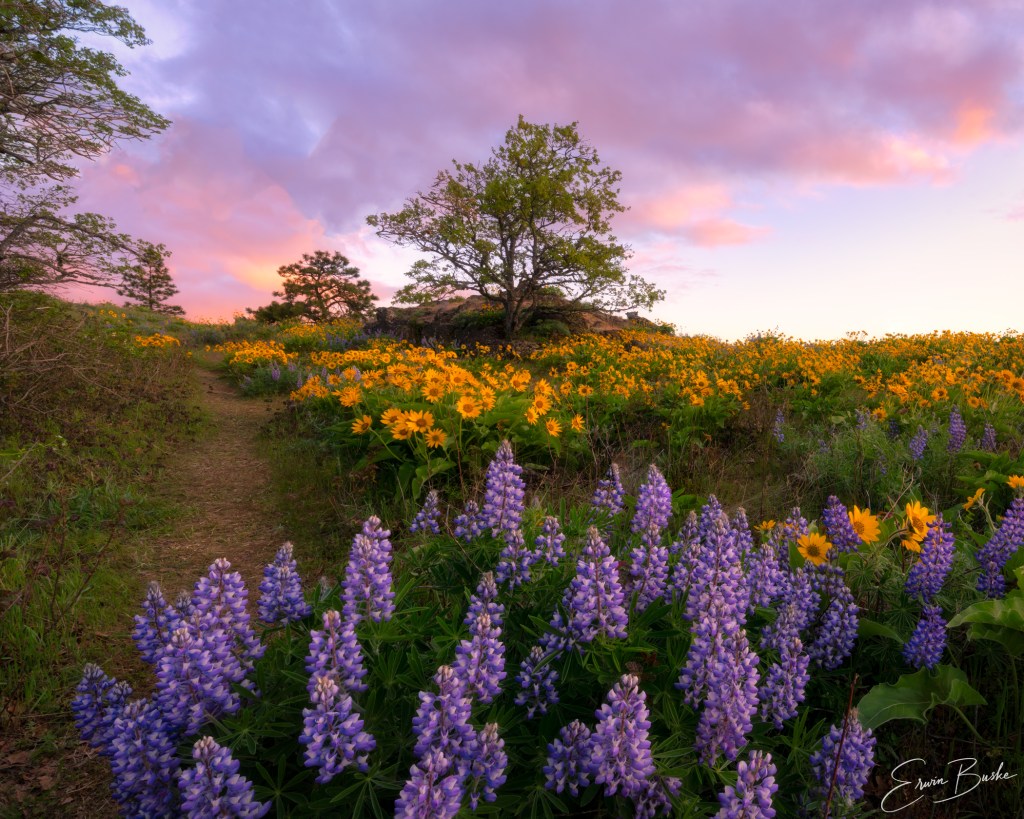
#21 In Dreams I walk through Blue and Gold

In Dreams I walk through Blue and Gold

A solitary trail makes its way through fields of lupine and balsam root, past a small lone oak tree, as it makes its way disappearing in gold and purple skies of the rising sun.

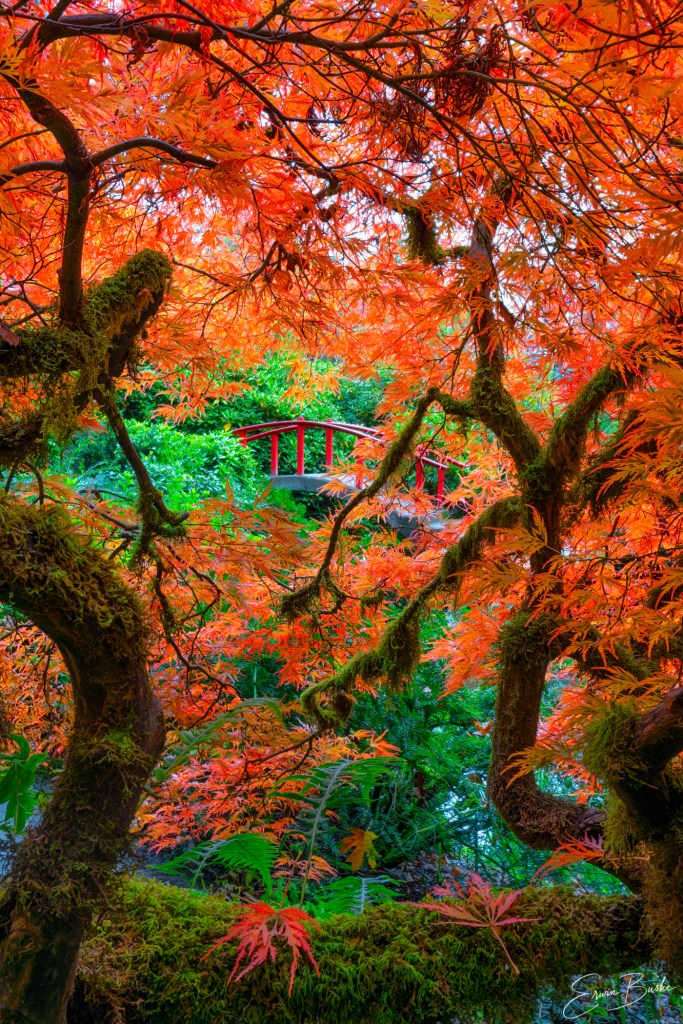
#22 Window through a Japanese Maple

Window through a Japanese Maple

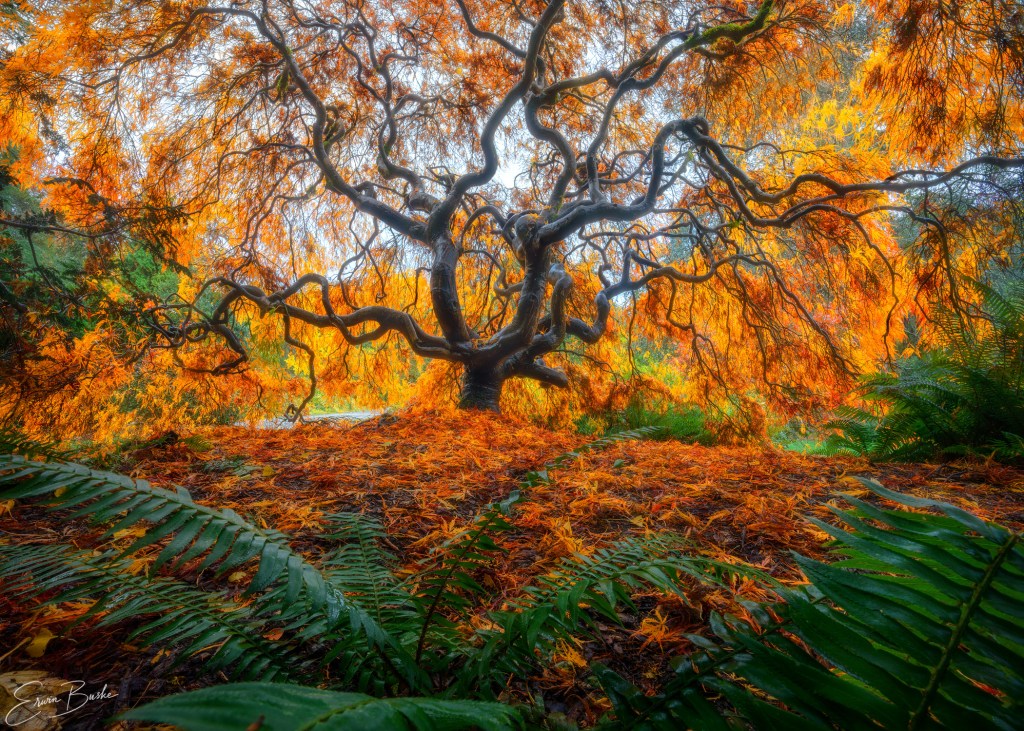
Life always seems better underneath a Japanese Maple at Kubota Gargen! Kubota is a garden whose visual poetry one must ultimately experience first hand without words and concepts in order to fully appreciate the wonder and awe of its beauty. Enter its many curvy paths and winding trails and find your self and your still point in a meditative garden retreat that will leave you feeling revitalized and somehow a more complete person who lives and breathes more in sync with the rhythms of nature.

#23 Golden Beauty in the Final Hours

Golden Beauty in the Final Hours

In late October the winds blew off just enough leaves to beautifully carpet the ground beneath this iconic Japanese Maple, but not so much as to take away the beauty of its golden canopy. Nature is often the most beautiful toward its endings.

#24 Zigzags

Zigzags

In early September I spent three days backpacking in the Mt. Baker area and was surprised to see autumn already in motion even as in other areas the flowers were still blooming. Luckily the heavy rains on the first day washed all the smoke away bringing fresh cool crisp autumn air.

#25 Lone Oxalis of the Hoh

Lone Oxalis of the Hoh

The leaves of the Oxalis plant are among my favorite and look to me like extra large lawn clover leaves. I especially like the way they colonize areas at the base of large tree trunks of the Hoh River Rainforest. Their presence along with moss hanging from the bows of Maple Trees help characterize the beauty of this magical place. Oxalis flowers are few and usually far between, but their subtle beauty at the forest floor makes up for anything they lack in grandeur.

#26 Daisy Daisy

Daisy Daisy

This is just some typical tiny lawn daisies growing wild at Deception Pass State Park. Their appearance can sure look different through the perspective of a macro lens. Its a small world after all!

#27 Columbia Gorge Spring Magic

Columbia Gorge Spring Magic

This image has some of the best things I love about the Columbia Gorge in Spring–beautiful wildflowers, green rolling hills with mountains in the distance, the river rolling on and on, and gorgeous sunsets to bring it all together!

#28 Lake Crescent Misty Morning

Lake Crescent Misty Morning

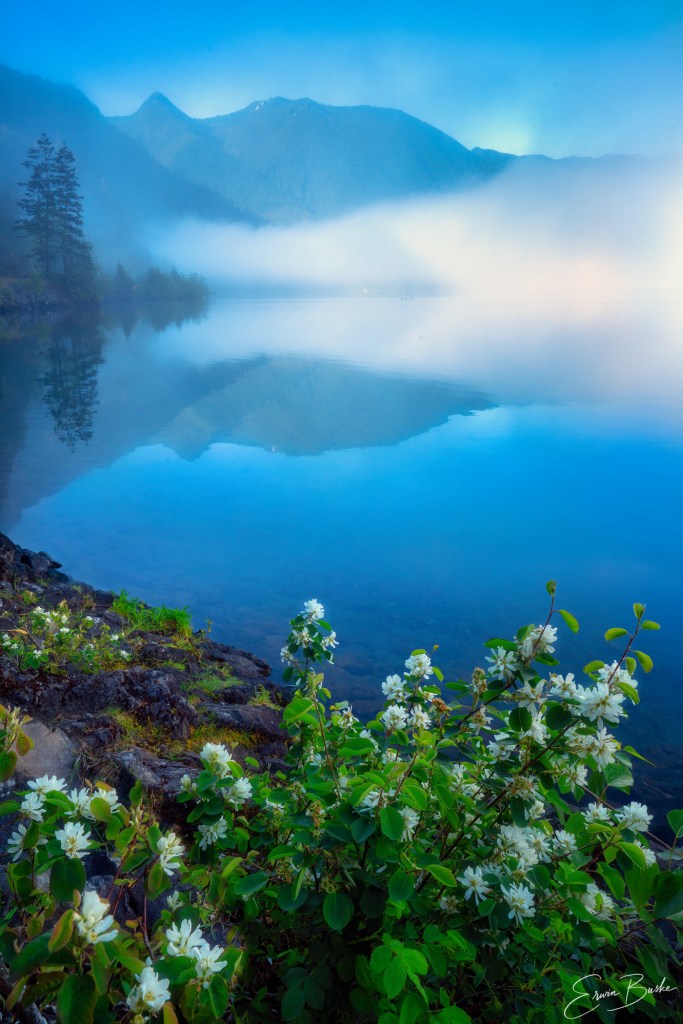
Julia and I could not resist making a stop on this misty morning at Lake Crescent prior to heading to the Sol Duc Trail Head! It was so peaceful and calm that it was hard to say goodbye.

#29 Four Strong Winds and a Lone Tree

Four Strong Winds and a Lone Tree

A lone tree sculpted by four strong winds seems to grow into the landscape-a brave warrior who thrives against all odds.

#30 Fields of Lupine and Golden Light

Fields of Lupine and Golden Light

This is now one of my favorite images from last summer. Julia and I were completing the Panorama Loop before heading out to the Goat Rocks for a few days. This capture was almost an afterthought, something one does spontaneously without much further ado at the end of the day. Strange, but back then I did not think much of this image, but it has grown to be one of my favorites. Some things just grow on a person.

#31 Tatoosh Spirea Magic

Tatoosh Spring Magic

The clouds in early August and a touch of rain were a welcome relief after so many blue bird days filled with smoke and and haze. My eyes were drawn to these Spirea flowers spread out in the meadow leading to the Tatoosh range in the distance.

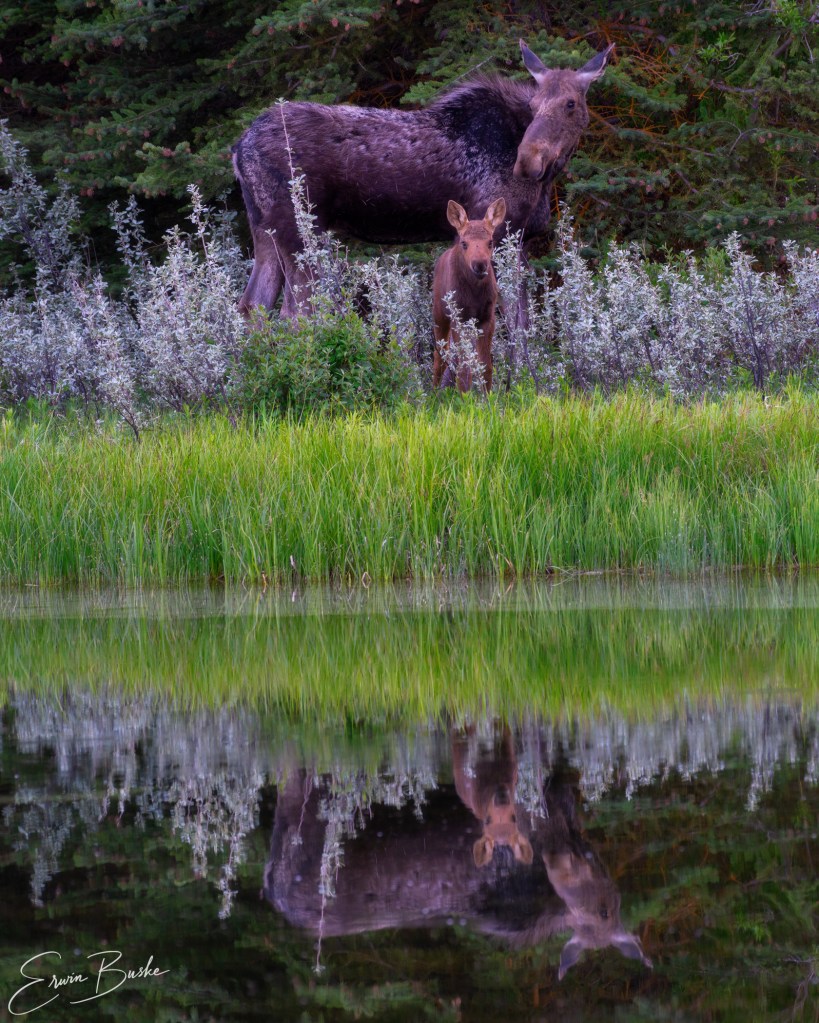
#32 Mother Moose and Calf

Mother Moose and Calf

A mother Moose and her Calf stroll slowly along the pond, occasionally wading into the water, during the evening hours at Grand Teton National Park.

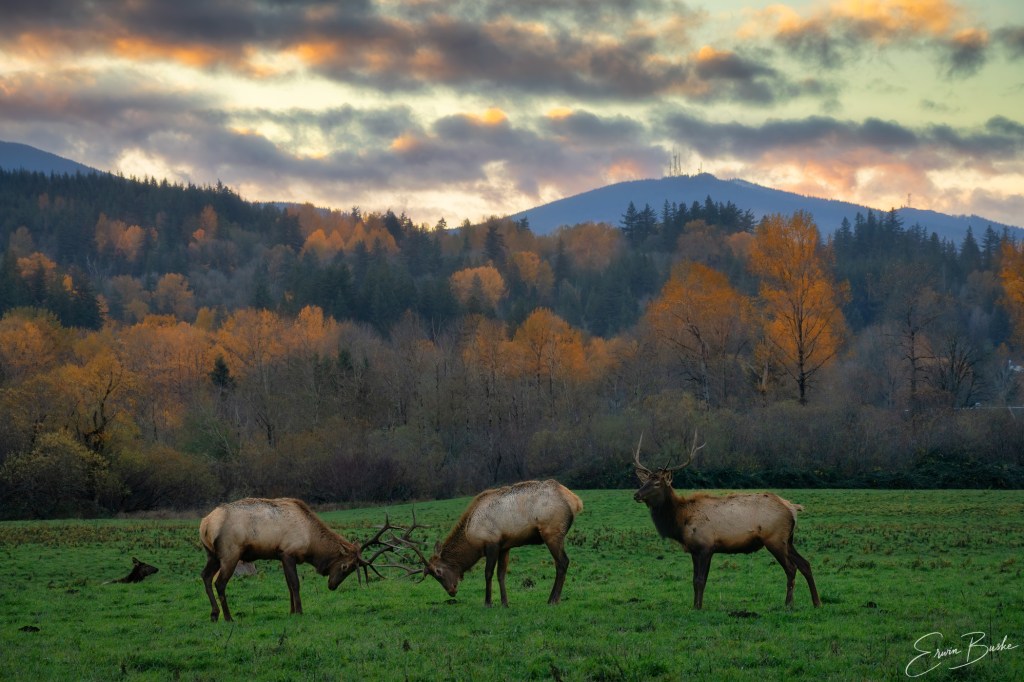
#33 Locking Horns

Locking Horns

Around sunset a herd of Elk ventured down into the Snoqualmie Valley underneath Squak Mountain. These two were locking horns most of the time I was there. Later the third male joined in for a three way horn battle or is it play–perhaps a bipartisan agreement!

#34 Sunrise at the Tulip Farm

Sunrise at the Tulip Farm

I cannot help but fall in love with this idyllic setting at the Tulip Farm. It is a cool crisp morning with birds chirping as the tulips catch the light of the rising sun.

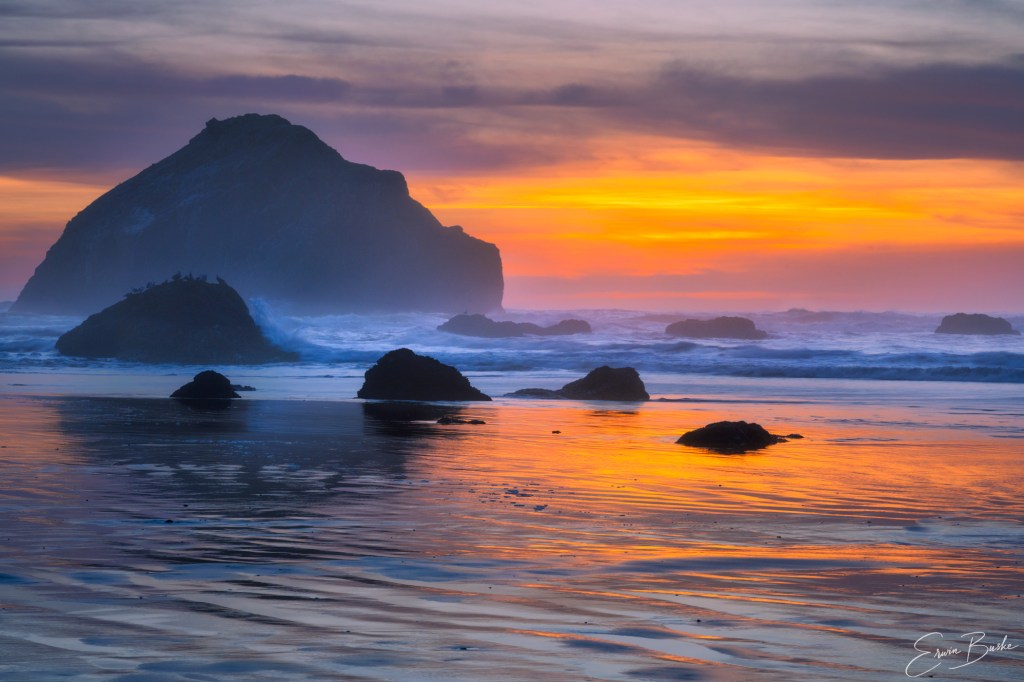
# 35 Lay Me Down to Rest

Lay Me Down to Rest

As I watched the sunset along this Oregon Coast on this day, the largest Sea Stack in this image reminded me of the final resting place for the passing of the Buddha. It is strange what one will see in these sea stacks at the edges of the day.

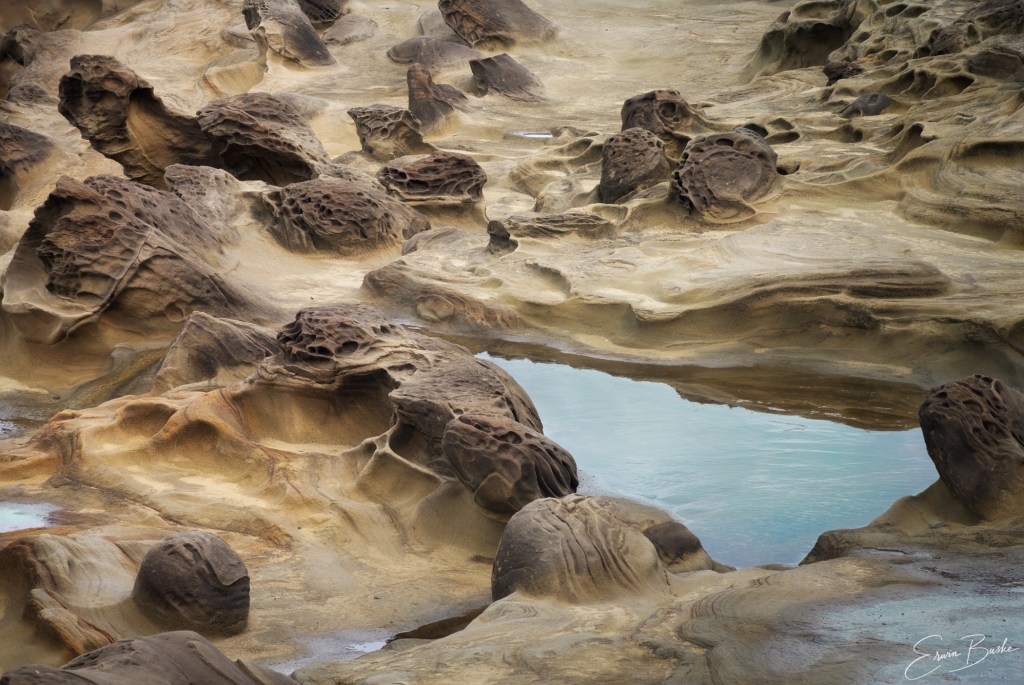
#36 Water on the Moon

Water on the Moon

The Oregon Coast is not all about its beautiful grand seascapes, iconic sea stacks, sunrises and sunsets. For me some of the most memorable beauty are some of my flashes of perception while walking along the coast–small scenes, often abstract, that catch our attention. Here is one I spotted on my recent trip to the Oregon Coast. Here you will find Water on the Moon.

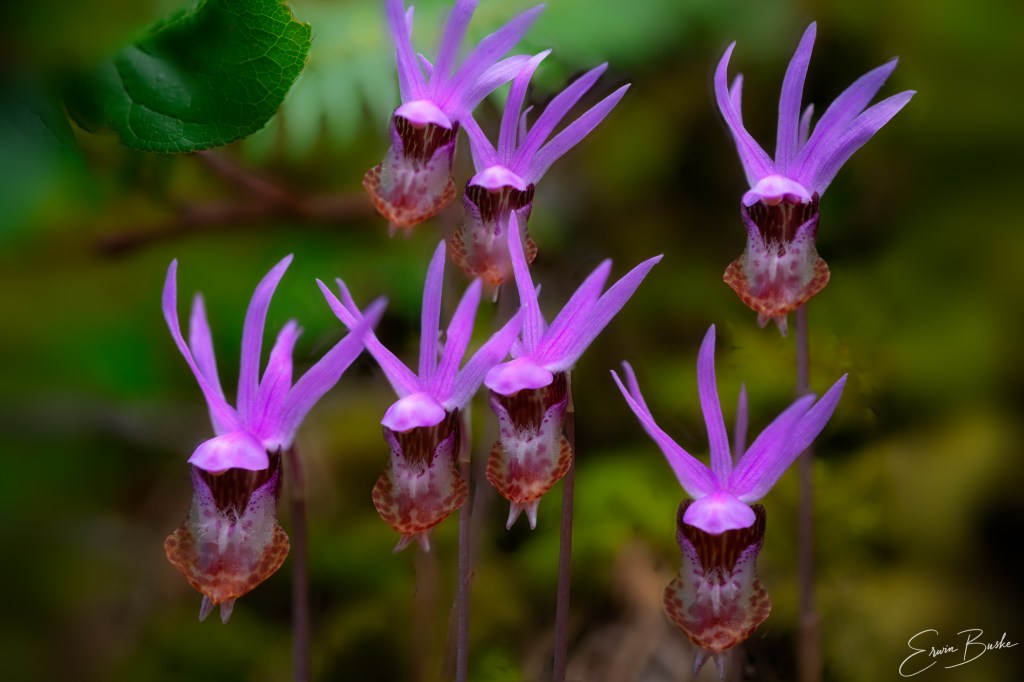
#37 The Dance of the Calypso Orchids

Dance of the Calypso Orchids

I really enjoyed the ensemble of Calypso Orchids, their faces looking right at me as they danced in the wind. This did pose some significant photography challenges, but with some totally manual focus stacking I think I did come close to capturing the moment after all!

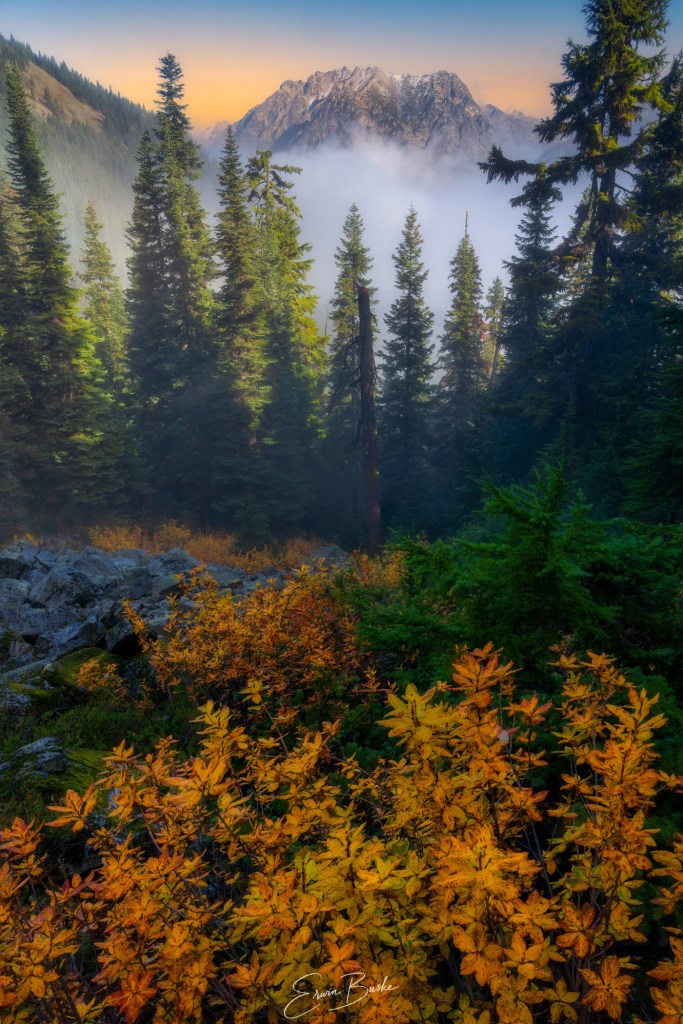
#38 North Cascades Foggy Morning

North Cascades Foggy Morning

There is nothing like climbing out of the fog in the morning to discover a beautiful scene like this on a cool and crisp Autumn day!

#39 A Walk in an Autumn Forest

A Walk in an Autumn Forest

As much as I like sunsets and bright skies in the North Cascades, a moody misty day takes me more to the essence of this area in Autumn!

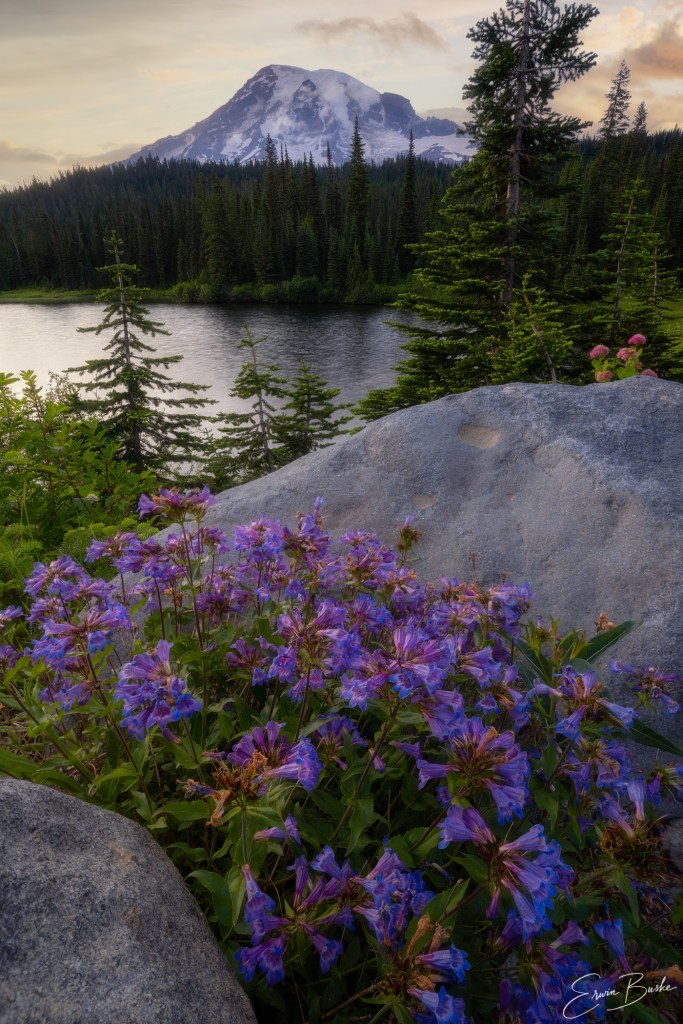
#40 Heaven and Earth

Heaven and Earth

During the Golden Hour, Penstemon flowers are at home between two rocks whose shape echoes the shape of Mt. Rainier at Reflection Lake.

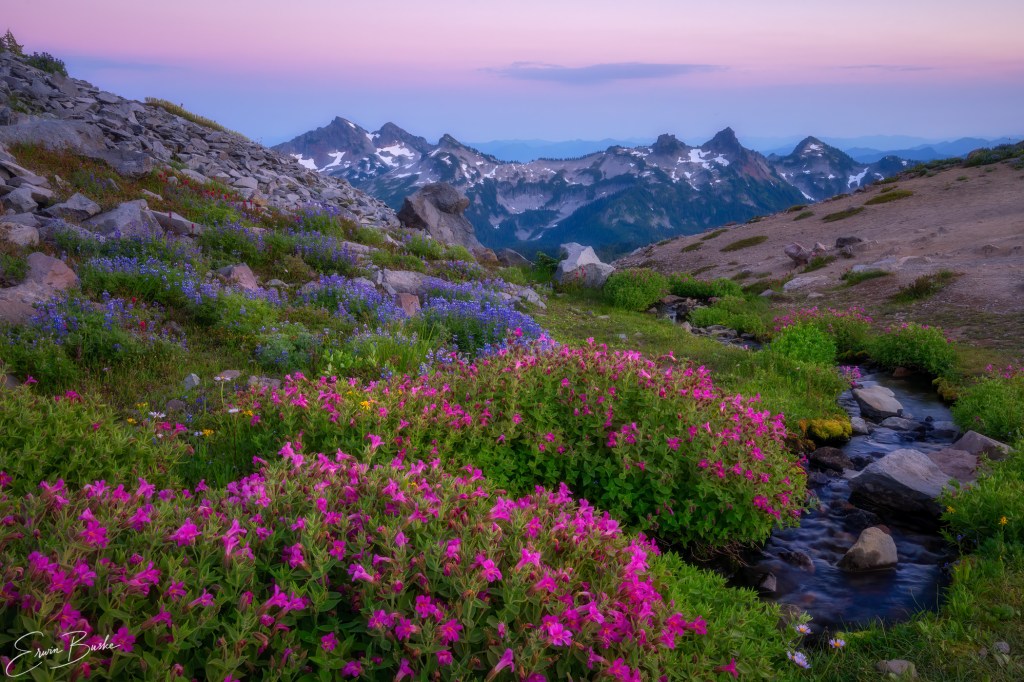
#41 A Stream runs through an Alpine Meadow

A Stream runs through an Alpine Meadow

I often become aware of places like this through my long hikes during the day. Then I return later, usually on another day, to create my image in the evening light. When I do, I arrive an hour or two early which I did here. I just sit and meditate in the place. There is something about this practice that works well with image creation. It is usually best to spend some time with nature first, immerse oneself into her emptiness, shapes and forms, and honor her presence before reaching for the camera.

#42 Tipsoo Lake Autumn Transitions

Tipsoo Lake Autumn Transitions

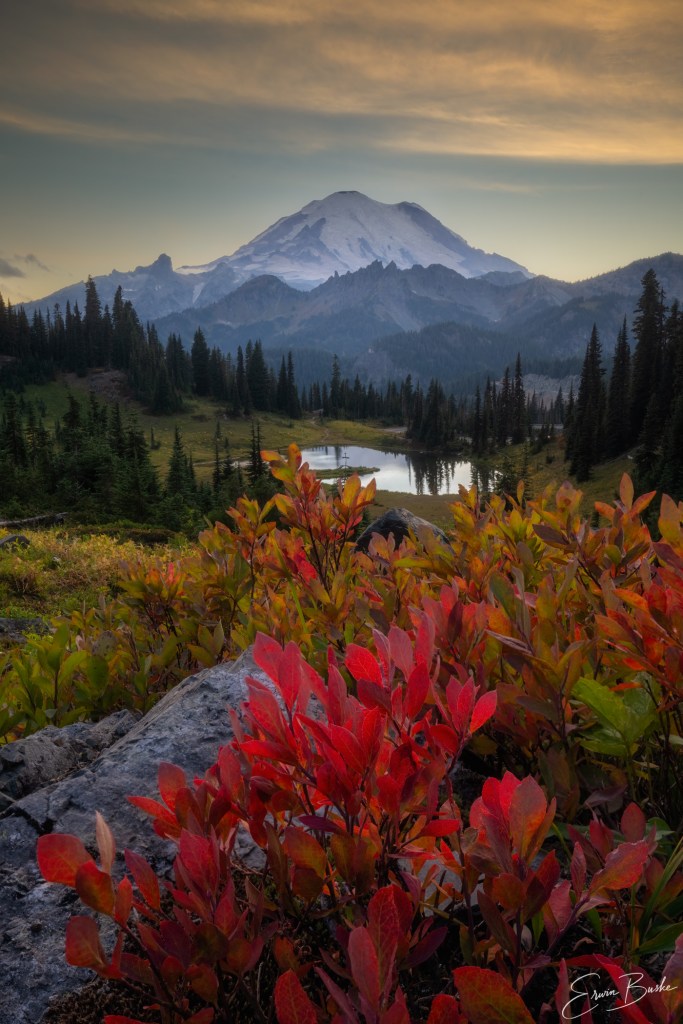
In mid September, Autumn is well on its way at Mount Rainier National Park. In this scene I was drawn to the brighter red blueberry leaves fronting others that were still a blend of shades of gold, yellow and green. I I had to pick just one favorite season it would be Autumn!

#43 Deception Pass State of Mind

Deception Pass State of Mind

This is looking across the bay on a dark winter day toward the Deception Pass bridge. In the darkest hour we can still find a bridge to beauty and hope.

#44 Misty Mountain Forest

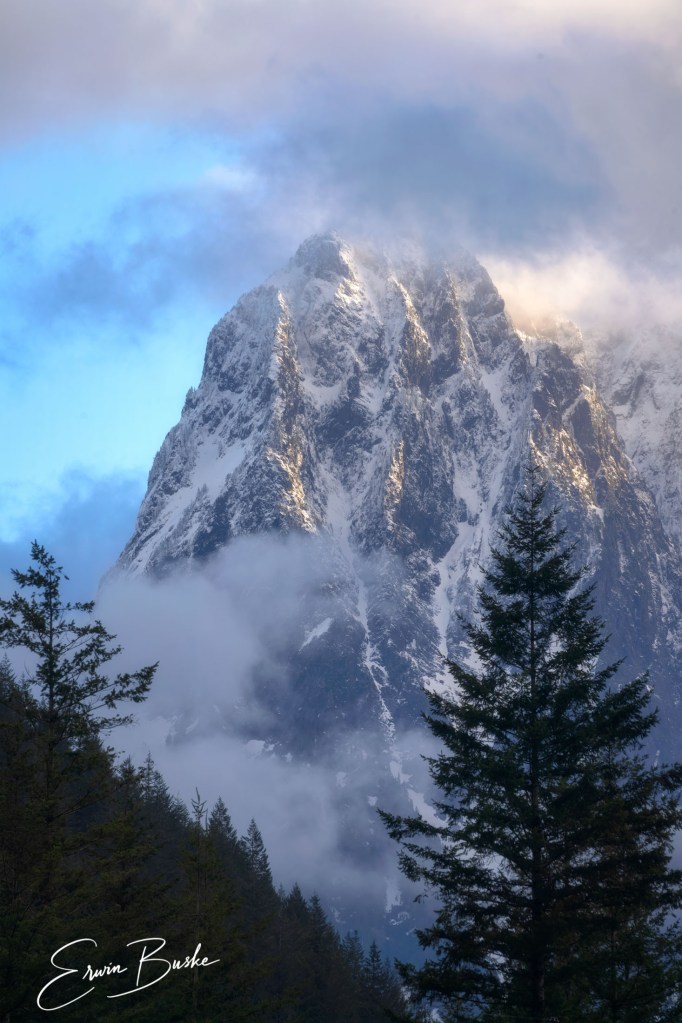
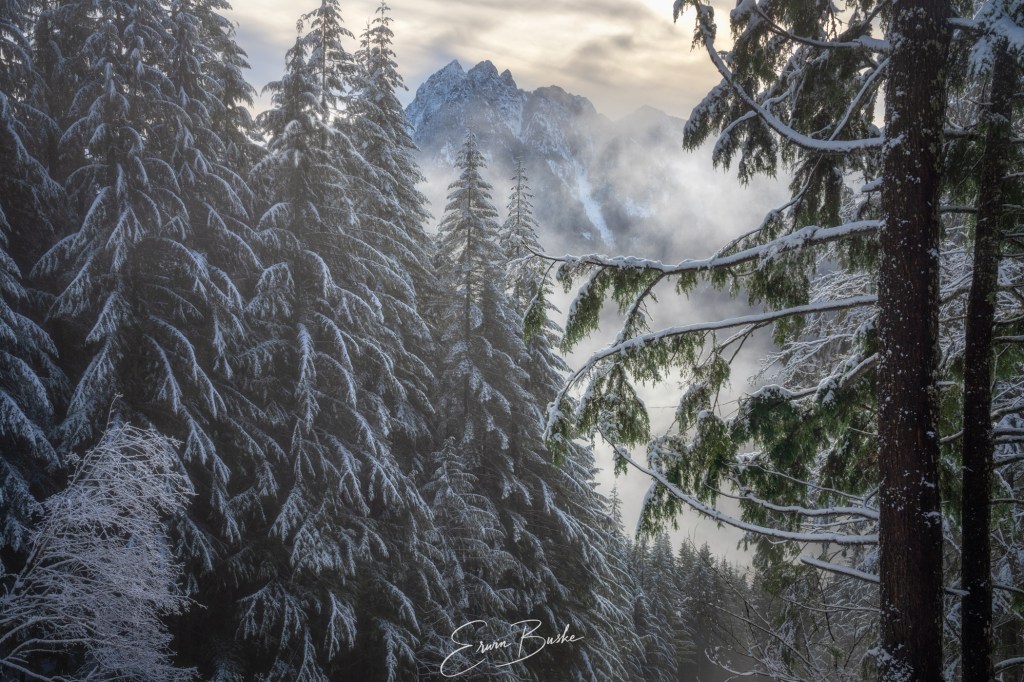
As we climbed out of the forest mist, we found an opening with sunlight streaming through, and a view to this misty mountain top.

Thanks so much for reading and viewing the images of this blog post. I encourage you to share your reactions, thoughts, comments, impressions on this post here. If you think others would enjoy reading this post please also share it with your friends and communities. The full resolution images from this blog post can be viewed on my website where they are also available for purchase. Here is the link 2021: Following the Open Trail and still searching for that Heart of Gold – The Hidden Landscape: Photography of Nature and the Soul (erwinbuske.com) If you would like to see more content like this subscribe to the blog so you automatically receive future blog posts. To learn more upon my perspectives on nature be sure to check out my Ebook, the Hidden Landscape: The Inside Passage. This image rich book is 248 pages and provides insight how nature, mystery, the Tao, Zen, and the American Transcendentalism of Thoreau inform my photography and can provide sources for you own inspiration. Here is the link to the EBOOK along with a preview. https://payhip.com/b/FCI4z. Thanks again and happy trails!